Book review

Fast or feast

‘Tell me what you eat and I shall tell you what you are.’ The best known adage in food literature, penned by the French politician and gastronome Jean Anthelme Brillat-Savarin, divides all of us generally: the gourmands from the picky, the greedy from the careful, one nation from another, one culture from the next. Laura Shapiro’s book about six famous women and their ‘food stories’ made me want to re-read a few biographies for those food moments. Shapiro claims that food in life stories is undervalued as a subject, considering how much time people spend eating.

Satire and self-deprecation

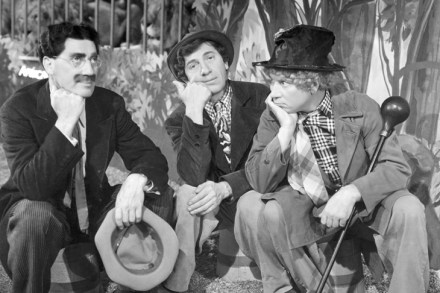
If you’re Jewish, or Jew-ish, or merely subscribe to the view that Jews should be trusted to recognise anti-Semitism rather than be accused of making false allegations to further their own malign agenda, the chances are you could do with a laugh right now. The resurgent far right’s threat feels frightening but expected, whether from torch-waving American mobs or European ethno-nationalists directing the restive masses’ anger towards the traditional target, presently embodied by George Soros.

Not for the fainthearted

In 2014 Michael Alig, impresario, party promoter and drug provider, was released on parole after 17 years in prison for the manslaughter of Angel Melendez. Alig, leader of New York’s Club Kids during the 1980s and early 1990s, features as a minor character in Jarett Kobek’s breakneck, crazed ride through NYC’s nightlife from 1986 to 1996. Although the novel is set in the club and drug scene, filled with addicts, gays, trans, queens and freaked-out weirdos, its main themes are serious and compassionate. Repeated constantly is the mantra that history repeats itself; but most important is the theme of enduring friendship. Despite the decadence, Kobek is optimistic.

Riddles wrapped in a mystery

His Bloody Project, Graeme Macrae Burnet’s previous novel, had the sort of success that most authors and creative writing students can only dream of. A psychological crime novel set in 19th-century Scotland, it became a surprise bestseller — and it was also shortlisted for last year’s Man Booker Prize. It is not an easy act to follow. Perhaps wisely, Burnet has chosen to make his next novel, his third, very different in both setting and tone. The A35 in question runs through north-eastern France between Strasbourg and Basel. One evening, at some point in the 1970s, a wealthy lawyer named Bertrand Barthelme is killed when his Mercedes goes off the road as he is driving home to the town of Saint-Louis. The death seems accidental.

Another Eden

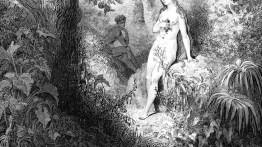
In December 1996 Martin Amis told listeners of the BBC’s Desert Island Discs what would relieve his solitude were he to end up cast away in paradise with one piece of music, a luxury and a book for company. He chose Coleman Hawkins’s version of the jazz standard ‘Yesterdays’ as his only record — seduction music, he suggested — and opted for the luxury of an unlimited Sky Sports subscription package. Amis’s preferred book, in this company, sounded similarly butch: John Milton’s Paradise Lost as edited by Alastair Fowler for the Longman Annotated English Poets series in 1968.

Sex and the city | 23 November 2017

‘I should like,’ Edgar Degas once remarked, ‘to be famous and unknown.’ On the whole, he managed to achieve this. Degas is after all one of the greatest names in European art, but there is much about him that remains enigmatic. Some of his works seem secretive, even surreptitious — the extraordinary monotypes he made in Parisian brothels, for example, or the many wax sculptures he created but neither cast nor exhibited. These and many other aspects of this curiously sympathetic man are explored in Degas: A Passion for Perfection by Jane Munro (Fitzwilliam Museum, £40), a fine book accompanying the current exhibition at the Fitzwilliam Museum, Cambridge (until 14 January 2018) marking the centenary of his death.

Listen with Auntie

The camouflage-painted, smoke-blackened entrance to London’s 1940s Broadcasting House, moated with sandbags and battered by bombs, provided its staff with a refuge from attack. Inside, a gender-segregating blanket divided the employees’ emergency dormitory in two. But such propriety masked the energy, idiosyncrasy and influence that ballooned within the Portland Place walls during the wartime years. From the morning of 3 September 1939, when Neville Chamberlain used the wireless to announce that Britain was at war with Germany, the same day that the Alexandra Palace indefinitely shut down all television broadcasting, radio became the nation’s indispensable source of up-to-the-minute information.

Mother of the nation

It can sometimes seem — unfairly but irresistibly — as if the sole function of the myriad Lilliputian German statelets of the Holy Roman Empire was to provide the royal families of Europe with some of their most dismal consorts. In the century and a half after George I came to the throne in 1714 Britain imported more than its fair share, but if in Caroline of Brunswick we drew quite possibly the rummest of the whole lot, in another and largely forgotten Caroline, Wilhelmine Karoline of Ansbach, the wife of George II, 18th-century Britain and Matthew Dennison struck, if not quite gold, then at least a good solid lump of iron.

In cold blood

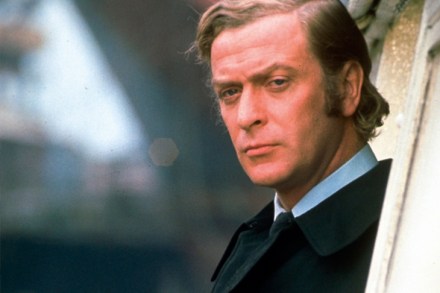
If you search Google Images for Ted Lewis, the results show an American jazz-age band-leader in a battered top hat, or the determined features of the world champion boxer Ted ‘Kid’ Lewis, the ‘Aldgate Sphinx’. In between falls a picture of the crime writer Ted Lewis perched on a stool at a cable-strewn film location in 1970, portable typewriter on his knees, cigarette on his lip, and a sardonically knowing look which says that after years of struggle, overnight success has finally arrived. The film was Get Carter, anote-perfect transcription of Lewis’s hardboiled masterpiece Jack’s Return Home, published in February that year.

The twice-promised land

If books about the Israeli-Arab conflict were building blocks, the Palestinians would have their own state already and then some. Most volumes bring little that is fresh or challenging, so selectivity is key. Daniel Gordis and Benny Morris are essential, Avi Shlaim and Tom Segev unavoidable. Take time on unsexy stylists like Mustafa Kabha or Anita Shapira; they will reward you. Anything by John Pilger or Ilan Pappé should be tossed aside like an iffy shawarma wrap, and for the same reason. Disconcertingly, Ian Black defies this framework. Enemies and Neighbours, his history of a century of blossoming and bloodshed in the Holy Land, is not revelatory and yet it is quietly compelling.

Catfight at court

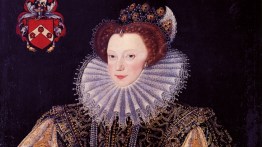
Apart from glorying in a memorable name, Lettice Knollys has chiefly been known for her connections — with her second husband, Robert Dudley, first Earl of Leicester; with the woman who was deeply in love with Dudley, Queen Elizabeth I; and with her hot-headed son who, as Earl of Essex, for a time enjoyed a flirtatious closeness to the older Queen. Until now, there has been no biography of the Countess of Leicester in her own right. Elizabeth, having been close to Lettice in her youth, was enraged and embittered by her marriage to Dudley, the one man in the Queen’s life who was ‘completely off limits’, according to Nicola Tallis.

It’s grim up north

Andrew Michael Hurley’s The Loney was one of the surprise stand-outs of last year, and a worthy winner of the Costa First Book Award. His new novel, Devil’s Day, is equally good, even though its similarities slightly muffle the surprises. Like his debut, it is a work of gooseflesh eeriness. The Loney artfully described the north-west coast of England; Devil’s Day as proficiently conjures the fells of an area hazily between Lancashire and Yorkshire. The Loney featured a damaged family on a religious retreat encountering old paganisms; Devil’s Day has our protagonist, John Pentecost, returning to the family farm for the funeral of his grand-father, the Gaffer, which coincides with a ritual for placating the devil before the flock is brought in for the winter.

On the wild side

The terroir of the Kentish coast is faultlessly represented in The Sportsman (Phaidon, £29.95), a book of recipes from an acclaimed pub restaurant in the village of Seasalter, close to Whitstable. On the bill of fare (it’s that English) you will find slip soles and thornback ray, salt marsh lamb and oysters, seaweeds of all sorts, wild berries, venison and much else from this landscape with its watery edge. The food is seasoned with home-panned sea salt and the kitchen churns its own butter. The Sportsman’s chef-proprietor,Stephen Harris, writes that terroir is a troublesome word that has come to mean too many things, especially with wine. The French have perhaps deliberately mystified it, he says.

Gathering moss

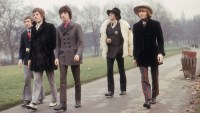
Many moons ago, I worked at the New Musical Express magazine, which transformed me from virgin schoolgirl to the fabulous creature I’ve been for the past four decades. It’s hard to describe how influential the NME was at its 1970s peak. I’ve met people who waited in exquisite teenage agonies for two-week-old copies to arrive in the Antipodes, while my colleagues were regularly flown to the USA and supplied with groupies and cocaine as if they themselves were rock stars. And then punk came along and rocked the gravy boat — and the internet finished the job. Last time I saw a copy, it was lying wanly in a bin marked FREE — PLEASE TAKE ONE.

A different kettle of fish

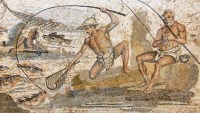
Fish. Slippery, mysterious creatures. They are mysterious because of where they live, in vast waters, and because they elude the historical record, too: fishing equipment is soft and decays (bamboo, hemp, lines made from kelp, cedar bark, women’s hair). Brian Fagan is an archaeologist, a profession that we associate with dust and soil and stone, but here he attempts to capture the history of fishing in ancient civilisation. It is not just fish that elude the historian: fisherfolk have always lived on the margins — of land and in recorded history (and still do). ‘To a scholar,’ writes Fagan, ‘the illiterate fishing people of the past are elusive, and their trade is a challenging puzzle of clues.

Problems of her own

If you don’t yet watch Gogglebox on Channel 4, start doing so now. Far from making you despise our couch-potato nation, it will make you feel great affection for it. Sprawled on L-shaped sofas with comfort cushions or slobbering dogs on their tummies, or sitting side by side on armchairs with a vase of carnations on a doily between them, the programme’s chosen telly-watchers make what must be the most unselfconscious, and therefore genuine, remarks spoken by anyone on air. There’s no doubt in my mind that Giles and Mary are the most watchable of all the watchers.

Angel and demon

Read cover to cover, a book of essays gives you the person behind it: their voice, the trend of their thinking, their tastes and the nature of their engagement with the world. So, here are two, one from each end of the human spectrum. Think of Milton’s Archangel Raphael, intellectually wide-ranging, lucid, informative and fair, and you have Francis Spufford. Think of his darkly glittering Satan — vivid, passionate, partisan and fatally persuasive — and you have Martin Amis. Read these books together and you have, in essay terms, a Miltonic whole. These are collections of what might be called ‘pre-loved’ pieces, not originally designed to cohere, so they have been washed and brushed for resale.

The art of deception | 9 November 2017

Enric Marco has had a remarkable life. A prominent Catalan union activist, a brave resistance fighter in the Spanish Civil War, a charismatic Nazi concentration camp survivor, and more. In January 2005 he addressed the Spanish parliament to mark the 70th anniversary of the liberation of Auschwitz. He is, everyone agrees, an extraordinary man. Heroic, almost. The thing is, his extraordinary, heroic biography is at least partly a lie. But which parts? In The Impostor, the novelist Javier Cercas seeks to disentangle Marco’s lies from those small provable truths supporting them.