Book review

Paris mismatch

There has been much debate recently about what exactly constitutes ‘literary’ fiction. If the term means beguiling, gorgeously crafted novels that are assured of their place alongside other writers, reacting to, and taking pleasure in discussing them; that are aware of the world’s events and their impact on humanity; that have delicately drawn characters; and that range with ease from intense emotions to moments of high drama; and that use careful, subtle imagery, then C. K. Stead’s The Necessary Angel is all this and more. His previous novel, Risk, touched upon banking and Iraq, but was never overwhelmed by them.

Soft dystopias

Science fiction, as any enthusiast will tell you, is not just about gazing into the future but also about illuminating the present. In a new collection of short stories by the veteran sf author M. John Harrison, lurid visions of aliens and spaceships play second fiddle to melancholic snapshots of plodding suburbia. Many of the tales in You Should Come With Me Now (Comma Press, £9.99) are set in leafy south-west London, amid the banality of modest affluence: from Putney to Chiswick, Twickenham and St Margarets, and along ‘the endless heartbreaking sweep of the A3 to the sea’. In ‘Cicisbeo’, a husband ensconces himself in his loft, and will only communicate with his wife via notes. ‘You found people like Tim all over London,’ the narrator explains.

The bread of life

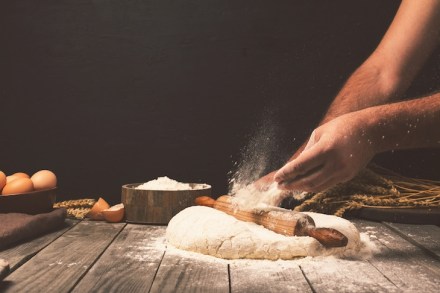
Sourdough has all the ingredients of a truly despicable work of fiction. Novels about food are awful, aren’t they? Especially novels about baking; they’re the absolute worst. Sourdough is not only a kooky satire inspired by that bread they sell for £6.50 down the farmers’ market – it’s set in San Francisco, the smuggest city in the world, with a cast of Tesla-driving techies and Kimchi fetishists and anthropomorphic yeast. Oh, and the book’s author, Robin Sloan, is a former Twitter employee. But just as it would be churlish to deny that, mmm, £6.50 bread is kind of tasty, so it’s hard to deny that Sloan has an inventive way with a story.

Death at close quarters

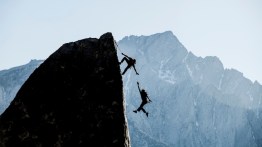
Alex Jackson is buried alive inside his own body, a body which lies in a long-term coma following a climbing accident. He can’t see, he can’t move, he can’t speak. This is the terrifying fate of the protagonist of Emily Koch’s debut novel If I Die Before I Wake (Harvill Secker, £12.99). The doctors believe that Alex has no awareness of his surroundings, but he can still think and feel, and he can hear people speaking. His family debate withdrawing life support, and his friends talk about his girlfriend Bea moving on, finding someone new. And from these fragments of speech he starts to piece together a shocking truth: that his fall wasn’t in fact an accident.

Wonder of Wenders

What know they of movies who only movies know? Wim Wenders’s latest collection of essays arrives at a time when the best-known film critic in England is unashamed to claim that tendentious tosh The Exorcist as the best picture ever made. Even though the slightest piece in The Pixels of Paul Cézanne is its title essay, it is good to know that there is still at least one film buff around who is alive to the first six arts. As a young man in Dusseldorf, Wenders fancied himself a painter — so much so that, before the movies lured him away, he was planning to further his studies in Paris.

Raiders of the lost lands

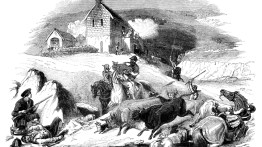
Graham Robb, apart from being a distinguished historian, biographer and literary critic, is one of our most accomplished travel writers. His The Discovery of France remains a classic, made both engaging and accessible by his very francophile obsession with cycling. Indeed, his new book, The Debatable Land, opens with a declaration that ‘writing and cycling are inseparable pursuits’. The debatable land in question is the thin wedge of territory between England and Scotland on the west coast which, for a period in the late Middle Ages, was officially declared as lawless by the parliaments of each country.

The Saki of sex

How I love short stories! Long before the internet realised that we can’t sit still long enough to commit to the three-volume novels of yore, these little beauties were hitting the sweet spot repeatedly. I especially love female short story writers — Shena Mackay, Lorrie Moore, Grace Paley — as they often read quite gossipy and friendly-like, as opposed to men who have to go out and shoot something to make some depressing point, or at least try to prove they’re the strong and silent type. Strong and silent writers should be true to themselves and simply shut up.

Three concepts of freedom

There’s a tiny mistake in Zadie Smith’s new collection of essays. She describes Geoff Dyer’s unimprovably funny ‘trick while introducing an unsmiling J.M. Coetzee at a literary festival’. And it’s a suggestive mistake. The moment she refers to is Dyer, bashful, blurting that he wondered how his younger self would have reacted if he’d one day known he’d be sharing the stage with ‘a Booker prize-winning, South African, Nobel prize-winning novelist’… and then deciding that his younger self would have said: ‘That’s incredible, because Nadine Gordimer is my favourite writer.’ The joke is all the funnier because the camera pans to Coetzee, utterly stony of face as Geoff giggles.

Now it can be told

Deployed in vastly exaggerated numbers, nuclear weapons were maintained in place not just by secrecy, but by banalities and lies. The atomic bomb has been, from the very beginning, both extraordinarily public and secret. Everyone knew about what was regarded as a momentous development in human history. It kept many clichés in circulation for decades — humanity as scientific giants and ethical infants; the desire for international control; the idea of moral scientists who did, or should, reject the sweet blandishments of the bomb. At the same time, insiders knew and did things which were the deepest and most troubling secrets of the deep state. For those few in the know, and assiduous critics, there was a huge mismatch between rhetoric and reality.

Time to lighten up

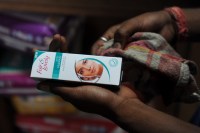
In parts of Africa and the West Indies women are so anxious to ‘whiten up’ that they use skin-lightening creams. The British writer and broadcaster Afua Hirsch sees this as a regrettable consequence of the aristocracy of skin colour as instituted by British merchant-capitalists during slavery. (Skin must first be bleached before it can be considered beautiful.) Of mixed Jewish-African parentage, the 36-year-old Hirsch is proud to call herself black. In this much-hyped book she sets out to question lingering obeisance to the idea of colonial Britain and to that ghost of the British Empire, the Commonwealth. Why does it persist so? Affection for Britain remains surprisingly strong in Commonwealth countries.

Wise old birds

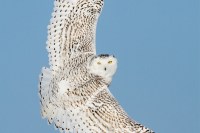
Owls, frontally eyed and nose beaked, look the most human of birds. Accordingly, they have for millennia been prominent in mythology and literature and their image continues to be commercialised beyond compare. They offer an author rich pickings, but in a competitive market a strong personal subtext is helpful. That improbable bestseller H is for Hawk told of a bird consoling and inspiring a daughter grieving for her father.Owl Sense has a mother finding a healing source in owls for herself and her worryingly ill son Benji. His Non-Epileptic Seizure Disorder (NEAD) took a disconcerting time to diagnose and is frighteningly unpredictable. Just how frightening is illustrated by his collapse on a bus as a 6ft, 16st student.

Women on the warpath

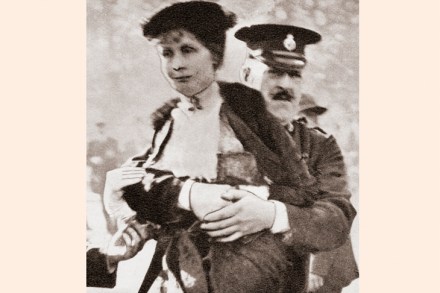
When Westminster Council granted planning permission for a statue of Millicent Fawcett in Parliament Square to mark this year’s centenary of women getting the vote, many people were puzzled. Few had heard of this feminist campaigner, and even fewer knew about the suffragist movement which she led. The suffragette Emmeline Pankhurst seemed a far more appropriate candidate for a statue. Not only was she famous, but some feminist historians claimed that her role in gaining the vote was more important. These two books stand on different sides of the debate. Diane Atkinson has written a collective biography celebrating Mrs Pankhurst and the suffragettes, while Jane Robinson makes the case for Millicent Fawcett and the suffragists. The two leaders were very different.

Return of the infamous five

It has become fashionable since the fall of the Soviet Union to diagnose communist fellow travelling as a form of Freudian neurosis. Where class resentment exists it is said to emanate less from angry young proletarians than from well-spoken youths intent on garrotting their dividend-drawing fathers. Most contemporary accounts of the Cambridge spy ring, which passed top secret information to the Soviet Union during the Cold War, draw heavily on this cliché. Kim Philby, Donald Maclean, Guy Burgess, Anthony Blunt and John Cairncross are typically portrayed not only as highly privileged men who rebelled against their upbringings, but as an upper-class clique who got away with what they did because they were sheltered under the protective wing of the establishment.

Blind into battle

Early every morning through the spring of 2002, US troops at Bagram airfield on the Shomali plains north of Kabul assembled on a makeshift parade ground. After the daily briefing, an officer announced the number of days since 9/11, read a short obituary of a victim of the attack and reminded the troops of their mission: to capture or kill those responsible for the worst terrorist strike ever in the US. Only a year previously, Bagram had been captured by the Taliban, who then exercised nominal control over 80 per cent of Afghanistan. Reduced to bombed-out buildings and a potholed, unusable airstrip, it was of limited strategic importance. Within weeks of the US-led invasion the runway was in constant use. Helicopters rotored throughout the night.

Reeling and spinning

It was approximately 4.50 a.m. in Ibiza: peak time on the dance floor. I was on the decks in one of the many sumptuous rooms of the superclub Pacha, spinning breakbeat on vinyl (early Noughties) and warming up for a live broadcast back to the UK. Without warning, a Pacha henchman burst into the DJ booth, grabbed the record I was playing and pulled it off the deck. Then he yanked the headphones off my head. ‘Hey, what are you doing?’ was my astonished response. ‘We are going live on radio in ten minutes!’ This did not cut any ice. Pandemonium ensued. There was a fight on the dance floor between differing factions of the club’s management. I was bustled ‘for my own safety’, live mic in hand, to the basement kitchens for the rest of the night.

Coffee and Kalashnikovs

‘This guy’s crazy,’ says a taxi driver, listening to a BBC interview with a man who has decided to become the first exporter of coffee from Mokha, Yemen, in 80 years. The man being interviewed, we have learned, has risked his life quite a few times over, in the most hair-raising ways imaginable it would seem, to achieve his dream of putting Yemeni coffee back on the map. We meet this taxi driver towards the end of the book, and although he does not know that the man being interviewed is actually sitting in the back of his cab, by this stage we have come to think that, yes, the man concerned, one Mokhtar Alkhanshali, is crazy. Coffee was discovered — or, to be more accurate, the beverage invented — in Yemen.

The way to dusty death | 1 February 2018

In the words of Dad’s Army’s Private Frazer: ‘We’re all doomed.’ Life remains a dangerous business whose outcome is always fatal. Despite all kinds of medical progress, the death rate is stubbornly fixed at 100 per cent, while the ways in which we die remain unchanged. At the same time, in a magnificent demonstration of cognitive dissonance, abetted by medical science, the human animal continues to cherish the fantasies of immortality that enable us, in Churchill’s stoic formula, to ‘keep buggering on’. This thrilling tension between the forces of life and death has always inspired two basic attitudes to mortality. First, a realistic, even forensic, fascination with the sensations and protocols of that last exit.

No stone left unturned | 1 February 2018

Alan Bennett once defined a classic as ‘a book everyone is assumed to have read and forgets if they have or not’. The Victorian nature writer Richard Jefferies 1848–1887 is in the peculiarly unfortunate position of having produced a whole library that falls pretty much into this category. His novels such as Bevis (1882) or the apocalyptic After London (1885) have cult status for some who, almost 70 years ago, had cohered into an active Richard Jefferies’ Society.