Book review

High wire act

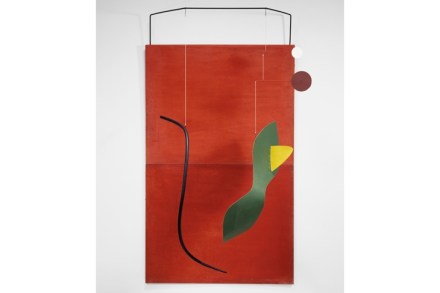
‘Mid-century modern’ is the useful term popularised by Cara Greenberg’s 1984 book of that title. The United States, the civilisation that turned PR and branding into art forms, wanted homegrown creative heroes. In design there were Charles Eames and George Nelson with their homey hopsack suits and wash’n’wear shirts, their sensible Wasp homilies: a counterattack against imported — and often baffling — exotics from the Bauhaus. It was the same in fine art. Jackson Pollock (Jack the Dripper) was a roughneck from cowboy country in Wyoming who became a darling of the media, not least because of his readily reportable deplorable behaviour.
The future isn’t rosy

Emotional geography is now a recognised academic subject. Is emotional botany heading the same way? This is a year for thoughtful books about plants and the way they affect lives, what they make people feel and how we can respect nature. Many of the year’s works might appeal to non-gardeners. Readers hoping for rose-tinted pages may be disappointed. Allan Jenkins’s Plot 29 (4th Estate, £14.99) is ostensibly a diary of his allotment over a little more than a year. But, he writes: ‘Sometimes, when I think of this book, I am almost bewildered. It has taken such a turn. It was to be about gardening... with personal stuff added in.’ The editor of the Observer food magazine, Jenkins grows exotic vegetables and describes them lusciously.

A blunt instrument of war

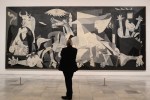
It takes a bold author to open his book about ‘Guernica’ with a quotation from the Spanish artist Antonio Saura lamenting ‘the number of bad books that have been written and will be written’ about it. Fortunately, James Attlee’s study of Picasso’s superstar work of art is not a bad book and he builds on a solid cultural and historic understanding of the painting to collate 80 years of evolving reaction to it. Attlee begins in May 1937, when, at the height of the Spanish Civil War, the Spanish Republic commissioned Picasso to create a painting for its pavilion at the World’s Fair in Paris. They hoped the famous artist would help secure sympathy, funds and, significantly, political intervention in the Republican cause.

Blowing hot and cold | 9 November 2017

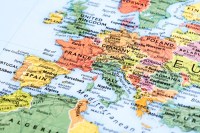
I spent part of the summer sailing around Ithaca and the Ionian Sea. It was a good reminder of how capricious Homeric weather can be. In the space of a few days the wind shifted dramatically to three different points of the compass — and none of them was the gentle westerly Zephyr that brought Odysseus and his men back to almost spitting distance of their homeland. Almost, because just as they approached, the crew became suspicious of the goatskin bag in which Aeolus had helpfully packed away the other hostile winds and let them all loose. Nick Hunt tries to track down a few of Europe’s more errant and potent winds. He starts with the homegrown Helm, which blusters across the Pennines.

The revolution devours its children

He stood five feet seven in his boots — the same height as Napoleon and an inch shorter than Hitler. He had webbed toes, a grey face pitted by smallpox, a stunted arm, soft voice, yellowish eyes and an awkward rolling walk. He swore like a trooper, smoked a pipe, drank the sweet wines of his native Georgia, and was an avid reader of history, novels and Marxist-Leninist theory, marking the pages of the 20,000 books in his library with expletives scrawled with the same coloured crayons with which he signed mass death warrants and international treaties: ‘Rubbish!’, ‘Piss off!’, ‘Fool!’, ‘Scumbag!’, ‘Ha-Ha!

A sensual Greek goddess

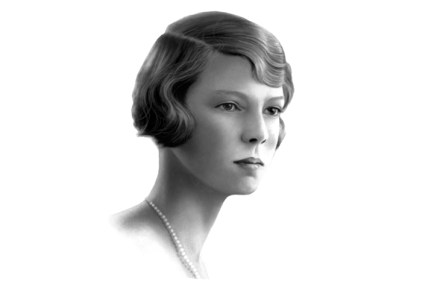
Joan Leigh Fermor died in 2003, aged 91, after falling in her bathroom in the house on a rocky headland of the Peloponnese which she had financed by selling her jewellery. Afterwards, whenever Joan’s husband and companion of nearly six decades reclined in her place on the sofa to read, eight of her 73 cats would gather round him in a recumbent group — but after a few minutes slope off. Paddy (who died in 2011) wrote: ‘They had realised they were being fobbed off with a fake.

More secrets and symbols

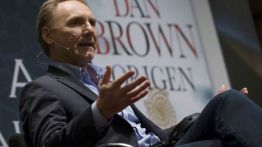
Being reflexively snotty about Dan Brown’s writing is like slagging off Donald Trump’s spelling: it just entrenches everyone’s position. In a world where a quarter of people read literally no books in any given year, can we give each other a break on this kind of thing? If you found Angels and Demons good fun, thoroughly enjoyed The Da Vinci Code (as I unironically did), but despised Inferno for the worthless piece of rat doodah that it was, then the good news is that Brown is back on form here. Origin is brisk, fun and filled with adorably pointless Wikipedia paragraphs; and what’s at stake is endearingly grandiose. Here, the premise is atheism vs religion.

The martyrdom of Proust

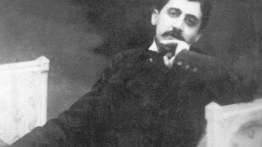
Why would a writer like Marcel Proust, who quivered and wheezed at the slightest sensation, decide to live surrounded by neighbours in one of the busiest parts of Paris? In 1906, at the age of 35, shortly after the death of his mother, he moved to a first-floor apartment at 102 Boulevard Haussmann. ‘I couldn’t bear to live in a place that maman never knew,’ he explained. For this ghostly comfort, he paid a heavy price. Petrol fumes and tree pollen — to which he was almost fatally allergic — drifted up from the boulevard.

Songs of the blood and the sword

Jihadi Culture might sound like a joke title for a book, like ‘Great Belgians’ or ‘Canadian excitements’. But in this well-edited and serious volume Thomas Hegghammer — one of the world’s foremost experts on jihadism — has put together a collection of essays by an impressive group of scholars analysing what culture Islamism’s most adamant adherents might be said to possess. The book is not a long one. Designed for a primarily academic audience, Hegghammer’s introduction carries all of the baggage that such audiences demand. It is not writing so much as a set of pleas and signs sent out to academia’s own hostage-takers, who lurk in universities and colleges reading mainly for the hope of discovering a rival’s error.

Animals make us human

There was a time when biologists so scorned the attribution of human qualities to other animals that anthropomorphism was seen as the ultimate scientific sin and suitable only for children’s stories. Not anymore. Today the inner lives of other creatures are widely accepted as a major research frontier, and here are three books that reflect these preoccupations. One of them even defines it as an entirely new discipline: anthrozoology. Peter Wohlleben may be no scientist, but he is a professional German forester and the author of the enormously successful The Hidden Life of Trees. In this new book he sets out to overturn the stock assumption that other creatures are mere automata driven by instinct, drawing particularly on studies that use MRI digital imaging of the human brain.

The spirits of the age

Children started knocking on my door last month wearing Donald Trump face masks and asking for money. Indeed, one enterprising group turned up as Trump, Kim Jong-un, a Disney Princess, and — I’ll admit that this had to be explained to me — a zombie Taylor Swift. Truly a quartet of contemporary horrors. Halloween, it is safe to say, is not what it once was: in my day, a gentle bit of apple bobbing, turnip carving and maybe a white sheet with holes for eyes at a fancy-dress disco was about the full extent of it. Ghosts and ghouls, it seems, change their appearance depending on time and place.

Racism is a grey area

This book is an exercise in crying wolf that utterly fails to prove its main thesis: that Europe is abandoning its core liberal values under threat from a resurgent populist right. It is a largely fact-free polemic that passes itself off as an open-minded work of interview reportage. Yet if you can ignore the author’s sly interventions on behalf of his left-liberal premises, he does introduce the reader to a fascinating cast of characters, mainly from the European populist right.

A dense, angry fable

Set partly in a future surveillance society, partly in ancient Carthage and 1970s Ethiopia, partly in contemporary Greece and London and partly in the synaptic passageways of the human brain, this huge sci-fi detective novel of ideas is so eccentric, so audaciously plotted and so completely labyrinthine and bizarre that I had to put it aside more than once to emit Keanu-like ‘Whoahs’ of appreciation. Science fiction in general is having an interesting moment right now, as writers and filmmakers respond to the loopily futuristic contemporaneities of robotics and AI research, but Nick Harkaway goes further than most in this vast and baroque novel.

How to be good

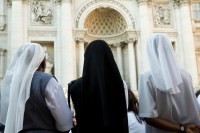
Suffering, wrote Auden, takes place ‘while someone else is eating or opening a window or just walking dully along’. His poem ‘Musée des Beaux Arts’ emphasises the mundanity of pain (‘even the dreadful martyrdom must run its course/ Anyhow in a corner, some untidy spot’) and how irrelevant it is to all but the sufferer: ‘Everything turns away quite leisurely from the disaster.’ Alice McDermott’s eighth novel, The Ninth Hour, is peopled by women who refuse to turn away from the disasters of others. The ‘untidy spot’ is Brooklyn, sometime in the first half of the 20th century, and the unsung heroines with no time for leisure are the Little Nursing Sisters of the Sick Poor.

A Muslim’s insights into Christianity

I’m not a critic, I’m an enthusiast. And when you are an enthusiast you need to try your best to keep it in check when writing reviews, just in case your prodigious levels of excitement and, well, enthusiasm, threaten to overwhelm readers and only succeed in putting them off. Because people generally need a bit of room — to create some distance, establish a tiny bit of breathing space — in order to make their own considered decisions about the liable goodness or badness of a thing. But shucks to all of that.

Romance and rejection

‘Outsider’ ought to be an important word. To attach it to someone, particularly a writer, is to suggest that their helpless circumstances have condemned them to struggle and neglect. It is up to us — posterity — to look beyond the writers who had social advantages in the year 1880, say, and find those who wrote best. One group that has been rewardingly elevated in recent years has been women. Although Lyndall Gordon has not tried to unearth anyone very out of the way, she has written about five writers who showed unusual courage and boldness, often behaving unconventionally.

Snatching victory from the jaws of defeat

Lord Woolton put it best: ‘Few people have succeeded in obtaining such a public demand for their promotion as the result of the failure of an enterprise.’ By that, the Tory grandee meant that in the spring of 1940 Winston Churchill managed to use Britain’s grotesque military cock-up in Norway, for which he was responsible, to supplant Neville Chamberlain. Churchill sidelined Chamberlain’s most likely successor, the foreign secretary Lord Halifax. He overcame Tory backbench distrust. He even got Labour on side, though its leaders had long considered him the class enemy incarnate.

Unearthly powers

This delightfully good-humoured novel is the sort of genre scramble that doesn’t often work: there’s a bit of 1990s family saga, a bit of mobster crime thriller, a bit of Cold War goat-staring spy story and really quite a lot of psychic/psycho-kinetic fantasy. And yet Daryl Gregory, who won several impressive prizes a few years ago for his fabulous horror novella We Are All Completely Fine, pulls the whole thing off with the unflustered charm of a stage magician. The setting is Chicago in the summer of 1995, where the Telemachus family, formerly a bunch of stage psychics and entertainers (‘Teddy Telemachus and His Amazing Family!’) have fallen on hard times.