Book review

Three daemons in a boat

Philip Pullman’s new k, the prequel to his Northern Lights series — the one north Oxford academics very much prefer to Harry Potter — is an intriguing work. It’s notionally set some time near our own, but the world it evokes is the 1950s and 1960s England of the author’s youth. The hero, Malcolm Polstead, is the only child of an innkeeper — that timeless calling — and the inn was an old stone-built rambling comfortable sort of place. There was a terrace above the river, where peacocks (one called Norman and the other Barry) stalked among the drinkers...


A choice of first novels | 19 October 2017

Black Rock White City (Melville House, £16.99) is ostensibly about a spate of sinister graffiti in a Melbourne hospital. ‘The Trojan Flea’ is scrawled across X-ray screens; ‘I am so full of your death I can now only breathe your rot’ on a stairwell; and, on a dead body, ‘cut into the flesh with a scalpel, from throat to navel, is the word INSPIRATION’. A.S. Patric grabs his reader’s attention with the riddle of ‘Dr Graffito’s’ identity, while a more subtle mystery unfurls alongside. Jovan, the hospital cleaner — whose job it is to remove the offensive graffiti — has come to Melbourne from Sarajevo, where he was a teacher and ‘used to wake in the mornings with poetry emerging in rhapsodies’.

Hunt the lady’s slipper

Who would want to read a whole book about a teenage boy’s gap year? When most 18-year-olds take time off before university, they either head for Thailand to experience middle-class Western culture in warmer climes with more drugs, or spend six months shelf-stacking and six months ‘finding themselves’ at a Ugandan orphanage. A tedious evening in the pub during freshers’ week when all the gap year students bore one another into submission about how much better Mexico made them is normally enough. Leif Bersweden thought so much of his year off, though, that he wrote 360 pages about it.

Something scary in the attic

How do you like your ghosts? Supernatural fiction is arguably the hardest to get right. Ideally it should terrify, but what appals A might bore B and merely confuse C. The mechanics of apparition, however fanciful, must be internally consistent, and explanations kept simple. M.R. James excelled at giving his spectres agency and focus, but in some hands ambiguity is more effective. Read a Robert Aickman and half the time you have no idea what happened, if indeed anything did. I was once put off by a description in a novel of a ghost drifting round a house at night and contemplating its sleeping inhabitants. While that might give you the willies, for me that violates an essential requirement for manifestation: that it involve interplay between deceased and living consciousness.

A poet in prose

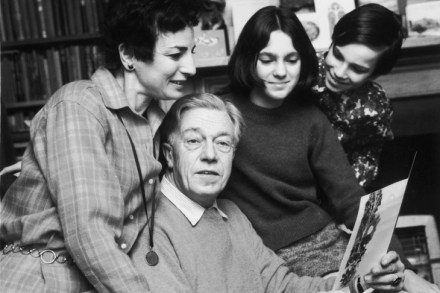
Literary reputation can be a fickle old business. Those garlanded during their lifetimes are often quickly forgotten once dead. Yet there is a daily procession of visitors to Keats’s grave in the English cemetery in Rome, where the headstone reads, ‘Here Lies One Whose Name Was Writ in Water’, so sure was the poet that the neglect he had suffered up to his death would continue ever after. By any standards, C. Day-Lewis — he disliked Cecil, the name given to him by his Church of Ireland vicar father — was among the most glittering figures on the 20th-century British literary scene, celebrated, well-connected, a bestseller and Poet Laureate for the four years up to his death in 1972.

The keys to Chinese

The history of industry is the story of the reduction of complexity to easily manageable, replicable components or actions. But what if some things appear to remain irreducible, complex and laborious? The Chinese writing system is one such case. For early information technologists, it presented what appeared like insoluble problems. Unlike an alphabet of 26 (English) or even 84 (Siamese) letters, the huge number of Chinese ideographic characters could not easily be reduced to a typeable common corpus. (Three 20th-century compilations totalled between nearly 50,000 and over 80,000 separate characters).

Wandering Jews

Simon Schama is an international treasure. Whether on screen or in print, he is all energy, enthusiasm, dramatic gestures, emotional intensity. He clutches his readers in a tiger-like grip, then chews them up with relish until they are almost helpless with mirth or emotional exhaustion. If the first volume of his trilogy on the history of the Jews had something of the quality of Cecil B. DeMille’s The Ten Commandments, this second, carrying the saga forward from 1492 to 1900, is no less of a Technicolor blockbuster. Here too we have a cast of zillions with all kinds of special effects. Composed of a dazzling succession of tableaux with linking intermezzi, this book resembles a medieval pageant.

Our islands’ story

Britain has 6,000 islands. Not as many as Sweden’s 30,000 but quite enough to be going on with. Only 132 of ours are populated, on a scale that slides from the 85,000 people on the Isle of Man to tiny St Kilda, with its summertime population of just 15. Patrick Barkham is a skilled compiler of lists. His charming and successful first book, The Butterfly Isles, chronicled the sighting of every one of Britain’s 59 butterflies within a single summer. It is high up on my own list of ‘I wish I’d thought of that’ ideas.

Who is Sylvia – what is she?

In May 1956, three months after meeting Ted Hughes, one before they will marry, Sylvia Plath writes to her mother Aurelia about the talented man she has fallen in love with: ‘He will start some portraits of me! A combination of both witch and ghost, perhaps.’ Because of Hughes’s editing and writing of her work, a combination of witch and ghost is precisely how we know her, and he strongly encouraged the idea that the version of Plath he offered was the ‘real one’, a core of personality born in an inevitably fatal struggle narrated through the Ariel poems. Ariel, in his view, was her only true work.

Band of bickering brothers

There aren’t many downsides to being a film critic, but one of them is being asked to name your favourite movie. You bluster and bluff, and then cop out by saying the answer changes from year to year and sometimes from day to day. Then you read David Thomson’s new book and realise that from now on you’re going to say that while you’ll probably never have a definitive favourite film, you do have a favourite film factory. Any movie that starts with kettledrums and a blare of brass, and a black and white escutcheon (in later years, gold and blue) emblazoned with the initials WB is likely to be a cut above: intelligent, liberal and seriously amusing.

Lost in the metropolis

Richard Rogers is to architecture what Jamie Oliver is to cookery. It is not enough for either of them just to be very good at what they do and to bank the proceeds: they want so much more. They want to use their skills and money to improve society more broadly. They are old-school campaigning idealists (and Oliver trained in the kitchen at the River Café, run by Rogers’s equally committed wife, Ruthie). The downside of being a do-gooder in the UK, of course, is that people can find you irritating.

The worst things happen at sea

This horrifying and engrossing book could scarcely be improved upon. In this age of HRHs Harry, William and Kate-led openness about our mental health, I declare an interest: diagnosed as cyclothymic, and having known more than two attacks of depression and hypomania in the past 30 years, I would have been disqualified from passage as an emigrant to New York by the 1907 US Immigration Act, which prohibited ‘All idiots, imbeciles, feeble-minded persons, epileptics, insane persons and persons who have been insane within five years previous....

Octopus beaks and snake soup

Driving across Japan’s Shikuko island, the food and travel writer Michael Booth pulls into a filling station to find, alongside the fizzy drinks and chewing gum, ‘vacuum-packed octopus beaks’. Who could resist? Not Booth. ‘Very crunchy,’ he reports. ‘And not in a good way.’ Booth is drawn to the offbeat, and The Meaning of Rice gives us a banquet of the unfamiliar: seaweed caviar, live squid sashimi, sea-urchin tongues, snake soup, bonito guts, silkworm pupae, and more, with all their smells, flavours and textures. I recall my disconcerting first meal in a traditional ryokan: pink wafers of raw horsemeat, boiled firefly squid and dark, gleaming eel. It was delicious; Booth would have approved.

August Auguste

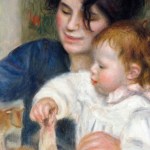
In 1959 the formidable interviewer John Freeman took the Face to Face crew to the 81-year-old Augustus John’s studio. The beetling brow, piercing eye and a succession of roll-ups stuck to his lower lip offer almost a caricature of the undimmed rascality of the old devil. Like all the films in that remarkable series, it offers a glimpse into a world that we thought television was invented too late to record. But how much more extraordinary it is to watch, in a three-minute film made in 1915, another elderly artist — the 74-year-old Pierre-Auguste Renoir, crippled with arthritis, working at his easel.

That’s no lady

Did I enjoy this novel? Yes! Nevertheless, it dismayed me. How could John Banville, whom I’ve admired so much ever since he published his first short stories, whose great novel The Sea deservedly won the Booker and whose thrillers, written under the pseudonym Benjamin Black, so hauntingly evoke 1950s Dublin, have wasted however long it took to write it? The answer, perhaps, was given some years ago, in an interview with a journalist, when he confessed: ‘The guiding light has always been Henry James.’ Probably all serious novelists in our language revere James beyond idolatry. He calls us to raise the craft of fiction to the level of art. And the trouble is that anyone with an ear soaked in the Jamesian music falls into the danger of parody.

The last great adventure

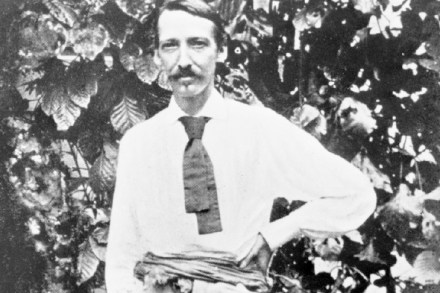
Towards the end of his life, Robert Louis Stevenson travelled widely in the central and southern Pacific Ocean. As well as the region’s exotic reputation, he was drawn by hopes that its benign climate would alleviate his chronic bronchial problems. In 1889 he arrived in Samoa and decided to settle there. He was a hit with the locals. Unlike so many of his peers, he declined to dismiss them as savages. Certainly, he was scathing about their disregard for property rights, which he labelled communism, and he found some of the women’s dancing obscene. But Joseph Farrell tells us that Stevenson was relaxed about extensive tattoos and scanty attire, and that he was a willing participant in kava drinking (kava is a narcotic plant extract, recently banned in the UK).

The art of the arabesque

The title of this book, By the Pen and What They Write, is a quotation from the Qur’an and comes from the opening of the ‘Surah al-Qalam’ (Chapter of the Pen), in which the authority of the cosmic scribes in heaven, whose writing determines the fate of humanity, is invoked in order to authenticate the revelation that follows. According to Islamic tradition, the Prophet Muhammad was illiterate (and so presumably were most of his audience). So it is odd to find writing featuring so prominently in this surah and throughout the Qur’an.

A clash of loyalties

If someone was to lob the name Antigone about, many of us would smile and nod while trying to remember if this is the one about the guy who shagged his mum or the parent who offed their kids. (Bit of both.) For those whose Sophocles is hazy, let me summarise. After a civil war in Thebes that sees two brothers, Eteocles and Polyneices, dead, the new king Creon rules that Eteocles is to be buried with honour, while Polyneices will be left outside the city gates to rot. Their sisters, Ismene and Antigone, have different views. Ismene — concerned that their social position is a bit shaky, given a family history of incest and rebellion — obeys Creon.

A grand inquisitor

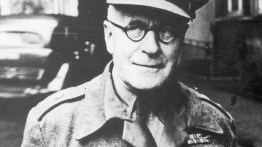
Hidden behind Kensington Palace, in one of London’s smartest streets, there is a grand old house which played a leading role in Britain’s victory over Nazi Germany. Today it’s owned by Roman Abramovich, apparently — it seems he paid £90 million for it. But during the second world war, and for a few years thereafter, 8 Kensington Palace Gardens was a secret interrogation centre known as the London Cage. This is where suspected spies (and, later, suspected war criminals) were broken down. Between 1940 and 1948, thousands of German servicemen passed through here, on their way to POW camps (if they were deemed innocent) or prison (if they were guilty).