Notes on...

The long ordeal of Mackintosh’s Glasgow School of Art

I was working on the final edit of my book — a fictionalised account of the year Charles Rennie Mackintosh spent in Suffolk — when news came in that his most famous architectural creation, The Glasgow School of Art, was on fire. My heart lurched. This was an unimaginable tragedy, not just for Glasgow, but for Britain. Students were weeping in the street. I struggled not to cry myself. Poor old Mac (as the Suffolk locals called him). He’d had enough bad luck already. Charles Rennie Mackintosh was a student at the Glasgow School of Art in 1895 when a competition to design a new art school was announced.

On the Yeats trail in Galway

The Go Galway bus from Dublin sounds an unlikely pleasure, but it is both comfortable and punctual. There is free Wi-Fi if you want it, but it would be criminal to do anything other than gawp at the view. Two and a half hours pass quickly when you are travelling at sunset, passing between rain clouds with rainbows falling out of the sky. While my trip was, as they say, for ‘the craic’ (a good friend’s 40th), I couldn’t come to Galway without making time for a W.B. Yeats pilgrimage. His patron Lady Augusta Gregory had her home near Gort, in the south of the county: Galway is saturated in his poetry; or perhaps I mean his poetry is saturated in Galway. But in the county today, there is both chaotic reverence and wilful disregard.

The sheer joy of hunting

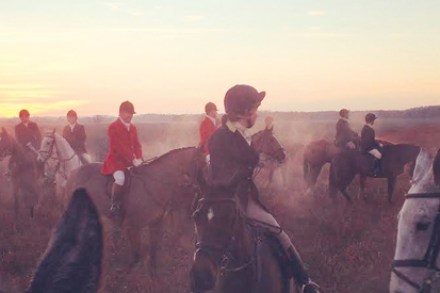
This time three years ago, I hadn’t jumped a single thing for almost ten years. This season, I am happily jumping hedges that my horse and I can’t even see over the top of. Crazy? Most likely. But when the adrenaline is pumping, and an inviting-looking hedge is looming directly in front of you — well, what’s a girl to do? The sheer joy of hunting comes from far more than just dressing up in a smart coat and shiny boots and drinking port. It’s the simple pleasure of being out in the field, watching the hounds do what they do best, and enjoying the pure beauty of the sport.

A museum of dirty postcards and Britain’s coolest bulldog: visit the strange side of the Isle of Wight

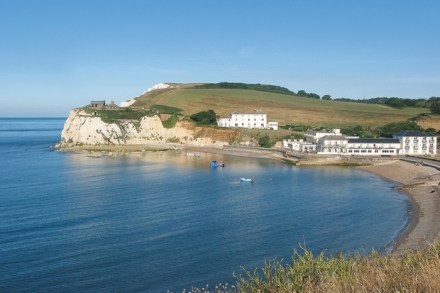
Every day the Isle of Wight becomes England’s smallest county: when-ever the tide comes in, the island steals the crown from Rutland, if only for a few hours. Taking the Wightlink ferry reminds you that the isle gave us the hovercraft, Christopher Cockerell’s early experiments there involving a hairdryer and some empty cat-food tins. Less successful as a seafarer was Lord Lucan, who once sank a powerboat off the Needles. It never surfaced, leading some to believe that when the time came to disappear he returned to the area and drowned himself. Current exports include most of the signage for the London Underground (A.J. Wells and Sons, vitreous enamellers of Newport), and all manner of garlic from the Garlic Farm in Newchurch (fresh, black, smoked, elephant).

If you want a real safari, head to Botswana

As a boy camping with my father on safaris deep in the African bush, there were no tents involved; we just slept by the fire like cowboys in the open under the constellations. Supper was sweet tea and biltong and we used a tin bucket for a shower. When it rained we simply moved underneath our parked Land Rover. One morning we woke to find tracks circling us, where a big lion had come close enough to blow on our toes as we slept. That old Africa rubbed off on me and I still like safaris to be the real thing — under canvas, by the campfire, gin, tall tales, fresh air, and carpet-creeping between tents. Safari is an art and it’s for real people, not celebrities climbing Kilimanjaro.

The Northern Lights

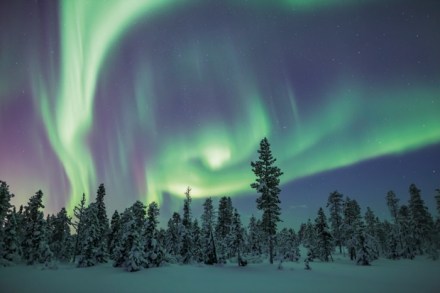
Getting here took a long time. First a flight to Seattle, then a connection to Fairbanks, followed by a coach to Coldfoot Camp and a final stage by minibus. It’s long after midnight and I’m shivering outside a snow-covered lodge in Wiseman, Alaska (population: 14), two hours north of the Arctic Circle, wrenching my tripod so the camera points straight upwards and trying like a fool to capture what essentially cannot be captured. I’m looking at the Northern Lights. The aurora borealis, the result of electrically charged particles causing havoc in the upper atmosphere, is the reason I’m here in America’s biggest state.

The birth of a barrel of cider

The fabulous October weather is now just a memory but it made for a golden, old-fashioned apple day down in Somerset. The plan was to pick and convert a mound of sugar-rich Redstreaks — about 400 kilos — into a rather special vintage. We would pour the apple juice into an oak hogshead, freshly emptied of its whisky, to make a cider tinged with a 20-year-old malt. How good does that sound? The idea of the get-together was the idea of designer Bill Amberg and publisher Damian Jaques, who is a cider boffin. Various friends and their families convened by an old barn with a nearby orchard. We tipped piles of apples on to a mat. The children rinsed the fruit in buckets and chucked them into a tall macerating contraption.

A cure for Christmas stress in Sweden

We’ve all been there, I’m sure. You work your pan off to get everything done in time. You count down the days until you can break out of the madhouse of pre-Christmas London. Then you’re brought down by the dreaded lurgy. I was all for cancelling our travel plans and spending Christmas under the duvet. But the Swedish Engineer was having none of it: she’d been promised Christmas in her homeland and it was a promise I was going to keep, even if I had to be med-evaced there. I don’t really remember arriving in Stockholm. Too much Lemsip, Jameson’s and nasal spray can cloud the memory. But our fellow passengers, all pictures of Swedish health when we boarded at Heathrow, were now engaged in a mass cough-and-splutter at the carousel.

A miracle: French hotels actually like dogs

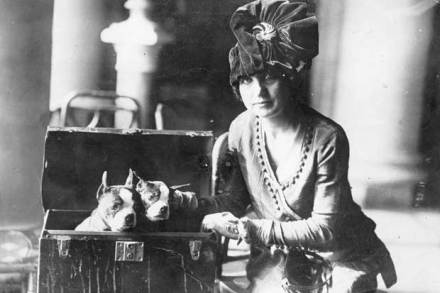
The first time I checked in to a French hotel with a golden retriever — his name was Gregory, predecessor of the incumbent Douglas — I left him, clearly unhappy, in the bedroom when I went to dinner. Then I realised that every other party already in the dining room included a dog, in some cases a lapdog enjoying morsels direct from its mistress’s plate. So I fetched Gregory, shoved him under the tablecloth and told him to keep quiet. But each time a tasty dish went past, his big hairy head emerged and sniffed the air. Eventually the maitre d’hotel approached. ‘You’re in trouble now,’ I whispered (to Gregory). ‘Ah, quel beau chien,’ said the maitre d’. ‘Would he like to order anything?

Malta’s military marvels

Fate occasionally leads travellers to places they had never planned to visit. Into this category, for me, fell Malta. I went to Valletta to see my sister, who was at a nursing conference. I wasn’t expecting a wild party; the island has a reputation for being fairly dry compared with its Mediterranean sisters. Yet for a certain type of traveller, with sturdy shoes and an interest in military history, Malta is a matchless trove. I plotted my campaign around the island’s key martial landmarks carefully. Time spent on reconnaissance is seldom wasted. My sister, inexplicably, made her excuses. Valletta is still dominated by reminders of the Knights Hospitaller, the crusading order that relocated there after being booted out of the Holy Land by the Ottoman Turks.

The Schumacher effect: ski helmets and the grim power of celebrity

For a melancholy example of the power of celebrity, head to the Alps. Since Michael Schumacher’s accident last December in Méribel, the use of ski helmets has soared in the mountains. My skiing instructor in Verbier, in the Swiss Alps, said the Schumacher effect was particularly acute among the young and the old — it’s seasoned skiers in their forties and fifties, battling the neurotic caution of middle age, who still keep their heads bare. Even half of the devil-may-care, schussing ski instructors now wear helmets. A philosopher would have a field day with the illogical aspects of the Schumacher effect. Schumacher was wearing a helmet and yet still suffered catastrophic head injuries.

Why Gibraltar needs its hunt back

The British overseas territory of Gibraltar, or, as some would have it, the wart on the bottom of the Iberian peninsula, is not an exciting place for a holiday. You don’t go for the food (mostly English pub grub and pizzas), or the nightlife (there isn’t any) or the beaches (overcrowded, with sand imported from the Sahara). But there are a few interesting legacies of three centuries of British occupation of what was known in Greek mythology as one of the Pillars of Hercules.

Why I’ll never want to escape Portmeirion

My husband and I stay for a week most summers in Portmeirion, the strangest and loveliest ‘village’ in the world. Built amid 20 miles of woodland on the peninsula of Tremadog Bay in Wales, it was called ‘a home for fallen buildings’ by its creator Clough Williams-Ellis, a local landowner. It was opened in 1926, and George Bernard Shaw, H.G. Wells and Bertrand Russell were early visitors; Noël Coward wrote Blithe Spirit here in 1941. I won’t try to describe it; if you’ve never seen it, just google it and prepare to be astonished. But oy, the drive! In the past we’ve motored from Brighton through Birmingham, a trip of more than eight hours.

Chasing the shadows of slavery in Barbados

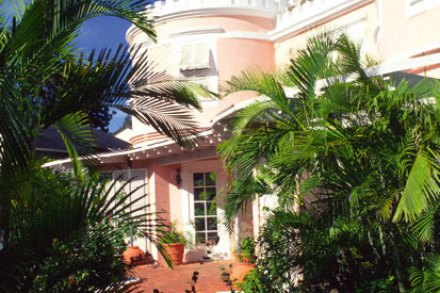
Driving up the west coast, from Bridge-town to Speightstown, you soon see why people around here call this the Platinum Coast. It’s not just the colour of the coral sand — it’s the colour of the foreign money. These seafront lots sell for millions, prices few Bajans can afford. Yet once you head inland you encounter another country, a land of chattel houses and plantation houses — remnants of the twin trades that shaped this island, slaves and sugar. Built on borrowed land, the first chattel houses were purely practical: basic wooden bungalows, easy to dismantle and put up elsewhere. Palatial plantation houses aped their British antecedents — Georgian and Jacobean mansions, impractically relocated.

Napoleon’s birthplace feels more Italian than French

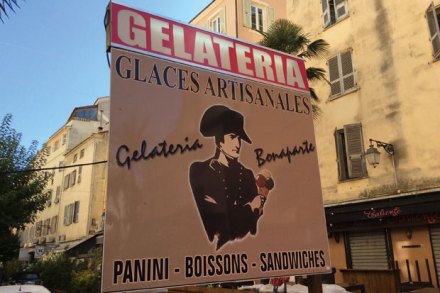
Napoleon’s birthplace, Casa Buona-parte, in Ajaccio, Corsica’s capital, is pretty grand. It has high ceilings, generous, silk-lined rooms and a gallery that could double as a mini-ballroom. The house fits Napoleon’s upper-middle-class roots, as the son of a lawyer and Corsica’s representative to the court of Louis XVI. But the odd thing is, the home town of the world’s most famous Frenchman doesn’t feel very French. Corsica is only 14 miles from Sardinia — and 110 miles from the Côte d’Azur. It only became independent from Genoa in the late 18th century and the place names are still a mixture of Italian and the Corsican dialect.

The lost horses of London

The days when horses and humans lived cheek by jowl in the capital are unarguably over. Brewers’ drays have disappeared, and most people would argue that the black cab does a far better job than the hansom cab ever did. But the ghosts of horses past still inhabit the city. Statues of kings atop their chargers take pride of place in squares and parks, water troughs are scattered about the place, and the more recent Animals in War memorial on Park Lane is a reminder that our dependence on them lasted until less than a century ago. Not all of the reminders are visual, either.

Artists’ houses

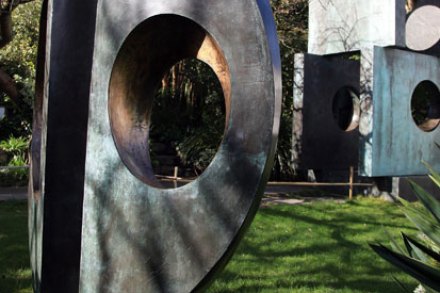
I’m not sure what took me to Salvador Dalí’s house in Port Lligat, but it sure as hell wasn’t admiration. As a public figure, I hold him alone responsible for the look-at-me culture that gives contemporary art a bad name. And as a painter… don’t get me started. Sceptics slag off conceptual art as a load of navel-gazing nonsense, made by people with no interest in anything other than themselves. But to be fair to Dalí, he did at least have something to say. That is: ‘I’m mad, me!’ No, if I’m honest the only reason I’d slogged up the hill from the nearest town was nosiness. Artists’ houses that have been preserved as museums are always a thrill. They appeal to the busybody in me, but have the same high culture pull as a major art gallery.

Drunkenness, theft, fighting and smuggling: the indiscreet charm of Deal

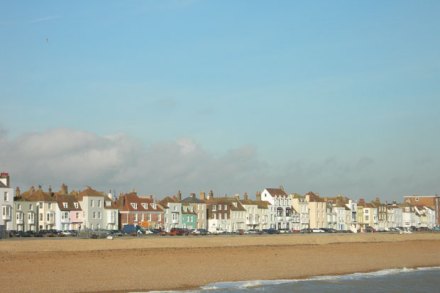
However the sand got into Sandwich, it did Deal a big favour. As the Cinque Port’s harbour silted up from about 1500, the merchant ships out in the downs, protected by those hidden shallows from the Channel’s full fury, began to offload their cargo into small boats called hoys that came out from Deal. A new town was the result, expanding until about 1860, by which time bigger ships had forced trade away and the Royal Navy depot was closed. Although there was a flurry in the 1920s, when they started to mine coal at Betteshanger, nothing much has happened since, with the result that what is left is as if pickled.

The perfectionist builder I always wanted

I have a friend who is perhaps best described by that old-fashioned phrase ‘ladies’ man’. He’s not a cad or a bounder — quite the opposite, in fact. He’d never leave a lady in the lurch, or lie to her, he simply enjoys the company of women — quite a lot of women — and they seem to enjoy him too. He knows all the hottest spots in town, and somehow all the barmen and doormen too. More important, he’s a listener, and as any girl will tell you, a man who listens is a rare and miraculous thing. But of all the cards up his sleeve, there’s one that trumps the rest: he’s friends with Artur, one of the best head builder/decorators in London, and for any home-owning thirtysomething woman, that’s catnip.

Sicily – notes from a large island

Don’t make the mistake of thinking that Sicily is anything like the Isle of Wight: it’s 70 times the size, and mountainous. Despite some beautifully engineered roads, it always takes longer to get around than one expects. Even my Sicilian friend has to stop to ask the way. Autostrade are closed, bridges under repair. It doesn’t help that every other motorist drives as though he’s your enemy. Which, unless he comes from your village, he probably is. Beautiful, fertile, sunny, with fabulous wine and cuisine — no island is so blessed by nature. Even the terrible communications, which meant that neighbouring communities couldn’t reach each other, have bestowed a legacy in the form of teeming variety. Each town has its traditions.