Notes on...

The quest for the perfect malt

It was poker night. Five yuppies crammed round a table in a room at the back of a south London semi. Tumblers and water were on the table. Conventions had developed. The host cooked the food (or so he said) and the four guests each brought a bottle of whisky. The guests rotated between four ‘stations’. One had to supply a standard blended scotch. Another had to provide a whisky from outside the United Kingdom. Another had to find an affordable malt (no more than £40). The last had to produce an ‘interesting’ malt. Ordinarily, this would be from a boutique producer; but if the nominee had had a good quarterly review then a special bottle would be brought. The blend was opened first and drunk last.

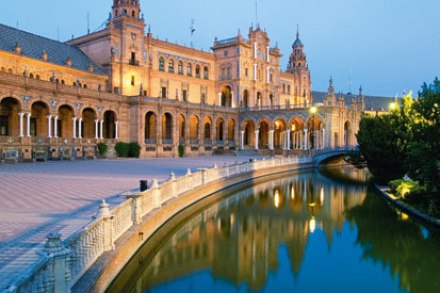
Seville: a city to get lost in

On our second night in Seville we got lost. We’d been to a flamenco concert, my first, a little way out from the centre. Eight musicians sat in a horseshoe on a plain stage. Deep plaintive wails of the campo pierced a surface of jangling guitars. Men in the crowd murmured ‘Olé’ to applaud moments of virtuosity. ‘Let’s go for a walk,’ I said as we walked out of the theatre. I was emboldened by the soulful music and wanted to see more of the town. In hindsight I was also emboldened by the Spanish-portioned bucket of ‘gintonic’ I had drunk at English-tourist speed during the interval. Soon we were walking down a long, straight, very dark road.

Nira Alpina, St Moritz: A cool Alpine hotel that’s perfect for the under-tens

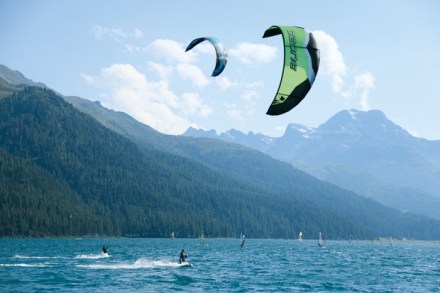
It’s a terrible moment, the realisation that you’ve spawned a monster. Parenthood, it becomes clear, has wiped stylish holidays off the agenda for a good few years. Somewhere like St Moritz, for instance, won’t thank you for polluting its elegant slopes with Bratbot 5.1. Then you stumble across Nira Alpina, and your desperation disappears. The hotel, its website claims, puts ‘fun before formality’. My partner and I took great delight in tiring out our young son (and ourselves) with the various activities on offer. The ‘high ropes’ course involved walking, wobbling and zip-wiring our way through the Alpine treetops, learning en route that vertigo hits the over-forties far worse than the under-tens.

On safari in Gloucestershire

The heat was still sweltering as we headed off at dusk towards the hide to watch wildlife with our enthusiastic guide, Leonie. My wife and I were on our first ever safari — or rather ‘stayfari’. No, we weren’t in deepest Africa, but in deepest Gloucestershire. And we weren’t on the look out for lions and elephants, but beavers. We were staying at Lower Mill Estate, near Cirencester. Consisting of 550 acres of beautiful lakes, fields and woodlands, it’s been described as the most important private nature reserve in Europe. In Lower Mill, the houses fit around the wildlife, and not the other way round: all of them have bird boxes and bat-friendly roofs.

An amateur’s guide to the glories of Gleneagles

Pity the folk at Gleneagles. They have the misfortune to host the Ryder Cup this year. Nothing, surely, can surpass the drama of the previous contest between the United States and Europe, held at Medinah Country Club near Chicago in 2012. The Yanks dominated for two days before Ian Poulter, an Englishman who plays golf with an intensity that borders on divine possession, marched on to the 18th green late on the second evening. He had the bit between his teeth, having made four straight birdies to keep himself in his game. All square; the US 10–5 up in the match overall. With darkness gathering and the boozy American support raining scorn on him, Poulter sunk a tricky 12-foot putt for birdie to win. He roared in defiance — eyes wide, knees bent and fists pumping.

The loveliness of Lucerne

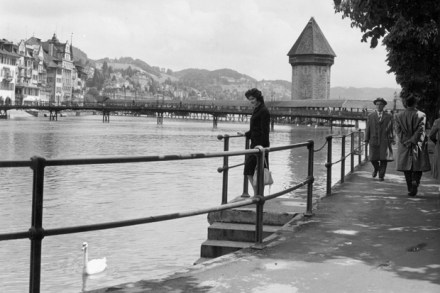
When Queen Victoria came here for her summer holidays, Lucerne was already a bustling tourist destination. Today it’s just as popular. It’s easy to see why. When you emerge from the busy train station (Lucerne is far too civilised to have an airport), Switzerland’s loveliest lake lies before you, framed by a ring of mountains. The forecourt doubles as a quay. If you like looking at the Alps but can’t be bothered to trek up them, Lucerne will suit you perfectly. You can sit in a quayside café and gaze at them all day. Lucerne’s biggest draw is its summer music festival (15 August to 14 September this year) which brings together Europe’s greatest orchestras.

The glorious bohemia of Prague

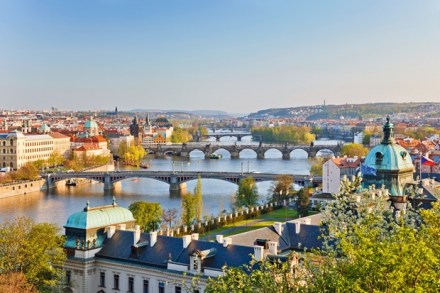
Prague, ‘Golden Prague’, is rich in music, architecture, glassware, pilsner and natural beauty. It is one of those places where laughter — innocent laughter, not laughter in the dark — seems a natural response. It is a playful city, and the people are playful, gentle, ironic. Above all, it is a writer’s city. The Czechs, be they Bohemians or Moravians, have literature in their blood. Tomas Masaryk, the first president of Czechoslovakia, was a philosopher. Vaclav Havel, first president of the Czech Republic, was a playwright. And the most famous Czech of all, Franz Kafka, whose name has entered the language, was a novelist; a Prague novelist. ‘The spirit of Prague’, Ivan Klima has called it.

Damp, green and beguiling – the joys of Killarney

Here’s a question for a Guinness-sponsored pub quiz: who or what is a ‘jarvie’? The answer is the gypsy driver of a ‘jaunting car’ — or pony and trap — you can hire to drive you up the Gap of Dunloe between the Purple Mountain and Macgillicuddy’s Reeks just west of Killarney in south-west Ireland. If that sounds a bit touristy, it certainly is; but the Gap, with its ruined cottages, Wishing Bridge, placid lakes and mountain goats glowering from dark parapets, is also an authentic glimpse of the wild place that was pre-modern Ireland before the struggle, boom and bust of the past hundred years.

Hundreds of years of history in a £2 plate

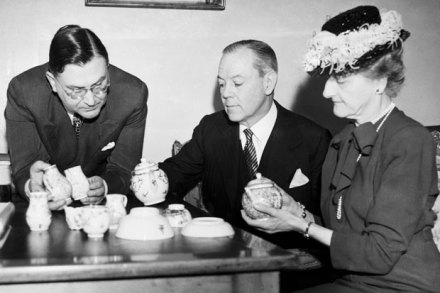
Next time you’re in a shop that sells Chinese blue and white porcelain, pick up a piece and turn it over. Chances are good it will carry an inscription in blue on the bottom. Called a reign mark, it tells you which emperor ruled when the piece was made. As the last reign ended in 1912, the dish you’ve picked up should logically be at least a century old. Hundred-year-old porcelain selling for £2? Not likely, but hold that thought. When you buy a Chinese dish today, you are doing what collectors have done since porcelain started arriving in London in Elizabethan times. Shakespeare mentions this marvel in Measure for Measure, when Elbow’s pregnant wife asks Mistress Overdone for stewed prunes.

The immigration museum that travelled 4,000 miles

The Immigrant Church at Sletta emigrated from North Dakota 18 years ago. Built on the prairie by Norwegian settlers in the 1900s, but latterly abandoned, it was deconstructed, transported and rebuilt on the island of Radøy, off Norway’s west coast. Now it presides over the West Norway Emigration Centre, a monument to the Norwegian diaspora, where it has since been joined by a jailhouse and four other buildings also salvaged from the American Midwest. This jumbled prairie scene surprises the unwitting visitor, accustomed to the red-or-white uniformity of the wooden houses of Radøy, each one equipped with a magnificent woodpile and a flagpole bearing a tricolor pennant.

From prisons to offices to police stations – London’s turning everything into hotels

The test of a truly great city is reinvention. Does it have the courage to change? London holds a PhD in meta-morphosis — just look at the buildings it converts into hotels. Hazlitt’s in Soho is named after William, whose house it once was. Round the corner, the Courthouse occupies what used to be Great Marlborough Street Magistrates’ Court, where Michael Caine was ordered to pay palimony, Oscar Wilde foolishly sued for libel and I was done for busking. (I keep meaning to go back and have dinner on the exact same spot.) Bow Street Magistrates’ Court is also being converted — four of the hotel’s bedrooms will occupy the old cells.

Salzburg – more than just a ridiculously pretty place

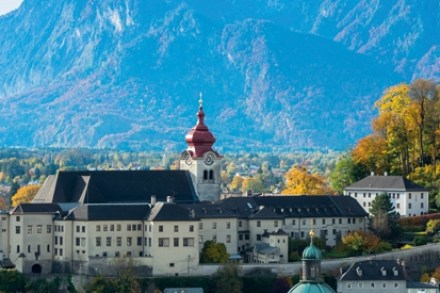
Salzburg is so ridiculously pretty, it’s sometimes hard to take it seriously. Standing on the ramparts of its knights-in-armour castle, surrounded by snowcapped mountains, admiring the delicate cluster of domes and spires and turrets below, you can’t help thinking, ‘Is this for real?’ Well, yes and no. Salzburg is absurdly beautiful — the baroque architecture, the Alpine scenery — but what’s most intriguing is its sense of theatre, the way it’s adapted to fit the fantasies of millions of foreign visitors like me. Salzburg’s biggest draw is Mozart — a wunderkind who personifies the city’s clever blend of fact and fiction.

The wonders of Wexford

I might have had chance to visit the famed Wexford Opera Festival when I was walking out with Bernard Levin — who was mad about the annual October event — but he never took me along, on account of calling me a ‘vile fidget’ during opera performances. Still, Wexford is a grand place to visit at any time, often having been, for me, a handy overnight stay after reaching Ireland at nearby Rosslare. Yet a more beautiful way, I think, to get to Wexford is by train from Dublin, which takes just over two hours. You travel down the lovely east coast of Ireland, with the sea on one side and the mountains and lush greenery on the other for much of the journey.

The only place I feel comfortable in my bathrobe

I know James Bond is partial to strutting around not-quite-enveloped in a dressing gown, but whether your robe is monogrammed silk or cotton towelling, I’m guessing that unlike the famous spy, it’s not something you’d want to be spotted in. Me neither. With one exception. When I’m at a spa. To be happy enough to be seen by strangers wandering around in a bathrobe, I have to be very comfortable in my surroundings. So I have to confess that, during my recent stay at Lime Wood, it was a struggle to change into something a little more refined come dinner. When I first visited this New Forest spa hotel, the Herb House spa was a hard-hat zone.

Goodwood Festival of Speed

You smelt them, it was said of the Mongol hordes, before you heard them, and by the time you heard them it was too late. At the Goodwood Festival of Speed it’s the other way round: you hear the intoxicating yowl of high-revving engines before you’re close enough to smell the heady mixture of high-octane, burnt oil and hot rubber.  But by then it’s too late — next year you’ll be back for more. Goodwood is motoring’s Glyndebourne, glamorous, smart and bucolic with the South Downs as backdrop and its origins in aristocratic hedonism. On Revival days you wear period costumes to go with your car, assuming you can find a hat to match a 1934 Hispano-Suiza and have worked out how to exit elegantly from a 1929 Blower Bentley.

The rise of the art fair – and the death of the small gallery

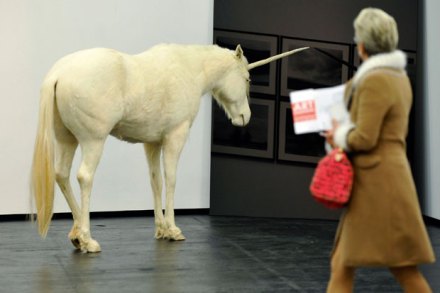
In 1967, two Cologne-based gallerists came up with the Cologne Art Market — a trade fair where German galleries could set up temporary gallery-style spaces for a few days to showcase their stock. The following year, three dealers in Basel copied the idea but opened up their event to international galleries. For years these two art fairs were discrete yearly shows which were in the background to far more visible gallery exhibitions, museum shows and biennials. Today there are hundreds of art fairs, with an explosion of these in the last few years. Last December 18 different art fairs took place in the same week in Miami alone. There are nine art fairs in New York this week. Next week there are art fairs in Hong Kong, San Francisco and Athens.

The Himalayas

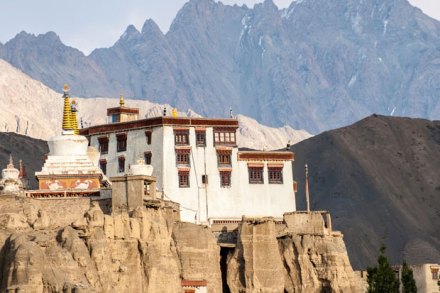
As the aircraft descends into the high altitude military airport at Leh, the first glimpse of the Himalayan Kingdom of Ladakh is nothing short of awe-inspiring. Situated on an 11,500ft high desert plateau, and sometimes known as ‘Little Tibet’, Ladakh has remained immune from the Chinese and Kashmiri territorial conflict. It maintains one of the most intact Tantric Buddhist societies left on earth. A journey through this stunning kingdom should be on every serious traveller’s list and it is now possible to stay in a series of fully staffed private houses dotted across the Indus valley.

My mother’s passport to the Antibes good life

My mother always said she wanted to ‘die tidy’. But I never imagined she would file everything away quite so neatly as she did. One drawer in her desk was given over to travel. It included a little Hermès box containing a leather docket given to her by Hotel-Du-Cap-Eden-Roc in Cap d’Antibes after she and my father spent their honeymoon there in 1950. It was a passport to the hotel, allowing them to go as day guests whenever they wanted for the rest of their lives. Which is pretty much what they did. They would spend two weeks every year in a B&B in St Jean Cap Ferrat and enjoy at least one day at Eden Roc (built in 1870 by the founder of Le Figaro newspaper), lounging by the pool with Cannes shimmering in the distance.

Notes on… Eastern Germany

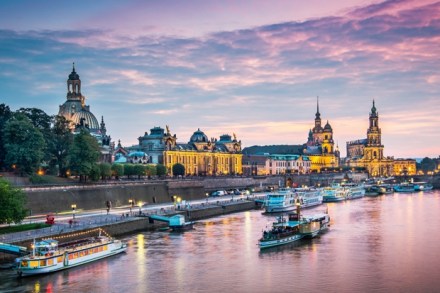
Ever since the Berlin Wall came down, I’ve been pottering around eastern Germany, where my father’s family came from, and fled from at the end of the second world war. I thought my interest would fade as my father’s fatherland was absorbed by the Bundesrepublik — but for me, this strange hinterland grows more intriguing with each passing year. Take the historic heartland of Hitler’s Reich, subject it to 45 years of communism and then 25 years of capitalism. What do you end up with? A mad mishmash of past and present, the last century laid bare. Naturally, the former GDR isn’t uniformly pretty (indeed, large swaths of it are spectacularly ugly) but for anyone interested in history, it’s a fascinating place.

Where it’s all kicking off in Athens nightlife

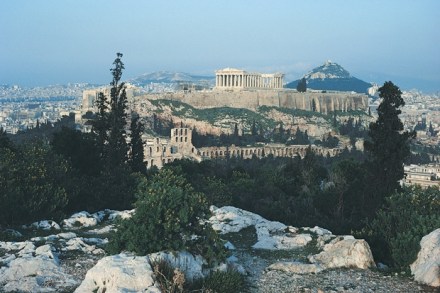
[audioplayer src="http://traffic.libsyn.com/spectator/TheViewFrom22_16_April_2014_v4.mp3" title="Paul Mason on why Athens is the place to go" startat=1192] Listen [/audioplayer]Where in the developed world can you ride a moped, minus helmet, at 2 a.m. under the noses of weary riot cops, when your night out has only just begun? Athens of course. Greece is in its sixth year of recession and crisis but this is still one of Europe’s great cities for culture, food, drink and entertainment. First stop: Bouzoukia. Forget all your troubles as you spend the small hours listening to live Greek pop music of a kind that makes The X Factor look underproduced. Despite the austerity, young Greeks say they will never sacrifice their nightlife and here is the proof.