Notes on...

Christmas markets

Why the fuss about German Christmas markets? Surely they’re just schmaltzy shanty towns, full of stuff you’d never dream of buying at any other time? This tends to be my point of view until Advent… when I yearn to be back in Germany. Its motor industry may be mired in scandal, its football team may have lost to Ireland (Ireland!) but at least Christmas is one thing my cousins still do best. So where and when to go, and what to buy? Well, most markets run from the end of November until Christmas Eve. They’re great for handmade decorations and festive food and drink, but for Germans a weihnachtsmarkt isn’t just about shopping. It’s a place to meet up for a mug of glühwein and a bite to eat.

The Lake District

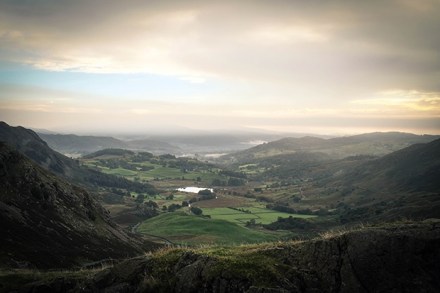
Cumberland and Westmorland Wrestling is the best thing in the Lake District. I lived near Wigton, just north of the fells, for two years and escaping the shadow of the clingfilm factory to witness generations of champions, all called Brocklebank, do writhy battle on the Cumbrian turf was a delight. Fools might think that the embroidered pants worn by competitors over their white suits indicate a camp, silly sport, but they are wrong. It is a noble art and its practitioners are heroes; legends of the Lakes. The terminology is as thrilling as the bouts: swinging hype, hank, cross buttock, inside click. (The latter is a particularly devilish move.

Anglesey: la dolce vita in north Wales

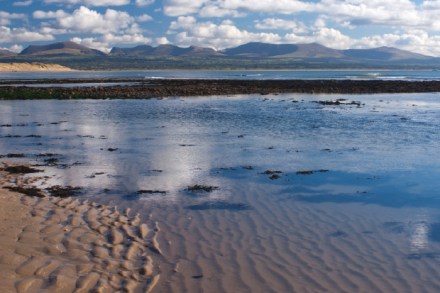
We teased our friends by saying that our holiday would be on a far-away island. The Maldives, perhaps? No, Anglesey, off the northwestern tip of Wales. Mentally far-away, that is: but by train, it is only three and a half hours to Bangor, where we hired a car. Two mighty 19th-century bridges span the Menai Straits, with the fearsome currents known as the Swellies (regarded by Nelson as one of the greatest of all tests of seamanship). Cross them and the world seems to go into reverse. Time slows. You find yourself playing Scrabble. I never actually went to Anglesey when I was growing up but, once there, I slip into a world of idealised childhood — except that today groceries are delivered by Waitrose.

Adventures on the isle that seduced Odysseus

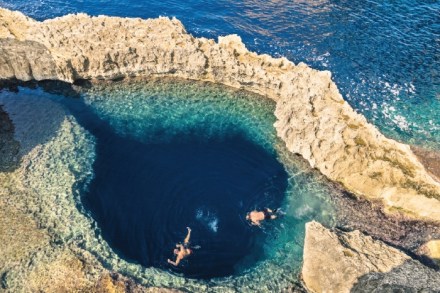
Gozo — Malta’s tiny island neighbour — was once rather a crucial spot in the Mediterranean. The Knights of Malta built a wall across Gozo’s Ramla Bay to stop Napoleon invading. The clever little Corsican attacked via the undefended gully next door instead. Homer’s island of Ogygia — ‘the navel of the sea’ in the Odyssey — is thought to be Gozo. It was in a love-cave above Ramla Bay that Odysseus caroused with the honey--voiced sea-nymph Calypso. Stranded on the beach, clinging to a plank from his shattered boat, he took refuge in her arms- — for seven years. He wasn’t that desperate to get home to his darling wife, Penelope, on Ithaca. I tracked down the love-cave — there was no seductive nymph to greet me.

Look beyond ‘Girl with a Pearl Earring’ in The Hague

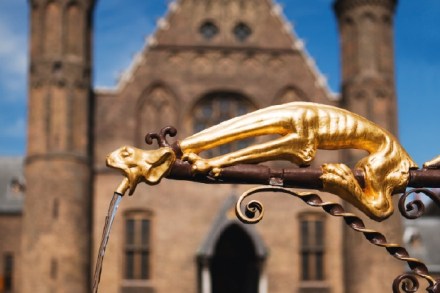
What a fate it is to be hung next to the most famous painting in a gallery. To be overlooked, a framing device, just out of shot of every selfie taken in front of ‘The Ambassadors’ or ‘Mona Lisa’. The painting immediately to the left of Johannes Vermeer’s ‘Girl with a Pearl Earring’ in the Mauritshuis is Gerard ter Borch’s ‘Combing for Lice’. The weary mother in this close interior has none of the pouty lusciousness of Vermeer’s pin-up, but no Madonna ever cradled her bambino with as much maternal tenderness as this Dutch huisvrouw inspects her son’s blond head.

Cruising

By the end of my ten-day Atlantic crossing to New York, a new wellbeing seemed to radiate from me. Lulled by the motion and murmurings of the rocking sea, I slept like a baby. I was never bored. Queen Mary 2, the Cunard Line’s flagship, has everything from a ballroom, planetarium and library to an art-deco Titanic-style dining hall. Passengers do not want for anything: there’s even a mortuary. The last time I shipped out to New York from Southampton was in 1961, when I was a baby. We stayed in New York for more than a year while my father worked for a Wall Street investment bank.

Autumn

Each year when I see the first conker of the autumn I think: fire up the ancestral ovens! This incendiary thought comes from the Ronald Searle cartoon in Nigel Molesworth’s How to be Topp of a sooty retainer sliding a tray of the young master’s conkers into a brick oven. School cads, Molesworth tells us, ‘are inclined to cheat at conkers having baked them for 300 years in the ancestral ovens. These conkers belong to the National Trust they are so tough and if you strike one your new conker fly into 100000000000 bits.’ What do prep school boys do with their conkers today? Bake them in the ancestral Aga? Autumn: season of mists and mellow pumpkin soups.

La Baule

The reaction of the chap on the door at Le Bidule told me that they weren’t used to seeing English stag parties in La Baule. His eyes narrowed and a scowl spread across his face. Marching up to our sober stag, dressed for the evening in typical Gallic attire, he finger-wagged aggressively at the beret, fake moustache and string of garlic. ‘Ça, ça et ça — non,’ came straight from the de Gaulle school of diplomacy. The response to my timid ‘Pourquoi?’ left us in little doubt: if we wanted our aperitif, the outfit had to go. No, La Baule is not your typical stag destination. The 12km-long beach on Brittany’s southern coast was a place of un-realised holiday potential until the late 19th century.

The perfect pub

Whenever one of those news stories appears about how many pubs have been forced to close in the last year, I always think of George Orwell. He would have had the correct reaction: lots of pubs are forced to close because they’re terrible. Yes, the pub is a wonderful British institution, with a long and noble history — but that doesn’t mean that any individual pub has a God-given right to stay open forever. If a landlord waters down his beer and scowls at his customers, as plenty of them do, they’ve only got themselves to blame when the bailiffs come knocking. We know Orwell had strong opinions on the subject because he wrote an article about it, setting out the qualities of the perfect pub, a sadly mythical place he called the Moon Under Water.

Dublin

What a delight it is to toy with a wooden newspaper-holder rather than a smartphone, tucked away in the cosy corner by the tall sunlit windows of a Victorian hotel. My companion sips her Baileys coffee, while I hide behind my broadsheet earwigging as a novelist is interviewed — possibly for the newspaper I’m reading. Dublin is still sponsored by Guinness and after I’ve drunk a second pint in the charming Library Bar of the Central Hotel, we head across to the great bookshop Hodges Figgis. En route, we pass Davy Byrnes, where you can still get a gorgonzola sandwich and glass of wine as Leopold Bloom did in 1904. Hodges Figgis is set on the charming Dawson Street, which links St Stephen’s Green to Trinity College.

The lessons of exam results season

Every year without fail, as the trees start thinking about losing their leaves, the papers are full of the same photographs and the same stories. The pictures are of groups of teenagers grinning triumphantly — hugging one another or throwing their exam results in the air in joy. What we have just experienced is exam results week; or, to be precise, results fortnight: first A-levels and then, one week later, GCSEs. GCSEs lead to A-levels, A-levels to university (and yet more exams) — and then at the end of it all? Well, that’s the next obstacle. But for parents, as well as children, the endless tests can be incredibly confusing. A colleague recently told me about her son, who is due to start school in September.

Antigua

‘Tourism, tourism and tourism,’ said my Antiguan cab driver, when I asked what the country’s main industries were. Still, it’s easy to avoid the other tourists, even though the island’s just over 100 square miles. Take a quad-bike tour — arranged by my hotel, the Sandals Grande Antigua Resort — and you can go from one end of the island to another in a morning, without seeing another tourist. Instead, you’ll see fields of sweet potatoes, dotted with sprawling tamarisk trees; jagged cliffs and pale-yellow beaches, fringed with luminous, aquamarine water. You’ll also come across remnants of old sugar plantations; in the early colonial years, slavery was Antigua’s biggest moneymaker.

Hamburg

‘What was it like growing up in Liverpool?’ a journalist asked John Lennon. ‘I didn’t grow up in Liverpool,’ he replied. ‘I grew up in Hamburg.’ My father grew up in Hamburg too, at the end of the second world war. The city had been bombed to smithereens. Cigarettes were the only currency, and my grandma had to trade her jewellery for food. When she met a British soldier who offered to take her to England, she grabbed this lifeline with both hands. If only she were alive to see her smart home town today. When the Beatles came here in 1960, they stayed in St Pauli, the dockside red-light zone. When I first came here in 1990, St Pauli was still sleazy. Now it’s the height of chic.

Oporto

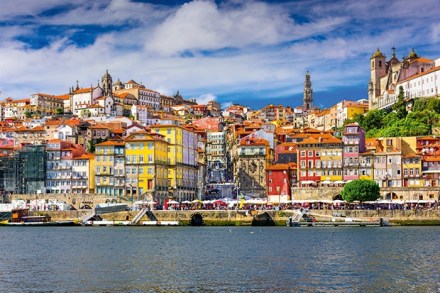
‘When he’s away, the thing he misses about Porto is the tripe.’ I was talking to Eduarda Sandeman, wife of George Sandeman, chairman of the eponymous port firm. Despite his illustrious name, George Sandeman isn’t from Oporto (as the British call it). His family are from Jerez and he was educated in England. He speaks English and Spanish fluently but he told me that he is still teased by his wife for his imperfect Portuguese. It’s a hard language to pronounce — a bit like Spanish spoken by a Russian. George’s love of tripe, though, marks him out as a true son of Oporto. The inhabitants of the city are known as Tripeiros — tripe eaters. This name dates back to 1415, when the Portuguese army were trying to take Ceuta in Morocco.

Glasgow

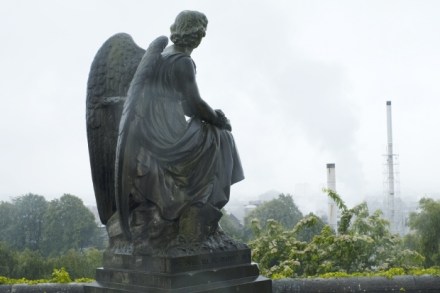
A wet walk in a Glaswegian graveyard might not be your idea of fun, but then you might not have spent the past two hours in the Glasgow Science Centre. Endure that, and see the sodden Necropolis stroll swell in allure. The Science Centre is one of the emblems of the new Glasgow. Rising from the old docklands on the south side of the Clyde, beside the BBC at Pacific Quay, it is one of the shouty new buildings leading the regeneration of the old shipbuilding areas. These buildings and their outlying friends still look like awkward blow-ins here, isolated blobs of glitter studding the wasteland. There’s not yet much sense of any connection with Govan Road, 200 yards to the west, but people are certainly coming here from somewhere for something, and in their multitudes.

Florence

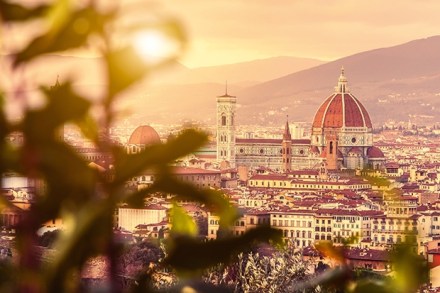
The British have always been in love with Florence. First visits cannot disappoint. One friend recalls being herded around as a schoolgirl, unexpectedly coming face to face with the replica of Michelangelo’s David in the Piazza della Signoria and fainting right there in the street. Return visits can be just as stunning. You can fly in to Pisa or to Florence airport, which receives an increasing number of flights. And the high-speed train from Rome takes just an hour and a half. Weather-wise it can be tricky to pick the best season. Winters can be very cold, but like many Italian cities Florence develops a different charm as it empties of tourists. August can be a mess, but any time is better than never. The hotels are pricey, but they include some of the world’s best.

Political memorabilia

My first reaction on hearing of Margaret Thatcher’s death in 2013 was: ‘Great — now my autograph from her will go up in value.’ This wasn’t callous. It was a simple application of demand and supply. As a child of the 1980s I had learned my lesson well. The Lady wouldn’t have objected to me viewing her signature as a pension plan. Indeed, it’s what she would have wanted. How many Caribbean villas, then, should I be thinking of buying? Because this is no ordinary autograph. I asked Mrs T. (as she then still was) to write out ‘There is no such thing as society’ and sign it. She embellished the quote, adding ‘…there are only individuals, it is we who bear the responsibility’.

North Cornwall

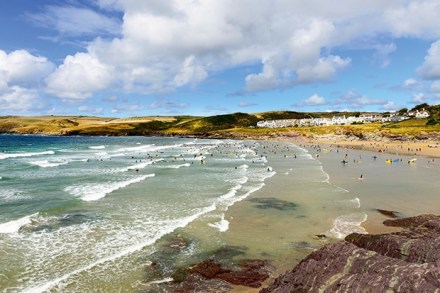
In a documentary filmed at the end of his life, Sir John Betjeman, who lived in the village of Trebetherick on the Camel estuary in north Cornwall, famously regretted not having had more sex. That problem doesn’t seem apply to today’s party crowd in the area. Nearby Rock and Polzeath are thronging with bingeing public-school teenagers, traffic jams of gleaming 4x4s, and new-build houses with plasma screens, wet rooms and all that hedge-funders require. David Cameron has body-boarded at Polzeath on recent holidays, his security detail bobbing like seals around him. For children of the 1960s, memories of frugal holidays in north Cornwall include pasties, fathers in baggy shorts, and limbs turning blue with cold.

Picnics

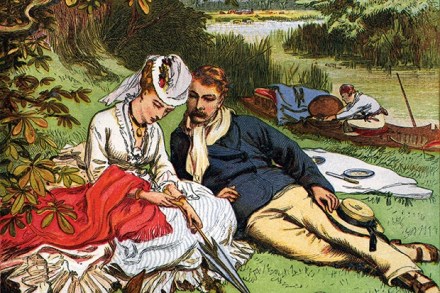
Strange, isn’t it, that despite having such famously terrible weather, we Brits are so fond of a picnic. It’s something to do with making the most of what sunshine we get — but if you ever plan to eat outdoors, it will almost invariably end up raining. Never mind. There’s very little that we’re better at than embracing our terrible weather, and keeping buggering on. This year’s Ascot was, for me, a case in point. Every day of the meet was blessed with excellent weather — except, of course, the one day I went. A person more sensible than I might have looked at the forecast and planned accordingly. I checked, saw that it was going to rain — and just got on with my picnic preparations as usual. So come 11 a.m.

Flanders

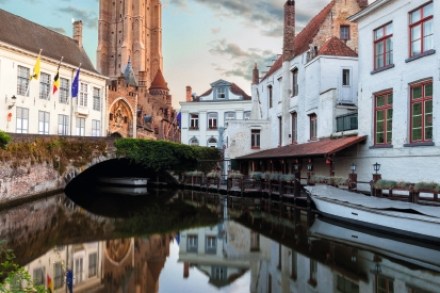
Usually, one of the first indications that you’ve entered a bilingual country is that the road signs are in two languages. At least this is the case in Ireland or Wales — but not in Belgium. In Flanders, the signs are written in Dutch. In Wallonia, they are all in French. French is spoken in Flanders, by the small local Francophone community, but more notably by the huge number of French people who descend on Brugge for the Christmas sales. The French registration plates and the gaggle of overly loud wanderers with cameras are giveaways, but don’t even think about trying French here yourself. It’s considered rude if it’s not your native language. You could, however, always make a stab at Dutch.