Notes on...

Book clubs

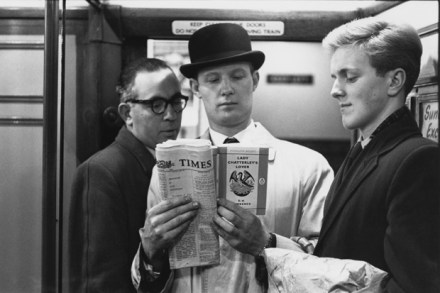
Everyone knows somebody who belongs to a book club. From informal gatherings of bookish friends in living rooms and cafés to ticketed events organised by newspapers, publishers and hubs like the Southbank Centre, and including rather more off-piste groups such as my own walking book club on Hampstead Heath, book clubs have become an integral part of our cultural landscape. At first glance it’s somewhat puzzling as to why they’ve become such a phenomenon. Surely it is surprising that readers, whom one assumes to be on the more introverted side of the spectrum — content to retire with a book of an evening rather than paint the town red — can be such keen talkers? The act of reading is by necessity anti-social.
Secrets of Sicily

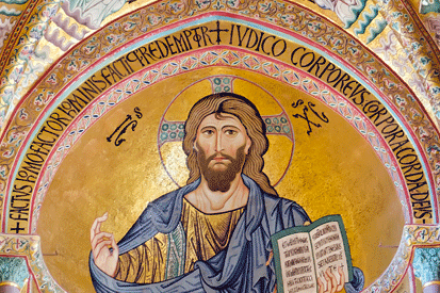
Western Sicily has been a crucible of aspiration and grandeur: the human condition at its most exalted: unsurpassable art and architecture. It started in the Greek era. Sicilian agriculture produced abundance. Trade with north Africa turned Demeter’s bounty into gold. With this wealth, Greek colonists built the temple cities of Selinunte and Agrigento, plus other glories such as the temple at Segesta. The modern traveller, seeing only harmony, might assume that the ancient inhabitants must have been uniquely blessed. In earlier generations, the best preserved temple in Agrigento was known as the Temple of Concord. This was an error. That was not its name and there never was much concord. Empedocles of Agrigento claimed that mankind was governed by the twin forces of love and strife.

The right way to see Madrid

I got Madrid utterly wrong for quite a long time. It’s a lovely city to walk in, and I thought it was idealistic and innocent, like Don Quixote. But its strength is the easy-going tricksiness of a Sancho Panza. It is a little like Toledo or Seville in the picaresque 17th century. I’ve only been robbed once, not violently, but it should have been more, so foolishly trusting was I, leaving my bag unattended or my jacket on the back of a chair. Not that Madrid is dangerous. You can saunter southwards from the marvellous Museo Sorolla (the house of the striking Sargent-like painter, stuffed with his canvases) in Paseo Martínez Campos, through streets of non-chain shops, down to the latitude of the Prado.

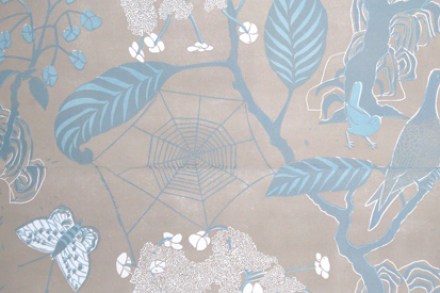
I never thought I’d write about wallpaper. But I’d never seen wallpaper like Marthe Armitage’s

Every night, while my husband reads by screen-light, my mind runs like an invisible rat two miles north to the house we’re rebuilding in Islington. And there it scurries from room to room, around the rotten skirting boards, up walls, into corners: testing, considering, fretting. Carpets or wooden boards? Which doorknobs, latches, hinges? Which white for the walls? What will look best, and what (hang your head, o rat) will your friends envy and admire? Towards 1 a.m., the rat gets ideas, starts thinking: hmm, polished concrete floors? Maybe a hot tub? And I hear my mother’s voice: Oh darling, no. That won’t do. Tiles, mirrors, rails, plugs.

Paris

No city really multitasks like Paris, shorthand for romance, culture, fashion, gastronomy and the kind of street life you find on Robert Doisneau calendars. The £69 Eurostar return opens up a vista of civilised pleasures: the best cheese shops (Androuet), the loveliest perfumeries (Serge Lutens, Palais Royal), the best markets (Marché des Enfants Rouge), the prettiest dolls’ house shop (Pain d’Epices), the most engaging museum (Jacquemart-André). Armed only with Patricia Wells’s unsurpassed Food Lover’s Guide to Paris, Inès de la Fresange’s style guide, Parisian Chic, and the Penguin Map Guide or the little brown Paris version of the A-to-Z, you’re on a roll.

Notes on… Venice

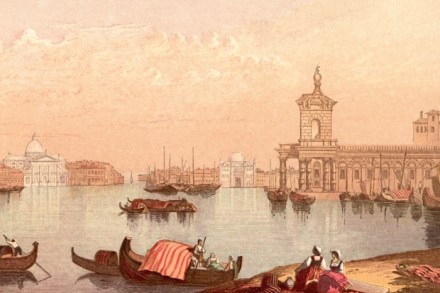
For Henry James it was ‘the repository of consolations’. Wordsworth, an earlier visitor, called it ‘the eldest child of liberty’. Ruskin, a self-professed ‘foster child of Venice’, dedicated his life to study of its buildings. Wagner and Browning died there, and Stravinsky left instructions to be buried there, in the island cemetery of San Michele, near the resting place of his friend and mentor Sergei Diaghilev. La Serenissima, which held the East in fee, is a city like no other. The Republic of Venice may have been ground under Bonaparte’s jackboot in 1797 but its independence of mind and spirit lives in the hearts and minds of all who have fallen under the spell of Saint Mark’s winged lion.

The great art of country houses is still getting better

Last year 114,000 people flocked to Houghton Hall in north Norfolk for a once-in-a lifetime opportunity. Part of the great collection of paintings sold by the Walpole family in 1779 to Catherine the Great of Russia was back, thanks to a generous loan from the Hermitage. It was an un-usual triumph — a blockbuster exhibition in a private house rather than an art gallery. Most art before that last century was made to be seen in houses or churches. ‘Houghton Revisited’ was a compelling reminder that it looks best in those settings. Since art in our country houses hits the headlines only when it’s sold or stolen, it’s often assumed that most of the best works have long gone to museums.

A perfect haven of peace in north Devon

It was late September. My wife and I were feeling overworked and overstressed — our mental states not helped by the fact that we hadn’t managed to get away for a proper summer holiday. We couldn’t face the prospect of middle-of-the-night flights or airport queues, so we looked for somewhere in the UK where we could drive to. We hit upon Wheel Farm cottages near Combe Martin in rural north Devon. The journey there was an adventure in itself, taking us over seven hours from our Oxfordshire home. The A39 coastal road was closed at one point, meaning a long detour along single track roads on Exmoor in the dark. We got to Wheel Farm at 11 o’clock at night but were already feeling more cheerful than when we’d set out.

The Marche

When I first visited the Marche a dozen years ago, folk who knew about such things tapped their noses and confidently predicted that it was to be Italy’s ‘next big thing’. The British would tire of Tuscany and Umbria, they said, and would head in Boden-clad hordes further east. They said exactly the same thing when I returned five years later and yet again more recently. The invasion has yet to happen. Few of the top travel companies push or promote the Marche and the Brits have stayed wedded to Chiantishire. I really can’t understand why. After all, the Marche has everything that Tuscany and Umbria have.

Valentine’s Day

One of the many things I love about my wife is that she doesn’t make me do anything for Valentine’s Day. Bloody Valentine’s. It brings nothing but resentment and misery. It makes single people feel left out and lonely and turns happy couples against each other. True, some women might feel a little gratified if their man buys them expensive flowers — particularly if the florist delivers to her office so that others can see just how special she is. She might also enjoy being taken out for an expensive meal at a restaurant full of other couples making each other feel special on this special day. ‘Darling, I had to book four months in advance coz they get so busy.’ ‘Darling, I can see!’ We all know such thrills are fleeting and vain.

South-west Ireland

Of course one feels free on a holiday: that’s what holidays are for. But I have rarely felt freer than when my younger brother, two wild Irish cousins and I, all aged 16 or under, drove across Éire to the south-west tip (with, I should mention, the permission and indeed encouragement of our respective parents). Setting off from Wexford in an ancient, definitely unroadworthy VW Beetle in the days before these vehicles had any classic cachet, with not even a provisional driving licence between us, it was a miracle that we arrived in Baltimore a day later — albeit decorated in mud and twigs after kipping the night in a ditch outside Cork where the Garda had passed their torches over us and grunted, leaving us to be the gypsies we so evidently were.

Golf in the Algarve

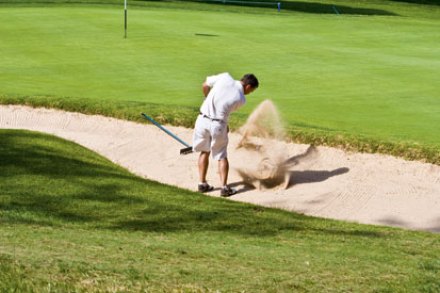
My second tee shot soared high and straight, then hurtled down towards the lake; a repeat of my first. I didn’t hear the disheartening plop this time because the breeze had shifted and now moved loudly through the pines that surrounded us. ‘Keep buggering on,’ said my old man, cheerfully. This course, Quinta do Lago South, was much too hard for us, so no shame in failure. I looked again at the 15th green. It was not much larger than a postage stamp, with water to the front and treacherous ground to the rear. ‘KBO,’ the old man repeated as my third ball followed its forebears into the deep. The Algarve is a dangerous place for occasional golfers. The heat, so pleasant on the outward nine holes, begins to sap one’s strength by the tenth.

Amsterdam

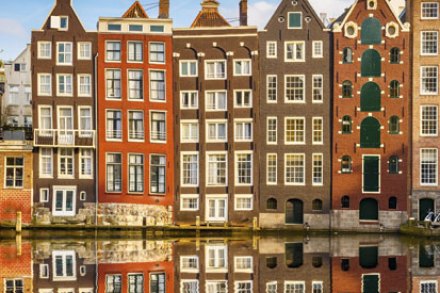
‘What are people in your country saying about Holland these days?’ one Dutch friend recently asked me. I hadn’t the heart to reply that no one was talking that much about his country. But the question seemed typically Dutch. Endlessly outward-looking and interested, yet charmingly insular and with a slightly off-kilter view of itself. The Dutch character — like the country — is fascinating for that cocktail of conservatism and libertinism, strict rule-making and anarchism which runs through it. Foreign tourism there has undoubtedly suffered in recent years from an exaggeration of just one side of that complex character. And although this seems mercifully to have declined in recent years, Amsterdam remains a victim of its culture of licence.

Gardens for all seasons

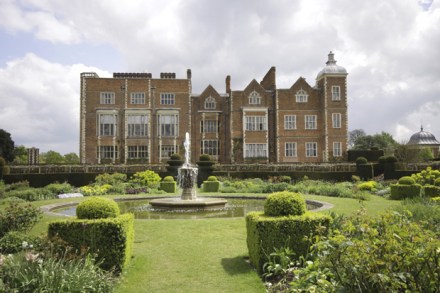
Winter garden visiting is a solitary pastime, lending itself to the misanthrope, and is highly recommended. When it’s so cold not even your dog wants to come with you, seize the moment, spurred on by the smug promise of self-improvement. Unfortunately, many of the best garden gates are closed during winter and can only be imagined or glimpsed by chance; see Hatfield in the film Orlando, with Tilda Swinton in the title role; her blanched androgyny majestically amplified by the frosted maze and standardised Quercus ilex of this great garden through which he/she runs.

The pleasures of the Dordogne

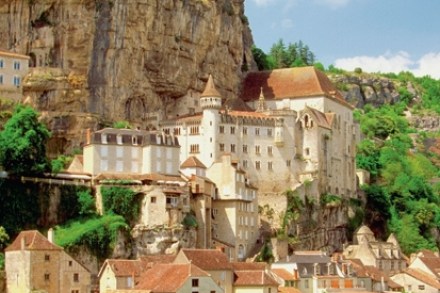
Call me a trencherman or worse, but I tend to think of the Dordogne as a giant restaurant-cum-farm shop, set in a wooded riverside picnic park. And I have a feeling that’s how its native residents think of it too, so central is the well-filled table to their traditional way of life. ‘Dordogne’ of course refers both to the department of south-west France and to the river, famous for the medieval châteaux along its cliffs, that rises in the Massif Central and flows into the Gironde near Bordeaux. It also, I suppose, refers to a certain English idea of the essence of Frenchness: mellow stone, soft rain, warm sunshine, deep forests, ripe crops, busy markets, and bad drivers on bendy roads.

Music in Vienna

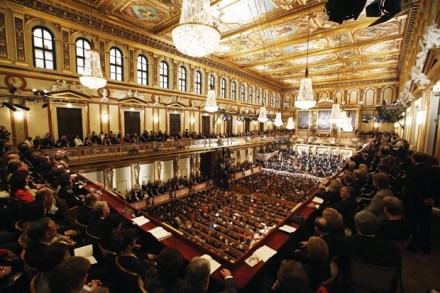
There is no finer city in which to hear music than Vienna. Or, to put it more felicitously, there is no finer city in which to listen to music for, as music-lovers know, there is a world of difference between hearing and listening. In the Imperial City, where most of the great composers in the Austro-German tradition lived and worked, you are on your mettle. As the Italian guide said to the American tourist who had popped into the Uffizi gallery in Florence to find out if there was anything worth seeing: ‘Here, signore, it is not the paintings that are on trial.’ In Vienna there is no greater musical pleasure than sitting in the golden hall of the Musikverein, particularly when the Vienna Philharmonic is playing.