Andrew Neil

What’s next for the Murdoch empire?

From our UK edition

19 min listen

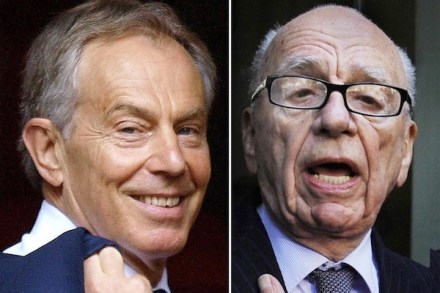
Rupert Murdoch stepped down as chairman of News Corp and Fox News this week. But is this really the end of Murdoch’s career? ‘I can guarantee you that I will be involved every day in the contest of ideas’, he wrote in a statement. And what will the media tycoon’s legacy be? James Heale speaks to Andrew Neil, chairman of The Spectator, and former editor of the Murdoch-owned Sunday Times.

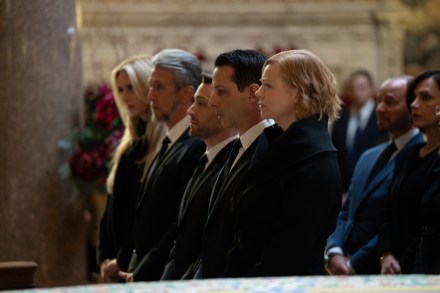
What did Succession get right about the Murdoch empire?

From our UK edition

24 min listen

Andrew Neil, The Spectator's chairman and super fan of the HBO show, Succession, joins this episode to talk to Freddy about where the show overlapped with the real life media empire of Rupert Murdoch, who has his own problems of succession to think about. This conversation was originally filmed as an episode of 'The View from 22' from Spectator TV, which you can watch here.

David Dimbleby turns out to be a bit of a closet republican

From our UK edition

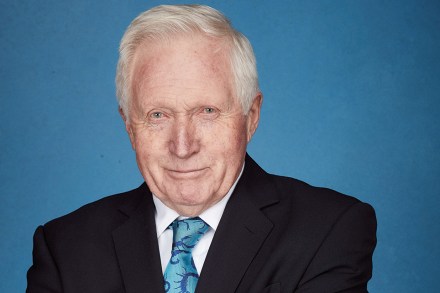
In Keep Talking, David Dimbleby takes us through a gentle romp of a stellar, unrivalled broadcasting career spanning, incredibly, 70 years. There are no great revelations (even the name of the BBC boss who tried to fire him from Question Time is withheld), no dramatic insights to make us rethink well-known events, no ponderous thoughts on broadcasting for media studies students to pore over (andthe book is all the better for that). As the face of the BBC’s coverage of our most important national events over the decades, from general election nights to every major royal ceremony, Dimbleby has been authoritative, well-informed, impartial and appealing.

‘I want to rewire Whitehall’: Andy Haldane in conversation with Andrew Neil

From our UK edition

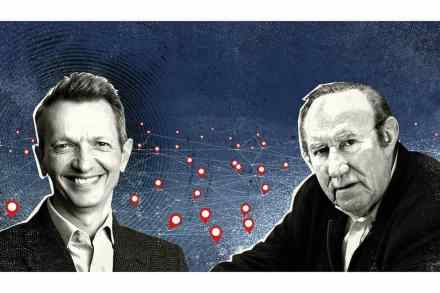
Andy Haldane is the Permanent Secretary for Levelling Up and was previously the chief economist at the Bank of England. He spoke to Spectator chairman Andrew Neil about his hopes for the job during a joint Spectator and BAE event earlier this year. Andrew Neil: The government has written this ambitious White Paper on levelling up. But is there the political bandwidth to deliver it, given all that’s currently happening? Andy Haldane: The government has lots to contend with. But what levelling up has in its favour is it’s a rare example of something that aligns politically, economically and socially. Take the money side of things. If we can achieve what we’ve set out in the Levelling Up White Paper it should boost our economy by up to £100 billion per year.

A statement from the chairman of The Spectator

From our UK edition

In common with thousands of companies up and down the country, The Spectator magazine group availed itself of government funds to furlough some of its staff during the Covid crisis. We feared the impact of Covid on our finances, especially on our cash flow, as parts of our business slowed or ground to a halt, leaving some staff without work to do. We were grateful for government help, which allowed us to conserve cash and still see our people paid 80 per cent of their salaries. Though some parts of our business – especially the revenue lines from events, newsstand sales and advertising – have been hit badly by the crisis and ongoing economic downturn, overall our magazines have weathered the Covid crisis better than we expected.

A cure for Christmas stress in Sweden

From our UK edition

We’ve all been there, I’m sure. You work your pan off to get everything done in time. You count down the days until you can break out of the madhouse of pre-Christmas London. Then you’re brought down by the dreaded lurgy. I was all for cancelling our travel plans and spending Christmas under the duvet. But the Swedish Engineer was having none of it: she’d been promised Christmas in her homeland and it was a promise I was going to keep, even if I had to be med-evaced there. I don’t really remember arriving in Stockholm. Too much Lemsip, Jameson’s and nasal spray can cloud the memory. But our fellow passengers, all pictures of Swedish health when we boarded at Heathrow, were now engaged in a mass cough-and-splutter at the carousel.

Andrew Neil: Letter from Australia

From our UK edition

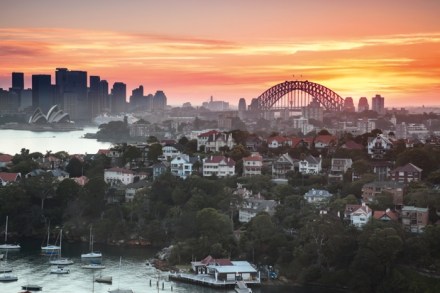
No rest for the wicked. We touch down before dawn in Sydney after a 22-hour flight and by 7 a.m. I’m live on radio 2GB with Alan Jones. I’m aware talk radio is big in Australia — as you’d expect in a country full of refreshingly forthright people — and Mr Jones’s breakfast show is one of the biggest. Predictably, talk turns to the visit of the Duke and Duchess of Cambridge. Aussie commentators are a bit sheepish about it all. Only 15 years ago, supposedly informed opinion, on the left and the right, confidently predicted that Australia would be a 21st-century republic. They were confounded — disgusted, even — when folks voted in a referendum to keep the monarchy.

Andrew Neil’s eulogy for Sir Alastair Burnet

From our UK edition

A memorial service was held today for Sir Alastair Burnet at St Martins-in-the-Fields in Trafalgar Square. Hundreds of family, friends and colleagues from the worlds of politics, print journalism, broadcasting and horse racing turned out to pay their respects and celebrate his life. Andrew Neil gave the eulogy along with Sir David Nicholas, Alastair's editor at ITN, and Alastair Stewart, one of his protégés at ITN. This is Andrew's tribute to his friend, colleague and mentor. I first met Alastair in the autumn of 1972. He was Editor of The Economist. I was looking for a job. He offered me a whisky. It was three in the afternoon. But I thought it churlish to refuse. Maybe even a bad career move.

Sir Alastair Burnet, 1928-2012

From our UK edition

It is with much sadness and regret that I have been asked by family and friends to announce the death of Sir Alastair Burnet. He passed away peacefully in the middle of the night at the Beatrice Place Nursing Home in Kensington, where he was being cared for after suffering several strokes. He was 84. Alastair was one of the greatest journalists of his generation, as much at home in print (he edited The Economist and the Daily Express) as TV news and current affairs, where he was a legendary figure as Britain's premier newscaster and anchorman.

Blair’s deal with Murdoch

From our UK edition

The below is an extract from Andrew Neil's evidence to the Leveson Inquiry, published today. You can read the whole document here. ‘How we treat Rupert Murdoch’s media interests when in power,’ Mr Blair told me in 1996, a year before he became Prime Minister ‘will depend on how his newspapers treat the Labour party in the run up to the election.’ That is exactly how it panned out.  The Sun and the News of the World fell in line behind New Labour in the run up to the 1997 election, The Times stayed broadly neutral and the Sunday Times unenthusiastically Tory.

The full story on NHS spending

From our UK edition

I make no apologies for returning to government spending on health. The Tory promise in the election to ring-fence health spending and increase it in real terms every year even during a period of public spending cuts was distinctive and much-touted during the 2010 election campaign. A quick recap: during my extended interview with Health Secretary Andrew Lansley which went out live on the BBC News Channel on Sunday evening, I suggested that higher inflation than anticipated when the health spending promise was given would make it more difficult to meet the Tory promise of real annual rises. Indeed I put to him a projection for real health spending which showed it would decline.

Why work experience matters more than ever

From our UK edition

In my recent BBC2 documentary, Posh & Posher, I explained how networking and contacts played a crucial role in giving those with the right connections an early leg up in their careers. Internships and work experience are proving increasingly crucial to opening doors and opportunities in later life. Many have expressed the view that the best intern and work experience opportunities in fields like politics, finance and the media are going disproportionately to those who are already privileged and well-connected. From what I've seen myself in recent years I suspect that to be true. The Mail on Sunday gives a classic example (and a potentially embarrassing one for the Tories) of how it can work.

The fall of the meritocracy

From our UK edition

I caught the figure strolling towards me out the corner of my eye. At first I thought I was mistaken. Then it nearly took my breath away. I was standing in the impressive wooden-beamed assembly hall of Paisley Grammar, where I’d gathered at the start of each school day many years before, silent and smartly uninformed, along with 900 other pupils. The current head was explaining how this ancient institution, dating back to the 16th century, was still giving children as fine an education as the one I had enjoyed. It was then I noticed the policeman coming along the corridor and into the hall, sauntering along as if his presence were as natural as a French or physics teacher. His uniform was clean and tidy. So was his stab vest.

The New Republicans

From our UK edition

After the Tea Party’s election success, the American right has a mandate to fight for a smaller state ‘I am not a witch.’ Now that’s not something you hear very often from a politician. But Christine O’Donnell, Tea Party darling and Republican candidate in Delaware for the US Senate, felt the need to say these words in a campaign commercial, after a youthful dalliance with witchcraft was revealed. The denial was somewhat undermined by the all-black outfit and smoky background. But the Democrats and their cheerleaders in the US media had a field day. These Tea Party folks? Strange, barking, dangerous. Who’d vote for them?

Brown let the dogs out

From our UK edition

When you keep a kennel of attack dogs then I guess you can't entirely claim ignorance or absence of responsibility when one of them bites several passers by. That explains why Gordon Brown's apologetic non-apology for the attempted muckraking of Damian McBride has failed to satisfy not just the Tories but many Labour supporters too.   After all, though McBride was fired for plotting to slime leading Tories, it is Labour politicians who have more often suffered at the hands of his dark arts -- even supposed Brownite loyalists such as Douglas Alexander were victims. So many Labour MPs were as pleased to see McBride get his comeuppance as were the Tories -- and politicians on the Right and the Left are not inclined to leave it there. This story still has legs.

The shape of things to come | 26 March 2009

From our UK edition

Today the Daily Politics stages the battle of the bloggers — on the New Labour left, Dolly Draper, on the libertarian right, Guido Fawkes — and we do so on a day when we have a compelling example of how the internet is re-shaping our media and politics. After Gordon Brown delivered his speech to the European Parliament on Tuesday, he was subjected to a three-and-a-half minute riposte in the Chamber by Tory MEP Daniel Hannan, which many thought devastating. Established broadcasters, while recognising that the Hannan attack was a cut way above normal party political banter, didn't quite see how "Tory MEP savages Brown" made it a story. Then the bloggers got a hold of it -- they have made it not just a story but a phenomenon.

Today’s surprise inflation figures have strengthened Darling’s hand as he tries to prevent another stimulus

From our UK edition

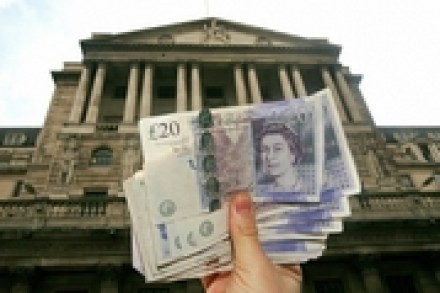
In the current unprecedented economic circumstances, politicians and policy-makers are having to learn as they go. So are economic commentators. It was widely predicted by economists in the City and the media that the latest inflation figures would show the Retail Price Index (RPI -- a broad measure of inflation) plummeting into deflation territory with prices falling by around 0.8 percent, while the Consumer Price Index (CPI -- which excludes housing costs) would slump from 3 percent to closer to 2 percent, a harbinger of further falls to come.   They were wrong. The headline RPI fell only to 0 percent in February from 0.1 percent in January while the CPI rose to 3.2 percent in February from 3 percent. Even the underlying rate of RPI inflation rose to 2.5 percent from 2.4 percent.

Thoughts from abroad, with two days to go…

From our UK edition

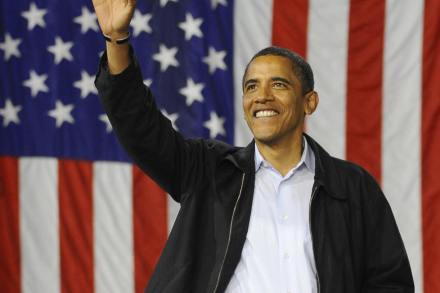
...and assuming an Obama victory. If McCain wins expect very different thoughts on Wednesday morning! 1) That part of the world which does not include the USA is pretty much a one-party state for Obama and if he fails to win there will be much international wailing and gnashing of teeth at the “stupid, racist Americans.” But the rest of the world should be careful for what it wishes because an Obama victory will make the usual knee-jerk anti-Americanism, now so common in the chancelleries and fashionable drawing-rooms of European and developing countries alike, much more difficult.

Coffee House exclusive: What the Russians want in return for bailing out Iceland

From our UK edition

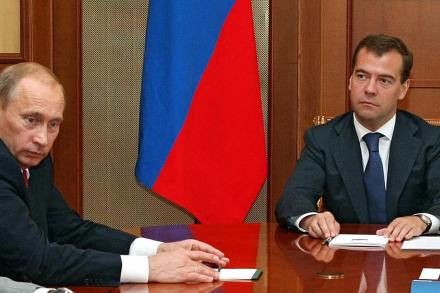
Near-bankrupt Iceland's €4bn ($5.43bn) loan from Russia is still not a done deal. Iceland's central bank Governor David Oddsson says that talks are still "ongoing" but that any aid from Russia would be "very much welcomed."   You can understand why Iceland is desperate for a massive euro-injection in the current bank crisis: the Sedlabanki, the central bank in Reykjavik, urgently needs euros because it has only €4.5bn in its current reserves and the country’s banking system needs to refinance about €10bn before year end -- not easy when the Icelandic krona has fallen 40 per cent against the Euro currency so far this year. But what price will the Russians demand for their bailout?