Clive Aslet

The atmosphere of a historic country house cannot be bought

From our UK edition

The Historic Houses Association can congratulate itself. This pressure group for country houses, founded in 1973, has proved to be one of the most effective lobbying organisations of our time. When it came into being, the future, according to the architectural historian John Cornforth, was ‘full of gloom’ for the country house. The Destruction of the Country House exhibition of 1974 revealed the extent of the crisis, which had set in a century earlier with the agricultural depression of the 1870s. That was when aristocrats who had previously relied on the income from their estates built their hopes on landing a transatlantic beauty with ‘plenty of tin’. The supply of heiresses dried up in about 1912, just before the first world war.

How Margaret Thatcher could have saved London’s skyline

From our UK edition

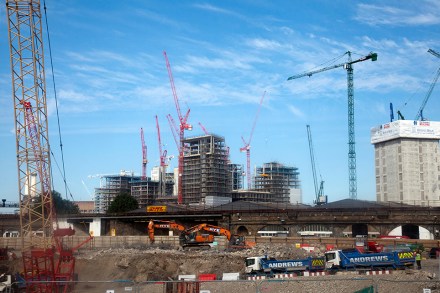
Looking around London on the eve of the millennium, it would have been difficult to think that the UK government had an adviser on architectural design. The 1990s had been a dismal decade. Yet such a body existed in the quaintly named Royal Fine Art Commission, refounded in 1924. The original Commission had been created as a way of giving Prince Albert, recently married to Queen Victoria, something to do – contriving the decorative scheme for the new Palace of Westminster. Fresco, the chosen medium, was not ideal in that damp position beside the Thames since the plaster took three years to dry; and the Duke of Wellington did not help the project by declaring he could not remember having met Blücher on the field of Waterloo, as depicted by Daniel Maclise.

The shock of discovering your ancestors were slave traders

From our UK edition

If I had a slave owner in my family background I’d probably keep quiet about it. Richard Atkinson, in his remarkable first book, has gone to the other extreme. Not only did he seek out as much information as he could about the activities of his Georgian forebear, also called Richard Atkinson, but he’s made them the subject of this history. Actually, he was as shocked by what he discovered as anyone. The quest started with a bundle of letters which he and his sister inherited from the wreck of a family fortune that had dwindled, by the 1970s, to a decrepit country house in Cumbria, where the brackets of orange fungus resembled botanical wallpaper, although it still contained a couple of stuffed crocodiles in the upstairs gallery.

Anglesey: la dolce vita in north Wales

From our UK edition

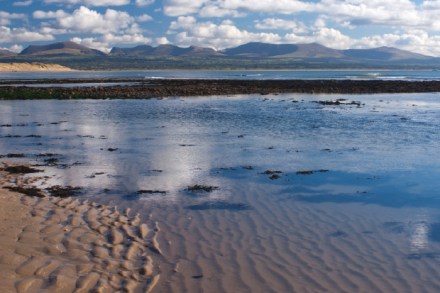
We teased our friends by saying that our holiday would be on a far-away island. The Maldives, perhaps? No, Anglesey, off the northwestern tip of Wales. Mentally far-away, that is: but by train, it is only three and a half hours to Bangor, where we hired a car. Two mighty 19th-century bridges span the Menai Straits, with the fearsome currents known as the Swellies (regarded by Nelson as one of the greatest of all tests of seamanship). Cross them and the world seems to go into reverse. Time slows. You find yourself playing Scrabble. I never actually went to Anglesey when I was growing up but, once there, I slip into a world of idealised childhood — except that today groceries are delivered by Waitrose.

Sicily – notes from a large island

From our UK edition

Don’t make the mistake of thinking that Sicily is anything like the Isle of Wight: it’s 70 times the size, and mountainous. Despite some beautifully engineered roads, it always takes longer to get around than one expects. Even my Sicilian friend has to stop to ask the way. Autostrade are closed, bridges under repair. It doesn’t help that every other motorist drives as though he’s your enemy. Which, unless he comes from your village, he probably is. Beautiful, fertile, sunny, with fabulous wine and cuisine — no island is so blessed by nature. Even the terrible communications, which meant that neighbouring communities couldn’t reach each other, have bestowed a legacy in the form of teeming variety. Each town has its traditions.

Old palaces for new plutocrats

From our UK edition

Having lived in London for 35 years, I thought I knew its architectural highlights pretty well, but this book is a revelation. It shows an aspect of the city that I hardly realised existed. I had always believed that, in what must now be called the Downton years, Britain’s grandest families preferred to sacrifice their London palaces in order to hang onto their country seats. The French had their priorities the other way about, our attachment to rural life being one of the things that made us British. Devonshire House, on Piccadilly, which was demolished in the 1920s, along with so many other Georgian buidlings, symbolised this retreat from the capital.

Et in arcadia ego

From our UK edition

The economy is in tatters, Europe in turmoil — but don’t worry: there is an antidote to the prevailing angst, and it’s provided by this book. It could be read simply as a close look at an undemonstrative corner of the English countryside, informed by the special understanding of a landowner, Jason Gathorne-Hardy, and an artist, Tessa Newcomb. But really it offers a philosophy. ‘Il faut cultiver notre jardin,’ said Voltaire. And that’s just what author and illustrator do here, both practically and imaginatively.   Each of the monthly chapters opens with a paragraph of ‘garden notes’, compiled from the diaries of working gardeners. So much for the practical side.

Welcome to the doll’s house

From our UK edition

What do Historic Royal Palaces think they are doing? They’re the people who look after the five royal palaces not occupied by the Queen, and their activities have been constrained by the fact that most of the contents are owned by her. But the recent reopening of Kensington Palace has gone to their heads. It’s as if, after decades of patiently interpreting the arcana of royal households, they’ve burst out of their corsets and gone wild. Kensington Palace, remember, is an edifice of such established importance that it’s not even listed. The only thing that is listed there is the statue of Queen Victoria in Kensington Gardens. Kensington Palace was scheduled as an ancient monument long before listing came into existence.

The house that coal built

From our UK edition

I opened this book expecting to  find the sort of volume a considerate host would place in your country- house bedroom. It is a bit more than that. Taking the decline of the Earls of Fitzwilliam and their enormous house Wentworth Woodhouse, outside Rother- ham, as her theme, Caroline Bailey evokes the social revolution that occurred in 20th- century Britain. The almost inconceivable riches of the Fitzwilliam family — coming- of-age parties were celebrated with entertainment for tens of thousands of people — are contrasted to the squalor in which local miners lived. The Fitzwilliams were not bad employers.

Ups and downs of Bankside

From our UK edition

Walk over Lord Foster’s wobbly bridge from St Paul’s and you will see, squashed between Tate Modern and the reconstructed Globe Theatre, a three-storey house that, according to an inscription, is where Sir Christopher Wren stayed while building the cathedral. Alas, the legend, acceptable in the 1940s when the words were put up, no longer holds water. The house was not built until 1710, long after Wren had a use for it. But the story that Gillian Tindall weaves in this book is no less fascinating for an absence of grand characters — in many ways it is the better for it. The house becomes a window through which the reader can view eight centuries of the busy, everyday riverside life which shaped this now voguish quarter of London.