Notes on...

Country house opera

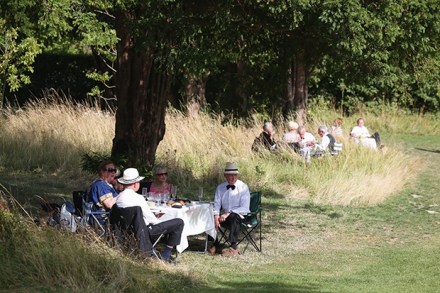
I stole a blanket last night. Rather a nice one, in fact. I feel bad about it, of course, but guilt is less inconvenient than pneumonia; and after trying to blow-dry my waterlogged dinner jacket with the winds howling through Garsington Opera’s ‘airy’ pavilion, it seemed like pneumonia or the blanket were the options. Forgive the melodramatic, self-justificatory tone. That, too, has its roots in the evening’s diversions, which included a performance of Intermezzo, Richard Strauss’s melodramatic and self-justificatory autobiographical account of a marital misunderstanding. It’s an odd piece, lovely in some ways, trite and misogynistic in others.
Tel Aviv

Just so you don’t get it confused with the City That Never Sleeps, Tel Aviv — my favovurite place on earth — now markets itself as the Non-Stop City and, indeed, it never lets up for a moment. We like to refer to the Blitz Spirit; Israel has it. Any of the lovely youngsters playing matkot on the beach (an American journalist once used the bat-and-ball game as a metaphor for Middle Eastern conflict — ‘No rules, no winners and it never ends’) could be called up to fight and die for their country that evening. And life during wartime leads to living for today. At the beach bar every morning at nine sharp, our beautiful waitress serves us G&Ts and tells us: ‘You come to nightclub on beach, near the Dolphinarium, where I work?

Father’s Day

No man ever watched a £20 note flutter from an opened Father’s Day card and thought: ‘How disappointing — not enough thought has gone into that.’ If you’re a son, you’ll know this already. But if you’re a daughter, remember that the sexes are different. Women want presents, actual objects, things that show your loved one has gone to the trouble of visiting a shop and making a choice, no matter how ill-advised and instantly destined for Oxfam. But men are a different country: we do things differently here. For a start, many men don’t want any more possessions, full stop.

St Moritz

Here’s a tip: when travelling to St Moritz, it’s best not to mention the name of your final destination to the airport porters, drivers or waiters that you encounter on your journey there. Such a slip, as I discovered, will only lead to disappointment when you come to leave a tip (however generous the amount may be). Once the star of Switzerland’s winter tourism, St Moritz is the original alpine resort, offering ski holidays to the super-rich since 1864. But in recent decades the town’s sparkle has begun to fade, as it now has to compete with the likes of Klosters and Gstaad for the custom of royals, oligarchs and glitterati in the market for a champagne-fuelled snow break.

Antwerp

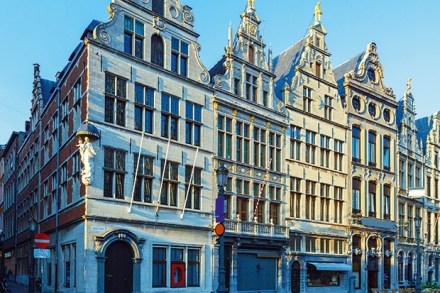
Napoleon didn’t think much of Antwerp. ‘Scarcely a European city at all,’ he scoffed. If only he could see it today. Ten years ago, Antwerp felt provincial. Now it feels like the capital of an (almost) independent state. ‘Jardin Zoologique’ it says outside the zoo, but that’s the only French signage you’ll see in this resolutely Flemish city. When they built the zoo, in 1843, Belgium was only 13 years old, and French was the official language throughout this mongrel nation. Now it only survives on a few old war memorials. ‘You’re in Flanders now,’ locals tell you, if you try to speak to them in French. Each time I come here, Antwerp seems more estranged from Belgium.

Normandy

I am compiling a list of the best black puddings. It began in Spain when I encountered my first morcilla de Burgos, a rich, spiced black sausage bulked up with rice. I was smitten. No black pudding could compete with this, I thought. But then I moved to Cumbria and in the flat hinterland of the Solway plain I found a butcher who made trays of the black stuff, studded with nuggets of fat the size of a child’s thumb. A portion of this was a veritable slice of heaven. I’ve sampled Stornoway’s, of course, and a black-pudding Scotch egg, but nothing ranked alongside the twin fruits of Burgos and Great Orton.

Barbados

Unusually, I didn’t leave the British Isles until I was 35, when I went to the Maldives for a fortnight. (You bet it was a culture shock, considering that the most exotic place I’d been until then was the Bognor Regis branch of Butlins.) But I’ve globetrotted like a footloose fiend since then, and on my travels I’ve observed that the pricier the watering hole, the less likely vacationers are to look happy. The Crane is one of the most beautiful hotels in Barbados, but plagued by sour-faced English types complaining about there being no skimmed milk or a cloudy swimming pool (‘quite troubling’). There were groups of good-natured Americans scattered about, whose parade the Englishers appeared to take some pleasure in raining on with the intensity of a tropical shower.

Marseille

If you haven’t been lost in Marseille then you can’t have been there. As Alexandre Dumas wrote, this is a place that is ‘always getting younger as it grows older’. But while you’ll certainly be lost at some point, you won’t be stuck and you won’t be bored. You can meander through the 16 contrasting neighbourhoods, or cross the town easily via metro, bus, bike, tram or even ‘Le petit train de Marseille’ — the Marseille fun train. Head straight to the Old Port (600 bc) where Foster and Partners’ mirrored canopy (2013 ad) gleams in the hot sun, then up the hill to the lovely, listed Intercontinental Hotel Dieu which has great views, a Michelin-starred restaurant and a Clarins spa, but which from 1188 until 1993 served as the city’s main hospital.

Wine tasting

One of the great jokes of the wine trade is: ‘Have you ever confused Burgundy with Bordeaux?’ ‘Not since this morning!’ A few weeks ago, I realised it isn’t a joke. I’d been invited to take part in the Varsity Blind Wine Tasting Match. It’s sponsored by Pol Roger champagne and they thought it would be fun to have a team of journalists from The Spectator compete against the students from Oxford and Cambridge. Our crack squad was made up of the in-house drinks supremo Jonathan Ray, the sommelier and writer Douglas Blyde, Spectator adman Nick Spong, and me. As soon as I arrived at the Oxford and Cambridge Club in Pall Mall I realised I was out of my depth. The two university teams were standing in the lobby looking fit and focused. This was as important as the Boat Race.

Møn

The sky over the island of Møn, which is at the bottom right of Denmark, was cobalt and the whitewashed walls of the Elmelunde church dazzled in the bright sunshine and hurt our eyes. Our arrival had been preceded by an argument about visiting the church at all, some of the party being of the opinion that they had seen enough medieval churches already during the four-week trek across northern Europe. Nevertheless, culture won the day and in we filed to glory in the frescoes of the Elmelunde Master, who some time during the 15th century devoted himself to the decoration of this church. The frescoes are spare and sinuous, bleached in hue and basic in execution.

The first Spectator cruise

It’s a complete recipe for disaster of course. By which I mean being trapped at sea with The Spectator’s ‘Low life’ correspondent for an entire week. That’s seven whole days. At sea. Crikey! Not that Jeremy Clarke isn’t the best of company (he is — everyone adores him) and not that we won’t all have the hugest of fun. After all, Cunard’s Queen Victoria has at least a dozen different watering holes to keep us (and JC) happy, from the Golden Lion pub to the swanky Commodore Club for pre- and post-prandial cocktails. No, it’s just that I fear hangovers of Wagnerian proportions, appalling damage to my liver and — even more — the socking great bar bill. I mean, even poor Jeremy can’t put it all on expenses.

Tourists are trickling back to Egypt – to beat the crowds, go now

Egypt’s revolution of 2011 didn’t just get rid of President Mubarak: it did a pretty good job of clearing out the tourists, too. The political uncertainty since then has made people wary of visiting — meaning more space and lower prices for those who do make the trip. But you’d better be quick if you want to take advantage: this seems to be the year that Egypt is opening up again. BA are resuming their Sharm el-Sheikh flights in September, while Abercrombie and Kent are back up to three boats for their Nile cruises (they had been down to one). I started in Aswan, home to the alarmingly named Hotel Cataract. My guide, Alaa, explained that the word denotes a white water rapid on this stretch of the river: the medical sort sends the eye the same colour, hence the derivation.

Rise early to see the Vatican at its best

The sun has only just risen in Rome and we are standing bleary-eyed in a short queue outside the Vatican. Our guide, Tonia, takes us through security, and within minutes we are in a nearly empty Sistine Chapel. In an hour it will be crammed with tourists — sweating, gawping, getting in each other’s way. Vatican officials will be shushing and clapping to quieten the chatter. Now, though, we are free to contemplate Michelangelo’s swirl of naked bodies in peace. Michelangelo claimed that he painted the ceiling entirely on his own. In fact, Tonia explains, he started off with 15 helpers, though he got rid of them all along the way. He ‘fought everyone’, she says. ‘On the one hand he was amazing but in human relationships, no.

Vienna is a crossroads of the world again – but something’s missing

People get the wrong idea about Vienna and I blame Johann Strauss. His plinky-plonky waltzes have become the soundtrack to the city, cementing Vienna’s public image as a place of balls and carriages and cream cakes. It’s an image the tourist board is keen to cultivate, and it makes good business sense. Tour groups visit the Spanish Riding School and the Vienna Boys’ Choir, eat a slice of Sachertorte and depart contented. It makes for a happy holiday, but Vienna is much more interesting than that. Like a lot of stereotypes, Viennese clichés have some substance. Once upon a time, this was the mecca of modern music: Schubert was the local hero; Haydn, Mozart, Beethoven, Brahms and Wagner hung out here.

Seeing Paris through Impressionist eyes

The spectre of the Charlie Hebdo killings still hangs over Paris. Outside the École Nationale Supérieure des Beaux-Arts, opposite the Louvre, there’s a big poster of Cabu, one of the murdered cartoonists. The poster is peppered with fake bullet holes; underneath, the caption reads, ‘It doesn’t hurt at all.’ I didn’t realise, until I talked to the curator of the new Impressionist show at the National Gallery in London, that Cabu was a popular figure on French children’s TV in the 1970s. His death particularly haunts the middle-aged, who grew up on his cartoons. The Charlie Hebdo posters across Paris still bring you up short.

Grim, generous, decaying and hip: the paradoxical charms of Athens

My first visit to Athens as a student gave me a set of impressions that the present crisis has only validated. The man designated to meet us at the airport did not turn up. I will never forget his name. It was Nic Katsoudis. So we got in a taxi anyway. It crashed twice on the way to our apartment in the Vouliagmeni resort south of the city. Once inside, the plumbing was Periclean in age if not in grandeur. That was when local colonels and not German bankers were the devil. Since then I have been back often, en route to my sister-in-law’s house on lovely, neglected Skopelos — an island not so much unspoilt as unimproved in the first place. Athens is where you change planes, get on a bus or find a boat.

A cruise around Cleopatra’s wedding present

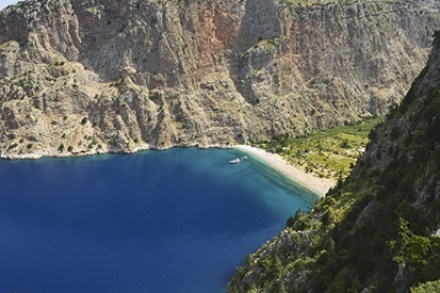
Legend has it that Mark Antony considered Turkey’s Turquoise Coast so beautiful that, in about 32 bc, he gave it to Cleopatra as a wedding present. The country’s southernmost shore stretches for nearly a thousand miles and combined incredible scenery, clear azure waters and a warm Mediterranean climate. Its strategic location means it has been occupied by various empires over the course of its history, including the Lycians and Ottomans. Two thousand years on, it is still breathtaking. The Taurus mountains provide a dramatic backdrop to the ancient ruins and beautiful beaches. With no road access to many of these hidden gems, the best way to explore them is by boat, preferably a wooden gulet.

An earthquake with a Baroque legacy in Sicily

Syracuse is a handsome place, steeped in a rich historical broth. At the tip sits Ortygia, an island offshoot, which has been the backdrop to many Mediterranean sagas: Hellenic, Christian, Medieval, Renaissance, Baroque — take your pick. By day, Via de Benedictis is filled with local men selling sea urchins, milky balls of ricotta and bunches of mint. At night, we went to the Piazza Duoma for aperitifs. The cathedral’s broken pediments and exuberant sculpture cast strange shadows on to the square and a zephyr blew. It was November and the place was empty, aside from a small boy on rollerskates and a dog. In summer it must swarm with people. An earthquake destroyed much of southern and eastern Sicily in 1693, and many of the towns were rebuilt in a Baroque style.

A walk through Fez is the closest thing to visiting ancient Rome

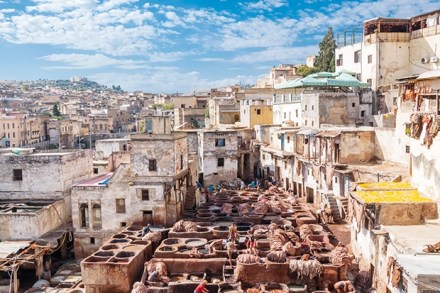
Fez is one of the seven medieval wonders of the world. An intact Islamic city defined by its circuit of battlemented walls, it is riven by alleyways. You pass doorways that look into a 10th-century mosque, then a workshop courtyard, before coming through a teeming covered market and twisting past the high walls of a reclusive garden palace. The aesthetic highlight of any visit will be the teaching colleges built in the 14th century by the Merenid Sultans, and nothing can quite prepare you for the colours and odours of the open-air tanneries or the drama of listening to the dusk call to prayer from the ruins of the Merenid tombs. To the north of the city rise the slopes of Jebel Zalagh, dotted with olive orchards.

How to walk along canals in Venice without feeling like a tourist

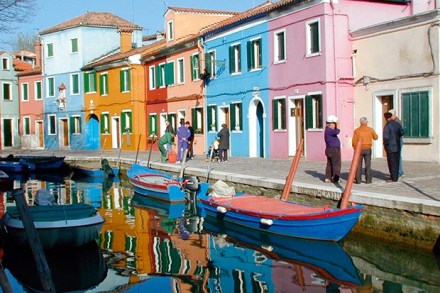
I arrived in Venice believing it would reek of sewage. It didn’t. The walk into the centre went through cobbled alleys packed with loud Americans in sandals and Italian ladies tottering in kitten heels. But it was when crossing the Rialto bridge that I first felt as though I was truly in Venice, with tacky gold gondola models for sale at extortionate prices, and tourists jostling for prime photo spots. How else are you supposed to know you’re on holiday? The canals are wonderfully chaotic; smaller boats have to dart out of the way of the Vaporettos as perilously overcrowded gondolas bob in their wakes. Gondoliers nap in the afternoon shade, pretending not to see the half a dozen tourists who turn up hoping to squeeze in to one boat and make their guide earn his money.