Notes on...

Life on Unst

‘I’d like a copy of the Times,’ said the visitor from the south. ‘Yesterday’s or today’s?’ the shopkeeper asked. ‘Today’s, of course.’ ‘Come back tomorrow.’ Life on Unst has its idiosyncrasies, but personally, I blame the weather forecasters for giving the nation the impression that the place may not even exist. Their London-centric maps of Britain, showing Scotland fading into the distance, leave us off entirely. Not surprising, as we are the most northern of the Shetland Islands and nearer Bergen than Aberdeen. Newcastle is to us the deep south. Yet we hold a key position in defence.

Cannock Chase

Cannock Chase is the long, low range of hills that’s visible to your right as you drive north up the M6 beyond Birmingham. If you’ve travelled by train between Euston and Crewe, you’ve practically brushed its cloak. Soon after Rugeley the landscape closes in, and a palisade of dark pines presses down the slope before your Pendolino ducks into the tunnel that Lord Lichfield made Robert Stephenson dig in 1846 so as not to spoil the landscape of his Shugborough estate. You don’t see much of the Chase, but you certainly sense it. It’s an Area of Outstanding Natural Beauty, but that feels rather an effete description for something so unexpectedly primal: an isolated upland wilderness between Wolverhampton and Stafford.

Battersea Power Station

Battersea Power Station once generated nearly a fifth of London’s power. It must have hummed and clanked almost as much as it does today while its transformation proceeds noisily. Graphic prints of it are two a penny across the capital, but I’m fond of them because the power station is my near neighbour. I still thrill to glimpse it framed by rows of Victorian semis, especially now that the new chimneys are lit dramatically at night, red crane lights dotted about them like a spiky ruby crown. Across the world it has celebrity status, thanks to the cover of Pink Floyd’s 1977 album Animals. The band’s inflatable pink piggy caused more bother than the protesters’ Trump blimp, becoming untethered and drifting off to Kent, alarming pilots along the way.

Kites

I’ve flown only three kites in my life. My stepfather bought me the first. I remember seeing him from a window approaching our little mews house off Bond Street, clutching it furled in its packet as though his life depended upon it. The previous day he had overcharged an electric plane sent for my birthday by my other father, the one left in America following a youthful marriage that didn’t pan out. The walk to the launch took us past the barley-twist facades of Mount Street and Allens the butchers (alas, no more) whose soft light, sawdust and warm meaty air I always recall pooling the pavement on autumn trudges home from St George’s primary school.

Tilbury

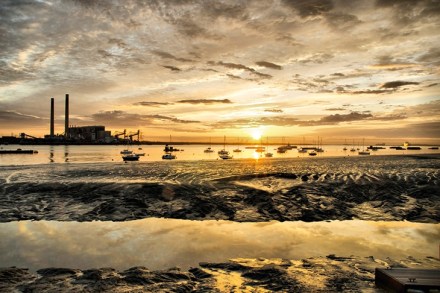
The great grey river stretched into the horizon. The sun was big and low in the sky. The air was very fresh and the clear sky streaked with smears of pink and orange. We had only a little left of the day. From our spot on the Globian Sluice, a steel grating promontory, we could see the gaunt cranes of DP World London Gateway port, smoking factories across the water on the Isle of Grain and a ship or two, loitering. Behind us, a blanket of fields and marshes, populated only by all kinds of native birds darting in and out of the hedgerows. And beyond, the City of London displayed its sparkling collection of cut-glass towers and they looked very shiny but very small from our perspective.

British street names

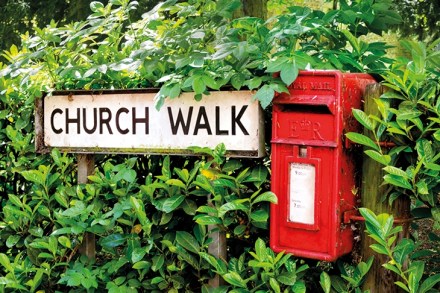
You know where you are with a British street name. I don’t mean literally. I mean there’s a tacit humility to our islands’ hodonyms: they are short, simple and unpretentious. Not for us the long-winded commemorations of national heroes or local worthies: no Avenue du Révérend Père Corentin Cloarec or Burgemeester Baron van Voerst van Lyndenstraat. Our street names are soundest away from the city. The High Street is thriving: it’s the commonest name in England and Wales, while Main Street leads the field in Scotland. Great Britain has some 3,600 of the two. A ‘street’ used to refer to a properly paved road, a practice imported by the Romans for their great connecting roads (Watling, Ermine, Stane, Dere).

Two days in New York

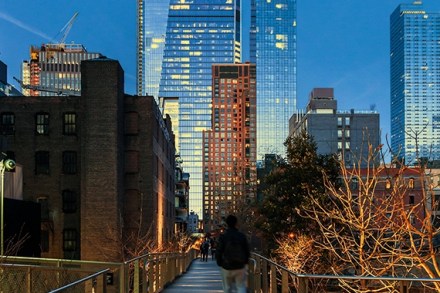
In Britain I never drink cocktails, but on arrival in New York it has become a ritual that my first drink is a Manhattan. Sipping this year’s drink, I realised that my regular two-day forays to the Big Apple have become one long ritual. We stay on Fifth Avenue to allow for a saunter among the brown baggers in Central Park, with delicatessen lunches from Zabar’s. Day one starts in Barnes & Noble to browse the latest US political biographies and pick up the new Alan Furst espionage paperback — after a diversion for Mrs Oakley to update her holiday wardrobe at Tommy Bahama.

Hastings

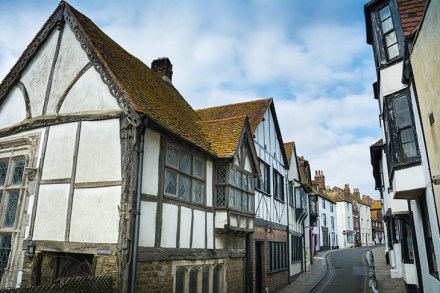
Kevin Boorman loves Hastings, and his enthusiasm is infectious. He was born here, he’s lived here all his life and his family have lived here for generations. He shows me a photo of his great-grandfather, who manned the local lifeboat. His parents met on Hastings Pier. Kevin works for the local council, and today he’s taken some time out to show me round. I can’t remember the last time I met anyone with such a fierce affection for their hometown. Of course it’s Kevin’s job to spread the good news about Hastings, but I wouldn’t be here to meet him if I didn’t have a soft spot for this place myself. I used to love coming here when I was a kid, when nothing was more thrilling than a trip to the English seaside.

The Bank of England

‘Safe as the Bank of England.’ So goes the old phrase. And yes, with walls 8ft thick, the Old Lady is pretty impregnable. Even the keys to her vaults are more than a foot long (the locks also now incorporate voice-activated software). Until 1973 the building was guarded at night by soldiers from the Brigade of Guards, who received a pint of beer with their dinner there. With all this security, how can you hope to get in? One answer came in 1836, when the directors received an anonymous letter inviting them to meet the letter writer in the bullion room late one night. At the agreed hour they heard some floorboards being dislodged, and looked down to see a man’s head appearing. He worked in the sewers, and had calculated that a drain ran directly underneath the vault.

Alpacas

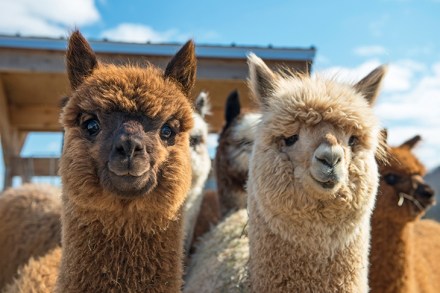
Of all the window displays in Amsterdam this spring there was just one that stopped me in my tracks. I had come for tulips, canals, the tremendous Van Gogh and Japan exhibition, but the unexpected highlight of my trip was the sight of a dozen alpacas beaming through the glass of a shop front off the Herengracht. Nothing could have made me forget the rain like this jubilant herd. I have long had a passion for alpacas but had never seen faux ones quite so lifelike. These were made from real alpaca fur — brown, white, chocolatey caramel — and were proportionally perfect, as though a craftsman had scaled a real one down in size and taken into consideration just how absurdly high its coat to body ratio is. Needless to say I bought one at once.

Being the perfect guest

Come to our house in France, say generous friends, come to Italy, come fishing. ‘How wonderful, what shall we bring?’ Nothing, they reply. They are lying, obviously. Bring cash, a thoughtful present for the house — pillowcases, new books — and your biggest smile. You don’t want the hosts rolling their eyes and punching the air when you drive away down that olive grove. The thing is, it’s not a hotel. There are people who can be a little peremptory with their friends’ staff. There is no point during the day or night when the dishwasher won’t need emptying and the cook will be delighted if you do that — extra points for cleaning the filter — or lay the table, wash the lettuce or do the bread run before breakfast.

Feminist children’s books

A friend of mine who commissions book reviews has added a sub-category to the list of titles coming up: ‘femtrend’, books about the female condition from a feminist perspective. ‘Grit lit is over,’ she says wearily, referring to edgy books about the marginalised. ‘Now publishers can’t get enough of the feminist trend about women who for centuries have been airbrushed out of history by toxic masculinity and oppressive patriarchy. Airbrushing the toxic white male. Female tribes. Modern courtesan. Now it’s draining down into children’s books too.

New Jersey

When my American friends invited us to stay with them in New Jersey, my 13-year-old daughter was thrilled. She’d never been to the States before, and she couldn’t wait to see Manhattan. I had to break the news to her that there were no skyscrapers where we’d be staying. Plainfield, New Jersey, is an easy commute from New York City, but it feels like a world away. Clapboard houses with star spangled banners: this is the real America. You’d never know Penn Station was just an hour away by train. I took my daughter into NYC, and we did all the touristy things proper travel writers look down on: we went up the Empire State Building; we went for a walk in Central Park. My daughter had a great time and so did I, but our best memories were back in New Jersey.

The Landmark Trust

About halfway across Lundy, if you’re trudging from the landing bay towards the north lighthouse, there’s a tiny holiday cottage all on its own. It’s a mile and three quarters from the island’s village and very basic inside. There are two bunks in the single bedroom; a dodgy oven in the kitchen that only works if you jam a wooden stick between the wall and the ‘on’ button; and, in the sitting room, the kind of gas lights that died out in the 1930s, because there’s no electricity — and so no wifi or TV — in the whole place. In other words, it’s bliss — at least for the right sort of person. Tibbets, as the cottage is called, is perched on the highest point of the island with views over the Bristol Channel on two sides.

Nucleus

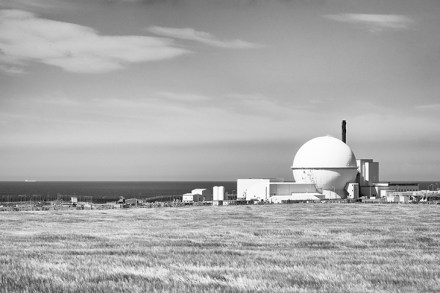
Doubtless Spectator readers based in Caithness will scoff when I say that the old fishing port of Wick (top right corner of the country, close to John O’ Groats) is a bit remote. But for the rest of us, it is. Indeed, its relative isolation is one of the reasons it was chosen to house the archive of the UK nuclear industry, in a brand-new public building called Nucleus. Another is the presence of the Dounreay nuclear plant near Thurso, a big employer in the area, now being slowly dismantled. I went to see Nucleus, relishing the beautiful 110-mile drive up the east coast from Inverness. Nucleus stands in the flat fieldscape north of the town next to another airport, Wick John O’Groats (only two scheduled services, to Edinburgh and Aberdeen).

The south of France

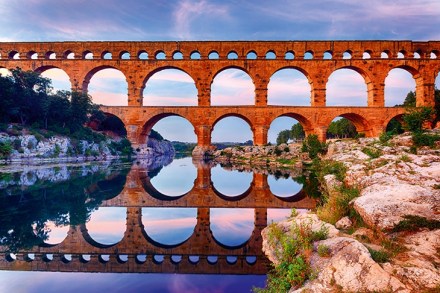
‘Saint-Tropez?’ said the French mother of a friend. ‘C’est un peu… “tacky”.’ She was distressed to think of our taking a house there — really, we were nearer Saint Paul de Vence, where they make artists, than San Trop, where they make tanning lotion — and suggested we stay with her in Provence. She promised lavender fields, cathedrals, boules in shady squares. ‘Vraiment civilisé.’ There are two souths of France. The tacky and the civilisé. Those who go to Aix (for Cézanne), Arles (Van Gogh) and Avignon (popes) think themselves a baskets--and-espadrilles cut above the Odabash girls and Vilebrequin boys of Cannes, Saint-Tropez and Cap d’Antibes hoping to be asked to a yacht.

Asterix

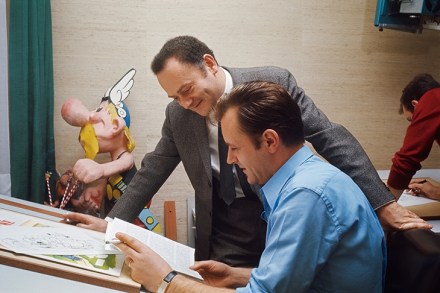
A sterix, te amamus! For those not lucky enough to learn their Latin from the dazzling René Goscinny and Albert Uderzo comic books, that means: ‘Asterix, we love you!’ How brilliant the Asterix books are and how very clever in their puns and deep appreciation of Roman history. A new exhibition at the Jewish Museum in Camden shows how much research Goscinny the writer and Uderzo the artist put into the books; and yet, like so much hard-won art, the result looks effortlessly light. The puns work in French and English, thanks to the inspired translations by Anthea Bell and the late Derek Hockridge. Getafix, the village druid, is Panoramix in the original French editions.

The English seaside

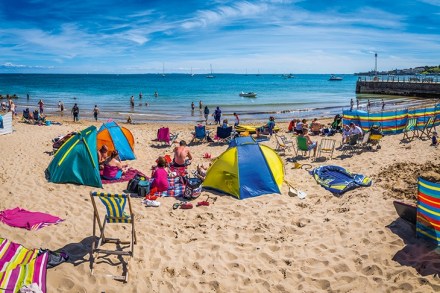
‘May I take a picture of your snake?’ I asked the tattooed man with a python around his neck, regretting it as the words left my mouth. He nodded. ‘What’s it called?’ ‘There’s two,’ he replied, gruffly. So there were! Two pythons comfortably coiled, glistening in the sunshine. It was the hottest early May bank holiday since the day was introduced in 1978, and the Kent coast was in full swing. The sea looked murky, the sand muddy and there was not a palm tree in sight but that did little to dent our enjoyment. You can’t beat an English beach day. On the scorching bank holiday in question, half of south London seemed to have disgorged onto Whitstable.

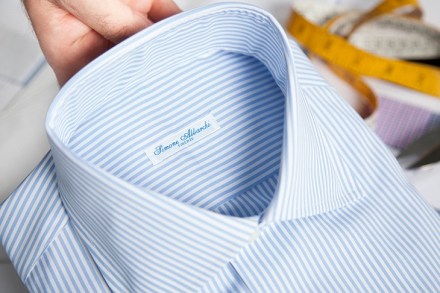
Shirtmaker Simone Abbarchi

The Premio Rezzori literary prize — held every May in Florence — is named after the Austrian writer Gregor von Rezzori, who lived for years in the small village of Donnini, east of the city, with his aristocratic wife, Beatrice Monte della Corte. Von Rezzori died some years ago but his formidable wife, now 92, is the doyenne of Florentine literary life and in the first week of May I was summoned by her from distant Bangkok, where I live, in order to be one of five finalists deposited in the Hotel Porta Rossa and groomed on how to behave at an awards ceremony to be held three days later in the Palazzo Vecchio. The other four of our merry band were George Saunders, David Szalay, Katie Kitamura and Andreï Makine. Margaret Atwood and her husband were there as well.

Matlock Bath

Revisiting cherished childhood memories can be dispiriting; everything appears diminished and one leaves questioning the nature of perception. Were we more open as children or less discerning? Happily, the village of Matlock Bath in Derbyshire, where I wasted so much of my youth and pocket money, is as delightfully dotty as when I last visited 30 years ago. Situated on the edge of the Peak District at the bottom of a limestone gorge, this enchanting mix of faded Victorian grandeur, tatty 1970s tourism and dreamy, Tolkien-esque landscape was once a fashionable spa resort where ladies in crinolines came to ‘take the waters’.