Notes on...

Underground ghost stations

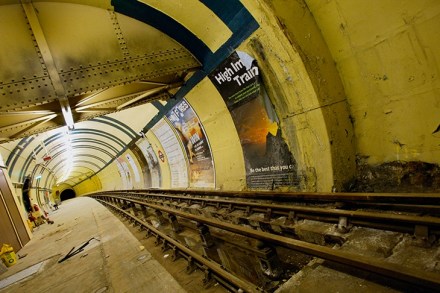
If you’ve ever travelled on London’s Piccadilly Line, you may have noticed that on the stretch between Green Park and South Kensington, the north-facing tunnel twice changes to a peculiar dark grey rather than the familiar charcoal black. I always used to look out for these grey bricks when I took the Tube back home to Hammersmith. This is because I was obsessed with disused, or ‘ghost’ stations, and on this stretch were two of the most distinguished: Down Street and Brompton Road, both of which were closed in the 1930s. Down Street is of particular interest, having served in the following decade as a bunker for Winston Churchill during the war. As a station, it had hardly been used after opening in 1907.
Cold water swimming

The woman on the path has come to a dead stop. She’d been shuffling along in that bunched-up posture we all developed when we bought smartphones, a two-fingered salute to the millennia of evolution that managed to pull humans into an upright position. Now she’s staring, open-mouthed, at her surroundings. I rather enjoy the shocked faces of passers--by who catch sight of us Serpentine swimmers in our flimsy costumes as we lower ourselves into the cold water each morning. I look still more shocking when I get out. My skin turns from its normal skimmed-milk colour to bright neon, as though it has been slapped. And it has in a way: when you first enter water that’s only a couple of degrees, you do get a shock.

Cairns

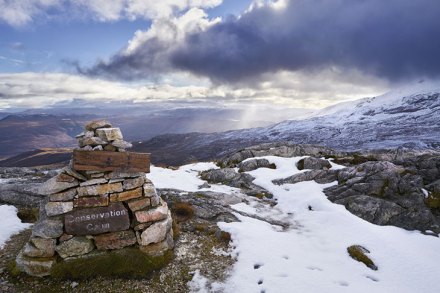
There are piles of stones and then there are piles of stones. Anyone can place one rock upon another, but it takes a special endeavour to get the Ordnance Survey to take notice. Once a clutch of cartographers formally recognise a cairn, it will stay mapped for centuries, if not millennia. Wander around Britain’s fells, moors and coastline and you’ll find all manner of rock piles punctuating the landscape. Often some 5,000 years old, these are our island’s most ancient standing constructions. Although they might look similar, cairns are not all the same. Summit cairns, for instance, indicate the precise pinnacles of hills.

Dedham Vale

Constable painted only three religious paintings, and when you see the one in St Mary’s Church in Dedham you realise why. The Ascension is a tricky topic, even for a master painter like John Constable, and his Jesus Christ looks distinctly awkward as he ascends into heaven — like a bloke at a toga party trying to dance to the house band. Never mind. Here in Dedham you can wander through the subtle East Anglian scenery he painted, and marvel at a nirvana that remains virtually unchanged. The tower of St Mary’s is a familiar motif in Constable’s paintings, and it’s a thrill to walk along the River Stour and see it as he saw it. It’s a few miles along the river to Flatford, where his dad worked as a miller, and where he painted ‘The Hay Wain’.

Booths

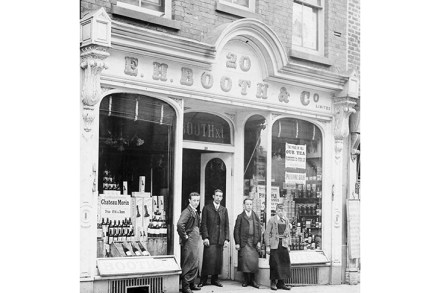
If you mention the word ‘Booths’ anywhere south of Knutsford, you will usually be met with a blank expression, followed by someone wondering if you are mispronouncing the name of a nearby pharmacy. But in the north-west the name is associated with a store native to Lancashire, which, uncharacteristically for a supermarket chain, holds a fond place in many people’s hearts. For those not aware of the Booths chain, it is often called the north’s answer to Waitrose. I think the comparison is a tad unflattering to Booths; while Waitrose has rapidly commercialised, Booths has retained its local roots and independent character. It has far fewer stores than other chains and is still very much a family business: the current chairman is Edwin J.

Brits in Paris

‘Yes, it’s here!’ says the sign above the English épicerie in Paris. ‘Yes, at last,’ thinks the starved expat wandering in a desert of croissants, magret de canard and monts blancs. Now for some real food: Fray Bentos pies, Quaker Oats, Fentimans lemonade, HP Sauce, Marmite, Tetley’s, Twinings, Dorset cereals, Cadbury’s Fruit & Nut, Altoids mints and Macsween  haggis. As a sop to Americans: Pop-Tarts, Lucky Charms, Aunt Jemima’s pancakes and marshmallow fluff in a jar. I know an Englishman who walks the length of the Canal Saint-Martin for proper Yorkshire Tea. There is a Pont cartoon ‘The British Character: Importance of Tea’ which shows four doughty picnickers getting an oil-stove and kettle going in a gale.

Cocaine

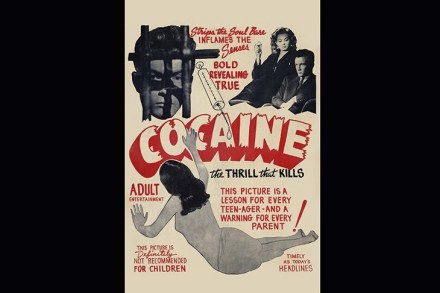
It always amuses me at this time of year to observe the fuss people make about quitting booze for a month. Because three years ago, after three decades of taking cocaine on a daily basis, I gave it up overnight. Over-eating, gambling, shopping, pornography — there’s no cheap thrill that can’t be mastered with a little self-control. I first took cocaine as a teenager working at the New Musical Express. As someone who had presented herself as a fearless punk when she was actually a shy virgin, I was already a big fan of the amphetamine sulphate, so when a man from a major record label said ‘May I?’ and starting racking out lines on my desk one day I was anticipating the familiar burn of baby laxative with the merest soupçon of speed.

Being snowed-in

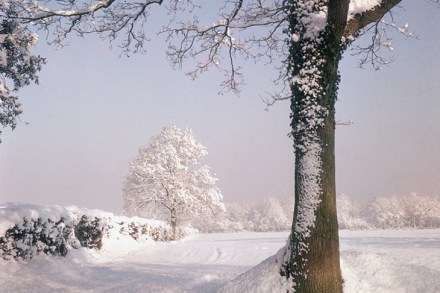
It took three hours for cabin fever to set in. Last Christmas, snowed in at the Oxfordshire homestead, my brother Ed and I, cooped up, cross, snappish, reverted to childhood squabbling. There’s a photo on my phone of Ed’s dog Rags standing at the kitchen door looking mournfully through the glass. We did let her out, but there are few sights so pitiable as a Chihuahua--Pomeranian trying to gambol, shivering, through four inches of snow. The first afternoon, I paced the upstairs corridor wondering how long before I went full Jack Torrance in The Shining. ‘All snow and no walk makes Laura a dull girl…’ By the third day, I was over the hump and well into hygge. Sheepskin socks, cashmere bobble hat, collected works of Somerset Maugham.

St Martin-in-the-Fields

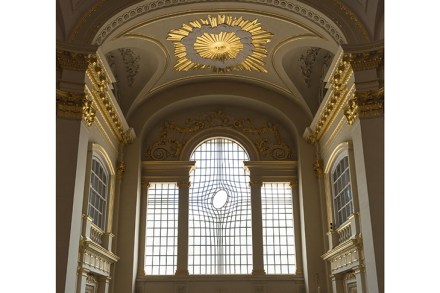
St Martin’s really did once stand in the fields, just as nearby Haymarket was a market selling hay. But the church has moved with the times. In 1924 it hosted the first ever religious service to be broadcast live. You might have expected Westminster Abbey or St Paul’s to get the nod, but neither wanted it — many in the religious establishment thought it would be wrong to transmit divine worship over the airwaves, as people might listen in pubs. Dick Sheppard, St Martin’s vicar at the time, was delighted to receive a letter saying that people in one south London pub had tuned in. Not only had they sung hymns for the first time since childhood, they’d discussed his sermon over their beer. Sheppard also got the better of George Bernard Shaw.

The Isle of Grain

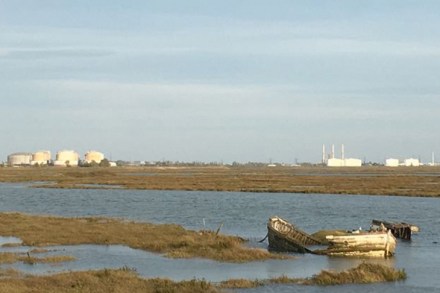
Perched on the edge of the Medway about 15 miles from Rochester is the Isle of Grain, a mass of wild marshes and pastures and great industrial infrastructure. Redshanks, curlews and egrets circle and dive around turbines, tunnels and tanks. The enormous chimney of the gas turbine power station stretches up into the enormous sky. In 1629, Thomas Johnson, the father of British botany, came to Grain and wrote of its bleakness. ‘Seeing nothing which could afford us any pleasure,’ he wrote, despairingly, ‘there was not a village near, nor the smoke of a chimney in sight, nor the barking of a dog, those usual signs of inhabitants, to raise our languid minds to any kind of hope.

Patricia Highsmith

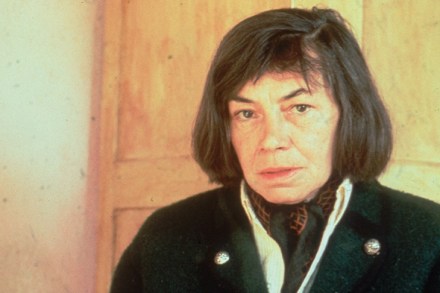
A new play, Switzerland, which opened in the West End this month, seems to have demonised Patricia Highsmith once again. I cannot quarrel with the overall impression given by the diligently researched biography by Andrew Wilson, but merely say that as one who knew and liked her over many years, the picture seems unfairly partial. We met for the first time in Florence in October 1952; I was 21, she 31. The Pensione Bartolini stood on the Arno facing the Ponte Santa Trinita. It was on an upper floor, and dominated by a huge dining room redolent of pasta, its windows looking out onto the river. Hardly had Pat Highsmith, lean and auburn-haired, arrived at the pensione than she was commandeered by Bernie, an American painter who had fought in Burma. Bernie plied her with wine and hospitality.

Watling Street

All roads lead to Rome, the saying goes. Well, all roads except for the Roman road of Watling Street, which at one end takes you to Dover (Dubris) and at the other Wroxeter (Viroconium) in Shropshire. I was always only vaguely aware of this thoroughfare but the name began, in recent years, to nag on my weekly visits to Canterbury (Durovernum Cantiacorum). When approaching the city centre from the station, I would see a street sign bearing the name on the side of a branch of Boots. It took some time to dawn on me that this was the very same Watling Street I had been told about in school history classes. The street sign in Canterbury isn’t unique, though: ‘Watling Street, EC4’ is affixed to a wall a few minutes’ walk from London Bridge station.

Drive-thrus

My wife and I have a set routine after landing back at Gatwick. We collect our bags, clear customs and are reunited with our car (Meet and Greet parking is by far the best value for money and avoids an hour or so of inhaling a mini-cab’s ‘vehicle deodoriser’). Then we head for the McDonalds ‘Drive-thru’ restaurant next to the BP garage, where Joanna normally goes for the Big Mac meal, while I vacillate between the McChicken sandwich and a bucket of chicken nuggets with a side order of fries. We look forward to this guilty secret so much that often we discuss our order in detail while queuing at passport control. Whatever we choose fills us up and is a marked improvement on what you can buy on-board.

The Dengie Hundred

J. A. Baker, an arthritic and short-sighted birdwatcher from Chelmsford, compared the British wilderness to ‘the goaded bull at bay, pierced by the lance of the picador’. Baker found solace in the unblemished solitude of the Dengie Hundred, where he wrote one of the strangest and most influential nature books ever written, The Peregrine, which tracks the daily lives of a pair of peregrine falcons. He died in the 1980s but the wilderness of the Dengie Peninsula, 50 miles east of London, where Essex marshland meets the Northern main, is still largely as it was. Here, wildfowl still come and go in their thousands. Waders take refuge in the glasswort and sea aster, and starlings flit through the sky like airborne sardines.

Morwenstowe

The first time I encountered Morwenstowe on Cornwall’s north coast I was alone. It was early spring and the church wore a fresh skirt of primroses. As I crossed the stone stile next to the lych-gate, the churchyard inclining before me, I glimpsed beyond the sturdy grey church tower a triangle of greenish blue, a patch of sea tantalisingly held between the sides of the combe. The faint but undying roar of the Atlantic rolled in across the pastureland. Here was a scene of raw beauty preserved by isolation, a fortuitous harmony of landscape, architecture and perspective where something of the spiritual, the poetic undeniably lingered. Now in early autumn I return, greeted by rooks loitering by the gate like bored pall-bearers.

Davenports Magic

It’s a very fitting place for a magic shop. Hidden away in the maze of pedestrian tunnels that lead from Covent Garden to Charing Cross station, Davenports certainly takes some finding. But that’s to the good — a complete absence of passing trade means they no longer have to stock stink bombs and novelties, as they did in their old location opposite the British Museum. These days Davenports concentrate solely on the proper stuff. The shelves boast Svengali decks and thumb tips, gimmicks like the Raven (it’s a beauty), and instructional DVDs and books by everyone from David Devant to Roy Walton. If those names are familiar to you, you’re probably a pro.

Home bars

When I mention to people that I have written a book about home bars, the most common response is, ‘my parents/grandparents/swinging uncle used to have one of those globe cocktail cabinets’. The other thing they mention is Only Fools and Horses. For years, having a bar in your home was seen as the height of bad taste. It’s a far cry from the home bar’s 1950s heyday. After the second world war, people were spending more time at home, but still wanted to lead the cocktail lifestyle. It was the suburban American dream: after a hard day’s work, drive home in your shiny new Chevrolet, put Frank Sinatra’s Songs for Swingin’ Lovers on your state-of-the-art hi-fi while your wife knocks you up a martini at your home bar.

Mann and motorbike

In Thomas Mann’s astonishing novel The Magic Mountain the indolent young Hans Castorp visits his brave, terminally ill soldier cousin at a sanatorium at Davos, high in the Swiss Alps. Intending to stay three weeks, he remains seven years. A dubious diagnosis of light tuberculosis is all the excuse he needs to dismiss ‘the flatlands’ and discover, with increasing wonder, that in the midst of death he is in life. We could have done with more than one night at Le Grand Hôtel Plombières-les-Bains in Eastern France in order to penetrate the Thermes Napoleon to which it is attached.

Hebden Bridge

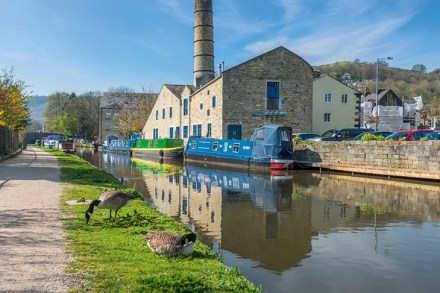
Bernard Ingham once told a story about a reporter from the Financial Times who went to cover an election in Ingham’s hometown of Hebden Bridge. The reporter went into a café and ordered a cappuccino. ‘Nay lad,’ said the waitress. ‘You’ll have to go to Leeds for that.’ Ingham told that story to illustrate the no-nonsense attitudes of the rugged town he grew up in — attitudes that shaped the man who became Margaret Thatcher’s muscular press secretary. So it’s wonderfully ironic that Hebden Bridge is now full of fair trade craft shops and vegan cafés. Nowadays you’ll have no trouble ordering a cappuccino — so long as you like it made from ethically sourced coffee beans.

Coming second

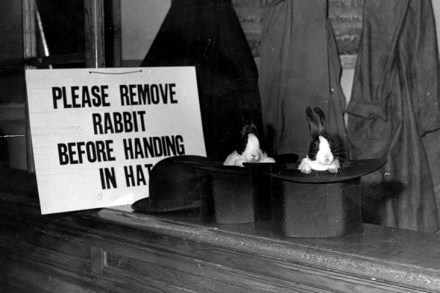
Who was the second prime minister? Everyone knows Robert Walpole was the first. Firsts get all the fame and glory. But what about the poor seconds, elbowed into the shadows of history? Isn’t it time they were given some love? Step forward, the Earl of Wilmington, PM from 1742 to 1743. Let us celebrate the fact that his country house in Warwickshire appeared as a monastery in Carry On Camping — and was the inspiration for Croft Manor, Lara’s childhood home in the Tomb Raider games. Likewise, no one knows very much about James Garfield, the second US president to be assassinated. I certainly didn’t until I researched him for my new book, The Book of Seconds. I didn’t know that he could write in Latin with one hand and, simultaneously, in Greek with the other.