Notes on...

Literary motorcycling

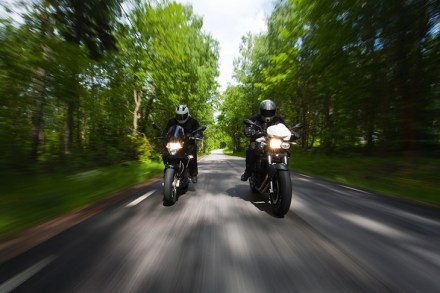
No seat belts. No airbags. Just air, and coming at you as fast as you like. Motorcycling shouldn’t be allowed, really, but thank God it is. Hanging on to an engine braced between two wheels as you travel through the countryside is worth any dose of mindfulness. The NHS should prescribe it. Even with the cost of broken bones and, alas, the occasional overheads of the mortuary, it would save money on mental health treatments. Your senses are stimulated in a way that is impossible in a car, with the force of movement intensifying an ordinary experience. Smells and temperature become suddenly distinct as you dip or rise, fly through conifer or broad leaf, past farmyards and bonfires. Other traffic on a good sweeping road becomes an irrelevance.
Much Wenlock

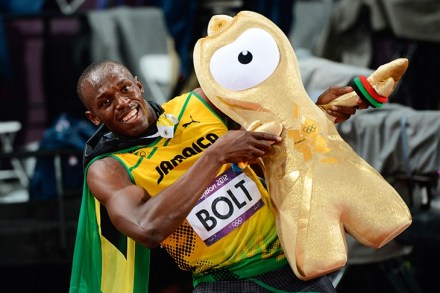
There were two mascots for the 2012 Olympic and Paralympic Games. One was called Mandeville, obviously because Stoke Mandeville’s games are seen as the precursor to the Paralympics. But why Wenlock? Ever been to Much Wenlock? You should go: not only is the Shropshire town a delightful place in itself, it was also the birthplace of the modern Olympics. Surely not, you say. Surely the International Olympic Committee was inspired by ancient Greece? Well in a more distant sense, perhaps. But the immediate catalyst was Much Wenlock’s Olympian Games, which had been happening since 1850. William Penny Brookes was the town’s doctor, and seeing the damage local men were doing to themselves by spending all their spare time in the pub, he founded the games.

Wet weather boots

‘Foot – foot – foot – foot – sloggin’ over Africa — / (Boots – boots – boots – boots – movin’ up and down again!).’ I do like Rudyard Kipling. I know I’m not supposed to. Trigger warning: empire, jungle stereotypes, microaggressions against monkeys, cultural appropriation of other people’s elephants. But what a stomping great marching poem ‘Boots’ is. Learn at least the first verse by heart: it’s the right rhythm for walking when the rain comes on and you’re miles from home. Boots–boots–boots–boots. Imagine the dust stamped up from the veld.

Dinner at Modigliani’s

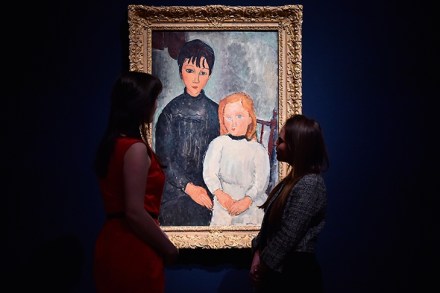
When you arrive for dinner and your host is massaging a purple cauliflower, you know you’re in for an interesting evening. I am in a top-floor flat in Paris, which was once the domain of Amedeo Modigliani. The Italian artist was famous for his louche lifestyle — drink, drugs, women — but we know him best for those serene portraits with empty eyes. He died of tubercular meningitis in this very flat at the age of 35. His ghost doesn’t stalk the rooms, though, and no sketches were found beneath the floorboards — much to our hosts’ disappointment. They are Nicolas and Monia Derrstroff, a chef and journalist, who host evenings in their apartment for curious tourists and art enthusiasts via Air-bnb.

Lewes

Autumn is upon us, and the streets are full of families in fancy dress. People of all ages are dressing up, everything from smugglers to suffragettes. In Lewes it can only mean one thing — it’s bonfire time again. Elsewhere in Britain, Bonfire Night has been overwhelmed by Halloween, but here in the historic county town of Sussex (forget about this newfangled East Sussex nonsense), Guy Fawkes is still going strong. This is no tame firework display, organised and sanctioned by the council. It’s a celebration of local kinship — half a dozen bonfires, one in each part of town, each with its own loyalties and rituals.

Cruise ship pianists

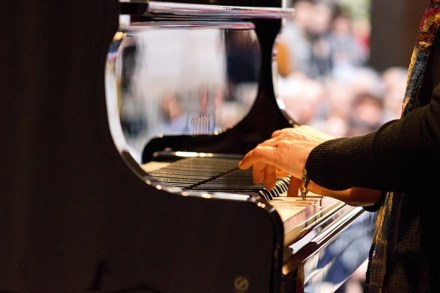
When Crystal Cruises invited me to join their flagship as the guest classical pianist for a springtime voyage around the Aegean, I had my doubts. Inspecting their website, I anticipated jazz-age glamour, Art Deco-inflected design and gourmet cuisine. But playing Beethoven on a boat? What about the noise, and the movement — not to mention the psychological effect of the environment on my interpretation? How, for instance, would my inner Richter fare in a face-off with my inner Liberace in a venue called the Galaxy Lounge? I have a genetic piano-seeking compulsion, however. I play them wherever I can find them. Could a luxury passenger vessel, I asked myself, really be much worse than a rowdy London pub? A Brazilian jungle lodge?

Trains in Spain

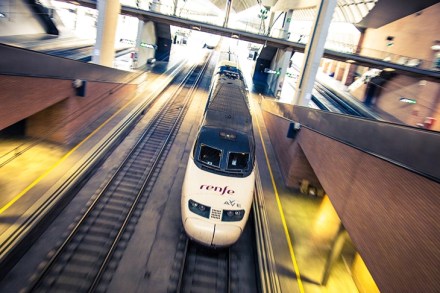
The first railway line in Spain, from Barcelona to Mataro a few miles up the coast towards the French border, was built in 1848 by British workers and with British expertise. I was reflecting on this, and the huge difference today between the services provided by our two countries’ railways, as the train passed through Mataro on the way to Girona. The 90-minute journey, for those of us of a certain age with a tarjeta dorada, cost five euros. The return journey to Barcelona by express train took 38 minutes and cost less than ten euros. Train travel in Spain is not only amazingly cheap; it is comfortable, efficient and almost always punctual.

Soho drinking clubs

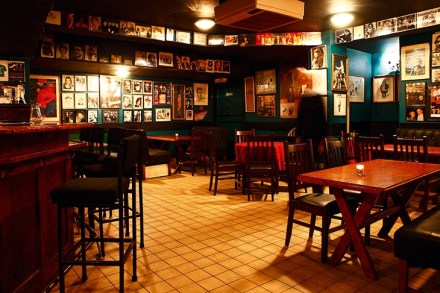
When someone says ‘Let’s go for a drink at my club’, what do you imagine? A grand St James’s establishment like Boodle’s or White’s, or perhaps a media hangout such as the Groucho or Soho House? What you probably don’t think of is an unmarked door and a flight of rickety stairs. Yet through unpromising-looking doorways in and around Soho are little clubs where you can take a break from the 21st century. Places such as the Phoenix beneath the Phoenix theatre on Charing Cross Road, Gerry’s on Dean Street and the Academy on Lexington Street are relics of a time (Gerry’s has been going since 1955) when pubs had to close after lunch and not open again until the evening. People needed somewhere to drink in the afternoon and after 11 p.m.

Prague

Prague. Prague. It helps to say the name at least twice as a countermeasure to the ridiculous ease of modern travel — especially when visiting cities of one syllable. Another countermeasure is to arrive by train, where the sweep of the landscape gives a better sense of Prague as the grand Bohemian capital than as a retreat for Hapsburg aristocrats and easyJet stag parties. There are direct trains from Munich and Budapest, and of course Vienna and Bratislava, to Prague’s Hlavní nádraží station, originally christened Wilsonovo nádraží after the US president who championed Czechoslovak independence. A new Wilson monument stands outside the station, replacing the original statue, which the Nazis melted down for its bronze.

Gresham College

How many people need to gather together before it becomes more likely than not that at least two of them will share a birthday? The answer might surprise you. It’s just one of the many intriguing facts that I’ve learned at Gresham College. Gresham was founded in 1597, the brainchild of Thomas Gresham, king of what’s now called the Square Mile. He had also established the Royal Exchange, and decreed that rents paid by merchants there should fund free lectures open to anyone. The arrangement continues to this day. No need to enrol or book: anyone can turn up at any lecture that takes their fancy. So next time you buy a Paul Smith T-shirt or Tiffany ring at the Exchange, congratulate yourself on your contribution to public learning.

Dover

When people come to Dover, it’s usually to pass through. The magnificent castle on the cliffs may be a tourist attraction in its own right, but for the most part, Dover has been a place people go through on their way to or back from the Continent. It’s never been much of a seaside destination. The rise of cheap flights, the end of duty-free and the advent of the Channel Tunnel diminished its status as a port, and the 2008 crash hit it hard. The number of vagrants, street drinkers and empty shop premises in the centre bear witness to a town that has seen better times. Yet things are looking up. Back in May, to the surprise of Doverians and the world’s media, a new Banksy mural was unveiled on the side of an old amusement arcade in York Street.

Tapestries

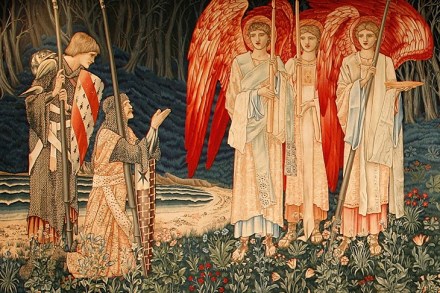
It is rare nowadays to see someone pull out a half-finished tapestry from their handbag and get on with their stitching. In fact, tapestry is becoming increasingly unfashionable; ‘nomadic murals’ (as architect Le Corbusier described them) are often relics of the distant past. So much so that they have plummeted in price. ‘People are streaming into contemporary art, and tapestry is becoming more of a niche market,’ says Marcus Radecke, Christie’s European head of furniture. ‘Whereas a large Brussels baroque tapestry might have fetched £50,000 in the 1980s or 1990s, nowadays it would sell for £20,000 or £25,000.’ That may still sound a lot for woven thread, but it’s a long way short of the record-breaking $1.

Greater Oxbridge

Oxbridge is an ivory-tower state of mind, perhaps, or at least two ancient rival universities, but how about this: in the future the word could describe a fully connected English economic region, a rival both to London and to the great midlands and northern cities. This is the aim of the National Infrastructure Commission, headed by Lord Adonis. This advisory body, a legacy of the Osborne chancellorship, wants to create a 130-mile economic corridor linking the two varsity towns and their hinterlands just beyond the Chilterns. It is running a competition to glean ideas as how to best make the new places in it. A fast cross-country road is planned, while the long-abandoned ‘varsity line’ railway from Oxford to Cambridge is being re-established bit-by-bit.

Saltburn-by-the-Sea

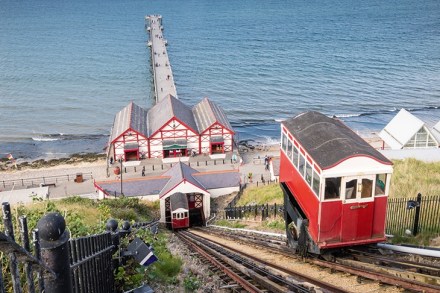
When towns are on the up, there is a brief period when they inhabit what I would call the Goldilocks Zone. Stuff has changed for the better and there are suddenly very agreeable things to do, places to eat etc, but the area has not yet been comprehensively and irredeemably arseholified by arseholes. There is still a retention of the old: it hasn’t all been expunged. For Notting Hill, I guess that would be the early 1970s — after the race riots and before Cameron et al moved in. For lovely Saltburn-by-the-Sea, 12 miles from Middlesbrough, it may be just about now. Or perhaps it is already drifting beyond the pale.

Boxer shorts

Chaps, be honest. Have you achieved nether-region nirvana? Twenty years ago I had reached the summit of underwear style and comfort but was  haunted by the fear that one day I would come crashing down from these Elysian heights. My brand would go out of business and I would be confronting knicker nemesis. And sure enough, a while ago my fashionista friend Kitty Go duly reported that Regatta of Manila, purveyor of the world’s most fabulous baggy boxers in the jauntiest fabrics, was no more. The crisis had struck. Let’s waste no time on jockeys, Y-fronts, briefs or those execrable jersey cotton hybrids or clingy lycra atrocities beloved by the clueless young.

Watercolour

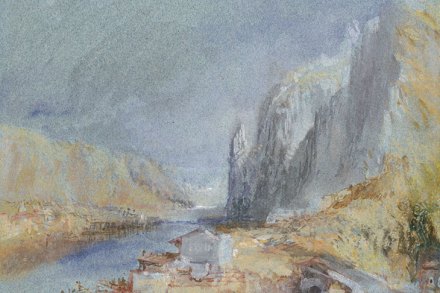
Like many artistically inclined children, I was given a set of Daler Rowney watercolours for my birthday one year. My first paints! What delights would I unleash with these cubes of colour? Well, practically none, as it turned out. Unschooled in the art of watercolour and evidently lacking any instinct for the medium, I used them, as undiluted as possible, to colour in my drawings of horses and Dogtanian characters. It was a bit fiddly with the blunt brush provided and, frankly, felt tip worked better. I went on to art school where, in the late 1990s, everyone would rather have dropped dead than be seen prodding around a tin of watercolours. The closest we got was watching the hapless amateurs in the surprisingly addictive Watercolour Challenge.

The Surrey hills

I live in the oldest village in England. How come? Well, in a field below the big house, there is a Mesolithic pit dwelling dating back some 10,000 years. This is the oldest known man-made dwelling in England — at least according to Dr Louis Leakey, who excavated it and wrote about it in The Spectator in December 1950. Prehistoric man instinctively knew that the Surrey Hills are a wonderful place in which to live. Today, I suspect most people see them as a slightly blurry backdrop to the annual RideLondon-Surrey cycle infestation. I see them as a hidden gem. Surrey is England’s most wooded county and if you drive east from Guildford, birthplace of P.G.

Goodwood

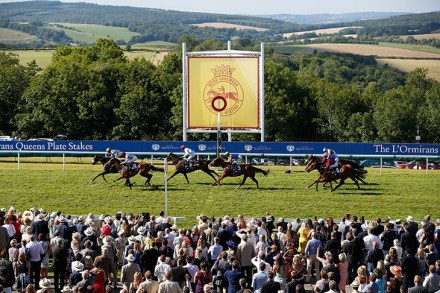
The South Downs cover 260 sq miles from Hampshire’s Itchen Valley to Eastbourne in East Sussex. Nestled near the southernmost point is Goodwood racecourse, which claims to be the most beautiful track in the world — and you can certainly see why. The downs are stunning, and from the top of the stands you can look out for miles. The course — part of the Goodwood estate — is owned by Charles Gordon-Lennox, the current Lord March and future 11th Duke of Richmond, who lives just a few hundred metres away in Goodwood House. His true passion is, admittedly, cars. He is president of the British Automobile Racing Club, and in 1998 reopened the Goodwood Motor Circuit, which had closed in 1966.

Shropshire

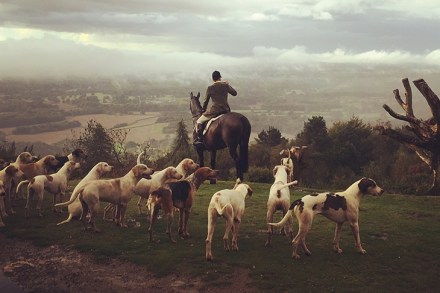
I found the land of lost content last week, west of the Clee Hills in the Shropshire Housman wrote about, but hardly knew. It is deep England, thick with trees, stone-built farms that look like forts and tracks in gullies cut by ancient feet. The villages here have rhythmic names: Bouldon, Peaton and Cockshutford — or simple Heath, where there is now no village at all, only the pure Norman chapel standing in grass with its long old iron key on a hook outside. It was built for a settlement lost at the Black Death. Few sounds here are unnatural: you hear birdsong more than cars or planes. I was riding my horse James, with two friends on Cassie and Rubin, along paths bursting with nettles.

Southwold Sailors’ Reading Room

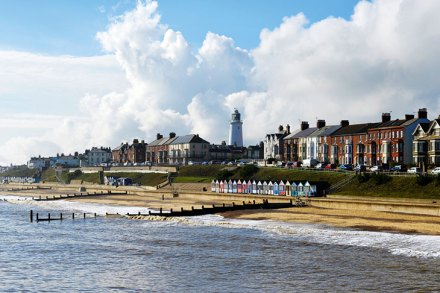
The Southwold Sailors’ Reading Room is a gorgeous bit of Inside. Like any coastal town, Southwold has an awful lot of Outside, which it can throw at you very hard and very fast. So the small redbrick building tucked away near the seafront is both charming and useful. It was built in 1864, in memory of Captain Charles Rayley. He’d been in the Royal Navy since Trafalgar, fighting pirates in Borneo and privateers in the West Indies, one of whom gave him a sabre cut across the cheek. When Rayley died his widow commissioned the Reading Room as an alternative to Southwold’s pubs, a place where sailors and fishermen could shelter from the elements without jeopardising their liver or their morals.