Lawrence Osborne

Lawrence Osborne is a novelist, short-story writer and screenwriter.

The glorious weirdness of Christmas in Thailand

From our UK edition

Bangkok Christmas in Thailand is one of the strangest festivities of the modern world. A country that is almost entirely Buddhist, which does not recognise Christmas as a public holiday, whose people have almost no idea what the event means, nevertheless erects giant glittering Christmas trees in its malls and intersections. These are larger and more numerous than the ones you see in London. It’s not difficult to imagine a future where British tourists fly to Bangkok to rediscover the mood of Christmas, not in shopping but in pagan feeling. December shoppers in the Bangkok mega-malls are greeted by choirs of small girls in Santa hats who ring bells and sing about the Wenceslas and the feast of Stephen.

The bliss of un-fame

From our UK edition

In July, astronomers at the Asteroid Terrestrial-impact Last Alert System discovered an interstellar object racing through the solar system at a velocity never before seen in a purported comet. Only the third interstellar object ever observed, and now named 3I/ATLAS, it has become the subject of inevitably extravagant internet theories. This possibly ten-billion-year-old visitor has now ‘disappeared’ behind the sun, though not before the European Space Agency photographed it from Mars as it passed by. It looks like a luminous cylinder. Optical illusion, says Nasa. Interstellar objects enter our unconscious just as phases of the moon do. Who knows if they also, like the moon, exert mysterious influences on terrestrial minds?

Gavin Mortimer, Colin Freeman, Lawrence Osborne, Lionel Shriver and Anthony Cummins

From our UK edition

34 min listen

On this week’s Spectator Out Loud: Gavin Mortimer looks at how the French right can still win (1:48); Colin Freeman interviews Americans who have fought in Ukraine and feel betrayed by Trump (11:01); Lawrence Osborne details his experience of last week’s earthquake, as he reads his diary from Bangkok (18:38); Lionel Shriver defends traditional, monogamous marriage (24:07); and, Anthony Cummins examines media satire and settled scores as he reviews Natasha Brown’s Universality (31:13).  Produced and presented by Patrick Gibbons.

The day Bangkok crumbled

From our UK edition

Last Friday I was on my 15th-floor balcony with an early afternoon coffee, watching dogs play among the banana trees below. It was strangely quiet. Looking across the skyscrapers that form my horizon, I noticed the 137 Pillars – a luxury high-rise hotel famous for its rooftop pool perched 37 storeys above my own street. Down the tower great cascades of water, thousands of gallons, were pouring from that rooftop pool. I looked at the jungle plants on my balcony. They were moving back and forth, the blades of the rubber trees swaying as if issuing a warning, and I felt dizzy. Soon all the towers around me were exploding with the same cascades of pool water. For a few seconds, before I had realised anything, I thought: ‘How beautiful.’ Then I stood up and keeled over.

Demonia: a short story

From our UK edition

They passed into the harbour of Favignana at the beginning of spring, the island’s single small mountain heaving into view from the Trapani ferry, burned brown by centuries of parch and abandonment. A disused Bourbon castle sprawled upon its summit, while below it near the water stood an old tuna-processing factory with 19th-century industrial chimneys. The raffish little port lay alongside. They came down on to a deserted quay with the harbour on their right filled with the pale blue and copper boats of the bluefin fishermen listing in shallows. The fishermen seemed to have walked off into a different life, perhaps never to return.

The handmade suit I’ll never wear

From our UK edition

Someone somewhere must surely have calculated that Bangkok has more doctors and tailors per capita than anywhere on Earth. These two industries, healthcare and clothing, must account for a prodigious share of tourist revenues, and they both operate on similar principles: make the customer feel pleasant even as the results disappoint. It’s a formidable business model, not least because it persuades thousands of customers that they have scored a bargain and therefore cannot be as disappointed as they actually feel. Deeply gaslit, the customer fervently believes in what he has purchased – even if his new suit would not look amiss on a Jacques Cousteau research boat or his ‘world-class’ surgeon operated on the wrong foot, something that happened to an acquaintance of mine.

Why foreigners can’t speak Thai

From our UK edition

For 12 years now I have been learning Thai from my maid, Pi Nong, who has been employed in our building for decades. It’s a much misunderstood relationship. Here the maid is an obligatory fixture, integrated into daily life for foreigners and Thais over the age of 45 and over a fairly modest income level. For foreigners the maid is a linguistic go-between, a bridge between two worlds, a portal into a new language. While she is making me dinner she gaily informs me that farangs cannot eat Thai food even though she is making it for me now and that, even more mysteriously, they cannot speak Thai – even though we are speaking it now. Her explanation is that our mouths are different and that we are malevolent.

The bliss of Phuket’s Millionaire’s Mile

From our UK edition

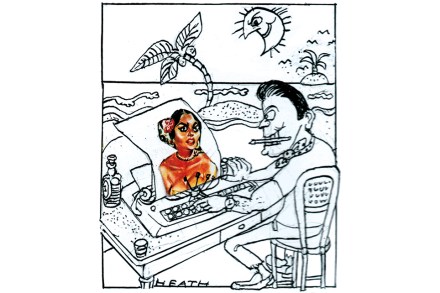
Many of my friends, stranded by the Hollywood writers’ and actors’ strikes, have temporarily given up their film projects and settled down to write that hopeless novel which they could never finish before. Those film projects were more alluring – more necessary – than the lingering novels because they at least held out the prospect of one day bringing them, the openly despised writers, to the kind of fantasy scenarios towards which they have worked all their life. For some, a timbered Elizabethan priory in Sussex; for others a tropical villa perched on a headland with a constant blue bar of sea to make the approach of death feel philosophical. (I’m in the latter category.) It’s a dream both childish and rooted in childhood.

The strange inspiration of the Gobi desert

From our UK edition

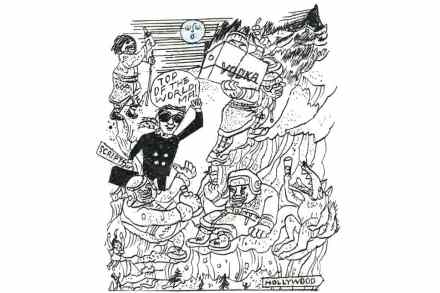
The first time I went to Mongolia was in 2014, when I travelled across the country with the actress Michelle Rodriguez and a group of her friends, courtesy of the Mongolian-American conservationist Jalsa Urubshurow. Driving out of Ulaanbaatar at dawn, we stopped at a market on the outskirts of the city to buy caviar, blinis and crates of Chinggis vodka for the 12-hour drive. Because I was not a follower of the Fast & Furious franchise, I had little idea who Michelle was, but every vendor in that tiny market knew her on sight. The place came to a standstill at 5 a.m. It was clear that the terrifyingly long reach of Hollywood extends even to the Gobi desert, where presumably pirated copies of the Fast & Furious movies light up a thousand gers on winter nights.

The argument that found its way into The Forgiven

From our UK edition

I moved to Bangkok ten years ago in order to be in a place where nothing happens, where no one knew me and where nothing cost very much. A decade on, after a military coup, running street battles between protestors and soldiers, a ceaseless social life and costs reaching about the same levels as Brooklyn, I have retained at least one of my original reasons for leaving New York: radio silence relative to events in my far-off ‘career’ on the other side of the world. This month my novel about Hong Kong, On Java Road, came out, and so did the film version of an earlier novel, The Forgiven. The principal response outside of reviews has been three death threats postmarked China. It is monsoon here, the rains coming in at 5 p.m.

It’s getting harder to laugh off the idea of UFOs

From our UK edition

When the late-night talk-show host James Corden asked Barack Obama about UFOs last month, there was as usual an air of nervous joviality surrounding the subject. Bandleader Reggie Watts pressed him as well and Obama, as if relenting, admitted two things. Firstly, that he could not divulge all that he knew on air; and secondly, that the slew of footage released by the Pentagon in the past two years showing UAP — ‘unidentified aerial phenomena’ — is in fact real.

Korean film has mastered the supernatural horror genre

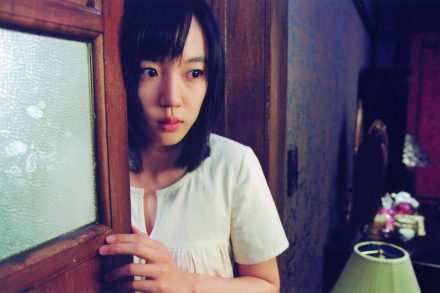
There is a moment in the Jung brothers’ 2007 ghost film, Epitaph, when a young doctor in wartime Korea realizes that the wife he adores does not have a shadow. He is entertaining her with a shadow puppet show in their home when he notices the aberration. ‘Walk to me,’ he says as he waves a naked light bulb in front of her. She had been a visiting medical student in Japan a year earlier and, unbeknownst to him, had died in an accident. It’s a moment that perfectly illustrates the psychological subtlety and brilliant scene-making of Korean film. Epitaph is about a group of young doctors working in a hospital under the Japanese occupation.

korean

How Korean cinema mastered the art of horror

From our UK edition

There is a moment in the Jung brothers’ 2007 ghost film, Epitaph, when a young doctor in wartime Korea realises that the wife he adores does not have a shadow. He is entertaining her with a shadow puppet show in their home when he notices the aberration. ‘Walk to me,’ he says as he waves a naked light bulb in front of her. She had been a visiting medical student in Japan a year earlier and, unbeknownst to him, had died in an accident. It’s a moment that perfectly illustrates the psychological subtlety and brilliant scene-making of Korean film. Epitaph is about a group of young doctors working in a hospital under the Japanese occupation.

Violence has long flowed under Bangkok’s surface

From our UK edition

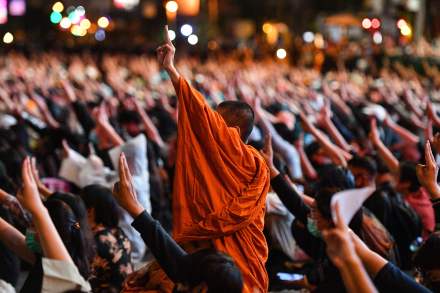
Three years ago I sat down to write a novel set in my adopted home city. Placing its claustrophobic action in the near future, I had no trouble imagining my mostly foreign characters haplessly trapped inside a decaying high-rise apartment complex and surrounded by political upheaval. Thailand has endured more military coups since 1945 than any nation on Earth, and I myself have lived through two, in 2006 and 2014, while the violent uprising of 2010 occurred while I was far away in New York. They are peculiar coups by world standards. Two Turkish friends who visited in 2014 were disgusted by the lack of tear gas and fatalities inflicted by air power. ‘You call this a coup?’ they asked.

Shirtmaker Simone Abbarchi

From our UK edition

The Premio Rezzori literary prize — held every May in Florence — is named after the Austrian writer Gregor von Rezzori, who lived for years in the small village of Donnini, east of the city, with his aristocratic wife, Beatrice Monte della Corte. Von Rezzori died some years ago but his formidable wife, now 92, is the doyenne of Florentine literary life and in the first week of May I was summoned by her from distant Bangkok, where I live, in order to be one of five finalists deposited in the Hotel Porta Rossa and groomed on how to behave at an awards ceremony to be held three days later in the Palazzo Vecchio. The other four of our merry band were George Saunders, David Szalay, Katie Kitamura and Andreï Makine. Margaret Atwood and her husband were there as well.

Peaceful yet violent: the Thai paradox that still baffles the West

From our UK edition

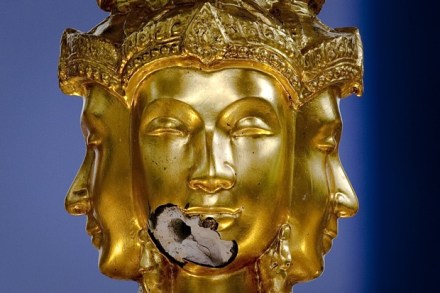
The scene of the recent bombing at the Erawan shrine has swiftly been remodelled to make it seem as though nothing happened. Upbeat slogans - 'Stronger Together' – and a forensically dubious ‘clean-up’ have gone hand in hand with a media campaign to reassure millions of tourists that they are safe in the Land of Smiles. The Chinese, however, have cancelled many of their vacations and the investigation rumbles on inconclusively, as is often the way with Thai investigations, which usually peter out in a vague inconclusiveness. An image is starting to form of Thailand as a uniquely dangerous tourist destination, riven by political violence and unprovoked attacks on hapless tourists.