Notes on...

Chelsea Green

Splats of calves’ liver in a puddle of blood; rabbits, headless, stretched and stripped of fur; and plucked poussins, nestling together in plastic trays. All garnished with sprigs of parsley. Welcome to Jago’s butcher, Chelsea Green, where the liver is ‘as tender as a butcher’s kiss’, as Rob the butcher tells me as I consider raw flesh through the glass. A few doors down, the cobbler runs what was previously his father’s shop. He has worked on the green since he was a child, and returns your shoes in a bag made of thick white paper. Then there’s Sign of the Times, a dress agency, selling secondhand designer clothing at reasonable prices. It is clean, clear and well laid out under bright, white and unflattering lighting.

University Challenge

One programme that still shines out as a beacon of intellectual rigour among the sea of dross on television is University Challenge. As always, teams of four students from Britain’s best universities battle it out for the series championship. Rather than assuming the viewer is an idiot, like most factual programmes, it works on the basis that we have a shared culture. There are always questions on kings and queens of England, Shakespeare and classical music. Even if the viewer doesn’t know the answer — and the questions are often fiendishly hard — the producers expect us to understand the question, except when it’s about quantum physics. The top teams are usually spectacularly good on high culture but struggle with more contemporary arts.

Long-distance walking

Long-distance walking is all the rage these days. There are all-nighters staged by charities, for instance the annual MoonWalk in London, which raises funds to fight breast cancer: participants of both sexes walk marathon and half-marathon routes wearing bras. The outfits might have changed, but when it comes to foot-slogging, long-distance has a long history. Charles Dickens liked a nocturnal ramble. He did it to combat sleeplessness, and on one particular night in October 1857 walked the 30 miles from his house in Tavistock Square to his country home in Kent.

Southend-on-Sea

Standing at the end of Britain’s longest pier, on a cold and misty morning, looking out across the Thames Estuary, I wondered, for the umpteenth time: why do people take the piss out of Southend? It’s got no airs and graces. It doesn’t take itself too seriously. Yet out here, surrounded by still grey sky and still grey water, with only a few seagulls for company, I’m struck by its barren windswept beauty. You’d never guess London was only an hour away. Southend-on-Sea has been a running joke for as long as I can remember. Even the train to London was known as the Misery Line, on account of its endless delays. Yet lately, something’s changed.

Monet in London

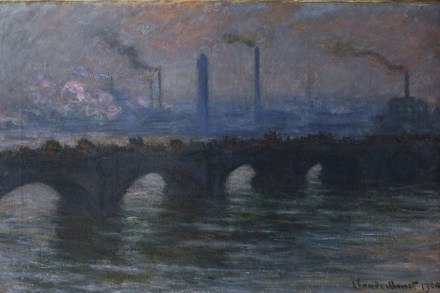
The Savoy was too sumptuous, complained Claude Monet, returning to the hotel in 1904. His rooms — one for sleeping, one for easels, canvases, palettes, with a balcony over the Thames — were too distractingly plush. He had been happier painting with his knees up to his chin in his ‘bateau atelier’ (a rowboat studio) on the Seine at Argenteuil. Or hidden behind a screen in the ladies’ changing room on the first floor of Monsieur Levy’s dress shop opposite Rouen Cathedral. Or in the little room for storing bottles in a nightclub with a view of Leicester Square. The place was a sale boîte — ‘dirty dive’ —according to Monet. But what a wonderful, smudgy, night-on-the-tiles, street-lamps-and-sudden-downpour picture he produced.

Evensong

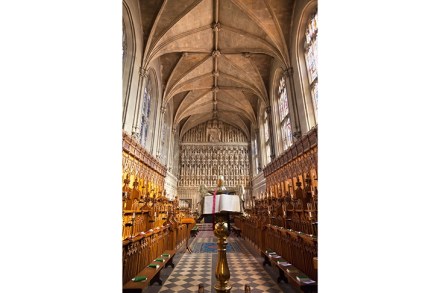
When Palestrina wrote his Mass settings and motets, or J.S. Bach his cantatas and passions, they could not have imagined the ways in which their music would be heard today. We can now access sacred music in our living rooms, at work and on the commute: an hour-long compilation of the choir of New College, Oxford performing the Agnus Dei has four-and-a-half million views on YouTube. Spotify and smartphones may eliminate the need to visit a church or chapel to hear these works, but visit we still do. While overall church attendance has fallen by two-thirds since the 1960s, attendance at traditional choral worship in the UK is on the rise, and has been for the past two decades.

Byron in Venice

‘I want to see Venice, and the Alps, and Parmesan cheeses.’ So wrote Lord Byron in 1814, some two years before he settled — if that is the word — in the lagoon city. Even after his arrival in the winter of 1816, Venice retained its fantastical allure: he identified with its decay (which he would still find today) and savoured its lack of tourists (which he would not). The city was, he wrote, ‘the greenest island of my imagination’, a place that had soon established itself as his ‘head, or rather my heart, quarters.’ It certainly had his blood pumping: for Byron, Venice became a playground for all manner of physical exertion.

The Katherine Mansfield House

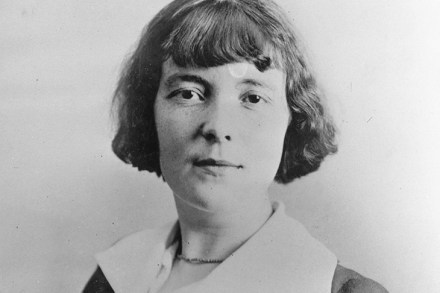
One of the more surprising attractions of Wellington, New Zealand’s small but perfectly formed capital city, is what might be described as England’s farthest-flung literary shrine — the Katherine Mansfield House. The author’s birthplace and childhood home, this modest house in the relatively plush suburb of Thorndon is open to the public — and who could resist the allure of a building described by Mansfield as ‘that awful cubbyhole’, ‘the wretched letter box in town’ and ‘that horrid little piggy house which was really dreadful’? She also described the place as ‘dark and crowded’. Dark it still is, and horribly crowded it must have been.

Otmoor

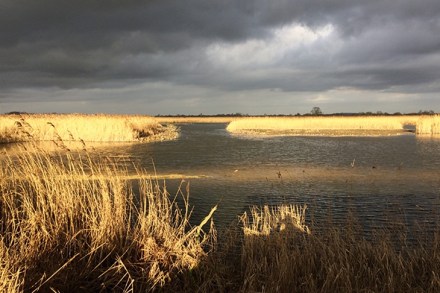
‘Don’t sit down too long my duck, you might be doing nothing,’ reads the inscription memorialising Barbara Joan Austin (4 July 1929–21 September 2004). I have no idea who Barbara was, but I often sit on her lonely bench in the middle of Otmoor. Otmoor is an ancient watery landscape just a few miles north-east of Oxford. I am always surprised how few people know of it, although many will have travelled there in the pages of fiction. Lewis Carroll’s chess-board landscape in Through the Looking--Glass is said to have been inspired by it and it features in the work of John Buchan, R.D. Blackmore and Susan Hill. A strong and uncanny genius loci presides, like many places layered with contentious history.

Vienna

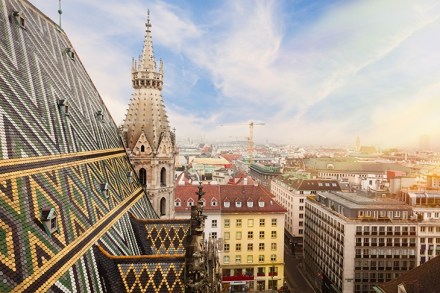
Two things always strike me when I visit Vienna. The first is how easterly the city lies. This was more apparent last century, when on maps of Europe the silhouette of Austria poked itself like a swollen proboscis into the dark shadows of the eastern bloc. But even today, with Bratislava, Brno and Gyor as its closest international neighbours, it’s a good reminder of how much ‘western European’ culture comes from quite far east. The second thing is how at home there I feel. The names and faces on the billboards are conductors and pianists, stars of opera and ballet. For once, you get the feeling celebrity is selling something worth buying.

Marx in Trier

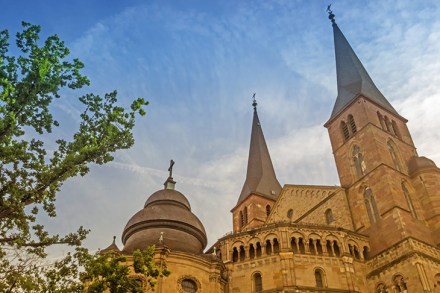
‘Trier hates you,’ reads the graffiti outside the Karl-Marx-Wohnhaus in Trier. Actually, that’s a bit unfair. Trier doesn’t hate Marx, but it’s always had mixed feelings about its most famous son. Marx’s 200th birthday will be marked by several lavish exhibitions in Trier, which is ironic, for this quaint Rhineland city has never known quite what to make of the author of Das Kapital. Marx was born in Trier on 5 May 1818, in a handsome house on the edge of the medieval old town that now houses the Karl Marx Museum. His father was a lawyer, his family were fairly well-to-do. When he was still a baby, they moved to the Karl-Marx-Wohnhaus in the city centre (now a drab convenience store) beside the Porta Nigra, a huge Roman gatehouse.

Abbaye Saint-Michel

‘A little corner of England which is for ever France, irreclaimably French.’ That is how the Catholic priest Monsignor Ronald Knox described the Abbaye Saint-Michel (St Michael’s Abbey) in Farnborough, Hampshire. It was founded in 1881 by the Empress Eugénie, widow of the Emperor Napoleon III. When they were forced to leave France following the fall of the Second French Empire in 1870, the couple, along with their son Louis-Napoleon, the Prince Imperial, settled in Chislehurst, Kent. The Emperor died there in 1873 and in 1879 Louis was killed fighting for the British in the Anglo-Zulu War, leaving Eugénie bereft.

Beagles

Harvey’s finest moment, he would tell you, was the chicken kiev. I’d just made the garlic butter and inserted it into the chicken breast when the phone rang. The call went on for a while, after which I returned. No chicken breast. ‘Must have put it in the fridge,’ I thought, and began to look. Only then did I glance across at the dog. His expression said: ‘You’re going to work it out in a moment, aren’t you?’ It’s the beagle’s defining characteristic: a yearning to become the widest animal known to man. ‘Taking candy from a child’ isn’t just a phrase for a beagle, it’s a way of life. Which can be a pity, as kids love them.

Leigh-on-Sea

I have fallen in love with the c2c, a whisker of a train that is never delayed. It operates between London and Essex; Fenchurch Street and Shoeburyness. Its name stands for ‘anything you want it to’, according to the company’s website — everything from ‘capital to coast’ to ‘commitment to customers’. Over the past year, I have become a complete convert, a cheerful champion of the c2c as it whisks me into Essex and on to the north side of the Thames Estuary, where I like to walk with a man called Malt. Joseph Conrad, who lived in Stanford-le-Hope, a town near Tilbury on the c2c line, wrote: ‘The estuaries of rivers appeal strongly to an adventurous imagination. This appeal is not always a charm.’ True.

Padel

When we arrived, we discovered that our villa had a padel court. Few of us had seen one before and no one knew the rules, so we invented them as logically as we could and got on with it. Within a couple of sets we were hooked. Some people started to get up early to practise; others began watching matches on YouTube. Specialist websites were consulted to establish the basics, such as how many underarm serves you get (the answer is two) and whether the ball is out if it hits the back wall without bouncing first in the court. (Absolutely). What a game! It’s a cross between real tennis, regular tennis, squash and ping pong.

A Gyptian weekend

Philip Pullman’s latest missal, La Belle Sauvage, once again features the boat-dwelling Gyptians. Rough and honourable, they emerge from the waterways of Brytain to help the heroine Lyra, before disappearing back to their watery world, one that runs through Lyra’s, but is separate and different from it. After a long weekend on the canals in the heart of Britain, I feel I have been drifting in Pullman’s wake. ‘Just steer her in here,’ says the boatman. We are new to the canals, so he is taking us through the first lock. ‘Straight in’. He must be joking: only one lock gate is open. The gap is about six inches wider than the boat. But his weathered face is completely straight — and completely calm. Deep breath.

Long-haul travel

For some reason, I decided to go to the other side of the world for Christmas. I may never do it again. Not because I didn’t like Australia (I loved it) but because it takes forever to get there. And spending 23 hours with your knees under your chin on a long-haul flight to the Antipodes will cure you of ever going further than Calais. When you’re flying economy it’s of paramount importance to choose the right airline. I tried four for size: Cathay Pacific, Qantas, Jetstar and Air New Zealand. Cathay Pacific flew me to Hong Kong. The staff were friendly and smart but, alas, the Boeing 777 was neither. After that, Cathay’s business-class lounge, where I waited for my connection and drank all the free champagne, was a welcome comfort.

Smoked salmon

I’m just about old enough to remember when smoked salmon was a rare treat. Then, around 1986 or 1987, suddenly it was everywhere. There were smoked salmon sandwiches at M&S, it was stuffed into lurid-looking canapés with cream cheese, and Christmas became a riot of salty fish. For me, smoked salmon is as emblematic of the 1980s as red Porsches, huge mobile phones and the Pet Shop Boys. But it’s almost always a disappointment, that acrid taste only palatable with lots of lemon juice and butter. I’d much rather have potted shrimp. It’s a far cry from how Scottish smoked salmon is supposed to be. It was first produced, not in Scotland but in London by Jewish immigrants in the late 19th century.

The Watford Gap

In a shallow dip between two unremarkable Northamptonshire hills you will find a road, a motorway, a railway and a canal jostling for position. It is neither a place of natural beauty nor a spectacle of human ingenuity. Yet it has been the subject of books, art exhibitions, pop songs and even a (mini) musical. This is Watford Gap, a three-mile break in the limestone ridge that runs from the Cotswolds to Lincolnshire. Perched between Daventry and Rugby, it subtly marks the watershed of the Nene and Avon to the east and west. However understated the depression geographically, it’s of high status culturally. For this is the gateway between the South and All Things North: the Midlands, northern England and Scotland.

Birdwatching in Sri Lanka

Standing in sweaty silence for an hour on a precipitous sliver of muddy footpath above a waterfall may not be everybody’s idea of fun, but for a small cluster of birders anxious to see the Sri Lanka whistling thrush it was a small price to pay. Eventually, as the cicadas shrilled and the dark closed in, the little blue-black bird appeared — and flitted away almost as quickly. Another evening, we scrambled 100 heart-pumping yards up a rainforest jungle slope for a view of the Serendib Scops owl, a reddish bird so rare it has been known to science only since 2004 and is one of 34 species endemic to the Beautiful Island.