Notes on...

Soap

Is there any invention as ancient and as fundamental as soap? Traced to Babylonian civilisation around 2,800 bc (handy for scrubbing down after all that gardening), it almost certainly goes back millennia further than that. It is mentioned in the Book of Jeremiah and by 1550 bc the Egyptians were marketing it as a medicinal aid for sores and other skin ailments. There was a soap factory buried in Pompeii — although the product is believed to have been used more for washing clothes because visitors to Roman bath houses preferred to scrub themselves with olive oil.

Croquet

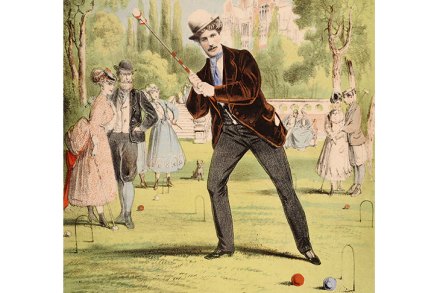
People say cricket is the quintessential English game. Those people are wrong. Cricket may have a longer pedigree, but it’s too boring, too democratic and too honourable to qualify: croquet is the game that truly captures what it is to be English. As any pub quizzer will tell you, Wimbledon started its life in 1868 as the All England Croquet Club, only developing its vulgar sideline in lawn tennis late in the following decade. Its reputation has yet to recover.   Just like cricket, where the game as played on the village green differs from the international game, the echt English croquet is the one played, ideally slightly drunk, in the echt Englishman’s garden. Its idiosyncrasies are what makes it special.

Claire’s Accessories

I was 17, studying for my A-levels in Great Yarmouth. Looking to defy my parents’ instruction to get a part-time job, I hit upon a cunning plan: why not apply to the shop least likely to require the services of a mopey teenage boy? That shop was Claire’s Accessories. Little did I know at the time that Claire’s — home of plasticky tiaras and tinsel wigs — was a retail empire at the height of its power. Five decades after it had arrived in America, Claire’s commanded some 3,000 outlets across the world and was present in more than 95 per cent of American malls. Its success had been built on one thing: ear-piercing.

Church visitors’ books

I am memorialised twice in my village church. Not in some premature lapidary way, but in the visitors’ book. The first time was with my toddler, when I wrote her name down. Some years later I showed her that scribbled evidence and inked us in again. There we were, here we are. I always sign these modest manuscripts, with their columns for date, name, address and comments, and I’m always touched by the commonplaces: ‘So peaceful.’ ‘Thank you for being open.’ ‘Beautiful.’ Sometimes the signatories are far from home; tourists who stumble in, or those searching out forebears. On a recent trip to Ludlow, in pursuit of A. E. Housman, I randomly opened the book in St Laurence’s, where he lies interred.

Hats

‘Thank goodness for racing,’ says Rachel Trevor-Morgan. She is a milliner — a hat maker — so it’s no surprise she’s grateful. Without weddings and race days, many milliners would be out of business. If you want to gain entry into the Royal Enclosure during Ascot week, a hat is non-negotiable. And it’s not just any old hat: the rules dictate that your headpiece must have a base of at least 10cm in diameter. The Ascot ruling was brought in in 2012 to put a stop to the trend for tiny fascinators, essentially just twiddles of feathers and fluff that perch above the hairline. For the very latest in fascinators, look at Ivanka Trump during the Trump family visit to Westminster Abbey.

Company names

Poor Mr Bergstresser. He put up the money to start the financial reporting company but his name wasn’t as snappy as those of his two partners, so ‘Dow Jones’ it was. At least he got the rewards, though, unlike Mr Taylor: the grocer sold out to Mr Waite and Mr Rose after just a couple of years, hence Waitrose. Other ‘people’ never existed in the first place. Faber & Faber was started by Geoffrey Faber on his own: he added the second name to sound more respectable. And there was no Mr Aston — Lionel Martin raced his cars at Aston Clinton in Buckinghamshire. His wife realised that the combination would put the firm near the beginning of alphabetical trade directories. Other people sort of existed.

Chelsea Flower Show

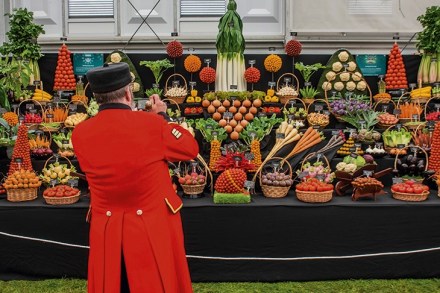
Chelsea, the most famous flower show in the world, pulled in its devotees once more this week, with its accustomed mixture of colour, scent and glamour. The continuing success of the Royal Horticultural Society’s ‘flagship’ show has much to do with the BBC’s need to fill schedules, the foreign media’s enduring fascination with ‘Englishness’ and royalty, and the desire of committed gardeners to worship in the company of their co-religionists. It cannot be any kind of fun for plant nursery people, who stage the exhibits in the Great Pavilion, since the logistical difficulties are fearsome, but they mostly cannot resist the buzz.

Pub names

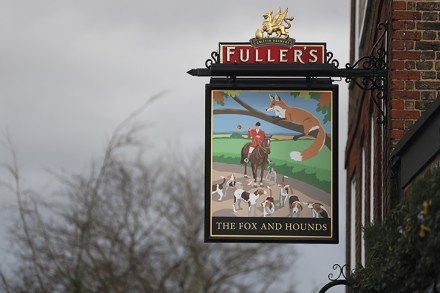
An easy one: what links Jack Straw’s Castle, The Labouring Boys and The Jolly Taxpayer? No, not the parliamentary expenses scandal of yesteryear, but the weird and whimsical world of British pub names. It was in 1393 that Richard II ordered brewers to announce their beery business by a prominent sign. Colourful names quickly abounded, invented by publicans and patrons alike. The intervening six centuries have given ample scope for praise and play. The commonest names across the UK’s 50,000 or so pubs gesture to royal heraldry: The Red Lion, Crown, Royal Oak and White Hart make up the top four; Rose and Crown, Queen’s Head and King’s Arms come close behind.

Windermere

‘A love of boats and sailing is the surest of all passports to a happy life,’ wrote Arthur Ransome. Standing on Windermere Jetty on a crisp clear morning, gazing out across the cool grey water, you can see what he meant. Sailing around England’s largest lake is a great way to spend a lazy day, and the new Windermere Jetty Museum is the best place to embark. There’s been a boating museum in Bowness since the 1970s, but it used to be more modest — a collection of old steamboats saved from the scrapyard by a local builder called George Pattinson. Now his old fleet has a much smarter home: a wooden building with stunning views of the lake.

The Isles of Scilly

‘You can get away from everything,’ said Harold Wilson of the Isles of Scilly, ‘not only in distance but also in time’. During recess, Wilson would frequently catch the sleeper from Paddington to Penzance before making the notoriously choppy crossing to Britain’s most westerly archipelago. There he would unwind in his cottage on St Mary’s — a place where the red box could not easily follow. This family of five islands 28 miles off the nose of Land’s End has always enjoyed a somewhat secretive coterie of admirers — Jude Law and Michael Morpurgo to name but two. Deserted beaches with a Caribbean colour palette are surely part of the draw, as are hedgerows festooned with wild garlic, pink bells and exotic aeoniums.

Goop

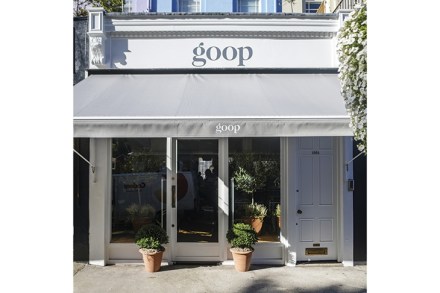
The other day, as I walked with my partner through Notting Hill, we came across a shop which deserves to be visited just as an experience, or perhaps an education, for people not yet aware how extremely silly the 21st century can be. We had heard strange and interesting things about Goop, an online store and blog run by the actress Gwyneth Paltrow, famed for its weird and often obviously ill-advised ‘remedies’ (vaginal steaming anyone?), but never knew it had a physical store. Stepping inside, it’s clear that within these walls Gwyneth is treated as a guru.

Holy cats

It is claimed that the prophet Muhammad loved cats. His favourite was called Muezza and he would do without his cloak on a cold day rather than disturb his sleeping pet. Muhammad was not alone in finding these creatures beguiling. Indeed, despite there being no mention of them in the Bible, cats have a prestigious holy pedigree in Christianity too. The medieval mystic St Julian of Norwich locked herself away in a room attached to a church, dispensing prayer and advice to those who passed. It was a tough calling for she was alone, anchored to the church — which was why she was known as an anchoress. Her one companion was her tabby who would sit with her while she prayed with the lonely, the desperate and the conscience-struck.

The Connaught

You may have noticed the Connaught a little more since 2011, when ‘Silence’, the steamy fountain by Japanese ‘architect philosopher’ Tadao Ando, was installed outside the entrance. But actually the hotel doesn’t want to be noticed. It prides itself on guaranteeing famous guests their privacy. Eric Clapton added his own layer of protection by checking in as ‘Mr W.B. Albion’ (he’s a West Brom fan). Alec Guinness valued its discretion, and was annoyed when Jack Nicholson’s stay during the filming of Batman attracted the paparazzi. The hotel in turn had its own issues with Jack and his entourage. As the star put it to a friend: ‘They have a shit fit every time we walk through the lobby with jeans on.

Newmarket

Standing on Warren Hill in the morning mist, watching Britain’s finest thoroughbreds thunder past, you realise what makes Newmarket so special. Racehorses are all around you — there are yards all over town. Every morning, there are hundreds of horses out training. And these aren’t any old horses. They’re some of the fastest racehorses in the world. Horses have cantered across this windswept heath ever since James I came here to hunt, and 400 years later racing remains Newmarket’s lifeblood. The town grew up around racing and its layout reflects its sporting origins — Tattersalls, the world’s oldest bloodstock auctioneers, is just behind the high street. The surrounding fields are crisscrossed by 50 miles of gallops.

Rhubarb

The tale of forced Yorkshire rhubarb has the makings of a David Lean film. Frosty Slavic beginnings, wartime devotion, steam trains. Rhubarb was brought to Britain from Siberia towards the end of the 17th century, and it’s hard to imagine a more eccentrically British fruit — though technically it is of course a vegetable. The curious method of ‘forcing’ rhubarb to make it fruit early wasn’t discovered until January 1817, when gardeners digging a trench inadvertently buried some rhubarb crowns in soil. Uncovered, it would have taken until Easter for these crowns to show any signs of growth. One can imagine the gardeners’ surprise when, a fortnight later, bright pink stalks emerged.

Beavers in Britain

There is a particularly magical West Country woodland that I know, through which a sunlit stream meanders, braided by a series of neatly dammed pools that hum with life; dragonflies and mayflies, swallows, swifts, kingfishers, amphibians and small fish teem here in numbers rarely seen in Britain. The birdsong is cacophonous. The water’s edge is lined with the fresh growth of willow, hazel and alder, artfully coppiced as if by a skilful gardener. This wood happens to be home to a family of reintroduced beavers. Beavers were eradicated from Britain centuries ago, hunted for their fur and for the valuable castoreum oil which is found in sacs under their tails.

Irish ruins

The Celtic Tiger has come and gone. Over the past 30 years, billions of pounds poured into Irish houses and then drained out again. The ruins of Ireland have slumbered on through the peak, the trough and the current blessed recovery. Medieval castles, Georgian country houses, Victorian lodges… They cling on, disappearing under the ivy, slowly crumbling, in demesnes across the island of Ireland. As Robert O’Byrne, aka the Irish Aesthete, writes in his new guide Ruins of Ireland, we tend to think Ireland lost most of its great houses as a direct result of the Troubles of the early 1920s. Several hundred did get burnt to the ground then.

Italians

For a few years before coming to Italy, I lived in Paris and I cannot tell you the life-enhancing difference I felt as I crossed the frontier from France into Italy in my metallic burgundy Honda Prelude. On arrival at the Italian motorway toll that stifling summer of 1998, I discovered I had no money and that the sun had melted my bank card which I had left on the dashboard. The charming young woman on the toll-gate simply gave me a form to fill in and waved me through with a smile. Isn’t this how we should run the world? I remember once being stopped by two Italian police patrol cars in the dead of night when well over the limit. Instead of them breathalysing me, we started to have a discussion about the Mussolini biography I had written.

Cricket in Buenos Aires

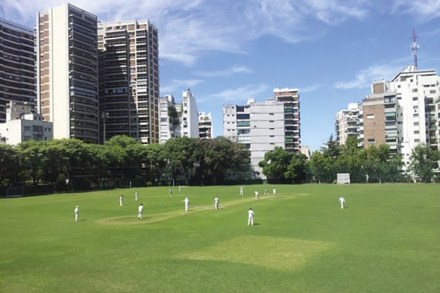
For most Latin Americans, who are themselves no strangers to sporting eccentricity, cricket remains a baffling proposition. The game is dismissed as being far too English (for that read ‘bizarre and snobbish’) and is often confused with croquet. Ignorance, however, does not preclude peculiar theories on how the game is played. I remember a Uruguayan diplomat attempting to explain the rules to a colleague who had recently arrived in London. ‘It’s very simple, che. All you need to know about el críquet is that when the ball hits those three little sticks, it’s a goal.’ Nowadays it tends to be forgotten that in the 19th century, cricket was played across Latin America.

‘Scallop’

Benjamin Britten was adamant that he did not want any memorial sculpture of himself in Aldeburgh, the Suffolk coastal town where he lived for 30 years. He died in 1976 and he is remembered there by the Britten-Pears music school and Snape Maltings concert hall, by John Piper’s magnificent window in the church, and at the Red House, where Britten lived, which contains his entire library, art collection and musical archive. A bronze bust standing on the seafront was neither needed nor wanted. But the Suffolk artist Maggi Hambling was greatly inspired by Britten’s music, and especially his opera Peter Grimes, and in 2002 she had the idea of designing a tribute. Its form — that of a scallop shell divided into two parts and standing upright, came to her immediately.