Ben Goldsmith

Ben Goldsmith is the host of the Rewilding the World podcast series and is chair of the Conservation Collective.

Pablo Escobar’s hippos are saving Colombia’s wetlands

From our UK edition

In Colombia’s enormous Magdalena River basin, an ecological anomaly has triggered an extraordinary debate among ecologists. Ought some invasive species – in this case hippos – be tolerated, or even welcomed, for the ecological role they play as proxies for prehistoric keystone species lost thousands of years ago? In the early 1980s, infamous trafficker and kingpin Pablo Escobar smuggled four hippopotami – one male, three females – from an American zoo to his private menagerie at Hacienda Nápoles. Years later, on 2 December 1993, Escobar was shot dead by members of the Colombian national police's search bloc in a shootout in Medellín. After his death, Escobar’s collection of exotic animals was dispersed to zoos around South America.

Labour has launched a galling attack on nature

From our UK edition

During the last Conservative government, it was common to hear the refrain that the prime minister of the day was waging a 'war on nature'. As someone who played a role in advising a string of environment ministers, I always thought that to be somewhat hyperbolic. I always admire the passion of campaigners, and I share with them a longing for our government to go further and do more for nature; but, at least until the last couple of years of Conservative government, I didn’t think many of the criticisms were fair. I’m starting to worry now, though, that we’re living in an altogether different world. The new Labour government was elected on a promise to protect and restore nature. And yet here we are a year later wistfully contemplating those halcyon days when No.

It would be a huge mistake for Labour to dam the beavers

From our UK edition

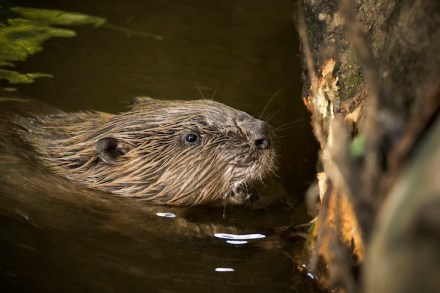
The Guardian is reporting that No. 10 is set to delay plans to release beavers into the wild, potentially because it is seen by officials as a ‘Tory legacy’. Could it be that Labour’s Steve Reed is set to join a long line of Defra ministers who, having promised finally to legalise the reintroduction of beavers into the wild, end up backpedalling under pressure from rural lobbyists who have long decided beavers have no place in the countryside? The assorted vested interests, farming representatives and rural power cliques who direct countryside policy from the shadows dislike beavers on account of their astonishingly poor understanding of how nature actually works.

Bring back lynx to Britain

From our UK edition

The surprise appearance and subsequent safe capture this week of a seemingly tame family of Eurasian lynx in the Scottish Highlands, more than a millennium after the species was extirpated from Britain, has been by far the most bizarre British news story of the year so far. For a brief moment, one of Britain’s most iconic extinct species is now dominating the national discourse – which can only be a good thing. The big question arising from this story, though, is not how the unfortunate creatures got there; but why the lynx, a secretive, beautiful British native species, was not officially reintroduced to Britain long ago. There are no good reasons for not doing so.

Rewilding the world

I recently found myself scrolling World Cement Weekly in search of news of a massive rewilding project in northern Mexico, created and funded by the cement giant Cemex. The growing success of the rewilding movement is strangely little known — though there are now places that are wilder, more vibrant, more teeming with life than they have been for centuries, few outside the movement know anything about them. Two decades ago, a nature-loving chief executive of Cemex decided that the company would acquire 346,000 acres of degraded land on Mexico’s border with America, an area larger than Los Angeles, renamed the El Carmen Nature Reserve.

rewilding

How to restore the British countryside

From our UK edition

Our countryside is one of the wonders of the world – a great patchwork quilt of green fields, hedgerows, and rolling hills. But our sad little secret is that England ranks among the most nature-depleted countries in the world. Countless species have vanished altogether, and others cling on in isolated patches of remnant nature. While most of us are dimly aware of nature’s decline – car windscreens no longer splattered with insects after a summer car journey; a countryside strangely silent in springtime – few realise the full extent of the catastrophe that is unfolding around us. Accounts from earlier centuries describe meadows riotous with colour, hedgerows thronged with songbirds.

Beavers in Britain

From our UK edition

There is a particularly magical West Country woodland that I know, through which a sunlit stream meanders, braided by a series of neatly dammed pools that hum with life; dragonflies and mayflies, swallows, swifts, kingfishers, amphibians and small fish teem here in numbers rarely seen in Britain. The birdsong is cacophonous. The water’s edge is lined with the fresh growth of willow, hazel and alder, artfully coppiced as if by a skilful gardener. This wood happens to be home to a family of reintroduced beavers. Beavers were eradicated from Britain centuries ago, hunted for their fur and for the valuable castoreum oil which is found in sacs under their tails.

Brexit gives us a chance to save our natural world

From our UK edition

For people who love the natural world, each new season brings new excitements. We are a nation of nature lovers. We feed the birds in our gardens and we revere David Attenborough. Which makes it surprising that – until now – governments have not cottoned on to how much of a vote-winner concerted action to restore and protect nature can be. Year in year out the abundance of life around us diminishes. Most adults can remember car windscreens splattered with dead insects after even the shortest of summer journeys. No longer. Insect populations are crashing almost everywhere, and with them everything else.

David Cameron must now lead a green Conservative government

From our UK edition

Those on the left tend to think that British Conservatism is a derivative of US Republicanism. But environmental policy shows that it’s a far more pragmatic mix. The latest Conservative manifesto encompasses George W Bush’s marine conservation ambition and Obama’s selective interventions to raise the pace of clean technology innovation.  This partly reflects the fact that the environment is still a largely non-partisan issue in British politics, but also that Cameron has protected discreet space for Conservative modernisers to bring forward new green ideas. As one of them I’m pleased with the progress we’ve been able to make.

Why Britain needs Prince Charles

From our UK edition

This week's issue of Country Life magazine has been guest-edited by the Prince of Wales. As long term perspectives disappear from national debate, we should all be grateful for his presence in public life, says Ben Goldsmith. It is hard to name an area of modern life which has not been overcome by short-term considerations. Companies sacrifice long-term growth for their quarterly financial reports, politicians are blind beyond the next election, and the attention span of rolling news channels is shorter than ever. In cricket, the deep satisfaction of a five-day Test Match is threatened by one day or even shorter match formats. Long termism speaks with a quiet voice; a voice that has been all but obliterated.

Diary – 22 November 2012

From our UK edition

I once bred a racehorse, half-owned by my mother, born at my mother-in-law’s farm in Suffolk and named ‘Green Moon’ by my daughter. He won a race or two but never found his form, so we sold him to an Australian for not much. A few days ago, I was woken by a 5a.m. phone call from an ecstatic friend who told me that Green Moon had just won the Melbourne Cup — one of the best races in the world — bagging an immense prize cheque for his new owner. I’m not sure whether I will ever be able to forgive him, or myself. Late one evening, I find myself star-stuck in the company of Jeremy Clarkson. I’m not excited by cars — I’ve owned the same seven-seater diesel Toyota Previa for six years — but Top Gear is unmissable.