Notes on...

Why beards of convenience are a bad idea

Viewers of the BBC News channel, now that Zoom shows talking heads in their own homes, want before anything to have a good look at the sitting rooms or study shelves of daily newspaper reviewers. But often this important task is distracted by disturbing face-foliage grown during lockdown. Jack Blanchard from Politico presents a face mottled with brown and grey like lichen on an old wall, and the curvaceous chin of James Rampton from the Independent bursts out with stubble like a ginger Desperate Dan. This is like queuing for the supermarket in your pyjamas, so different from the profitably energetic habits of Samuel Pepys, who told his diary: ‘Up betimes, and shaved myself after a week’s growth. But, Lord! how ugly I was yesterday and how fine to-day!
Is this the end of the wine bottle?

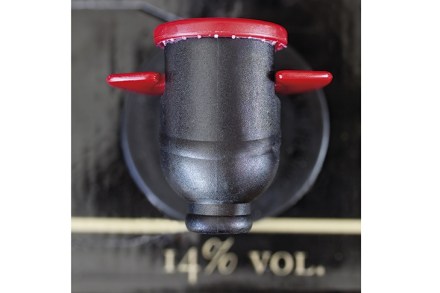
Picture the world before the invention of the bottle: if you wanted a nice glass of claret at home, you’d have to send a boy round to the tavern to fill up a jug — unless you were rich enough to have a whole barrel in your cellar. Around 1630, a new tougher glass was invented in England which, when combined with the cork, meant that wine could be transported and stored safely and inertly. We owe the amazing variety of wine available to us at the touch of a button to this invention. What’s peculiar is how little has changed in 400 years. For most of us, buying wine still means buying a bottle. This is bananas, because most wine is drunk within hours of being purchased, and the glass bottle then discarded. It’s not as if there aren’t alternatives.

I’m walking round Britain – in my back garden

What’s the best way to keep in shape during the lockdown? That’s the First World problem I’ve been using to distract me during these strange, distressing times. My wife and teenage children are doing online workouts, but that looks far too tiring. Instead, I’m walking round Britain — in my back garden. I got the idea from a walking trail called Walk the Planets, in Ruislip Woods, not far from where I live. It’s a round trip of about two miles, which doubles as a tour of the solar system. At a scale of five billion to one, Mercury, Venus, Earth and Mars are barely a hundred yards apart (on the same scale the nearest star system, Alpha Centauri, would be in San Francisco).

The oddest thing people are stockpiling? Hens

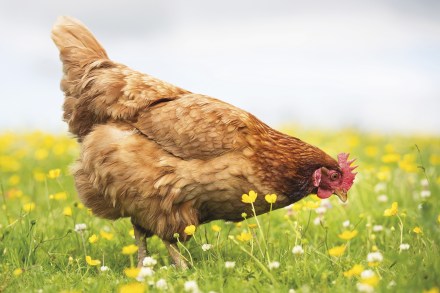
Is there nothing people won’t panic-buy during this crisis? Having stripped shelves of food and toilet roll, shoppers are now turning to chickens. Coop company Omlet reports a 66 per cent rise in sales, and breeders have sold out of pullets. The British Hen Welfare Trust, which rehomes caged hens, has stopped taking new customers out of fear that the people bidding for their birds were either planning to eat them or didn’t really know how to look after them. Keeping chickens does seem like a really good way of avoiding going to the shops. A good layer will give you an egg almost every day at this time of year and having a flock in your back garden will mean you’ll never run out.

How to work from home (according to Churchill, Einstein and Napoleon)

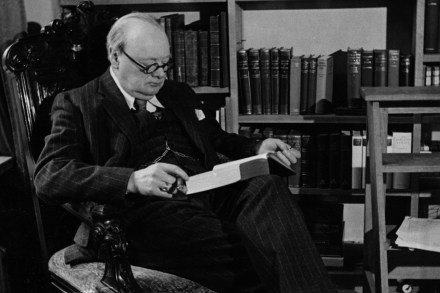
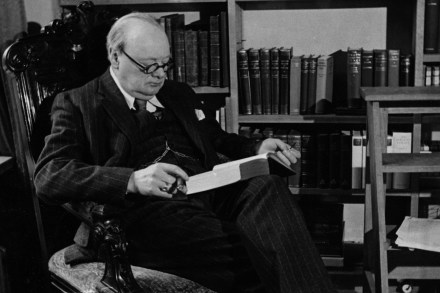
Working from home has been on the rise for years. No one expected the latest surge to happen in the way it has, but now that we’re here, what can we learn about home-working from those who have already done it? The first rule — even when times are normal — is: make sure you stay at home. Victor Hugo resisted the temptation to go out by ordering his valet to hide all his clothes. The Greek statesman Demosthenes achieved the same result by shaving half of his head. Whenever he felt the need for exercise, Cardinal Richelieu jumped over his furniture. But even at home, the scope for procrastination is endless. Any writer will tell you that the first result of a deadline is your ironing gets done. So you need a routine.

Why are so many people still going to the pub?

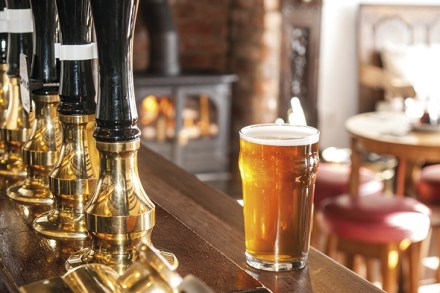
Pubs are fascinating at the moment. On the day that the Prime Minister advised us not to attend them, I turned up at one in leafy Highgate, London N6 to find it much fuller than you might expect. I’m not sure that’s entirely a bad thing. People are still getting out, having a jolly time — but carefully. At the Woodman earlier this week, while I sat alone with my book and a drink, everyone was very politely giving each other a metre of space because that’s now the done thing. One couple, in the early stages of courtship, were wondering how close they could get to each other. She was keen. He was less so. I’d dump him, if I were her. In France, Spain and Italy all bars and restaurants have been closed and everyone has been ordered to stay at home.

No blues, just reds and whites: the Oxford vs Cambridge wine-tasting

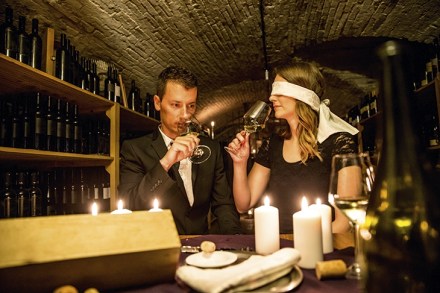
The cellar room is almost silent save for the sound of slurping and spitting and the odd gentle sigh. One woman has her head buried in a bucket, while a chap lays his on the desk before raising a hand and asking for a refill. It has the air of a rather polite orgy, only everyone is fully dressed. Welcome to the 67th blind wine-tasting Varsity match. The 14 men and women in the basement of Berry Bros & Rudd in St James’s have the most educated palates in Oxbridge. They know their D’Arsac from their Albariño. Unlike in the Boat Race, there are no blues on offer, just reds, whites and the chance to win a trip to Maison Pol Roger in Epernay where they will compete against the champion student wine-tasters of France. Aux armes! Or at least aux verres.

Is there any better place for an EU-subsidised arts festival than Galway?

I was still digesting my delicious breakfast (kippers, poached eggs and soda bread — all local) when the sad news reached our party of freeloaders (sorry, I mean distinguished international journalists): a force ten gale was blowing in, so tonight’s opening ceremony on the headland by the harbour had been cancelled. ‘Ah well, let’s go and get drunk,’ said my new friend Shane. So we did. Galway is this year’s European Capital of Culture and, while Brexiteers may welcome their liberation from this perennial EU shindig, if you’re going to stage a state--subsidised arts festival anywhere then Ireland’s liveliest little city is probably the best place, despite the frequently filthy weather.

‘Desolate, despairing and awful’: Britain’s uninhabitable island

In 1978, an invitation was sent to some 200 members of Oxford’s Dangerous Sports Club, which simply read: ‘Tea, Rockall, Black Tie.’ The good news was that invitees had never visited this part of the UK; the bad was that it is way out west. Forget Land’s End, or the Western Isles, or even far-flung Fermanagh. First get to the Outer Hebrides and then head into the Atlantic for 230 miles or so. There a single tooth of granite, 60-foot high, will emerge from the waves. Welcome to Rockall, the last acquisition of the British Empire. Though known to the Vikings, and to map-makers since the 16th century, Rockall was until 1955 terra nullius: land claimed by no one. No wonder.

How political is your bread board?

It’s not known which inspired Victorian first had the idea to take a chopping block and carve it into a circular ‘bread-platter’, as they were called, with a raised centre and decorated rim; but William Gibbs Rogers was the one to turn it into a craze. In the mid-19th century Rogers was considered one of Britain’s most accomplished wood-carvers. An 1847 issue of The Spectator said he had single-handedly ‘restored to carving the same interest and execution which it possessed in the best days of Grinling Gibbons’. His long list of wealthy patrons included Queen Victoria, who commissioned a wooden cradle for the infant Princess Louise.

The fight to save G. K. Chesterton’s home from demolition

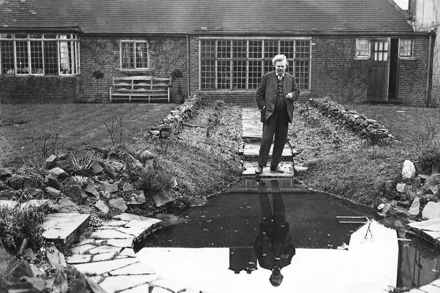
It’s a quiet Wednesday afternoon in Britain’s most expensive market town, and there’s a sense of foreboding in the air. Well, there is if you’re a G.K. Chesterton fan. South Bucks District Council is about to decide whether Overroads, the house where the author lived from 1909 to 1922, will be demolished and replaced with a block of flats. A Londoner until the age of 35, Chesterton moved here on a whim. He and his wife Frances, in a spirit of adventure, went to Paddington and asked to buy a ticket for the next train. It was going to Slough. (‘A singular taste,’ he remarked in his autobiography, ‘even for a train.’) From there they wandered to Beaconsfield, and liked it so much they never left.

Is Monopoly feminist?

I’ve been playing a lot of Monopoly recently. My son got his first grown-up set for Christmas and, even after time has increased the entropy of his Lego sets and Scalextric, this is the present he still pulls out. I have no objection — why wouldn’t I break off from completing my tax return to watch someone else squirm at income tax? — but his mother is doubtful about the game’s message. She has already forbidden the card game Old Maid on feminist grounds (‘You shouldn’t be stigmatised for not being in a couple!’); should we really be teaching him the fun side of capitalism? One of Fidel Castro’s first actions on seizing power was to ban the game and have all sets in Cuba destroyed.

Why does Big Ben bong on the radio before it does in real life?

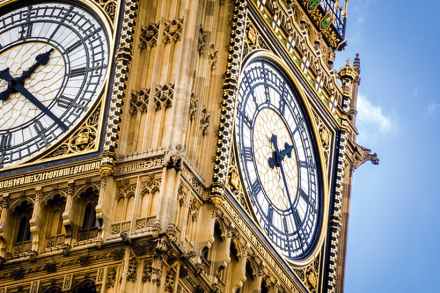
The debate over whether Big Ben should bong to mark Brexit isn’t the first time the famous bell has caused consternation. Listeners to a BBC radio news bulletin in 1949 were horrified when the chimes failed to sound. They had to wait until a later bulletin for an explanation: the clock was running four minutes slow because a swarm of starlings had gathered on the minute hand. In fact, right from the start there were problems with the Great Bell. (That’s its official name — ‘Big Ben’ is a nickname honouring, depending on who you believe, either Sir Benjamin Hall, who oversaw its installation, or Benjamin Caunt, a heavyweight boxer.) The original bell, cast in Stockton-on-Tees, cracked during tests in New Palace Yard.

Will Kent conquer Champagne?

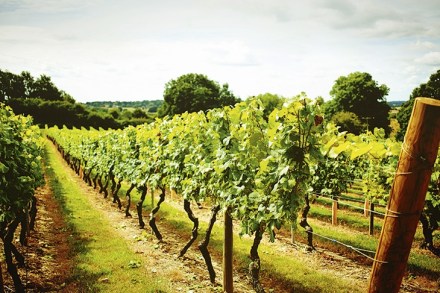
Driving home through Kent the other day, I was struck by how much the topography has changed. When I was growing up there in the 1970s, first in Rolvenden and then in Hawkhurst, there were hop gardens. Today there are vineyards. I’m not sure Alfred Jingle would recognise the county about which he stated in Pickwick Papers: ‘Kent, sir — everybody knows Kent — apples, cherries, hops and women.’ The apple and cherry orchards are not nearly as numerous as they were in either his day or mine and the hop gardens have largely, although not entirely, disappeared. As for the women, I can’t vouch for their numbers, but I’m delighted to report they remain very easy on the eye. I loved picking hops.

What is the only London Underground station to share no letters with ‘mackerel’?

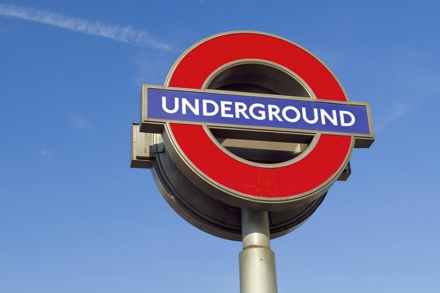
Don’t worry, this isn’t a piece about fishing quotas. It’s about the word ‘mackerel’ itself. Specifically, the fact that St John’s Wood is the only London Underground station to share no letters with it. Really? Half a page in The Spectator, just about that? Well, yes. The fact has gathered a life all of its own. It’s been doing the rounds in pub quizzes for ages. At least 20 years: in a trailer for his 1999 TV chat show, Jeremy Clarkson promised to reveal the answer (and then didn’t). No less an authority than Only Connect host Victoria Coren Mitchell calls it her favourite quiz question ever. ‘It’s the comic juxtaposition,’ she explains.

The faded charm of the Isle of Wight

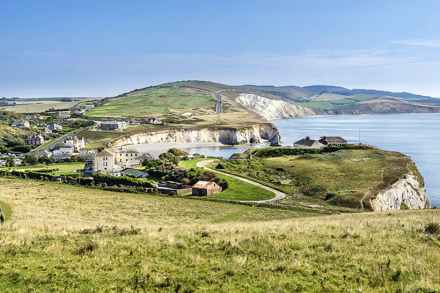
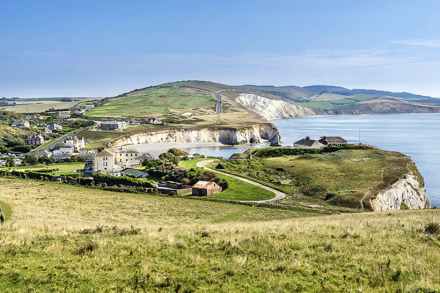
I was worried my first trip to the Isle of Wight might be too late. These days, a holiday island would surely be no more than fanciful tearooms with hardening scones and flashing arcades. But alighting from the ferry at Ryde, I not only stepped into another place, but another time. It may not be fanciful or flashy, but the Isle of Wight has a faded charm, in the white-painted hotel fronts along the esplanade, the over-manicured patches of public gardens, and a pier without any fruit machines, but with a railway running all the way along it. I travelled around this 1950s throwback in a futuristic fashion — by electric bike — soaring up hills as if mere molehills. I’d never been on one before, and they go quite fast with very little effort.

Away from the manger: the holy relics of Bethlehem

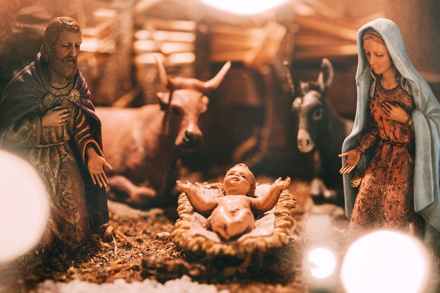
‘No crib for a bed,’ says ‘Away in a Manger’ rather puzzlingly, since a crib is a manger. ‘No one paid me much attention, lying on the hard stones, a young child in a crib,’ says God made Man in the Old English poem ‘Christ’. At the beginning of his prophecy, Isaiah declares: ‘The ox knoweth his owner, and the ass his master’s crib.’ The crib as a manger lent its name to the whole Christmas caboodle of stable, ox, ass, Mary, Joseph and all the trimmings of magi and shepherds. Francis of Assisi was keen on building cribs that put the Christ Child in his surroundings, and the idea caught on.

Is St Edmund’s body buried beneath a Suffolk tennis court?

Here in St Edmundsbury cathedral, a bunch of clerics and local bigwigs are preparing for a most unusual anniversary. Throughout 2020 the inhabitants of this historic market town will be celebrating the 1,000th birthday of a building that ceased to exist nearly 500 years ago. The Benedictine Abbey of Bury St Edmunds was founded by King Canute in 1020 to house the body of King Edmund, England’s original patron saint. Traditionally said to have been born in 841 and crowned King of East Anglia in 855, Edmund was captured in 869 by the Danes, who told him he could be their puppet king if he renounced Christianity. He refused, so the Danes tied him to a tree, shot arrows at him and chopped his head off.

The unwritten rules of sending Christmas cards

No one sends Christmas cards any more. Except that I do, and you might, and a few other people do too. But overall, cards have become so expensive, time-consuming and, let’s admit it, unfashionable that many people have abandoned them with some relief. Some of them rather piously tell us the money thus saved is now going to charity. Others, even more piously, say they are no longer sending cards because of the waste of planetary resources, and they now prefer more ecologically sustainable methods of celebrating Christmas. These are often the people who then fly to New York to go Christmas shopping. I love cards. I like buying them, I like writing them, and most of all, I like receiving them.

The big burly blokes who make infinitely precise pointe shoes by hand

Pauline, Petrova or Posy? Which Fossil sister are you? Or, rather, which Fossil sister did you hope to be when you first read Noel Streatfeild’s Ballet Shoes? It has to be Posy. The third and last adopted Fossil arrives in a basket with a note — ‘This is the little daughter of a dancer’ — and tiny slippers. For any girl who has ever imagined taking the stage in pointe shoes, the Freed factory in Hackney is a dream of pink satin. Frederick Freed was a shoeman and showman. Ninety years ago, Mr Freed was the star-maker at Gamba, which only made shoes in one width. Then Mr Freed had the idea of adapting the shoe to the dancer, rather than the dancer cramming into the shoe. Mrs Freed was a milliner. Fred did the architecture, Dora the trimmings.