Notes on...

Starling murmurations are a display more dazzling than fireworks

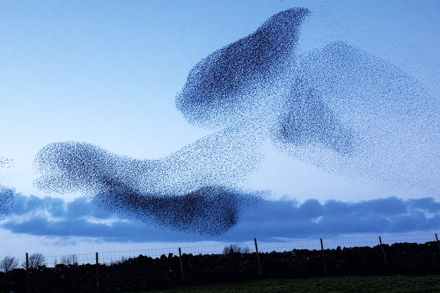
It’s late afternoon in the car park of Workington Asda. A little crowd is gathering in one corner, most of them clutching cameras and tripods. We’re not here to find ‘Workington Man’, the supposed archetypal voter who apparently all the parties need to court to win this election. Instead, Workington men and women — and a number of us from all over Cumbria — are here to watch a bunch of birds going to bed. The sun is at that dripping egg-yolk stage where it’s about to slip behind the horizon. It’s cold, and for a few minutes you can see the panic on the faces of the birdwatchers. Perhaps the starlings aren’t coming tonight. Perhaps we’ve missed them. Perhaps the other shoppers will think we’re a bit weird.
The joy of rummaging through Gladstone’s annotated books

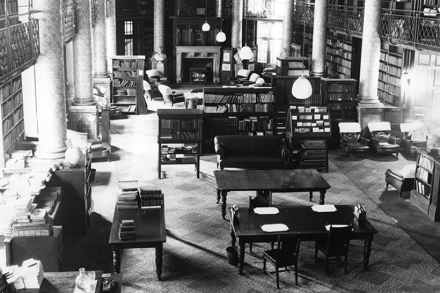
Gladstone’s Library began as that most English of things: a great man’s visionary idea. William Gladstone, at the age of 85, decided that he had amassed too many books, and wanted to share them with the less fortunate. As his daughter Mary put it: ‘He wished to bring together books who had no readers with readers who had no books.’ He duly spent £40,000 of his own money on founding and building the library that bore his name, carrying 32,000 of his own volumes three-quarters of a mile between his home, Hawarden Castle in Flintshire, Wales, and the temporary structure that housed them, aided only by his valet and the long-suffering Mary.

The war heroes of Northolt Airport

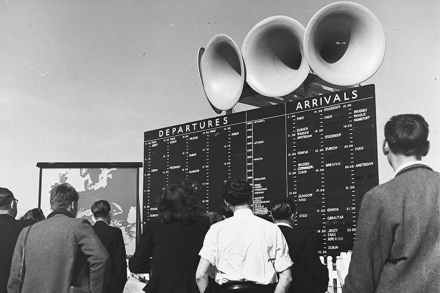
At 6.50 p.m. on 31 August 1997 a plane touched down at Northolt Airport. It was a lamentable and dismal evening. Prince Charles, wretched and ghastly, accompanied the coffin that carried the body of his former wife Diana. Watching from the wings was Tony Blair. The nation mourned. And Northolt Airport did the job it has done so often — being the receiver of the great and the good and the bad, dead and alive. As a boy I’d get on my bike and head down the road to Northolt Airport to watch the planes. Being from the suburbs, the airport held me in a grip. Friends’ parents recounted stories of dog-fights in the skies over Northolt during the second world war and of a German plane being shot down by the glorious and brave Polish Spitfire pilots.

The unlikely beauty of urinals

In 1966, just as he was becoming famous, Michael Caine met John Wayne. The Holly-wood veteran offered him some advice: ‘Never wear suede shoes.’ The explanation? ‘One day, you’ll be taking a pee, and the guy next to you will say “Michael Caine!” and he’ll turn and piss all over your shoes.’ Urinals are tricky places. Women seem to think they’re temples of laddishness, all footy banter and lewd jokes. A few men are like that, the sort who stand with their free palm planted high on the wall (God knows why). But most of us find the whole thing rather awkward. The broadcaster Mark Chapman once stood next to his hero Bryan Robson.

The Grand Union Canal, a serene sanctuary amid the urban sprawl

It was a Saturday afternoon in September, the end of summer, and I was feeling sorry for myself. I’d gone to see my son play football in Slough. He was on the bench, his team had lost, and now I had to carry his kitbag home while he went out with his teammates. I’d missed my bus back to Uxbridge and it was an hour until the next one. I was trudging back into town when I saw a signpost for the Grand Union Canal. Along the towpath, I reckoned it was about eight miles to Uxbridge. Sod it: I decided to walk home. When I finally reached Uxbridge dusk was falling and I was feeling happier than I’d felt in ages. I’d hardly seen a soul (a lone fisherman drinking beer, two blokes dredging for scrap metal) but I’d seen swans, herons, cormorants and my first kingfisher.

It’s not just hooligans – hipsters also love a football shirt

When I was young, from about the age of nine to 13, I went through what my parents recall with a shudder as ‘the football shirt phase’. Where some children rebel by smoking, and others take to eyeliner, my vice was polyester. My first shirt was a quirky one — an early Noughties AS Bari white and red home shirt with an itchy collar. The thing smelled of washing powder no matter how much I wore it — which was daily for the best part of three months one very hot Italian summer. I’d wear football shirts everywhere, from family meals to drinks parties, trips into town and to Mass. It got to a point where my father would explode with rage if I appeared at the door wearing a baggy AC Milan kit.

The lessons I learned at my Oxford gaudy

I went to a gaudy last weekend. Several British universities now host these splendid events; mine was at Worcester College, Oxford, from where I graduated in 1981 with a double third in mathematics. A gaudy is essentially a reunion weekend with knobs on. At Worcester they are blessedly free, which is great for paups like me who can enjoy the exceptionally good food and, particularly, wine with a huge stupid smile. (The only cost was £42 for a guest room for a night, and my God do you need that.) Gaudies typically occur for each year’s intake only every seven years, and when you get the invitation you need to respond by return, because if you don’t you won’t get in.

Small but perfectly formed: The Romney and Hythe Railway

‘The smallest public railway in the world.’ So proclaims a faded poster at New Romney Station, the midpoint of the 15in gauge Romney, Hythe and Dymchurch Railway which runs almost 14 miles along the south-western Kent coast from Hythe to Dungeness. Well, almost. The railway was indeed the world’s smallest public railway by gauge from 1927 until 1978, the year it lost the honour to the 12¼in gauge Réseau Guerlédan in France. The RM&DR regained the accolade the following year when the French line closed, only to lose it again in 1982 with the opening of the 10¼in gauge Wells and Walsingham Light Railway in Norfolk.

We have the French Revolution to thank for Ordnance Survey maps

You could say it started because of the French. The turmoil caused by their revolution got the British military worried about the possibility of an invasion, so maps of the ‘invasion coast’ (beginning with Kent in 1801) were produced. Hence the name ‘Ordnance Survey’. Until the 1960s every director general of the agency held an army rank. The first five-mile baseline from which everything was measured had been laid out earlier by Major-General William Roy, its two ends marked by cannons stuck in the ground. Coincidentally one of these lay just outside what is now Heathrow. It’s still there, near the junction of Northern Perimeter Road and Nene Road. Searching for it once, I asked a planespotter if he knew where it was.

My puppy-training advice for Boris Johnson

President Harry Truman once observed: ‘If you want a friend in Washington, get a dog.’ Boris Johnson, as Prime Minister in the unfriendliest era British politics has known, and his girlfriend Carrie Symonds have taken on a Jack Russell puppy called Dilyn. They and I are therefore among the 24 per cent of UK citizens who are dog-owners, with nearly nine million animals in our national ownership. Taking on a puppy in retirement, said our friends, was madness — especially in a house full of antiques and with a carefully tended garden. Certainly, the game has changed since we last raised a puppy 40 years ago. So have the overheads.

Inside the unassuming house where the Brontës’ creativity thrived

‘Do you think, because I am poor, obscure, plain and little, I am soulless and heartless?’ Jane Eyre asks Mr Rochester in Charlotte Brontë’s most famous novel. What is true of Brontë’s heroine is equally true of her Yorkshire home: plain in every sense of the word and yet perennially mysterious. The muted colour palette of the house reflect the rain-soaked moors surrounding it in a pleasing way. Tucked up a cobbled lane behind Haworth’s church, you would easily pass by without stopping to notice it, were you not aware of its former inhabitants. Much like Jane, Charlotte Brontë believed herself to be physically unremarkable. Even after the success of Jane Eyre, she struggled to make a strong impression in social situations.

The unparalleled entertainment – and heartbreaking reality – of watching a court hearing

‘Barristers’ speeches vanish quicker than Chinese dinners, and even the greatest victory in court rarely survives longer than the next Sunday’s papers.’ So wrote John Mortimer in Rumpole of the Bailey. While no doubt true, a barrister delivering a well-honed speech is still something to behold. They are the last defenders of a rhetorical tradition that our politicians have all but given up on. Many QCs still use Cicero’s principles of oratory: to teach, to entertain and to move. The public are allowed to watch almost any court hearing, but few ever do. As a court reporter, I have been struck by how empty the public galleries tend to be, beyond a few elderly men who regularly turn up.

A bridge to the past: Tintagel’s complex history

Halfway across the brand new bridge that links the two halves of Tintagel Castle, there’s a gap where you can look down at the waves crashing on the rocks below. Don’t worry; it’s only a few inches wide so there’s no danger of falling through it. But it’s a thrilling reminder that you’re suspended between an island and the mainland; between the present and the past. Like a lot of places in Cornwall, Tintagel has a complicated history. It was a big settlement during the Dark Ages, bigger than London at the time, and very well connected with the lands around the Med. More Mediterranean pottery has been found here than anywhere else in Britain. Why was Tintagel so important? No one seems sure.

It’s easy to see why Trump wants to buy Greenland

When the news broke of Donald Trump’s interest in acquiring Greenland from the Danes for strategic, mining and perhaps golf course development purposes, it was a perfectly timed affirmation of what had otherwise looked an eccentric choice of summer holiday destination — namely to spend three days last week exploring part of the island’s east coast. When friends asked ‘Why Greenland?’ I explained that Iceland had served as the gateway drug. A fortuitous visit to Reykjavik a few years ago to advise on a new budget law had prompted return trips, not least for the food but also to explore the country’s fabled natural landscape. But it wasn’t enough. Surely you must have something else behind the counter, you know, a little harder…?

British jazz

Jazz died in 1959. At least, that’s what New Orleans trumpeter Nicholas Payton wrote in 2011 as part of a series of tweets that riled jazz lovers the world over. It later transpired that he meant jazz the word (which, he reckoned, was ‘a label forced upon musicians’) rather than jazz the genre. Semantics aside, Payton struck a chord. He fired up what many people for many decades have assumed to be an ever-shrinking band of jazz aficionados. In fact, there has been an increasingly cool end to the jazz catalogue in America for at least the past 20 years. Pianist Robert Glasper and saxophonist Kamasi Washington are two figureheads of this stateside jazz renaissance, which is characterised by a liberal use of synthesisers and drum machines.

Savannah

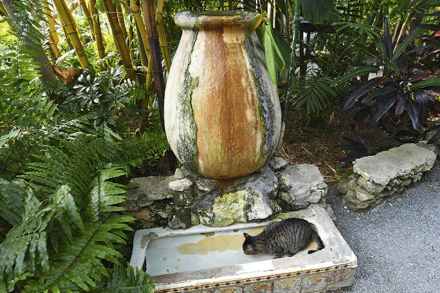
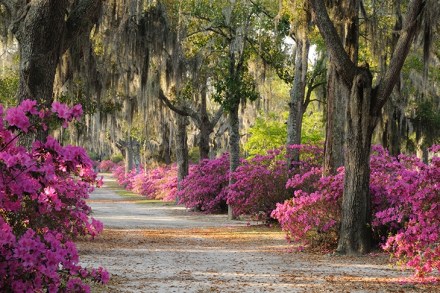
Savannah GA is supposed to have lots of ghosts, but I’d forgotten that. It was an April morning and sunlight filtered through the Spanish moss. As I arrived at Wright Square, someone fell into step with me and we crossed the road together. At the other side I glanced to see who it was. No one. Huh. This is the Ghost Coast and there is an industry around it, including night-time tours in a black trolley bus that end in a visit to Savannah’s most haunted residence, the gothic Sorrel-Weed House. At dusk you pass groups of people being told unsettling stories — I caught a snippet about a cat that vanishes into thin air. One evening a friendly grey shadow wound itself about my shins. Was it an apparition?

Gisborough Priory

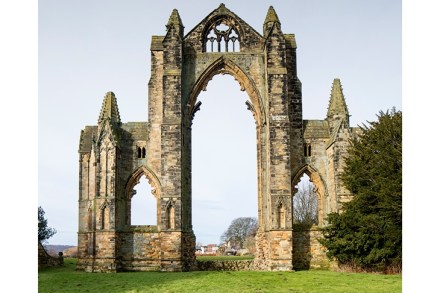
Gisborough Priory was founded in 1119, although the gothic chunks which remain of it today — including the grimly magnificent east end — date largely from the 13th century. A fire had destroyed much of the original building. It has great antiquity, then, nestled on the northern edge of the North York Moors in the market town of Guisborough, within spitting distance of (still, just about) industrial Teesside. The place has always had a certain resonance for me, not least because it adjoins the graveyard of St Nicholas Church, which was an important venue for somewhat brusque and pragmatic courtships when I was an early teen.

London City Airport

The late Frank Johnson — former editor of The Spectator — had a thing about London City Airport. ‘I never want to fly from anywhere else,’ he would say, often after returning from Germany, a country he loved, not least because of its Wagner connections. He was right, of course. Even today, more than 30 years since its official opening, flying out of City is a completely different experience from any other airport in the UK. Size matters, of course. It’s merely the 14th busiest airport in the UK, just ahead of Leeds Bradford and below East Midlands. It only has one 1,500-metre runway and the terminal has a distinctly pop-up feel to it.

Cottage gardens

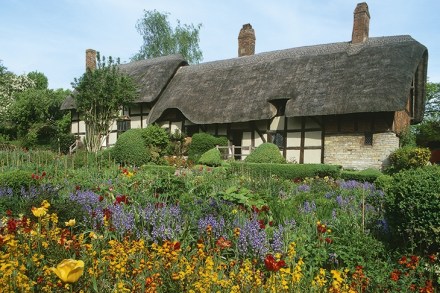
The confusion is understandable. You arrive at Anne Hathaway’s Cottage in Stratford-upon-Avon, keen to experience the quintessential cottage garden — only to be told that Shakespeare’s garden was, in fact, designed in the 1920s. The space in front of an Elizabethan cottage would have been used for keeping pigs or hens, with a patch for cabbages or onions. Any flowers or herbs would have had medicinal or practical uses, not least for strewing on the cottage floor to disguise the stench. By the 19th century, the garden at Hathaway’s Cottage had become more decorative, but it was the Edwardian plantswoman Ellen Willmott who filled the front with flowers and introduced the idea of mown paths through long grass in the orchard.

Motorways

The first one was too straight. In the absence of a speed limit, early motorists on the M1 used the long sections without bends as racetracks. The record was set in April 1964 by two drivers testing their AC Cobra for Le Mans: they reached 185 mph. The following year new express trains appeared on the track next to the motorway, and some drivers tried to keep up with them. So the 70 mph limit was introduced. Subsequent motorways were built with curves even where they didn’t need them, purely to discourage speeding. As if driving itself wasn’t risky enough, some users of the new M1 stopped for picnics on the hard shoulder, with one family even doing so on the central reservation.