More from Books

Lydia Davis masters the art of translating without a dictionary

‘Read slowly, word by word, if you wish to understand what I am saying.’ Despite appearing in Essays Two, the latest non-fiction collection from Lydia Davis, this exhortation is by the Norwegian author Dag Solstad; yet the approach is apt for Davis’s work. This is not because Davis, a feted translator and writer who won the Man Booker International Prize in 2013, is incomprehensible but because her work is often so short — a couple of lines or a couple of pages. It demands to be savoured slowly.

What the Russians thought of James Bond in the 1960s

Last year I wrote a piece about James Bond for the ‘Freelance’ column of the Times Literary Supplement. All true Bond lovers — of the novels, I mean — know that he lived in a ‘comfortable flat in a plane-tree’d square off the King’s Road’, as Ian Fleming described it in Moonraker. Further internal evidence in Thunderball indubitably established that it was Wellington Square — but there was considerable mystery and doubt about exactly which house contained the Bond apartment. In my article I claimed to have identified it as No. 25, based on a certain amount of sleuthing and, I thought, convincing circumstantial evidence. No.

Were the Sixties really so liberated?

Lolita, the Lady Chatterley trial, the pill, Christine Keeler, ‘(I Can’t Get No) Satisfaction’, love-ins, Oh! Calcutta!, the Oz trial — sex, even more than usual, was on people’s minds in the 1960s, that semi-mythical decade which, to stretch a point, lasted from the late 1950s to the early 1970s. That, anyway, is the plausible contention of Peter Doggett, whose Growing Up is a refreshingly undogmatic, well-researched and highly readable survey of some of the emblematic episodes and controversies surrounding the subject during these years. More detailed sociology would have been helpful — how, if at all, did everyday/everynight sexual practices and attitudes change in Barnsley, in Dunfermline, in Ashby-de-la-Zouch?

All successful spies need to be good actors

On 2 October last year, when he became chief of the UK Secret Intelligence Service (MI6, if you prefer), Richard Moore tweeted (tweeted!): ‘#Bond or #Smiley need not apply. They’re (splendid) fiction but actually we’re #secretlyjustlikeyou.’ The gesture’s novelty disguised, at the time, its appalling real-world implications. Bond was, after all, competent and Smiley had integrity. Stars and Spies, by the veteran intelligence historian Christopher Andrew and the theatre director and circus producer Julius Green, is a thoroughly entertaining read, but not at all a reassuring one.

Don’t be seduced by fake truffle oil this Christmas

Truffles smell of sex. Even if we can’t quite say what we mean by ‘smell’ or ‘sex’ in this sentence, the much sought-after underground fungi emit something analogous to the pheromones that subconsciously attract us to other human beings. On the conscious level, these members of the family Tuberaceae release aromas ranging from floral to garlic to petrol to old socks, which pigs and dogs also find appealing. It can be faked, too. Most so-called truffle oil gets its scent from the chemical 2,4-Dithiapentane. In Truffle Hound, his pacy travelogue-cum-foodie manual, Rowan Jacobsen deals with about a dozen species of truffles (or other near-truffle fungi).

How to tell your Roman emperors apart

Rising professors do well to be controversial if they wish to be invited to contribute to mainstream media. But the elder professor, lauded, loved and telly-tastic, has the privilege of swerving controversy without losing the limelight. And so Mary Beard gives us this rich disquisition on the Caesars’ visual representation (and misrepresentation), from swapped plinths to forged heads. Handsomely illustrated and brightly ringing with Beard’s enjoyment and scholarship, the book doesn’t inflame debate but brings it down a few degrees. While her publicist might have preferred more engagement with today’s ‘sculpture wars’ (touted on the dust jacket but not mentioned within), Beard provides no ammo for either side, but takes a wry long view.

A keepsake – and to-do list – of Europe’s greatest cathedrals

In his new book on Europe’s cathedrals, Simon Jenkins begins with the claim that the greatest among them are our most important European works of art. Greater than the paintings of El Greco or Berthe Morisot? More momentous than the buildings of Mies van der Rohe or Norman Foster? More important than the organ music of J.S. Bach or the Duruflé Requiem? Still, I see his point.

Why America’s attitude to mental illness is dangerously deluded

A friend who works in social care speaks to me earnestly about a troubled young colleague: ‘Of course, she’s got a borderline personality disorder...’ I check her there: ‘What do you mean by that?’ She thinks for a moment and continues: ‘Well, she’s very emotional, she can’t maintain relationships, and she’s very defiant…’ I wait for a moment to see if there’s anything else before I say my bit: ‘Perhaps she just has a bad character — because fundamentally that’s all a personality disorder is: epithetic psychiatry. There’s no defined organic basis for these so-called disorders, no psycho-dynamic aetiology either, no progression — and, of course, no cure.

The real surprise contained in a Kinder Surprise Egg

The Rosetta Stone has an awful lot in common with a Kinder Surprise Egg. Hear me out. The actual text of the Rosetta Stone is mainly about some changes to tax rules, and is about as interesting as such things usually are. The one important fact about it, for us, is that it is written in three languages and three alphabets: Greek, Demotic and Hieroglyphics: the Language of the Ionians, the Language of the Documents, and the Language of the Gods. Thus hieroglyphics were decoded. A Kinder Surprise Egg does an awful lot more than this. Tucked inside with the cheap plastic toy is a tiny sheet of paper that says: ‘WARNING, read and keep: Toy not suitable for children under three years. Small parts might be swallowed or inhaled.

Jan Morris’s last book is a vade mecum to treasure

Jan Morris, in all her incarnations, was always able to evoke a place and a moment like no other. As James Morris, the only journalist to cover the first successful ascent of Everest in 1953, he described Edmund Hillary returning from the summit as huge and cheerful, his movement not so much graceful as unshakably assured, his energy almost demonic… It was a moment so thrilling, so vibrant, that hot tears sprang to the eyes of most of us. Morris, who died last year, was married to Elizabeth Tuckniss for 71 years and had five children, one of whom died in infancy. She transitioned to live as a woman in 1964, one of the first high-profile people to do so. Her subsequent memoir, Conundrum, was a bestseller.

A scrapbook of sketches: James Ivory’s memoir is slipshod and inconsequential

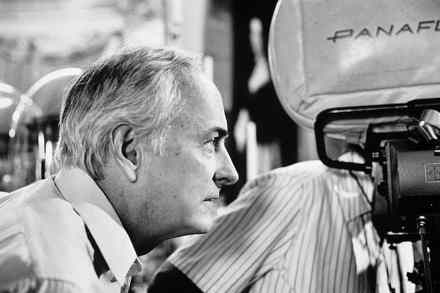
James Ivory and Ismail Merchant formed the most successful cinematic partnership since Michael Powell and Eric Pressburger. Between the founding of Merchant Ivory in 1961 and Merchant’s death 44 years later, the company produced 42 films, more than half of which were directed by Ivory himself. Although its range was wider than is often allowed, the company’s fame rests on its adaptation of late 19th- and early 20th-century novels, among them Henry James’s The Europeans, The Bostonians and The Golden Bowl, E.M. Forster’s Howards End, A Room with a View and Maurice, and Jean Rhys’s Quartet.

Culture clash: Things We Don’t Tell the People We Love, by Huma Qureshi, reviewed

Apart from what the title tells us, these stories are about a fundamental difference in cultures. Huma Qureshi writes like a psychotherapist, considering, analysing, explaining, seeking out conflicts, evasions, and discomforts. The clash is between London and Lahore, Britain and Pakistan. The girls who appear in these tales are westernised, but still hostages to their heritage. The narrator of ‘Superstition’ escapes the shalwar kameez that she has to wear at family dinners on Saturday evenings in suburban London. She is smitten with a boy at a neighbour’s house, and then endures a conspiracy of male, religious dominance: ‘All this happened over an unfortunate teenage kiss.

Who’s to blame if Britney Spears has been ‘devoured’ by celebrity?

All the questions around Britney Spears can be condensed into this one: who should we blame? For a long time, there was a comfortable narrative that the pop star’s decade-long descent — from virginal queen of teen in 1998, to junk-food scarfing, twice-divorced single mother, to broken woman being transported to hospital in restraints — was wholly her own doing. Britney was a train wreck, white trash, a hot mess and, all in all, no better than she ought to be. The fact that her career recovered dramatically after she was placed under a conservatorship arrangement in 2008 (giving her father ultimate control over her life and finances) seemed to prove that the under-lying problem had been her freedom.

Lost in the fog: The Fell, by Sarah Moss, reviewed

Novelists are leery about letting the buzzwords of recent history into their books. The immediate past threatens to upstage the imagined world with its reality, and at the same time diminish it with the cardboard tang of everyday life. Sarah Moss, by contrast, has never been embarrassed to lend her prose the texture of contemporary conversation. As a celebrated author of novels in which catastrophe shatters middle-class English lives, she was always a likely candidate to be quick off the mark with a lockdown novel. In her latest, it’s November 2020, as night falls in the Peak District. Kate, a single mum, is half way through a 14-day period of mandatory isolation when she decides to slip out for an illegal walk in the hills.

Suspicious circumstances abound in the latest crime fiction

The old adage that everyone has a novel in them has a new version: anyone can write a thriller. Celebrity helps, of course, and Bill and Hillary Clinton are exemplars of the trend, though each has had the sense to draw on professional assistance and the grace to acknowledge it. Closer to home, Britain has spawned its own unexpected authors, led by Richard Osman with his astonishing successful The Thursday Murder Club. Now Alan Johnson, the former Labour MP and cabinet minister, joins the club with The Late Train to Gipsy Hill (Headline, £16.99), his first foray into fiction. He arrives with impressive credentials, however, having published three excellent volumes of memoirs since leaving politics. Like them, this book is well written, if less affecting.

The 17th-century Huron chief Kondiaronk can still teach us valuable lessons

Ten years ago, David Graeber was a leading figure of the Occupy Wall Street movement. He and his fellow protesters camped out in Zucotti Park, storing $800,000 of donations in trash bags because they didn’t believe in banks. The American anthropologist and anarchist activist called this an experiment in ‘post-bureaucratic living’. But such politics made Graeber persona non grata at US universities, so he moved to Britain where, in 2013, he became a full professor at the LSE. There, until his death last year aged 59, he imagined anarchist utopias and indicted what he took to be an oxymoron: western civilisation.

What I really said to Gordon Brown: Field Marshal Lord Guthrie sets the record straight

A headline in the Mail on Sunday, taken up eagerly by the BBC’s Today programme, claimed recently: ‘The SAS is getting worried that not enough posh officers are applying for jobs.’ Having hooked those shocked by the thought that the SAS should draw such distinctions, as well as those appalled that oiks are applying at all, the piece actually went on to explain that one officer failed the selection because he ‘lacked the sophistication’ to be able to brief cabinet ministers on operations. No lack of sophistication ever attached to Charles Guthrie.