More from Books

As feminists fall out, it’s not just the patriarchy that’s under fire

UK grassroots feminism is flourishing at the moment, with the journalist Julie Bindel leading from the front as troublemaker-in-chief. In a long history of activism that began in the 1980s, campaigning against male violence in Leeds while Peter Sutcliffe stalked the streets, Bindel has always been straight to the point, full of heart and un-interested in placating middle-class sensibilities. Her new book is no different. Feminism for Women is an impassioned manifesto for the kind of feminism she favours — indeed, the only kind she’s willing to acknowledge as worthy of the name.

The country house is dead: that’s why we love it so

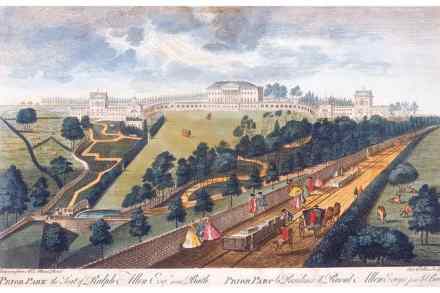
The true English disease is Downton Syndrome. Symptoms include a yearning for a past of chivalry, grandeur and unambiguously stratified social order, where Johnny Foreigner had no place unless perhaps as butler in the pantry or mistress in the bedroom. And the focus of the disease is the country house, Britain’s best contribution to the world history of architecture. Except often the architect was Johnny Foreigner. The typologies are well understood: from great halls with their Tudor feasts to Italianate palazzi, with Alexander Pope scribbling in the garden; thence to disturbing Victorian horrors corrupting their inhabitants (q.v.

Wrapped up in satire, a serious lesson about the fine line between success and scandal

Have you heard of champing? Neither had I. Turns out it’s camping in a field beside a deserted church. When it rains, you abandon your flimsy tent and instead bed down in the hushed aisles. At the beginning of Ferdinand Mount’s new novel, Making Nice, Dickie Pentecost and his wife Jane, together with their daughters Flo and Lucy, are doing just that. In the morning they meet fellow champer Ethel, short for Ethelbert, a bewitching man with stony eyes and sticking-up hair. ‘Ethel,’ says Dickie. ‘I suppose they could have shortened it to Bert instead.

Mind games: the blurred line between fact and fiction

Readers of Case Study unfamiliar with its author’s previous work might believe they have stumbled on a great psychotherapy scandal. We’ve all heard of past psychiatric controversies — forced lobotomies, the incarceration of single mothers, false memory syndrome — and of R.D. Laing, whose unconventional techniques were not always beneficial to the patient. Well, here is Graeme Macrae Burnet, a Scottish writer whose His Bloody Project was shortlisted for the Booker in 2015, disclosing that after he wrote a blog piece about the once notorious, now largely forgotten, 1960s psychotherapist A. Collins Braithwaite, he was sent previously unseen notebooks written by a young woman who had been his patient.

How 19th-century gold rushes led to a distrust of China

For a brief moment three summers ago it seemed that the clear Idaho air wafting through the Sun Valley Literary Festival had become tainted with the smoke and soot of Nuremberg. Here was Thomas Friedman, bloviator-in-chief to America’s chattering classes, standing before a rally of thousands, delivering a powerful philippic about the ascent of the Asiatic East. As he warmed to his theme, he decided for some messianic reason to demand that his audience chant the phrase that he suggested now dominated the American economic landscape. Come on, he urged like a latter-day Elmer Gantry, yell out with me the words: ‘Everything. Is. Made. In. CHINA!

Unkindly light: The Morning Star, by Karl Ove Knausgaard, reviewed

Karl Ove Knausgaard’s My Struggle sequence is one of this century’s great projects: an intimate epic in which the overriding obsessions of our times — identity, gender, the meaning of truth — play out through six maddeningly detailed, curiously compelling autofictions. It’s the kind of work that casts a long shadow; any fiction that follows, the author knows, is in communion, and competition, with that momentous work. Which is why The Morning Star, Knausgaard’s return to the novel after an almost decade-long break, is both fascinating and frustrating.

How does David Sedaris get away with saying the unsayable?

These aren’t diaries in the sense that Chips Channon kept diaries, or Samuel Pepys. They aren’t diaries at all, beyond the fact that each entry records an event and has a date and place attached. If a diary is a conversation with yourself, A Carnival of Snackery is a conversation with a crowd, because the observations it contains were written as material for David Sedaris’s shows. The entries, which begin in 2003 and continue to Christmas 2020, are therefore, as Sedaris admits, over-polished, and what we hear on the page is a spoken rather than a written voice.

China and the WHO are given an easy ride in the Covid blame game

Are you ready to relive 2020? That’s what Adam Tooze is offering as he tells the story of Covid-19 through the spectacular and terrifying economic consequences created by the global health crisis. For many, the answer will be a simple no. But for others looking to make sense of an utterly surreal year, Shutdown might seem an obvious place to start. Unfortunately, the book offers less analysis and more ranting than would normally be expected from an economic digest — especially one written about one of the most startling shocks to the economy the world has ever seen. Some readers may like the rant.

The coal mining conundrum: why did the NUM fight so hard for its members’ right to suffer underground?

Anyone with a grasp of the history of Britain knows that its once considerable power, and much of its still considerable prosperity, was built on coal. The geological accident of these islands containing coal gave us the industrial revolution and the first railways, and consolidated British naval power. Implicit in that accident was the fact that a few landowners, under whose acres the coalfields spread, became astonishingly rich as a result — people such as the Butes, the Londonderrys and the Fitzwilliams, who lived self-indulgent lives in their stately homes while half a mile below semi-naked men crawled in coal dust five-and-a-half days a week to make them so wealthy.

Flight into danger: Freight Dogs, by Giles Foden, reviewed

Flying has always attracted chancers and characters to Africa. Wilbur Smith’s father so loved aviation he named his son to honour the Wright Brothers. ‘I am forever grateful he didn’t go for Orville,’ the Zambian-born author once confided. Smith father and son may well have approved of Giles Foden’s romping novel, which has African bush pilots at its core, and a style not dissimilar to that of an airport thriller. School-age dreamer Emmanuel ‘Manu’ Kwizera comes from the implausibly beautiful hill country of eastern Congo. Green though the land is, its recent history is anything but pleasant: a plunge pool of horrific violence, backwash from the 1994 Rwandan genocide.

T.S. Eliot’s preoccupations in wartime Britain

In her essay ‘A House of One’s Own’, about Vanessa Bell, Janet Malcolm says memorably that Bloomsbury is a fiction, and that compared with letters and first-hand material, biography is like canned vegetables compared with fresh fruit. We read the letters of writers because they are informal, unguarded, unbuttoned, intimate and candid, revealing not only the secrets of composition but, we hope, glimpses of the writer in the flesh, with his trousers down. This is T.S. Eliot, on 26 December 1941, thanking the editor and critic John Hayward for a gift of toilet paper: BROMO is, as you know, and as the manufacturers state, so well known that lengthy description is not necessary...

The first patrons of Modernism deserve much sympathy and respect

If Modernism is a jungle, how do you navigate a path through its thickets? Some explorers — Peter Gay and Christopher Butler among them — have been fool-hardy enough to attempt an overall map, identifying factors common to a half century of music, art and literature. But the borders remain disputed and light cast on one area only leaves another consigned to the shadows. Philip Hook, however, has been less ambitious, confining himself to one patch of special interest: the painting and sculpture of the decade preceding the first world war.

Thoroughly modern Marie: Matrix, by Lauren Groff, reviewed

It is 1158. A 17-year-old girl, born of both rape and royal blood, is cast out of the French court and condemned to spend her days in a threadbare abbey in England. She will go on to become abbess and one of the dominant forces in the land, transforming her abbey from a shack into an institution grown fat on holy power. The girl is Marie de France, loosely based on the 12th-century poet, about whom very little is known. Into history’s silence steps the American novelist Lauren Groff, who imagines a character who seems remarkably familiar. For Marie is a strong, feminist lesbian, who doesn’t fit into her era’s gender roles, considers much religious teaching to be laughable and who worries about global warming.

The secret life of Thomas Mann: The Magician, by Colm Tóibín, reviewed

In a letter to Stephen Spender, W.H. Auden, who had married Thomas Mann’s daughter Erika sight unseen in order to provide her with a British passport, wrote: ‘Who’s the most boring German writer? My father-in-law.’ This is clearly not a sentiment shared by Colm Tóibín, who has brought out a fictionalised biography of the Nobel prize-winning novelist. Unlike The Master, Tóibín’s 2004 novel about Henry James, which confined itself to a four-year period when the protagonist was in his mid-fifties, The Magician covers almost the whole of Mann’s life, from his boyhood in Lübeck, which inspired his first and arguably finest novel, Buddenbrooks, to his death in Zurich at the age of 80.

How China’s economic revolution created billionaires overnight

In the winter of 1992, the retired octogenarian Deng Xiaoping toured China’s southern coasts. From there he gave a spirited warning to his communist successors: ‘Whoever doesn’t reform will have to step down! We must let some people get rich first!’ These words were the starting-gun for the country’s opening, and its intense economic reform. In the decades since, Chinese cities have never stopped hungering for more space, with new suburbs swallowing up old villages and steel skyscrapers growing ever higher. Even taxi drivers lose their way. One sheepishly explained to me: ‘That road never used to be there.

No Samuel Beckett play is set in stone

It must have been shortly after my first performance of Not I in London in 2005 when Matthew Evans, the former chairman of Faber, handed me a volume, published in 1992, of The Theatrical Notebooks of Samuel Beckett. He told me that the series was no longer in print and therefore difficult to get hold of, but he dearly wanted me to have this copy. It was volume 3 — Krapp’s Last Tape, one of the two of the series (the other being Endgame) that Beckett himself had approved and personally overseen the edits for. Doing so had prompted Beckett to make further adjustments to the play text, despite it having been published more than 20 years earlier — such was his own artistic process of obsessively tinkering with and amending his work.

Only Iain Sinclair could glimpse Hackney in the wilds of Peru

It seemed like a preposterous proposition. For decades, Iain Sinclair has been an assiduous psychogeographer of London, an eldritch cartographer mapping ley lines between Hawksmoor churches and Ripper tours, skulking around the torque of the M25 and fulminating about the Millennium Dome and the gentrification (and gerrymandering) around the Olympic Stadium. So when I learned that his new book was about a journey to Peru, I sarcastically imagined he would be attempting to find the grave of Paddington Bear. Not so, and this is vintage Sinclair. His great-grandfather, Arthur, was a botanist and author. After sojourns in Ceylon and Tasmania, he was sent to assess an area by the ‘corporate predators’ of the Peruvian Corporation of London.