Mark Forsyth

The real surprise contained in a Kinder Surprise Egg

From our UK edition

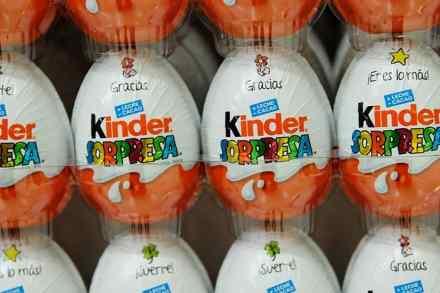
The Rosetta Stone has an awful lot in common with a Kinder Surprise Egg. Hear me out. The actual text of the Rosetta Stone is mainly about some changes to tax rules, and is about as interesting as such things usually are. The one important fact about it, for us, is that it is written in three languages and three alphabets: Greek, Demotic and Hieroglyphics: the Language of the Ionians, the Language of the Documents, and the Language of the Gods. Thus hieroglyphics were decoded. A Kinder Surprise Egg does an awful lot more than this. Tucked inside with the cheap plastic toy is a tiny sheet of paper that says: ‘WARNING, read and keep: Toy not suitable for children under three years. Small parts might be swallowed or inhaled.
Beware!!!

From our UK edition

‘The trade deal USMCA has received fantastic reviews. It will go down as one of the best ever made, and it will also benefit Mexico and Canada!’ These are the words of Donald Trump, not tweeted, not spoken, but written down on the headed notepaper of the White House and finished off with an exclamation mark (or exclamation point, as he would call it, being of the American persuasion). The punctuation is rather mysterious and I think it has one of four possible meanings. First, I should probably say what an exclamation mark is. The question is more vexed than you think. Most authorities on English style despise exclamation marks. The Economist Style Guide and Gower’s The Complete Plain Words don’t even acknowledge its existence.

Who invented Santa Claus?

From our UK edition

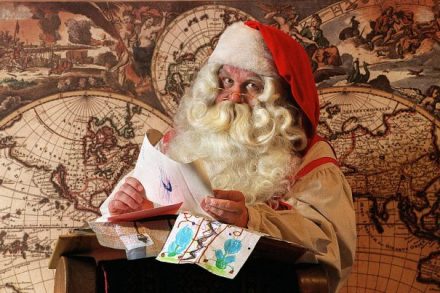
Santa Claus ate Father Christmas. It happened quite suddenly. Well, it took about a decade, but that’s suddenly in cultural terms. Over the course of the 1870s the venerable British figure of Father Christmas was consumed by an American interloper. Father Christmas (first recorded in the 14th century) was the English personification of Christmas. Just as Jack Frost is a personification of the cold and the Easter Bunny is a rabbitification of Easter, so Father Christmas stood for Christmas. He was an old man (because Christmas was ancient) and he was plump (because Christmas was a feast). But Father Christmas did not give presents, did not come down the chimney, had nothing to do with stockings or reindeer and did not live at the North Pole.

The invention of Santa

From our UK edition

Santa Claus ate Father Christmas. It happened quite suddenly. Well, it took about a decade, but that’s suddenly in cultural terms. Over the course of the 1870s the venerable British figure of Father Christmas was consumed by an American interloper. Father Christmas (first recorded in the 14th century) was the English personification of Christmas. Just as Jack Frost is a personification of the cold and the Easter Bunny is a rabbitification of Easter, so Father Christmas stood for Christmas. He was an old man (because Christmas was ancient) and he was plump (because Christmas was a feast). But Father Christmas did not give presents, did not come down the chimney, had nothing to do with stockings or reindeer and did not live at the North Pole.

The Servant

From our UK edition

You will see, alas, that all of this is true. One morning, I awoke in a feather bed in a room in a tavern and reached, as I always did, for my purse of gold, but it was not there. I had been travelling on business for many months and weeks with only my faithful coachman Joseph for company. Wherever I stayed, I would put the purse of golden coins by my pillow. Each night it was the last thing that I touched, and the first thing I touched in the morning. Sometimes, when I climb a flight of stairs, I have a strange feeling, which may be peculiar to me. I misjudge the number of steps and then, at the top, I put my foot down on nothing. Then my whole body feels dizzy. It is as though the world has made a mistake and not I. I had that feeling when I reached for my purse.

What rhetoric can do for you – and what you can do for rhetoric

From our UK edition

Listen to Mark Forsyth discuss what makes a political sound bite: [audioboo url="http://audioboo.fm/boos/1746136-mark-forsyth-inkyfool-on-the-importance-of-political-sound-bites"/] In December 2011, there was a major reversal of American policy and ideology. Barack Obama told a crowd of veterans: ‘You stood up for America. Now America must stand up for you.’ A U-turn! A flop-flip! Because, if you think about it, Obama was saying the exact opposite of JFK: ‘Ask not what your country can do for you, but what you can do for your country.’ And nobody noticed. Obama was still the heir to Kennedy, because he used the same rhetoric. Technically, it’s called chiasmus. The press and the public hate rhetoric.

Why do people talk nonsense in public

From our UK edition

There’s something about the word located that makes me want to slit throats. Not that I’m a naturally furious chap, not a bit of it. But located makes me want to shoot a puppy. The safety instructions are ‘located’ at the end of the carriage. The life-jackets are ‘located’ under the seats. They needn’t be located. They just are. The life-jackets are under the seats. The information desk is on the ground floor. I want to take a huge red pen to the world and start deleting. The curious thing is that everybody — even health-and-safety officers — can talk properly in a pub. By properly I don’t mean that they’ll necessarily use the subjunctive perfectly or distinguish between disinterested and uninterested.