John Phipps

An all too brisk and too narrow history of eugenics: Radio 4’s Bad Blood reviewed

From our UK edition

Like so many of history’s great catastrophes, the story begins with an eccentric Victorian Englishman. Francis Galton was a maker of maps and compiler of tables; ‘Whenever you can, count,’ was his mantra. Galton was the first man to plot a weather map and the grandfather of forensic fingerprinting. His quixotic mania for quantification would lead him to try and draw up a ‘beauty atlas’ of the United Kingdom based on his own observations. In a footnote to one of his books, he expressed the need for a new term for the ‘science’ that obsessed him most: ‘We greatly want a brief word to express the science of improving stock.’ That is, improving, by breeding (and by other means), the genetic quality of the human race. He coined a new term: ‘eugenics’.

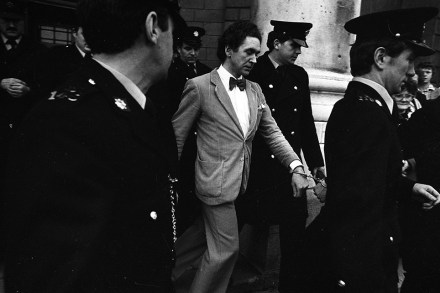
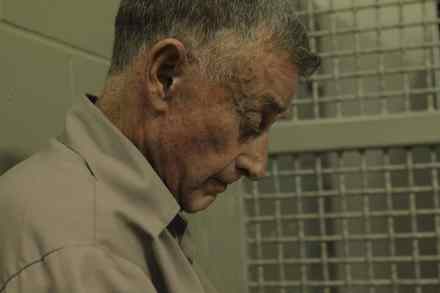
The extraordinary case of Malcolm MacArthur

From our UK edition

Non-fiction tells you what happened, fiction affirms the kinds of things that happen. According to Aristotle, anyway. So while journalism seeks out unlikely events, fiction creates pleasing inevitabilities. The problem as it pertains to our brave narrative podcasters is that they have to straddle the two worlds: their material must be interesting and unusual, but their final story should have the poetic coherence of good old unreality. They have to turn ‘some things that happened’ into ‘a kind of thing that happens’. Otherwise it’s all evidence and no charge, each event indistinguishable in its randomness from a bolt of lightning.

Shocked and moved me far more than I anticipated: Hoaxed reviewed

From our UK edition

I shied away from conspiracy stuff during the Trump era. Not the theories themselves, but the huge volume of content proclaiming that we lived in a post-truth age of misinformation and conspiracy. It wasn’t that I disagreed with the idea that something like this was happening, or the idea that it was bad. It was more a certain tone these podcasts, essays and articles shared – almost a shared idiom and turn of phrase. People talked about ‘truth’ and ‘facts’ and ‘evidence’ with unwavering self-certainty.

A belter of a podcast, featuring a mad South African: Smoke Screen reviewed

From our UK edition

I go back and forth on tobacco companies. On the one hand, they are merchants of death. On the other, cigarettes are fun and delicious. On the one hand, they push cigarettes on children, which is unconscionable. And on the other, I remember how I would gather in the park with other children to collectively venerate a ten-pack of Marlboro Lights, our soft, pink fingers shivering and struggling with the lighter mechanism, our untutored lips puffing ineffectually at the speckled filter, all of us beginning to grow woozy from the acrid smoke filling our virgin lungs as we stood there and thought: this is the life. Luckily, Smoke Screen sidesteps this question to focus more squarely on corporate espionage within the tobacco industry.

No genre of storytelling is more formulaic or more exhausted than true crime

From our UK edition

Nothing new under the sun. Or at least it feels that way these days, doesn’t it? The movies are TV shows are comic books are children’s toys. The TV series are podcasts are non-fiction books are magazine articles. The radio shows are real-life stories are Twitter threads are TV series. Even the interesting movies are remakes now. Intellectual property is king, franchises rule the entertainment world and audiences are left to chew the cud from a hundred-stomached cow. Sunrise, sunset and nothing new to offer. So it is with radio, and especially with true crime, the staple crop of narrative radio. No genre of storytelling is more formulaic or more exhausted. No narrative form more consistently fails to deliver what it promises. Yet on it goes.

The cruelty of reality TV was part of the appeal

From our UK edition

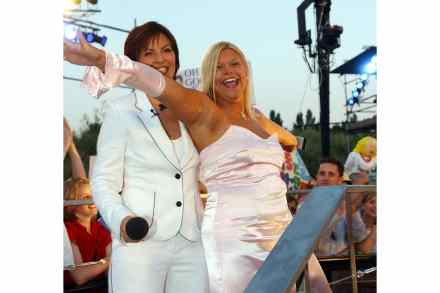
Jade Goody appeared on Big Brother in 2002. She was a short, loud, blonde-haired woman who broadcast her every thought and feeling, either in her thick Cockney accent or with her unforgettable face. She became a star. In 2007 she appeared on Celebrity Big Brother, where she made racist comments about her fellow contestant, the Bollywood actress Shilpa Shetty. Effigies of Goody were burned in India; the Sun called her ‘the face of hate’. Hoping to redeem herself, she agreed to appear on Indian Big Brother, where she was told she had cervical cancer with the cameras still rolling. She died less than nine months later. It was a three-act drama that only reality TV could have delivered. Call it 45 minutes of fame.

A podcast with real emotional heft: Philippa Perry’s Siblings in Session reviewed

From our UK edition

Have you ever taken a piece of advice? I’m not asking a rhetorical question. Have you ever once in your life been given a piece of advice that you’ve then acted on? I ask this question a lot at parties, and generally find the answer is: ‘No, not that I can think of.’ It may be that when we take good advice, we begin to imagine we came up with the idea in the first place. It may be that we always just do whatever it is we were always going to do. All I can say for sure is that if you ask: ‘What’s the best piece of advice you’ve ever given someone else?’, people will keep you there all night. Best Friend Therapy bills itself as a chat between two best friends that will impart the blessings and insight of therapy.

Don’t read Ulysses; listen to it

From our UK edition

Dublin. 16 June 1904. A little after 8 a.m. Two men – both annoying, one stung with grief and ambition – are having an argument. One is pierced by thoughts of his late mother. ‘Pain, that was not yet the pain of love, fretted his heart.’ She has come to him in a dream smelling of wax and rosewood. ‘Dedalus,’ the other calls up to him. ‘Come down, like a good mosey. Breakfast is ready.’ Ireland. 16 June 1982. 6:30 a.m. Radios all over the country emit the words ‘Stately, plump Buck Mulligan’, and don’t stop broadcasting until they have read out every word of Ulysses, down to its last, heart-stopping syllable. There was no abridgement and no explanation: just the text, entire.

Everything in me wanted to dislike it – but it’s lovely: BBC Radio 3’s Sound Walk reviewed

From our UK edition

It’s a sweet, green, glowing dawn in north-west Scotland. All around us are empty hillsides of rock and heather. The cold air smells of moss. To the south, far mountain peaks resolve into high banks of mist and cloud, while up ahead stands the crumpled rock face of Ben Nevis, its broad shoulders beginning to fill the patchy, blueing sky as we walk towards it. It’s very beautiful. Look. A heron. Why are we here? To take the long view, because two million years of intermittent glaciers have frozen, thawed and hewn the mountain into its present-day shape. More immediately, because of the Norwegian public service broadcaster. In the 2000s, it decided to televise, in real time, the railway journey from Bergen to Oslo.

Lost in the fog: The Fell, by Sarah Moss, reviewed

From our UK edition

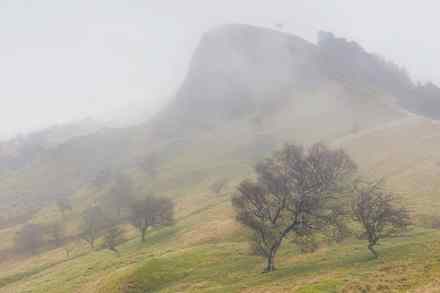
Novelists are leery about letting the buzzwords of recent history into their books. The immediate past threatens to upstage the imagined world with its reality, and at the same time diminish it with the cardboard tang of everyday life. Sarah Moss, by contrast, has never been embarrassed to lend her prose the texture of contemporary conversation. As a celebrated author of novels in which catastrophe shatters middle-class English lives, she was always a likely candidate to be quick off the mark with a lockdown novel. In her latest, it’s November 2020, as night falls in the Peak District. Kate, a single mum, is half way through a 14-day period of mandatory isolation when she decides to slip out for an illegal walk in the hills.

It’s amazing how little insight Paul McCartney has into the Beatles’ genius

From our UK edition

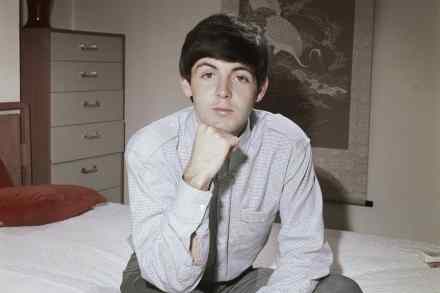
The Paul people are out in force these days. A New Yorker profile, a book and a new documentary have put the Beatles, and particularly Paul, back in the papers. Not that they, or he, ever left. I should admit a bias. I have the same first name as John, and being a man of straightforward loyalties I took him as my favourite early on. Even now I find him the most interesting of the four: vain, sardonic, nasty, boyish, thoughtful, wounded; bright-eyed and pugilistic and blessed with an undermining cleverness that left him bored by whatever he came across. The even-tempered Paul just doesn’t entrance me in quite the same way.

In Bennington it was a badge of dishonour not to have slept with your professor

From our UK edition

It is incredibly hard to convey the fleeting invincibility and passionate self-significance that we feel on the cusp of adulthood. Youth goes: the skin fades, the face slackens, the lower back begins to groan in protest. The world dims and we dim with it. Yet generally speaking, we’re as personally winded by that realisation as we are indifferent to it in others. When everyone suffers, no one cares. Why should I bother with someone else’s wasted youth? I’ve got one of my own right here. Still, I was intrigued by the appearance of Once Upon a Time at… Bennington College, an eight-part oral history of three literary superstars’ time at university together.

The Sunday Feature is one of the most consistently interesting things on Radio 3

From our UK edition

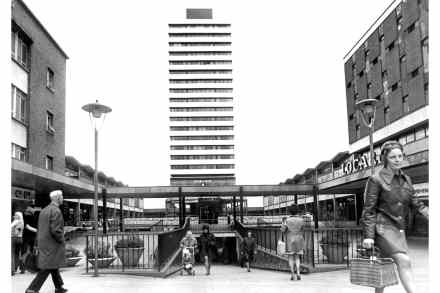
The story is likely apocryphal — and so disgraceful I almost hesitate to tell it — but it goes like this. On the night of 14 November 1940, as more than 500 Luftwaffe rained bombs on the people of Coventry, the newly appointed city architect Donald Gibson was watching the fires. Gibson had been appointed to the newly created position of ‘city architect’ three years earlier by the radical Labour council that had come to power in a local election. His job was to modernise what was then Britain’s best-preserved medieval city, and build the ideals of social justice and equality into the city’s brick and mortar.

A podcast that will rescue your relationship: Where Should We Begin? reviewed

From our UK edition

Let me give you a free piece of relationship advice: just break up. If it’s more work than pleasure, if your heart sinks when they call, if you catch yourself writing ‘have sex’ on your to-do list, break up. Life is short, death is certain, relationships are for loving in, and if you can’t be with the one you love, you can at least leave the one you’re with. I give this advice because I know that people in bad relationships don’t take it. They are like those evacuation refuseniks, stumping around on the volcanic hillside, saying they’ve lived there 20 years and they’ll be damned if the whole thing blowing sky-high will change that.

Why do I find sketch shows – even the better ones – so embarrassing and charmless?

From our UK edition

On sketch shows, the wisdom once was that you needed a punchline. That is, a slightly hammy, summative sign-off to let people know that they had come to the end of any given bit, to help the audience keep its bearings. The rules changed when the team behind Monty Python, who hated writing that mugging final joke, discovered that you could simply cut to Graham Chapman wearing a dress in a field and saying in a stern voice: ‘And now for something completely different’ — and it turned out that this was not only just as good, it was actually quite a lot better. This is the problem with sketch shows: you can hear the aching labour of the actors and the writers trying to be funny (and when they’re particularly bad, you can hear them praying for it too).

Much smarter than your average podcast: Passenger List reviewed

From our UK edition

Passenger List opens with a carefully structured ripple of breaking news bulletins: a mysterious catastrophe, an unconvincing official explanation, the repetitive stupidity that surrounds disaster. A plane has disappeared, no wreckage has been found. A woman whose brother was on board begins to search for the truth. The authorities say it was a bird strike: a flock of geese was shredded in the engines and 200 passengers crumpled on impact with the Atlantic ocean. Of course, the authorities’ story doesn’t make sense. So we follow our hero, Caitlin, a lone citizen searching indefatigably for answers in a shadow world of half-truth and paranoia. It seems that we never tire of this subject matter.

The worst idea ever for a podcast – and it’s great: Our Struggle reviewed

From our UK edition

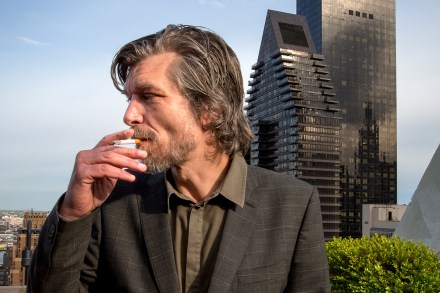
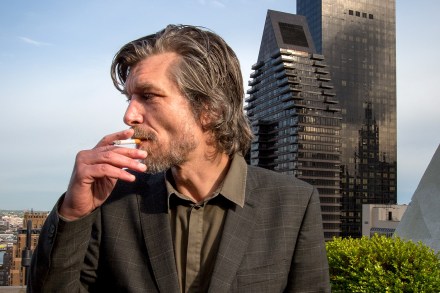
Our hosts are Lauren and Drew and they want to talk about Karl Ove Knausgaard. Or rather, they want to talk around Knausgaard. Or to talk through Knausgaard, towards the sense of what the Knausgaard phenomenon means. Or, it sometimes seems, they want to talk about everything but Knausgaard — cigarettes, Constance Garnett, the history of literary criticism, to what extent hotness is a function of tallness, Clarice Lispector, media hype, backlash, cancel culture, sneakers, Gen X, how Geoff Dyer got where he did — until the only territory left uncovered by the conversation is Knausgaard himself, described only through omission, in negative outline, raising yet another cigarette to his smouldering, craggy face.

knausgaard struggle

Our Struggle is the worst idea ever for a podcast — and it’s great

Our hosts are Lauren and Drew and they want to talk about Karl Ove Knausgaard. Or rather, they want to talk around Knausgaard. Or to talk through Knausgaard, towards the sense of what the Knausgaard phenomenon means. Or, it sometimes seems, they want to talk about everything but Knausgaard — cigarettes, Constance Garnett, the history of literary criticism, to what extent hotness is a function of tallness, Clarice Lispector, media hype, backlash, cancel culture, sneakers, Gen X, how Geoff Dyer got where he did — until the only territory left uncovered by the conversation is Knausgaard himself, described only through omission, in negative outline, raising yet another cigarette to his smoldering, craggy face.

Insane and fascinating: BBC World Service’s Lazarus Heist reviewed

From our UK edition

The narrative podcast remains a form in search of a genre. The template set by the hit show Serial — enterprising American journalists with janky piano theme tune shed new light on tantalising murder — still predominates seven years on. To this we can add the format pioneered by S-Town (initial murder investigation subsides into rich human detail) and, more recently, the excellent Wind of Change (intriguing what-if maps cultural and macropolitical shifts, with bonus CIA window-dressing). I remain sceptical about the form’s usefulness as a way of breaking hard news. Caliphate, the New York Times jaw-dropper on the Islamic State, is less gripping now its key source has been revealed as a fraud.