Lead book review

The Edge of the World: deep subject, shallow history

The Mediterranean glows in our conception of the Continent, the warm source of everything that is best in us, the seat of civilisation, from which one delicious wave after another has washed up on our shores. But what about the Mediterranean’s twin, the other great lobe of the Atlantic which defines the northern edge of the European peninsula, a sea of enormous fertility, its edges laced with islands, fed into by the richest of rivers, with, in the Baltic, its own inner chamber, giving access to the giant hinterlands of Russia. Surely the North Sea deserves its human history too? That is Michael Pye’s question: do the North Sea and the connections across it constitute the missing half of the European story? How have its dynamics shaped our history?

Terror plots, threats to liberties, banks in crisis: welcome to Britain during the Napoleonic Wars

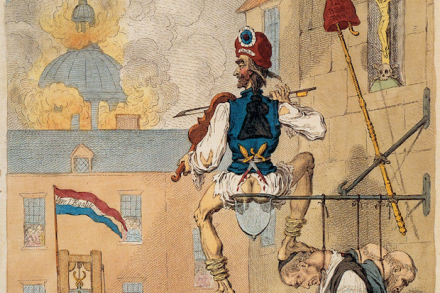
In our own troubled times it is useful and comforting to recollect that ’twas ever thus.  Violent threats against prominent politicians? Jenny Uglow reminds us that in 1802 Colonel Edward Despard, a British officer turned radical agitator, was the last person in England to be sentenced to be hanged, drawn and quartered, for a plot to kill King George III and the cabinet; while in 1812, the wildly unpopular hardline Tory Spencer Perceval became the only prime minister (so far) to be assassinated, the victim of John Bellingham, a deranged bankrupt. Threats to civil liberties?

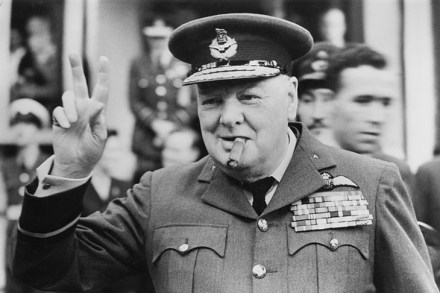
Does Boris Johnson really expect us to think he’s Churchill?

As you would expect, it’s impossible to read this book without drawing fairly direct comparisons between its author and its subject. In promotional exchanges, with the well-worn practice of self-deprecation, its author will of course insist that there is no comparison between the great man and the present humble supplicant.

My mad gay grandfather and me

Family history is all the rage at the moment — finding out about one’s ancestors, digging back into one’s roots. Sofka Zinovieff has written the strange, and strangely moving, tale of her family’s unorthodox relationships. By turns comical, tragicomical and melodramatic, her book often reads much like fiction, and she recounts it like a novel. The principal characters are: Gerald Berners, born in 1883; his lover, nicknamed the ‘Mad Boy’, Robert Heber-Percy, born in 1911; the author’s grandmother, Jennifer Fry, born in 1916; and the author herself, born in 1961. Zinovieff expertly interweaves their unlikely history from late Victorian England until the present day, leaving the reader on the last page with ‘a view up to the intriguing gateway of Faringdon House’.

How Hitler’s dreams came true in 1946

I should begin this review, in the spirit of full disclosure, by admitting that I know the author very slightly. Something close to 14 years ago, we were on the same press freebie: a slap-up lunch in Paris courtesy of — was it? — LBC radio. Who knows? The ignominious occasion of our acquaintance isn’t the reason I mention it: rather that, somewhere on the Eurostar under the Channel, he and I fell into a conversation about the European Union. As I trotted out the usual boilerplate grumbles about sovereignty and bureaucratic opacity and the iniquities of the Common Fisheries Policy, he exclaimed so passionately in its favour that the conversation stayed with me. After all these years I of course paraphrase, but what he said was: ‘Yes, yes, but it is such a beautiful idea.

If you want to admire Napoleon, it helps not to have met Gaddafi

Forty-odd years ago, in the early phase of the Gaddafi regime, I had the slightly mixed fortune to attend the new Benghazi University’s first degree ceremony. The university had actually been closed for months and there were no degrees to award, but that did not stop them kitting out their foreigners in a job lot of academic gowns shipped in from Poland and marching us off to sit, ringed with machine-gun-carrying guards, in a huge tent under a broiling sun to wait for the Colonel himself to arrive. Every so often the band would strike up, we’d all stand, a loudspeaker would blare out ‘Mu’ammar Muhammad Abu Minyar al-Gaddafi’ and nothing would happen.

Nabokov’s love letters are some of the most rapturous ever written

After the publication of The Original of Laura, Nabokov’s last and most disappointing novel in a very sketchy draft, you might have been forgiven for thinking there wasn’t much left to discover in the great novelist’s writings. If the posthumous fiction has been mostly fairly thin, this extraordinary and wonderful collection of letters to his wife restores him to us as the virtuoso of prose. They are some of the most rapturous love letters anyone has ever written, love letters from the length of a lifelong marriage; beautiful performances for Véra, Nabokov’s wife, and incidentally for us. The publishers have immediately issued this volume as a Penguin Classic. I don’t think we will quibble with that.

Going for a Song, by Bevis Hillier – extract

  On the Bust of Helen by Canova In this beloved marble view, Above the works and thought of man What nature could and would not, do, And beauty and Canova can! Beyond imagination’s power Beyond the Bard’s defeated art, With immortality her dower Behold the Helen of the heart! — George Gordon, Lord Byron (1788–1824) Precious Stones My Cherrystones! I prize them, No tongue can tell how much! Each lady caller eyes them, And madly longs to touch! At eve I lift them down, I look Upon them, and I cry; Recalling how my Prince ‘partook’ (Sweet word) of cherry pie! — Charles Stuart Calverly (1831–84) A Glass Collection Today I had a big surprise Uncle left me eight glass eyes.

Keep the Man Booker Prize British

I am nothing if not patriotic. Like most Americans, I am convinced that mine is the freest, most beautiful country on earth. But I cannot pretend to be happy that two of us have been shortlisted for the Booker Prize. When it was announced earlier this year that novels written by Americans — in fact, all novels written in English and published in Britain — would now be eligible for the award, I dismissed the news as a harmless gimmick. Now I am not so sure. Behind the fair-play, hands-across-the-border niceness of the committee’s gesture, I sense something else: masochism. The best evidence of this is a piece that ran last week in — where else? — the Guardian in which a panel named 15 American novels that ought to have won the Booker in their respective years of publication.

Confused, unbalanced, brilliant: the Blanche Dubois of Tennessee Williams biographies

Anyone for Tennessee? At a best guess, the answer to that’s yes. There’s scarcely a moment these days when there isn’t a Williams play on somewhere in the West End or along the Great White Way. One reason for this is that he wrote such succulent roles, and I don’t mean just his steamroller leads, though for a kind of bruised or brittle actress, Blanche Dubois is as close to a female Hamlet as it gets. In A Streetcar Named Desire, there’s also the surly stud Stanley; Stella, his sex-drunk bride; and the courtly, perspiring Mitch, bewitched by Blanche’s blend of magic. Then think of The Glass Menagerie, which has the smothering mother Amanda, the crippled Laura, and the conflicted Tom, who abandons both to pursue his vocation as an author.

Corrie and ready-salted crisps: the years when modern Britain began

In Burberry’s on Regent Street on a dank December day in 1959, David Kynaston records, ‘a young Canadian writer, Leonard Cohen [...] bought a not-yet-famous blue raincoat’. For those joining Kynaston’s groaning historical wagon train for the first time, this is a sample of the sort of thing with which it abounds. Here is a fun little fact — gathered in from a distinctly marginal source — dropped in a wry half-sentence where it belongs chronologically, but looking forward to the future: a stitch in time. A Shake of the Dice is the sixth book in Tales of a New Jerusalem, the great historian’s ‘projected sequence of books about Britain between 1945 and 1979’. He is chewing his way through the giant lettuce-leaf of his chosen decades like a particularly thorough tortoise.

Is there anything left to say about Queen Victoria? A.N. Wilson has found plenty

Do we really need a thumping new life of Queen Victoria? She seems to be one of our most familiar figures, the subject of countless books; but the surprising fact is that there hasn’t been a full, authoritative study since Elizabeth Longford’s life of 1974. A.N. Wilson has spent many years thinking and reading about Queen Victoria, and this superb revisionist biography is the book that he was born to write. In Wilson’s view there are two Victorias. The young Victoria was always someone’s pawn, trying to be a person that she wasn’t. She was in thrall first to Lord Melbourne and then to Baron Stockmar and Prince Albert. Only after Albert’s death was she able to become her true, strong-minded self.

Germans see the best of their soul in Weimar. Everyone else, on the other hand..

Thuringia, a region of former East Germany, occupies a special place in the thoughts of Germans, who like to regard it as the origin of all their best virtues. It’s an alluring place, full of wonderfully untouched stretches of densely forested hills; the occasional small historic town seems hardly to have changed for decades, and the tourist can spend a happy week pottering from Schmalkalden to Ilmenau to Eisenach in the illusion that none of those unpleasant realities of the last century ever touched this place. I once asked the guide at the Wartburg, the magnificent medieval and mock-medieval castle on a snowy crop outside Eisenach, what this place meant to modern-day Germans.

The biography that makes Philip Larkin human again

How does Philip Larkin’s gloom retain such power to disturb? His bleakest verses have the quality of direct address, as if a poetical Eeyore were protesting directly into our ear. ‘Aubade’, his haunting night-time meditation on the terrors of death and dying, focuses on ‘the sure extinction that we travel to/ And shall be lost in always’ and offers no consolation. His ‘Next Please’ makes grim fun out of our habit of hope, pictured as a ship we expect to greet us with its full cargo of rewards. But of course ‘Only one ship is seeking us, a black-/Sailed unfamiliar….’ He saw religious faith as a form of self-deception. Moreover, his ‘The Old Fools’ mercilessly depicts senility.

Soldier, poet, lover, spy: just the man to translate Proust

Charles Kenneth Scott Moncrieff’s Englishing of Proust — widely and immediately agreed to be one of the greatest literary translations of all time — very nearly didn’t happen. Scott Moncrieff only suggested the project to his publisher after they rejected a collection of satirical squibs in verse (sample: ‘Sir Philip Sassoon is the Member for Hythe;/ He is opulent, generous, swarthy and lithe.’). Like any good hack, he had another suggestion up his sleeve: there was this character Proust just starting to be published — making a bit of noise in France. Constable didn’t immediately see the value: ‘They replied that they did not see much use in publishing a translation of Prevost [sic].

James Bond’s secret: he’s Jamaican

Ian Fleming’s first visit to Jamaica was pure James Bond. In 1943, as assistant to the Director of Naval Intelligence, he flew from Miami to Kingston to attend an Anglo-American naval conference and to investigate the rumour that Axel Wenner-Gren, a rich Swede and supposed Nazi, had built a secret submarine base at Hog Island, near Nassau. He was accompanied by his old friend Ivar Bryce, who was also in intelligence, and who put him up at a house his wife had recently bought. As they left the island, Fleming told Bryce, ‘When we have won this blasted war, I am going to live in Jamaica… swim in the sea and write books.

Kaiser Wilhelm’s guide to ruining a country

The role of personality in politics is the theme of this awe-inspiring biography. This is the third volume, 1,562 pages long, of John Röhl’s life of the Kaiser. It has been brilliantly translated — the labyrinth of imperial Germany navigated by many headed subdivisions in each chapter — by Sheila de Bellaigue. The fruit of what Röhl calls a ‘dark obsession’ with the Kaiser, it had its origin when, writing about Germany after the fall of Bismarck at the apogee of social and institutional history in the 1960s, he realised that he was analysing not a modern government but a court society. Personalities and dynasties were as important as classes and parties.

The age of the starving artist

What remains of art is art, of course; and what chiefly interests us is the creative talents of a painter or a sculptor. What we forget is that the work of art wouldn’t be there without some kind of engagement with the brutal forces of money. James Hamilton’s riveting book is a richly detailed study of how, in Britain in the 19th century, artists and a small army of opportunists, art lovers, collectors and businessmen of all sorts used their ingenuity to turn the visual arts into money.

Why movie musicals matter – to this author anyway

Do movie musicals matter? Most readers, even those who love them, will embark on Richard Barrios’s short history of the genre with the thought: not much. They’ll very likely, I’m afraid, finish it holding much the same opinion. But not mattering much doesn’t prevent the best film musicals from being captivating. This is a book by someone who is indeed captivated: a love letter for the best of musical cinema and a blown raspberry for the worst.

It’s not just Putin who misses the Soviet empire. President Bush did, too

Vladimir Putin calls it ‘the greatest geopolitical disaster of the 20th century’, a viewpoint which explains much of his recent behaviour. Few others anywhere in the world, particularly people who live around Russia’s borders, would agree that the collapse of the Soviet Union was anything to lament. From Riga to Tbilisi and from Kiev to Tashkent, Christmas Day 1991, when Mikhail Gorbachev resigned as leader of the USSR and the Red Flag was lowered from the Kremlin, remains a day to celebrate. With nearly a quarter of a century’s hindsight it still seems astonishing that a great superpower and, with it, an entirely different way of looking at the world — Soviet-style communism — disappeared almost overnight and with practically no bloodshed.