Lead book review

Doctor Zhivago’s long, dark shadow

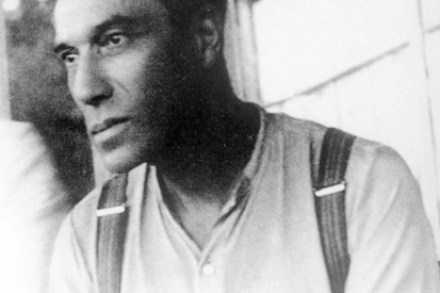
For most Russians, Boris Pasternak is one of their four greatest poets of the last century. For most Anglophone readers, he is the man who won the Nobel Prize for Doctor Zhivago. The first four chapters of The Zhivago Affair give a full picture of Pasternak’s life and the Soviet literary world up until the early 1950s, when Zhivago was nearing completion. Pasternak was born in Moscow in 1890, into an assimilated and highly cultured Jewish family. His father was a painter, his mother a concert pianist; among the family’s friends were Leo Tolstoy, Sergey Rachmaninov and Rainer Maria Rilke. Pasternak wanted first to be a composer, then a philosopher — but by the age of 22 he understood that his vocation was poetry.

Thug, rapist, poetic visionary: the contradictory Earl of Rochester

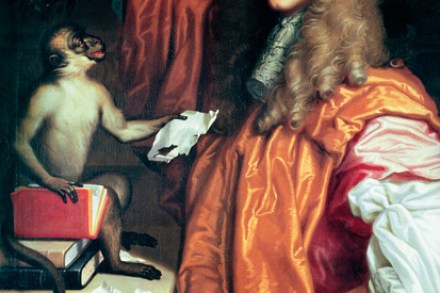
Despite being an earl, Rochester is very nearly a major poet. His poems and letters were torn up by a zealous mother after his death, bent on destroying anything obscene or scandalous. A good deal was lost, but a lot was passed from hand to hand, copied and recopied (it was never printed in Rochester’s lifetime). His full development as a poet cannot be traced, but some of what survives is tantalisingly rich, and has fascinated many subsequent writers. He is one of those rare poets who come to mean much more to later generations. ‘Upon Nothing’ bears a bleak relationship to the end of Pope’s ‘Dunciad’, and, very powerfully, to Hardy’s poem on the sinking of the Titanic, ‘The Convergence of the Twain’.

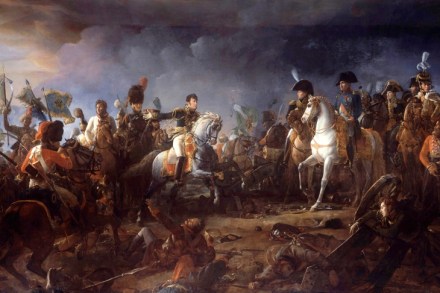
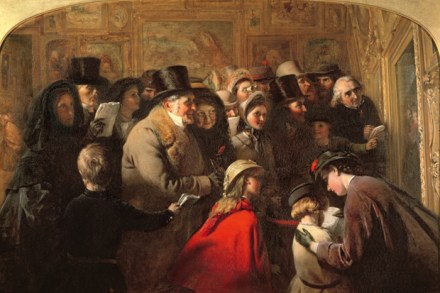
An old soldier sees through the smoke of Waterloo

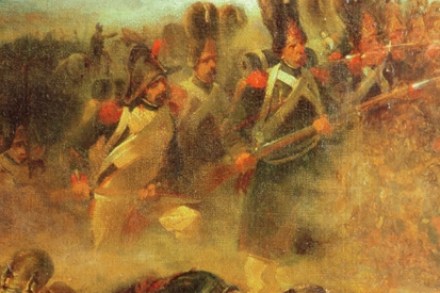
There is a very nice story of a dinner for Waterloo veterans at which Alexandre Dumas — ‘Dum-ass,’ as the Antarctic explorer Taff Evans would have him — was for some reason present. I can’t remember now the exact wording of the exchange between them, but Dumas had clearly spent so much of the evening sounding off about the battle as if he knew what he was talking about that a French general at the far end of the table could finally take no more. ‘But my dear Dumas,’ he protested, ‘it wasn’t at all like that! And remember, we were there!’ ‘Precisely, mon général,’ came back the reply. ‘You were there, so how could you possibly know?’ Gordon Corrigan is more than a chip off the old Dumas block.

A horse ride from Buenos Aires to New York? No problem!

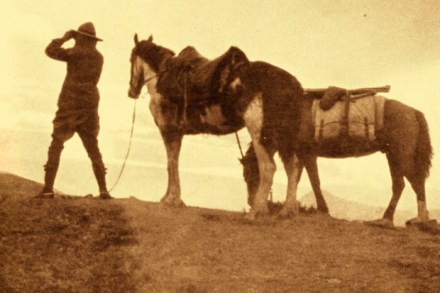
Aimé Tschiffely was what I have seen in other contexts called a ‘doublehard bastard’. In the middle of the 1920s, this Swiss-born schoolteacher at the age of 30 feared that he was getting stuck in a groove and that he wanted ‘variety’. So he set out on a solo horse-ride from Buenos Aires to New York City. Tschiffely wasn’t even much of a horseman at this point. But he had the notion that the wild Criollo horses of Argentina — descendents of the Spanish horses transported to the continent by the Conquistadors in the 16th century and brought to excellence by their survival in that unforgiving environment in the centuries since — were the hardiest horses for long riding in the world. Everyone else thought he was mad.

From Scylax to the Beatles: the West’s lust for India

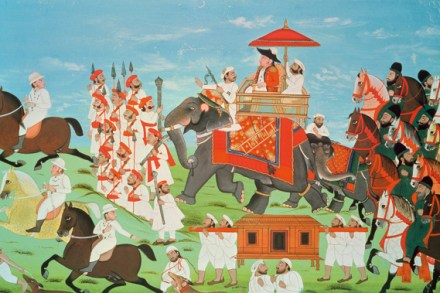
From the Greek seafarer Scylax in 500 BC to the Beatles in 1968, there is a long history of foreign visitors being drawn to India. Many have come in search of the ‘exotic’ or the ‘other’, an idea of India that persists despite the best efforts of Edward Said’s post-colonial disciples.

Baghdad’s rise, fall – and rise again

The history of Baghdad more than any other city mirrors the ebb and flow that has marked Islamic history and civilisation. The rise and fall of empires and dynasties, the splendours of Islam’s high culture and its decline, the periodic tensions and ease that affected relations between nations and peoples, sects and faiths have all been played out in the teeming neighbourhoods, palace precincts, market areas, great mosques, educational centres and military compounds of this remarkable city. Unlike its rival Damascus, the capital of the first Muslim empire, the Umayyads, which had been established for centuries before the arrival of Islam into Syria, Baghdad was pre-eminently a city of the Islamic era.

The wit, wisdom and womanising of Constant Lambert

We owe Constant Lambert (1905–1951) a huge amount, and the flashes of brilliance that survive from his short life only suggest the energy with which he established the possibilities for English culture. What we remember about this extraordinary man are some delightful pieces of music, especially The Rio Grande; the funniest and most cultivated book about contemporary music ever written, Music Ho!; and a few surviving recordings of his work as a conductor. Before his death, aged 46, from chronic alcoholism and undiagnosed diabetes, he had established the Sadler’s Wells Ballet with Ninette de Valois and Frederick Ashton; in the trio, he was not only the conductor and musical expert, but someone who was acutely alive to the possibilities of stage design and drama.

If you ever wanted a Homeric jump-start, this is your book

As a teenager, like many of his class and generation, Adam Nicolson encountered Homer in Greek lessons. The subject matter seemed remote and uninteresting — ‘like someone else’s lunchtime account of a dream from the night before’ — and the words dead on the page — ‘as if the poems were written in maths’. But when Nicolson took Robert Fagles’s translation of the Odyssey with him on a sailing trip up the west coast of Ireland ten years ago, something drastically different sparked. He came to see Homer ‘as a guide to life, even as a kind of scripture’.

Look again – the first world war poets weren’t pacifists

If the poets of the first world war probably enjoy a higher profile now than they have done at any time in the last 100 years, it has not been a smooth passage. When Wilfred Owen was killed in the last week of the fighting he was still virtually unknown, and even 25 years later in the middle of another war, when the ludicrous Robert Nichols — the man Edmund Gosse had once seen as a new Keats and Shelley combined — brought out his anthology of first world war poetry, there was still room for only four poems by Owen and none at all by Isaac Rosenberg, Edward Thomas or Ivor Gurney.

Jorge Luis Borges and his ‘bitch’

When Jorge Luis Borges died in 1986, at the age of 87, he left behind 100-odd slender fictions and as many poems, but no novels. Compared with the blockbusting authors of our age, this was a small (if perfectly formed) output. Many of Borges’s glittering ficciones are mere ironic fragments, at best notebook jottings. To his detractors his work amounted to little more than a babble of sweet nothings. ‘Who is Jorge Luis Borges?’ Philip Larkin gruffly enquired. (Larkin had not seen Nic Roeg’s trippy film Perfomance, where Mick Jagger is shown reading the Argentine author in the bathtub.) Born in Buenos Aires in 1899, Borges was acutely myopic as a child and in middle age he went blind.

Up close and personal | 24 April 2014

What should a writer write about? The question, so conducive to writer’s block, is made more acute when the writer is evidently well-balanced, free of trauma and historically secure. It is made still more urgent when that writer is solipsistic in tendency and keen to write, not about the world, but about perceptions of the world. Two American authors of the same period arrived at different solutions to the problem. Sylvia Plath, in her husband Ted Hughes’s assessment, first found nothing worth writing about, and then deliberately encouraged demons and hitherto controlled minor difficulties until they flared up and killed her. John Updike, on the other hand, had an immensely long and sustained writing career, with few troubles to cope with other than psoriasis.

Churchill was as mad as a badger. We should all be thankful

Land sakes! Another book about Winston Churchill? Really? Give us a break, the average reader may think. Actually though, as title and subtitle suggest, this isn’t just another biographical study. It’s at once odder and more conventional than that. More conventional because, in some ways, it is just another biographical study. Odder because — instead of being a straightforward discussion of Churchill’s literary work — it sees literature as the key to his biography. More than that, its author seems to think he has hit on a ‘new methodology’ in which ‘we can write political history as literary history’. Well, perhaps.

Our leaders have betrayed the noble worker. Oh really?

In his essay on the ‘Peculiarities of the English’, E.P. Thompson gave his theoretical definition of class: When we speak of a class we are thinking of a very loosely defined body of people who share the same congeries of interests, social experiences, traditions and value-system, who have a disposition to behave as a class, to define themselves in their actions and in their consciousness in relation to other groups of people in class ways. But class itself is not a thing, it is a happening. Selina Todd has a snappier and more prosaic definition of the working class (‘The People’) as ‘a class of workers who depended on earning a living and were in that way distinguished from the rich who lived on the labour of others’.

War is good for us

At the heart of this work is a startling and improbable statistic and the equally surprising and counterintuitive thesis that flows out of it. We are used to looking back on the 20th century as comfortably the most violent in all human history — the silver medal usually goes to the 14th — but if Ian Morris(a fellow at Stanford University) is to be believed, the century that could wipe out perhaps 50 million to 100 million in two world wars and throw in the gulags, the Cultural Revolution, civil wars, government-orchestrated famine, trench-stewed pandemics and any number of genocides for good measure was, in fact, the safest there has ever been. If sometime around 7a.m.

Was Roy Jenkins the greatest prime minister we never had?

In any list of the-best-prime-ministers-we never-had, the name of Roy Jenkins is likely to be prominent. He was intelligent, moderate, courteous, thoughtful: he was exactly the sort of man whom any civil servant would wish to see installed in No.10. That, no doubt, is why he never got there. John Campbell makes no bones about the fact that he is a fan of Jenkins. He was, writes Campbell, ‘the first public figure I was aware of and always the one I most admired’. Campbell is far too sensible a man and good a biographer, however, to allow his book to degenerate into a paean of praise. Jenkins’s frailties are unsparingly exposed, his occasional failures recorded, his more extravagant pretensions ridiculed.

Management consultancy! Sculpture park! Sports stadium! The many faces of the Delphic Oracle

‘In ancient times ... hundreds of years before the dawn of history, lived a strange race of people ... the Druids. No one knows who they were ... or what they were doing. But their legacy remains ... hewn into the living rock ... of Stonehenge.’ The unforgettable opening of Spinal Tap’s song ‘Stonehenge’ was much in my head as I read this scholarly history of Delphi. We use the word ‘delphic’ to mean riddling, ambiguous, difficult to parse. It applies just as much to the history of Ancient Greece’s most sacred site as it does to the pronouncements of its oracle. No one knows who they were ... or what they were doing.

Lawlessness, corruption, poverty and pollution: the city where we’re all headed

Rana Dasgupta, who was born and brought up in Britain, moved to Delhi at the end of 2000, principally to pursue a love affair and to write his first novel. He soon found himself mixing in bohemian circles, spending his evenings in ‘small, bare and, in those days, cheap’ apartments, talking with ‘artists and intellectuals’. These are not the people, nor is this the life or the city that he describes in Capital. The book’s title is in fact a pun, since its principal subject is money: how it is acquired, how it is spent and what it has done to Delhi and its citizens.

Kim Philby got away with it because he was posh

The story of Kim Philby is, of course, like so many English stories, really one of social class. He was one of the most scandalous traitors in history, and from within the security services sent specific information to the Soviets during the early years of the Cold War that resulted directly in the deaths of thousands of men and women. Among them were the Albanian guerrillas, hoping to liberate their country, who found Soviet-sponsored troops waiting at their landing places to shoot them. A list of non-communist opposers to the Nazis in Germany was passed on to the Russians who, advancing into Germany in the last years of the war, summarily executed 5,000 named people.

Secrets of Candleford: the real Flora Thompson

When Richard Mabey was researching this biography of Flora Thompson, author of Lark Rise to Candleford, he happened to stay at a farmhouse B&B near Bath. Ambling around, he found something very curious ... There were two rows of cottages facing each other, with a dusty track between them ...There were clean curtains in the windows. The gardens were in good order, with sweet peas in flower and rows of fat cabbages. It was a vision of an English village as idyllic as a Helen Allingham painting ... I edged round the back and realised they were two dimensional ... a façade but nothing behind.

The Artist Formerly Known As Whistler

When James Whistler was two years old, he was asked why he’d disappeared from company and hidden under a table. ‘I’s drawrin,’ he replied. He started as he meant to go on. Daniel E. Sutherland’s well-appointed new biography of the American-born painter — whom Henry James described as a ‘queer little Londonised Southerner’ — keeps the attention there, making its central emphasis Whistler’s ferocious single-mindedness in the making of his art. The striking thing is how much the other aspects of him — Whistler the rebel, Whistler the public combatant, Whistler the philanderer, the dandy, the show-off, the semi-delinquent father, the wit and conversationalist — fed into that rather than distracting from it.