Features

The true cost of renewable energy

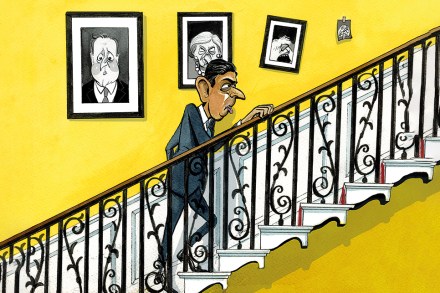
Having delivered his platitudes on climate change at Cop27, Rishi Sunak returns to a more pressing problem: how to keep Britain’s lights on this winter. Last week it was revealed that the government has been wargaming a ‘reasonable worst-case scenario’ in which blackouts last up to a week. Whether those fears prove unfounded or not, there is a huge and growing hole in the future of Britain’s electricity supply, with little to explain how it will be filled. The lights might not go out this winter, but there is a reckoning coming as Britain attempts to steer towards net zero. Over the past decade the National Grid has succeeded in virtually ending coal power in Britain. The proportion of our electricity generated by coal fell from 29.5 per cent in 2011 to just 2.

Ukraine is becoming a showroom for modern weaponry

The war in Ukraine has become a testing ground for new technology, an opportunity to develop weapons and find different ways of fighting. Nations that are supposedly neutral have been sending weapons to the front line to find out just how they work in the heat of battle. This is a relatively new trend in the history of warfare, one that first emerged in the 1936-39 Spanish Civil War. The backers of both sides treated the war not just as a testing range but also a showroom. The Germans, supporting Franco’s nationalists, first tried Blitzkrieg on the Spanish peninsula. Hermann Göring saw the civil war as a chance ‘to test my young Luftwaffe’.

Does China’s WeChat show Twitter’s future?

Imagine you’re scrolling through Twitter. You see a new coat and, on impulse, tap ‘buy’. Purchase confirmed. Later, you open Twitter again to order a taxi to a restaurant and once there, you scan a QR code to see the menu, from which you order directly to the table. All of this is charged to your Twitter-wallet, filled with money you’ve received as a birthday present from friends or family, sent of course via Twitter. These are all real examples of how my family and almost a billion other Chinese use WeChat, a Chinese super-app that has become far more than just a messaging platform. Elon Musk has already expressed his ambitions to turn Twitter into something similar – an ‘everything app’.

The march of Germany’s extreme monarchists

The far right in Germany isn’t all angry young men with shaved heads, baseball bats and black boots. There are those who appear respectable, even intellectual. The Reichsbürger movement includes accountants, teachers and academics; many members are middle-aged. It’s a fractured network with vastly diverging world views, united in their belief that the current government is illegitimate.   The Reichsbürgers claim that the German empire was not legally abolished when it collapsed at the end of the first world war and that it therefore continues to exist. To them, the so-called November Revolution of 1918, in which Kaiser Wilhelm II was forced to abdicate, ending the German monarchy, was a coup without legal basis.

Robert Buckland: ‘Let asylum seekers work – and pay tax’

When the small boats crisis began, it was seen by some in government as a positive sign. ‘It was an emblem of success,’ says Robert Buckland, who was solicitor general at the time. ‘If you remember, the previous mode of entry for migrants was on lorries.’ Heat scanners had been introduced at the Channel Tunnel in 2015, which meant more stowaways were being caught. The switch to boats, it was argued at the time, was a desperate tactic on the part of the people-smugglers. No one guessed what a problem it would become. Back in 2014, the UK asylum system was coping: 87 per cent of cases were handled within six months. Now that number is just 7 per cent. The challenge of accommodating tens of thousands of applicants is too much for the Home Office to handle.

How a tweet got me sacked 

I always advise younger journalists never to use irony or make jokes on social media, so when I was effectively sacked for alluding to an edible fruit of the palm family, I should have known better. And of course I did know better. I deleted my three-word tweet within minutes. But screenshots live for ever. There are no second thoughts on Twitter, no clarifications allowed. No second chances either. It is judge and jury and will take away your career, reputation and livelihood at the click of a mouse, if pusillanimous employers allow it to. I’d been in countless Twitter storms in the past over Scottish nationalism, hate crime, gender. It’s what Twitter does.

At sea: can Sunak navigate the migrant crisis?

It’s not hard to see why migrants come here. For those who make it across the Channel illegally, there is only a small chance of deportation. About 72 per cent of the predominantly young males who leave the safety of France can expect to have their UK asylum claims granted. The success rate is more than twice the EU average (34 per cent). That’s part of the reason for the extraordinary growth in numbers coming across. Three years ago, 2,000 people arrived in small boats. So far this year, it’s 40,000. It’s funny to think that when 40 migrants crossed the Channel on Christmas Day in 2018, the then home secretary Sajid Javid was forced to cut short his family holiday amid the outcry. Last Saturday alone, 1,000 people made the crossing.

Will anyone buy my Liz Truss book?

‘If you’re having a bad day at work,’ read the Twitter meme, ‘at least you’re not Harry Cole or James Heale.’ The inglorious collapse of Liz Truss’s government put paid to many plans, but none more so than the biography of the lady herself, which Harry and I have been writing for the past ten weeks. Having started the project as her biographers, we ended it as her political obituarists, furiously rewriting copy as it became clear that our intended cliff-hanger could only have one ending. Our deadline was 29 October. Harry (who is the political editor of the Sun) and I signed the deal for Out of the Blue: The Astonishing Rise of Liz Truss on 20 August, so we had less than two months to throw ourselves into the madcap world of Truss.

Papal bull: the shame of the Vatican’s dealings with China

This week Cardinal Joseph Zen Ze-kiun, the 90-year-old retired bishop of Hong Kong, went on trial in Kowloon Magistrates Court as a punishment for supporting pro-democracy demonstrators during the mass protests in Hong Kong. He was arrested in May and, along with four other trustees of a humanitarian relief fund, charged with failing to register the organisation properly. The chances that he will be acquitted are slim, to put it mildly. This is Beijing’s way of confirming that Hong Kong is now a police state. Even a frail and saintly cleric who walks with the aid of a stick is not safe to endorse democracy. No one is.

How will Rishi Sunak’s Hinduism inform his premiership?

When Rishi Sunak was elected as an MP, he swore his oath of allegiance in the House of Commons on the Bhagavad Gita, one of Hinduism’s most sacred texts. Many – if not most – people think that Hinduism is a religion of peace: an idea that’s taken root thanks to Mahatma Gandhi and his philosophy of nonviolence. The truth is that the Bhagavad Gita is about war. The text consists of the dialogue between Lord Krishna and Prince Arjuna on the battlefield. Prince Arjuna is facing amoral and emotional dilemma. The battle is against his own kith and kin – many of whom would be sure to be killed. Arjuna asks Krishna whether he should renounce the war. Krishna’s counsel is unambiguous: Arjuna’s duty is to waste them. Arjuna wins the war, killing quite a few himself.

The myth of the jolly fat man

After last week’s revelation that James Corden was banned from a New York restaurant for being repeatedly horrible to staff, I’ve been considering the different way fat men and fat women are viewed. Fat men are invariably seen as jolly – who can imagine a thin Father Christmas? – despite the rollcall of porky evil, from Fatty Arbuckle, abuser of women, to Cyril Smith, abuser of boys. If they are well--connected drunks, fat men may also be called ‘bon viveurs’ whereas fat women are seen as ‘eating their feelings’ at best, being lazy and thick at worst.

Why the next wave of feminism is conservative

At a recent dinner, an MP told me a story that reveals a great deal about the current state of feminism. One of her constituents had come to her surgery in some distress. She had children at a local primary school, she said, and had been alarmed to discover that the school’s sex education curriculum contained explicit details that she considered wildly inappropriate. She was aware of the prevailing culture in which adolescents – particularly girls – are sexualised at an ever younger age, and she did not want that for her own children. But parents are increasingly powerless in the face of progressive schools, and not having been to university, this woman felt anxious. She was intimidated by the prospect of speaking with her children’s headteacher.

Liz Truss: my part in her downfall

Now that the final curtain has fallen on Liz Truss’s brief and tumultuous premiership, it is time for reflection. A chance to set the record straight and also to own up to mistakes – especially for those of us who tried to advise her. What went wrong? Yes, the tipping point was Kwasi Kwarteng’s mini-Budget. But three problems were by then already brewing. First, the leadership campaign over the summer had become very focused on tax cuts. Even Rishi Sunak ended up saying he would cut the basic rate of income tax from 20 per cent to 16 per cent by the end of the next parliament, while Jeremy Hunt (now Chancellor) would not settle for cancelling the planned increase in corporation tax to 25 per cent, but instead wanted it cut to 15 per cent.

Is Rishi ready? Sunak’s first test will be getting through winter

It is the most remarkable turnaround in recent political history. On 5 September, Rishi Sunak lost the Tory leadership race to Liz Truss with 43 per cent of the vote. He was written off as another politician with a brilliant future behind him. Seven weeks later, the former Chancellor – whom, I should say, I have been friends with for many years – walked through the door of No. 10. His political resurrection was made possible by the economy. He spent the summer warning of the risk of slashing taxes without having a grip on inflation and controlling spending. When Truss followed through on her tax-cutting campaign pledges – adding a few more surprise tax cuts and an energy subsidy for good measure – the markets were spooked.

How bad will the midterms be for the Democrats?

Towards the end of the summer, almost in a spirit of contrarianism, well-informed Americans started talking about President Joe Biden and the Democrats winning again. It had been a bad year, these pundits conceded, but Biden was suddenly on a ‘hot streak’ and, as the November midterms approached, the Democratic party finally had some political momentum. The President had passed the Inflation Reduction Act, they said, which addressed the most pressing issue facing voters. He’d also launched a bold initiative to forgive student debt for low- to middle-income earners. The Republicans, meanwhile, had frightened moderates with their pro-life extremism following the Supreme Court’s decision to overturn Roe vs Wade.

The lady vanishes: the Truss agenda is dead

‘Governments don’t control markets,’ the new Chancellor, Jeremy Hunt, likes to say. But there are times when markets control governments. The market, or the fear of how the market might react, is now the driving force in British politics. It explains the dramatic developments of the past week and will determine the new Prime Minister’s fate. Last month’s ‘mini-Budget’ was doomed because it required that the government borrow £70 billion more than had been planned. This money would have to be raised in the gilts market, and Liz Truss and Kwasi Kwarteng assumed that the markets would be happy to continue to lend so much at such low rates. But they missed the fact that attitudes were changing.

Will The Parthenon Project seize the Elgin Marbles?

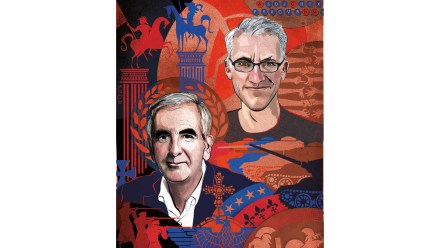
Thirty-five years ago, the late Christopher Hitchens published a book about the Elgin Marbles. Unsurprisingly, it was a polemical work; he was passionately campaigning for the return of the sculptures to Athens. But that was not the reason why I wrote a scathing review of it for The Spectator. Parts of it were plagiarised, as I showed, from the classic book by William St Clair; and in some places Hitchens dealt with the awkward fact that the evidence did not fit his claims by abbreviating the quotations, filtering out the unwanted bits. Hitchens replied with a thunderously disdainful attack on me in the letters page. I said to the then editor, Charles Moore, that I feared that if I met Hitchens at a Spectator party he would punch me on the nose.

Zuckerberg’s empire collapses

Mark Zuckerberg is in a lot of trouble. He has turned away from the slog of running Facebook to focus almost entirely on his ‘metaverse’, a vision of the internet where people enter interactive virtual spaces using virtual reality (VR) headsets. He has pledged investment of at least $10 billion a year for a decade, and investors have been told that profits will be lower for the next decade as a result. He saw the digital future once. Can he repeat the trick? Right now, it seems not. His company’s stock price has more than halved, wiping $600 billion off its market value. Shareholders are worried. Meta is to cut expenses by at least 10 per cent in the coming months, in part through redundancies. More cuts are expected.