Julius Strauss

Julius writes Back to the Front, a substack on Ukraine, Russia, the Middle East & the Balkans

What does Putin want from America?

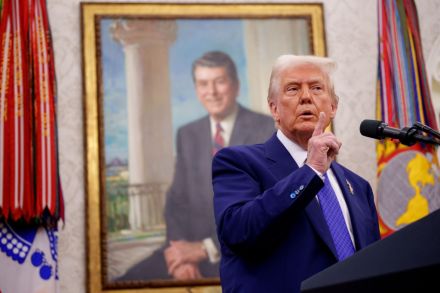
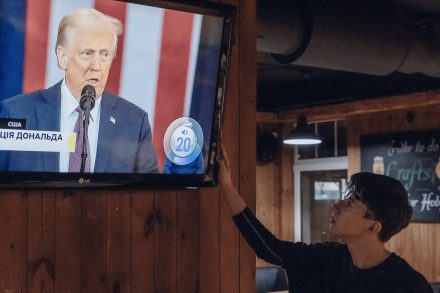
If I had a penny for every time I have been told that Russian president Vladimir Putin only wants respect. Or that he is only interested in eastern Ukraine. Or that if Kyiv is only denied NATO membership, then he will call off the tanks. Well, in the last seven days President Donald Trump has given Putin all this and more. And, though it is still early days, so far the war is showing no sign of slowing. And what has the man who wrote The Art of the Deal asked for in exchange for all this diplomatic largesse? Absolutely nothing. In fact, the only substantive demand Trump has made so far is of the Ukrainians. Last week Washington sent Treasury secretary Scott Bessent to Kyiv with an extraordinary demand.

Putin

What Putin wants and what America will do

From our UK edition

If I had a penny for every time I have been told that Russian President Vladimir Putin only wants respect. Or that he is only interested in eastern Ukraine. Or that if Kyiv is only denied NATO membership then he will call off the tanks. Well, in the last seven days US President Donald Trump has given Putin all this and more. And, though it is still early days, so far the war is showing no sign of slowing. And what has the man who wrote The Art of the Deal asked for in exchange for all this diplomatic largesse? Absolutely nothing. In fact, the only substantive demand Trump has made so far is of the Ukrainians. Last week Washington sent Scott Bessent, Secretary of the Treasury, to Kyiv with an extraordinary demand.
My week in war-weary Ukraine

From our UK edition

In the morning darkness at the reception of our central Kharkiv hotel, 25 miles from the Russian frontlines, the night porter's face was creased with sleep. As we made our way towards the door to catch the early express to Kyiv, he handed us a small keyring with a yellow and blue plastic ornament. They had been made by local children. The man was large, muscled rather than hammy, and had a trim beard. In the several days we had stayed at the hotel, he had not shown a trace of emotion. Now he almost looked as if he might cry. ‘Perhaps next time we meet there will be peace,’ he said struggling with his English. Then he said it again: ‘Perhaps there will be peace.

Can Ukraine survive the coming of Donald Trump?

From our UK edition

On the eastern marches of Europe, after nearly three years of slugging it out with its larger, more powerful neighbour for control of a string of unlovely mining towns, Ukraine is approaching exhaustion. Kyiv, which has led a fierce and unexpectedly successful defence of its realm, is contending with a waning supply of weapons, ammunition and money. Worse still, president Volodymyr Zelensky's war effort is beginning to run out of fighting men. All men aged 25 and over – with the exception of those deemed critical to the war effort, or who have fled, gone into hiding or bribed their way out of the draft – have been dispatched east to hold the line.

Syria is up for grabs

From our UK edition

After 13 years of war that began with street protests during the heady days of the Arab Spring and morphed into one of the bloodiest civil conflicts in the Middle East’s recent history, the regime of Bashar al-Assad, the Syrian strongman, collapsed in just over a week. Sunni rebels – some of them former jihadists – who had broken out of the north-west province of Idlib swept into the capital Damascus after overrunning the major cities of Aleppo, Homs and Hama on their way south. On the road into the city witnesses described seeing uniforms, military equipment and even tanks abandoned by the Syrian Army. On the country’s borders, queues began forming of displaced families desperate to return home after more than a decade as refugees.

How life carries on near the Kursk front line

From our UK edition

Sumy, Ukraine In the city of Sumy, the jumping off point for the Ukrainian attack on Russia’s Kursk region, the night is punctuated by the sound of explosions, the staccato fire of anti-aircraft batteries, and occasionally the whir of Iranian-made Shaheed suicide drones. In a parking lot in the east of the city a dozen cars were burned to a crisp on a recent Saturday morning, incinerated by one of Moscow’s Iskanders, a hypersonic missile that travels at Mach six and has a range of more than 300 miles. Meanwhile in a basement cellar in the city dozens of young Russian conscripts, taken prisoner in Kyiv’s recent land-grab, were being questioned, treated for injuries, and shown to western journalists.

Putin is biding his time to seek revenge for Kursk

From our UK edition

Vladimir Putin, it seems, is procrastinating. Just when the war in Ukraine was going his way and the Russian army doing what it does best – pummelling its way forward like a leaden-footed but seemingly unstoppable heavyweight boxer – Kyiv has sneaked in a powerful side punch. By launching an incursion into the Kursk region, Ukraine has not only breached the borders of Mother Russia – the inner sanctum of what is still a regional empire of control and influence – but also opened a second front. For days Ukrainians braced for a spiteful rejoinder. Perhaps Putin would lash out with withering rocket attacks, a devastating bombing raid against a major city, or even (Heaven forbid) a small nuclear strike against Kyiv’s forces.

Putin takes revenge for the Kursk attack with glide bombs

From our UK edition

In the sprawling and unlovely village of Billopilya, only five miles from Ukraine’s border with Russia, when death comes, it comes from the skies. Moscow had been targeting the hardscrabble settlement with glide bombs – known here as KABs – ever since Ukrainian troops smashed their way into the Kursk region on 6 August. Vladimir Putin's troops may be struggling to contain the estimated 6,000 Ukrainian soldiers now in Russia proper. Kyiv’s forces have seized a salient of land that encompasses more than 1,000 square kilometres. But even as Moscow slowly musters the forces to fight back against the incursion, it has ratcheted up attacks on Ukrainian civilians in apparent revenge for the surprise cross-border attack.

Near the Russian border, Ukrainians are delighted about the Kursk attack

From our UK edition

The road from the Ukrainian city of Sumy to the Russian border gave just a foretaste of the fighting 20 miles ahead. We passed tanks on transporters, armoured vehicles, and occasionally an olive-green ambulance with flashing lights speeding the Ukrainian wounded away from the battlefield. In dusty half-deserted villages, stray dogs roamed and a few locals still moved around on Soviet-era bicycles. But mostly we saw 4x4s emblazoned with the white triangle that is the mark of troops taking part in Ukraine’s attack on the Russian region of Kursk.

Ukraine’s plight is getting more desperate by the day

From our UK edition

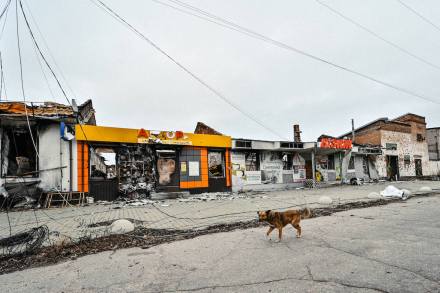
Driving into the bomb-damaged eastern Ukrainian town of Kostiantynivka you can hear the impacts from the big Russian guns and bombs. Block by block they are blowing apart a small workers town just to the east called Chasiv Yar. On the wall of a destroyed building a Ukrainian soldier had vented his frustration. 'We are not asking too much, we just need artillery shells and aviation,' the graffiti reads. '[The] rest we do ourselves.' But even that sentiment is now starting to feel dated. A more accurate depiction of how Ukrainian frontline soldiers feel was probably the large phallus that had been spray-painted over the top of the cri de coeur. If Ukraine does fall under Moscow’s writ, what happens next?

Putin wants to create an unliveable no man’s land in Ukraine

From our UK edition

The residents of Velyka Pysarivka had almost finished renovating their municipal library. They laid the floor with large white tiles, built a special section for hundreds of brightly-coloured children’s books which they brought in from the city, and even painted a large cartoon giraffe with oversized spectacles on one wall to make the place feel welcoming. Although the Ukrainian village was close to the Russian border it had, until last month, escaped the worst of the war. And with no end to the conflict in sight the townsfolk decided they had to get on with their lives and invest in the future. One glide bomb can turn even the most well-built bunker into a crater Then, just over three weeks ago, huge Russian bombs began falling. One of them wrecked the new library.

Despite Russia’s intensifying attacks, Kharkiv carries on

From our UK edition

Irina Kotenko, 53, was already awake when a Russian drone crashed into the roof of her three-story building at 1 a.m. last Thursday. She had heard another strike nearby and was wondering where it might have hit. The explosion blew out the windows of her home. Somehow Irina, her husband, Vitaly, 48, and her daughter Aleksandra, 21, survived unscathed. Aleksandra began to shout: ‘Mum, are you alive?’ In the next-door flat a neighbour, an older man who lived alone, was buried in rubble. Soon emergency workers arrived. Outside firemen poured water on to the roof of the building to put out a fire that had broken out. These days little in Kharkiv is truly safe It was then that another attack drone hit the asphalt just outside the house, in what is known as a ‘double tap’.

Should Ukrainians stop speaking Russian?

From our UK edition

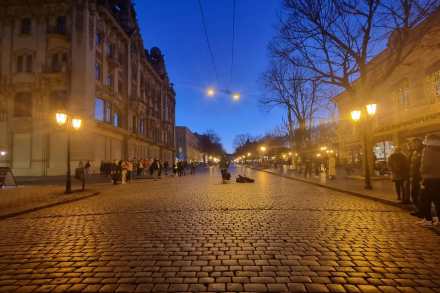
A young woman called Lyudmila walks into a cafe in Odessa, the southern Ukrainian city. Her phone is switched on and the camera set to record mode. She approaches the owner and asks for service in Ukrainian. He declines. He says his Ukrainian language skills are poor. When she insists he makes excuses, then tells her the cafe is closed, and finally asks her to leave. But unbeknownst to the owner, Lyudmila is a member of a small Ukrainian-language vigilante group. The group, who call themselves ‘Getting on your Nerves’, has made it their business to turn this Russophone city, founded in 1796 by Catherine the Great, into a Ukrainian-speaking one, one small intervention at a time.

The bodies keep the score in Lviv

From our UK edition

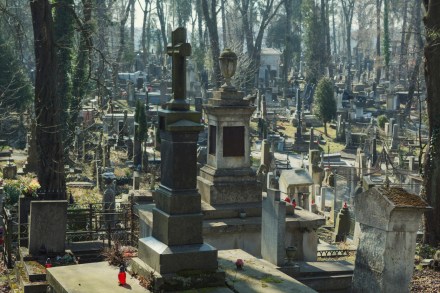
Lviv, Ukraine At the Lychakiv cemetery in the western Ukrainian city of Lviv the bodies keep the score. Within its confines the more than 300,000 graves offer a tangled insight into the labyrinthine history of this eastern European city that even now goes by four different names. There are Polish generals, mathematicians and philosophers; Ukrainian composers, theologians and playwrights; Soviet and Russian aviators, inventors and academics. Most of the city’s Jews – in what was one of Jewry’s most important cities in eastern Europe – are buried in a different graveyard, but there are smattering of their number, as well as German and Czech notables.

The haunting of Rishi Sunak

From our UK edition

39 min listen

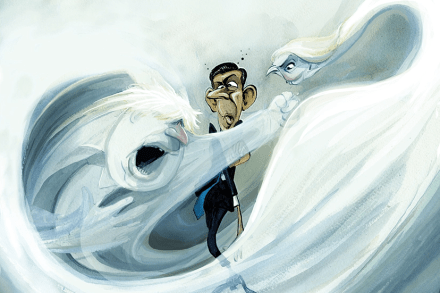
This week: the haunting of Rishi Sunak. In her cover piece for The Spectator Katy Balls says that Rishi Sunak cannot escape the ghosts of prime ministers past. She is joined by former Chief Secretary to the Treasury and New Statesman contributor David Gauke to discuss pesky former PMs (01:05).  Also this week: In the magazine Julius Strauss writes about Black Tulip, a volunteer-led humanitarian organisation who recover the war dead from the front line in Ukraine. He is joined by Mark MacKinnnon, senior international correspondent at the Globe and Mail in Canada, to talk about the time they spent with the Black Tulip (16:45).

Collecting the dead in Ukraine

From our UK edition

Dovhenke, Ukraine The Russian soldier lay where he had fallen. His plastic combat belt and flak jacket were still intact, but his legs were splayed at an unnatural angle, and where his face and scalp had once been there was now only a skull with dark stains on it.   ‘The guys who died protecting our country need to go home to their mothers, fathers, daughters and sons’ Oleksiy, leader of the Black Tulip, a small team of Ukrainian men who collect bodies from the country’s eastern battlefields, gingerly tied a rope around the decaying corpse. ‘These bodies are sometimes booby-trapped,’ he said. ‘We have to be careful.’   We all walked 50 or 60 yards up the muddy track we had come down and crouched. Then Oleksiy, bending low, gave the rope a tug.

In Orikhiv, war has a rhythm

From our UK edition

On the road to the frontline Andrii, 36, managed to coax the tired old British ambulance up to 80mph.  The tarmac ahead was scarred with the impact of artillery shells and some of the holes were big enough to pitch us off the road, but he navigated around them skillfully. Suddenly, far in front of us and high above, we saw the contrails of an airplane: an innocuous sight in a peaceful country. Here it almost certainly meant an incoming Russian strike. Andrii and his helper, Oleksandr, 29, donned their body armour. And then from our left a new contrail appeared: a Ukrainian missile. The first contrail made a sudden and tight 180 degree turn, revealing that it was a Russian fighter jet. The pilot must have suddenly become aware of the incoming missile.

The looming battle for Chasiv Yar

From our UK edition

In the eastern Ukrainian town of Chasiv Yar, seven-year-old Symon was clinging to a chocolate bar and a packet of biscuits he had just been given by an aid worker. With the sound of each new shell landing – and they were coming every few seconds - his small body shook and shivered in sympathetic rhythm. Eventually he buried his head against his mother, Svetlana’s, coat and closed his eyes. ‘We are terrified’, said Svetlana, a 47-year-old who worked as a chemist in a laboratory before the war. ‘Of course we want to leave.’ Symon, seven, with his mother Svetlana and grandfather Serhii. (Credit: Julius Strauss) Using back roads, and in a borrowed helmet and flak jacket, I visited Chasiv Yar this past weekend with a Canadian colleague, a driver and a photographer.

My Transylvanian horror

From our UK edition

My first taste of proper street violence came in a Transylvanian town square 30 years ago. Ethnic Romanian and Hungarian villagers were going at each other with pitchforks, knives and strips of wood they had ripped from park benches. In an attempt to separate the two sides, the Romanian army had driven half a dozen armoured vehicles into the middle of the square. Just as things seemed to calm down, a group of villagers came running out of a hotel, pursued by fired-up Hungarians. As I ran to avoid the melee, a man appeared holding a chunk of wood and hit me over the head. For a second I was stunned. Then my survival instinct kicked in. ‘I’m English,’ I shouted in my best Hungarian. ‘English!’ He stopped mid-swing.

The night train to Kyiv

From our UK edition

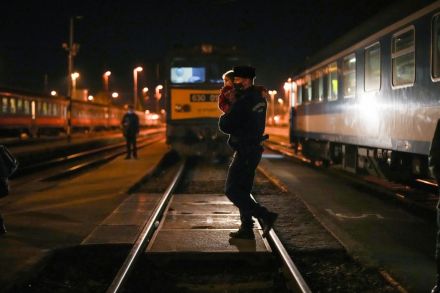
After several months in the UK, the lady sleeping on the opposite bunk on the night train to Kyiv told me she had had enough. Welcomed under the Homes for Ukraine scheme into a small English village, she had watched as the thermostat in the house was turned down and then turned down again. ‘Finally they set it to 15 degrees’, she said. ‘I know they were trying to save money but for all the water bottles I used I just couldn’t keep warm. I decided life back in Kyiv had to be better.’ An hour before our conversation I had arrived at Lviv station in western Ukraine. I sat on an ancient curved wooden chair in a barely-lit waiting hall. Near me were three men in uniform holding Kalashnikov assault rifles. They were yawning.