Svitlana Morenets

Svitlana Morenets

Svitlana Morenets is a Ukrainian journalist and a staff writer at The Spectator. She was named Young Journalist of the Year in the 2024 UK Press Awards. Subscribe to her free weekly email, Ukraine in Focus, here

Will Ukrainian drones spoil Putin’s Victory Day parade?

From our UK edition

Vladimir Putin’s subordinates are bending over backwards to ensure Saturday’s Victory Day parade in Moscow goes ahead smoothly. Mobile internet has been cut off, air defence systems are being redeployed to the capital, and threats to bomb Ukraine if it dares disrupt the celebrations have been issued. Yesterday, Russian foreign ministry spokeswoman Maria Zakharova said the Kremlin had written to foreign governments urging them to evacuate staff from Kyiv. She warned of ‘inevitable’ and ‘massive’ retaliatory strikes on the Ukrainian capital should the ‘terrorist regime’ in Kyiv attack Moscow on Putin’s sacred day. The threats follow Russia’s proposed ‘Victory Day truce’ for 8 and 9 May, which Volodymyr Zelensky appears to have rejected.

Russia has failed to unload stolen Ukrainian grain in Israel

From our UK edition

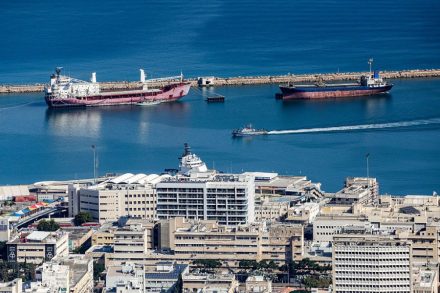
The diplomatic spat between Kyiv and Jerusalem over the Russian vessel wanting to unload stolen grain from occupied Ukrainian territories in Israel appears to have reached a conclusion this morning. The Panama-flagged Panormitis, which was carrying more than 6,200 tons of wheat and 19,000 tons of barley, arrived at the port of Haifa early this week. Today, after days of diplomatic sparring, its Israeli importer Zenziper reportedly turned the vessel away. Israel’s Grain Importers Association added in a statement: ‘The Russian supplier of the wheat cargo will have to find another destination at which to unload it.’ The Panormitis is not the only Russian vessel carrying illegal grain to have docked in Israel in recent weeks.

Starlink has dealt a huge blow to the Russian army

From our UK edition

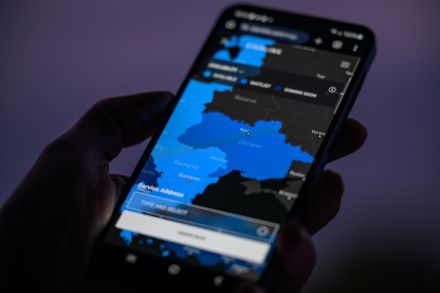
It is remarkable how heavily the Russian army has relied on western technology during a war it claims to be fighting against the West. After Starlink terminals went offline on both sides of the Ukrainian frontline on Wednesday evening, Russian communications were sent into disarray. ‘The enemy at the front doesn’t have a problem; the enemy has a catastrophe,’ wrote Serhiy ‘Flash’ Beskrestnov, a Ukrainian defence adviser. ‘All troop command and control has broken down. In many areas, assault operations have been halted.’ The block was thanks to Ukraine’s newly-appointed defence minister Mykhailo Fedorov.

Can Ukrainians trust Trump’s ceasefire deals?

From our UK edition

When Donald Trump announced yesterday that Vladimir Putin had agreed to stop bombing Ukrainian cities for a week, officials in Kyiv were taken aback. Volodymyr Zelensky said there were no direct agreements between Ukraine and Russia to suspend air strikes on critical infrastructure despite the issue being discussed at last week’s peace talks in Abu Dhabi. The Ukrainian President had no idea when this ceasefire was supposed to begin or end – and he wasn’t the only one. The Kremlin, it quickly turned out, didn’t have any idea either.  The first to start the rumours were outraged pro-Kremlin military bloggers, who began reporting that Moscow had ordered its forces not to strike Ukraine’s energy infrastructure yesterday morning.

Zelensky got little to show for his trip to Davos

From our UK edition

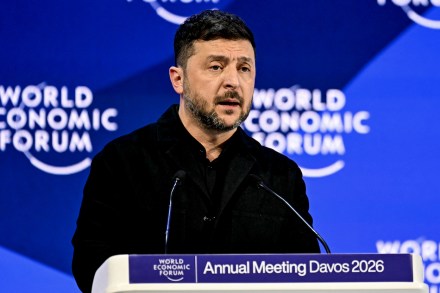
Volodymyr Zelensky didn’t want to go to Davos. Why bother showing up at the World Economic Forum to watch world leaders swarm around Donald Trump and his obsession with Danish-controlled Greenland? The Arctic spectacle has stolen the spotlight from the war in Ukraine, and Zelensky could not bear the thought of returning empty-handed while his country struggled to survive the freezing winter. ‘I choose Ukraine in this case, rather than the economic forum,’ Zelensky said on Tuesday after another Russian attack deepened the country’s energy crisis. That was until Trump announced he wanted to talk to the Ukrainian President one-on-one.  Their one-hour meeting yesterday ended with little to show for it.

The war is far from over for Vladimir Putin

From our UK edition

‘When the Ukrainian troops leave the territories they occupy, then the hostilities will cease,’ declared Vladimir Putin during his state visit to Kyrgyzstan yesterday. ‘If they do not leave, we will achieve it militarily.’ The Russian President did not specify which territories he expects Ukraine to abandon. Did he mean only the Donetsk region? Did he also mean Zaporizhzhia and Kherson, which Moscow has annexed in its constitution? Or did he, perhaps, mean the whole of Ukraine? Putin’s speech didn’t suggest he was willing to compromise. He again repeated his claim that signing any documents with Ukraine was ‘pointless’ as President Zelensky has ‘lost his legitimacy’ It’s futile to look for truth in Putin’s public statements.

Volodymyr Zelensky is facing the ultimate test

From our UK edition

Standing outside his presidential office in Kyiv tonight, on the same spot as on the second day of Ukraine's full-scale war with Russia, Volodymyr Zelensky addressed Ukrainians. He said he hadn't betrayed the country then and wouldn't do so now. Ukraine faces ‘one of the most difficult moments in our history’, he said, while the Trump administration presses it into a deal with Russia. The US, once Ukraine’s biggest ally, has issued an ultimatum: either Zelensky signs the framework of the 28-point peace plan drawn up by Washington and the Kremlin by next Thursday, or Trump will cut intelligence-sharing and weapons supplies for Ukraine.  The pressure on Ukraine right now is among the heaviest.

Zelensky must get a grip of his government

From our UK edition

Vladimir Putin’s hopes of wearing Ukraine down in a war of attrition are no longer far-fetched. The country feels fragile, like it did in February 2022. Back then, Ukrainians rallied behind a president who stayed and shared a conviction that victory was possible. Today many are wondering whether defeat and the end of Ukraine’s statehood are drawing nearer than anyone would like to admit. A corruption scandal is engulfing Volodymyr Zelensky’s government. Russia is making gains on the battlefield. Ukraine’s tragedy is not only that Zelensky’s close associates were leeching off 15 per cent from contracts meant to fortify critical energy infrastructure, stealing from the country £76 million at the very least.

Can Ukraine afford Zelensky’s winter giveaway?

From our UK edition

Since taking office in 2019, Volodymyr Zelensky’s decisions have often been a mix of blatant populism and good intentions. Today, however, a number of his domestic policies are seen in Ukraine less as acts of genuine support for the war-weary public and more as attempts to shore up his approval ratings. This year, just as last, Zelensky has announced a round of ‘winter support’, under which every Ukrainian can receive 1,000 hryvnias – around £18 – from the state. The money can be used to pay utility bills, buy medicine or books, or be donated to the army. The scheme was tested last December, when more than 14 million Ukrainians claimed the payment.

Who will save Ukrainian troops in Pokrovsk?

From our UK edition

What matters more – land or the lives of soldiers? For each side fighting in Ukraine, the answer is different. For Vladimir Putin, every metre of captured Ukrainian soil is worth the lives of tens of thousands of Russians. For Kyiv, the priority is to stop the invaders while keeping casualties to a minimum. Ukraine’s military command has not always managed to hold that balance, at times allowing its troops to be encircled and slaughtered rather than ordering a timely retreat. Today, that same choice between territories and lives is being made in Pokrovsk. The battle for this fortress city in the Donetsk region has raged for nearly two years, ever since Russian forces marched to Pokrovsk after seizing the ruins of Avdiivka in February 2024.

Zarah Sultana’s pompous, luxury beliefs about Ukraine

From our UK edition

Zarah Sultana loves to pose as a champion of the working class, seeing the world through the lens of class struggle. Even, it seems, the war in Ukraine. In her latest interview, she calls Nato ‘an imperialist war machine’ and advocates for putting all our effort into ending the war, rather than making weapons, thereby giving money to those who profit from conflict. ‘Putin is a dictator, a gangster,’ she says, but ‘Zelensky isn’t a friend of the working class either’. She met Ukrainians and Russians in Paris, she adds, who explained this to her. Sultana embodies the kind of British leftist who would do anything for the world’s working class except listen to them I’d like to add my own voice to this debate. I think I’d qualify, in her book, as working class.

Trump is finally putting pressure on Russia

From our UK edition

Donald Trump has at last lost patience with Vladimir Putin. He cancelled their anticipated meeting in Budapest after Putin refused to make a single concession on a ceasefire following their phone call last week. Having returned to the diplomatic stage only to derail the sale of American long-range Tomahawk missiles to Ukraine, Putin then ramped up strikes on Ukrainian cities and sent Washington an unofficial paper with the same old demands for Ukraine’s capitulation. It was only a matter of time before Trump grew tired of Moscow’s flattery while it dragged out the peace talks. Given Volodymyr Zelensky had already agreed to an unconditional ceasefire in March, Putin’s refusal to stop the killing became obvious even to the most anti-Ukraine figures in Trump’s administration.

Putin’s winter campaign begins

From our UK edition

For the fourth winter in a row, Vladimir Putin believes now is the time when Ukrainians will finally break. Russia’s campaign of systematic strikes on the country’s energy infrastructure has begun once again with the first cold winds. Last night, Putin unleashed nearly 500 Shahed drones, decoys and missiles against Ukraine, launched simultaneously at different regions from multiple directions, with energy and gas production sites as prime targets. Only 13 missiles and 60 drones made it through. A child was killed and at least 24 people injured across the country. Eight regions, including Kyiv, were left partially without electricity and water. Ukrainians knew that another winter of blackouts was coming.

Ukraine is determined to give Russia a taste of its own medicine

From our UK edition

Russians living in the Belgorod region of Russia got a taste of what Ukrainians have been enduring for over three years of war last night, after they spent it without power, hot water or internet. Ukrainian forces set the Belgorod power plant ablaze with US-made Himars missiles after the Trump administration reportedly gave Kyiv the green light to target Russia’s energy grid with American weapons during the UN summit last week. With winter closing in, Russians once untouched by the war now dread that they will be forced to live just like Ukrainians, suffering from daily bombardments and power outages. The strike came after Moscow unleashed nearly 500 drones and 40 missiles against Ukraine on Sunday morning.

Is Nato really ready to shoot down Russian jets?

From our UK edition

Until recently, when Russian drones strayed into Nato airspace during mass attacks on Ukraine, fighter jets would scramble, not to shoot them down, but to watch. The allies tracked the drones as they flew across the Nato border, either jammed off course or deliberately redirected to confuse Ukrainian air defences. In both cases, if the drones didn’t crash into a field somewhere in Romania or Poland, they always made it back to bomb Ukrainians, under the close watch of Nato’s best pilots on fully loaded warplanes. Is Nato so terrified of Vladimir Putin that it allows Russian drones to roam its skies freely? For Ukrainians, this was infuriating.

Kyiv is running out of money

From our UK edition

In all the speculation about when Russia might run out of money to fund its war in Ukraine, one fact has gone largely unnoticed: Ukraine’s pockets are emptying first. Kyiv has approved a draft State Budget for next year that devotes record sums for defence with a projected deficit of 18.4 per cent of GDP – some 2.4 trillion hryvnias (£46 billion). The IMF estimates the realistic deficit could be some £20 billion higher. In addition, the government still needs to plug a hole of nearly £6 billion in the current budget. As in previous years, the plan is to turn to allies, cap in hand, hoping that their generosity can keep pace with Ukraine’s mounting needs.

The Coalition of the Willing is unwilling to defend Ukraine

From our UK edition

When Volodymyr Zelensky was asked to describe the security guarantees finalised for Ukraine at the Coalition of the Willing summit in Paris yesterday, the word he reached for was ‘theoretical’. Theoretical guarantees for a theoretical ceasefire: 26 countries pledging, in theory, to support peace in Ukraine on land, sea and in the air after the war ends. With Vladimir Putin actively regrouping his troops for an autumn push to seize the rest of the Donetsk region, nobody knows when this war’s end might be. The plan on the table is a shadow of what Kyiv was promised a year ago The plan on the table is a shadow of what Kyiv was promised a year ago.

Kyiv and Budapest are at war over Druzhba pipeline

From our UK edition

Relations between Ukraine and Hungary have soured once again after Robert Brovdi, the Ukrainian drone commander of Hungarian descent, struck the Druzhba pipeline several times this month. The latest attack on the Unecha pumping station on the pipeline in Russia’s Bryansk region choked off Russian oil supplies to Hungary for several days, until it was repaired this week. Budapest fears that the taps could be turned off again: in response, Hungary accused Ukraine of trying to drag it into the war, banned Brovdi from entering the country and threatened to cut vital electricity exports to Ukraine if the pipeline is hit once more. Kyiv’s reaction, it seems, is: ‘We will do it again.’ Volodymyr Zelensky confirmed the strikes publicly last weekend.

Svitlana Morenets, Michael Simmons, Ursula Buchan, Igor Toronyi-Lalic, Richard Morris & Mark Mason

From our UK edition

37 min listen

On this week’s Spectator Out Loud: Svitlana Morenets says that Trump has given Zelensky cause for hope; Michael Simmons looks at how the American healthcare system is keeping the NHS afloat; Ursula Buchan explains how the Spectator shaped John Buchan; Igor Toronyi-Lalic argues that art is no place for moralising, as he reviews Rosanna McLaughlin; Richard Morris reveals how to access the many treasures locked away in private homes; and, Mark Mason provides his notes on bank holidays. Produced and presented by Patrick Gibbons.

Trump has given Zelensky cause for hope

From our UK edition

On Volodymyr Zelensky’s last visit to the White House, he brought a gift: a championship belt from one of Ukraine’s boxing legends. But talks collapsed before the gift-giving stage. This time, he brought a golf club from a wounded soldier and a letter from Olena Zelenska, Ukraine’s first lady, to Melania Trump. Donald Trump not only accepted them but reciprocated with symbolic ‘keys to the White House’. The exchange signalled that Trump, who once slammed the door on Ukraine, is now willing to listen, if the approach is right. Just six months ago, Trump was ruling out any American role in guaranteeing peace in Ukraine. This week, such guarantees are at the centre of negotiations in Washington.