Features

What’s killing our birds?

If you are a bird, any kind of bird, the current pandemic of avian influenza rampaging through your kind is far more terrifying than anything the hairless apes on the ground below experienced in 2020 and 2021. Britain’s seabirds – guillemots, gannets, gulls, kittiwakes and skuas – have been hardest hit because they breed in dense colonies, facilitating infection. The death toll this summer among 2,600 sandwich tern chicks on Coquet island, off the Northumberland coast, approached 100 per cent. The worst may be only just beginning for the many thousands of geese, ducks and waders. They scatter across the Arctic tundra in summer and gather in dense flocks on estuaries and salt marshes around our shores in winter.

The strange inspiration of the Gobi desert

The first time I went to Mongolia was in 2014, when I travelled across the country with the actress Michelle Rodriguez and a group of her friends, courtesy of the Mongolian-American conservationist Jalsa Urubshurow. Driving out of Ulaanbaatar at dawn, we stopped at a market on the outskirts of the city to buy caviar, blinis and crates of Chinggis vodka for the 12-hour drive. Because I was not a follower of the Fast & Furious franchise, I had little idea who Michelle was, but every vendor in that tiny market knew her on sight. The place came to a standstill at 5 a.m. It was clear that the terrifyingly long reach of Hollywood extends even to the Gobi desert, where presumably pirated copies of the Fast & Furious movies light up a thousand gers on winter nights.

The case against a stripped-back coronation

The last King Charles was crowned in 1661. Samuel Pepys attended the ceremony. He was captivated by ‘the sight of all these glorious things… sure never to see the like again in this world’. He later became so merry, he told his diary, that ‘my head began to turne and I to vomitt…Thus did the day end, with joy everywhere’. We live in a more decorous age, but I think Pepys imbibed the right spirit. The coming coronation of King Charles III should be joyful too. The paradox is that joy will not be achieved unless the ceremony is solemn and magnificent. Early signs give slight cause for concern. On Tuesday last week, the coronation was announced for 6 May, half the traditional time gap.

What will the Halloween Budget bring?

Liz Truss did not think that spending cuts would be a major part of her agenda. She and her first chancellor, Kwasi Kwarteng, were confident that markets, having lent Britain billions of pounds to cover the cost of the lockdowns, would be more than happy to do the same to transform the economy. Their argument was, as it turned out, calamitously wrong. The miscalculation cost Kwarteng his job and the Prime Minister her power. Truss’s new Chancellor, Jeremy Hunt, has dismantled almost all of her plans. ‘Trussonomics’ has been snuffed out. This temporarily calmed the markets. But abandoning tax cuts – as painful as it was – will soon prove to have been the easier part of the job.

Why we must accept ethnicity matters in child grooming cases

A 24th man has just been charged with the rape of a 13-year-old girl more than ten years ago in Bradford. Twenty-four men. One 13-year-old girl. It takes some absorbing. The case will come to trial in due course, but it prompts reflection on other cases of historic sexual abuse against girls where the victims have been white, working-class, usually in care and very young. One girl admitted her first memory was of sexual abuse aged five. The perpetrators have often been men from the British Pakistani community living under a Labour-run council. It all happened a decade or more ago. Nothing to see here, we are told. Just some unsavoury historic sex crime. Let’s all move along. Harvey Weinstein’s abuse of women also went back years.

Hard to swallow: the unjustified hype around Japanese food

Tokyo After 23 years in Japan, having tried everything from yatai (street food) to deep-fried globe fish in a kaiseki (traditional) restaurant, I have come to the conclusion that Japanese food is overrated. It is rarely less than perfectly presented, and it can be superb – but it can also be bland and homogenous. Part of the problem is that much of what delights the Japanese about their food is unrelated to its actual taste. If British food, in the bad old days at least, was simply fuel, Japanese food has always been, to some extent, art. A high-end Japanese meal is the equivalent of a Wagnerian gesamtkunstwerk, with the colours, the choice of bowls, utensils, tablecloth, room, and tinkling water from a nearby stream, if available, part of the all-encompassing sensory experience.

‘Election campaigns are like voodoo’: Fiona Hill breaks her silence

Not so long ago, Fiona Hill was the most powerful woman in Whitehall. She ran Downing Street with an iron grip for the first year of Theresa May’s premiership alongside her co-chief of staff Nick Timothy. Ministers bowed to their authority, civil servants feared them, Tory MPs complained of a power grab by a duo of unelected officials. As the former Labour MP Frank Field put it: ‘People know that Fiona is not someone you mess around with.’ But after the Tories fell short of a majority in the 2017 snap election, she and Timothy were forced to resign. Hill flew to America and disappeared from public life. We meet in The Spectator’s offices to record an episode of my podcast, Women with Balls. She is bright-eyed and dressed in a red two-piece suit.

The beauty of a Wetherspoons pub

The J.D. does indeed come from J.D. ‘Boss’ Hogg in The Dukes of Hazzard. But Tim Martin’s reason for ‘Wetherspoon’ is slightly different from the commonly told version. Yes, it was the surname of one of his schoolteachers in New Zealand. But Mr Wetherspoon didn’t tell Martin he would never amount to anything – rather he struggled to keep control of his class. And when Martin opened his first pub in Muswell Hill in 1979, he feared a similar problem. More than 40 years and nearly 900 pubs later, the fear seems ill-founded. Yes, the chain was in the news last week for its slow recovery from the pandemic, with Martin blaming the ‘drink at home’ culture acquired during lockdown.

Inside The Privileged Man, the support group for men who have it all

‘It’s like that whole #MeToo thing,’ says Esmond Baring, 44, scion of the famous banking family and founder of The Privileged Man, a support group for, er, privileged men. ‘Once you’ve realised you’re not alone, you can ask for help.’ Baring is rakishly handsome and talks with the zeal and articulacy of the true convert. He met co-founder Pete Hunt, 40, in 2011 on the island of Bali after he’d experienced a fairly vigorous nervous breakdown. Ten years later, both having left the corporate world to which they felt ill-suited, they established The Privileged Man.

Why America’s cannabis experiment failed

Indiana Once cannabis legalisation in the US started being taken seriously a decade ago, the majority of liberal Americans supported it. It just seemed like common sense. No longer would pot users have to rely on street dealers, so criminal organisations would wither away. At the same time, states would benefit from billions in tax revenue. Booze, after all, was once held under the thumb of prohibition in the US, bringing about 13 years of black market activity and gang violence, which all ended when prohibition was repealed in 1933. The alcohol trade is now one of the leading earners in America and contributes roughly $260 billion to the economy. Why would marijuana be any different?

Kremlin crack-up: who’s out to get Putin?

The soldier with the Kalashnikov wasn’t happy. Neither were the hundreds of comrades who had chosen him as the spokesman for their angry complaints as they milled about on a train platform somewhere in Russia. ‘There are 500 of us, we are armed, but we haven’t been assigned to any unit,’ the newly mobilised soldier complained on a video that went viral earlier this month. ‘We’ve been living worse than farm animals for a week… Nobody needs us, we’ve had absolutely no training.’ Other soldiers, most of them masked, chipped in with more grievances. ‘The officers treat us like animals,’ shouted one. ‘We’ve spent a fortune on buying food for ourselves.

Crash course: how the Truss revolution came off the road

Liz Truss and Kwasi Kwarteng wanted to shake things up. They were radicals in a hurry, keen to show that Britain was under new economic management. Theirs would be an unapologetic pro-growth agenda: no more genuflection in front of failed orthodoxies, no more being paralysed by fear or criticism. As a sign of this, they abolished the 45p tax rate for the highest earners: a move that many Tories longed to make, but did not dare. It seemed Truss and Kwarteng would leap in where other Conservatives feared to tread. This lasted just ten days. As the tax plan was reversed and No.

Meet the Bristol Tyre Extinguishers

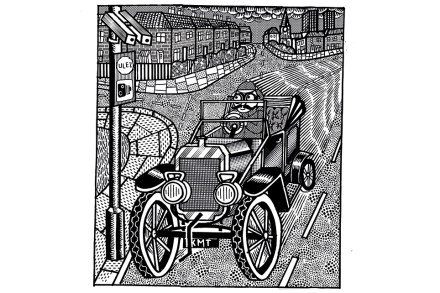
If the world really does face a climate emergency, what ought you, personally, be doing about it? Should you, as increasing numbers of young people are doing, roam the streets at night letting down the tyres of SUVs? The fast-growing movement that calls itself the ‘Tyre Extinguishers’ thinks this is an effective approach, and has targeted thousands of SUVs in cities around the world. My home town of Bristol – always quick to espouse a green cause – has seen at least 200 SUVs ‘extinguished’ in recent weeks. Though they claim to be leaderless, the Extinguishers have a Twitter account where you can keep up-to-date with their latest ‘hits’, and a website that generously invites everyone to get involved.

How should the West respond to Putin’s threats?

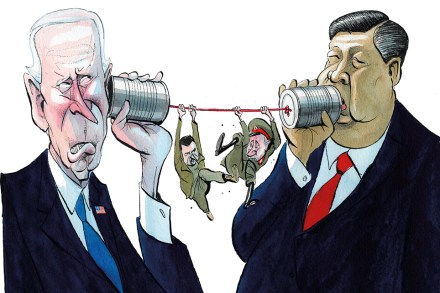
Vladimir Putin clearly wants us to worry that he is crazy enough to use a tactical nuclear weapon in Ukraine. This fear was intensified this week when images surfaced that some – possibly in error – believed showed a train operated by the secretive nuclear security forces moving towards Ukraine. Despite this, many believe the likelihood of a nuclear attack remains extremely low. Yet it is a plausible enough threat for the West to be considering how it should respond if Putin were to unleash one. Russia has an estimated 1,900 non-strategic nuclear weapons (NSNWs), from artillery shells to warheads for missiles; their yields range from a mere 0.5 to 100 kilotons, more than twice the power of the bomb that devastated Nagasaki.

Suella Braverman: ‘Brexit isn’t a revolution – it’s a restoration’

During her leadership bid, Suella Braverman positioned herself as a Tory maverick – a firm believer in Brexit, a campaigner for low taxes, and a defender of controlled immigration. Once her campaign ended, she backed Liz Truss because, she said, she wanted to join a team that would change things. When Kwasi Kwarteng announced he would abolish the 45p rate of tax on highest salaries, she was delighted. And when Michael Gove and others rebelled against the plan, she accused them of orchestrating a ‘coup’. We meet a few hours after her remarks, at a Spectator event at the Tory party conference in Birmingham. She’s a little late, given the kerfuffle caused by a home secretary talking about a coup. ‘That word has followed me everywhere,’ she says.

Fellowship of the Lamb: how we’re saving Tolkien’s pub

I’ve just bought Tolkien’s pub in Oxford. Well, to be more precise, I and more than 300 fellow drinkers have bought the Lamb and Flag, the 400-year-old Oxford pub where the Inklings group of writers – including J.R.R. Tolkien and C.S. Lewis – drank. Like so many pubs across the country, the Lamb and Flag closed, in January last year, thanks to the pandemic trading slump. Across the road, the Eagle and Child pub also closed, in 2020, because of Covid. Tolkien and Lewis drank there, too – they called it ‘the Bird and Baby’. It remains shut. What rare survival stories these two pubs are – or were. The Eagle and Child, owned by St John’s College, opened in 1650.

Open alms: how I came to live on charity

A year ago, I moved into what I hope will be my home for the rest of my life. I became an almshouse resident. The announcement of my implied reduced circumstances provoked some interesting responses: from family, joy that my recent hard times were over; from acquaintances, a range of reactions: embarrassment, shocked disbelief, scepticism. Even some thinly veiled envy. Who’d have thought? What kind of person ends their days in an almshouse? The key word is need. It might be financial, it might be social, perhaps both. Some people are quite alone in the world. Some reach old age with a negligible pension, or no roof over their head.

Red kites should never have been reintroduced to Britain

I own a grass farm in the Chilterns which provides grazing for horses and haymaking. It also provides habitat for hares, skylarks, lapwings and field voles (the staple diet of my resident pair of barn owls) – which is why I am so set against the red kites. Between 1989 and 1994, red kites from Spain were imported and released into the Chilterns by the RSPB and Natural England. The population here had dwindled and the RSPB describes the reintroduction programme as ‘one of the UK’s biggest conservation success stories’. But it’s only a success story if you ignore the devastating effect red kites have had on other wildlife. The RSPB assures us that red kites feed mainly on carrion and earthworms and, as opportunists, the occasional small mammal.