Features

The Tories’ wind power delusion

A very strange parliamentary rebellion has been taking place with Boris Johnson, Liz Truss and dozens of other Tory MPs demanding an end to the ban on onshore wind farms. Wind power is cheap and getting cheaper, they argue. And surely, if we’re engaged in an energy war with Russia, we need all the power we can get? It’s an argument that is wrong several times over. There is no ban on wind farms – it is actually a bog-standard planning requirement that they be confined to areas designated for that purpose and with community support. Nor do they offer a cheap solution: the costs are high and rising.

The red line: Biden and Xi’s secret Ukraine talks revealed

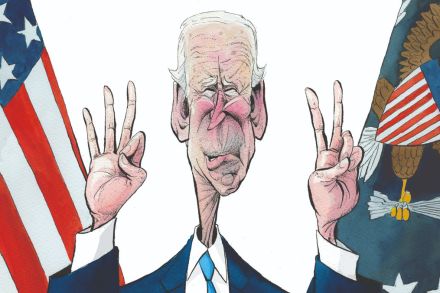
Since the beginning of Russia’s invasion of Ukraine, China has played a decisive – though publicly low-profile – role in strategic decision-making in both Washington and Moscow. As I report for the first time in my new book Overreach, it was a back-channel intervention approved by Beijing that caused the US to scupper a deal for the Poles to provide Soviet-made MiG-29 jets to the Ukrainian Air Force back in March. And since September a flurry of personal diplomacy by Chinese foreign minister Wang Yi with Nato and the US has led to a rare moment of public agreement over Russia, when Xi Jinping said that the world ‘needs to prevent a nuclear crisis on the Eurasian continent’ in a meeting with Joe Biden at the G20 summit in Bali.

It’s time to replace the Society of Authors

The most important job of any union is to support its members against bullies. So why has the Society of Authors, a sort of posh union for writers, illustrators and translators, failed to support members who are receiving death threats? In August, J.K. Rowling tweeted her sympathy for Sir Salman Rushdie after his attempted murder. Imagine how she felt when she received this response: ‘Don’t worry, you are next.’ Rowling is a member of the Society of Authors and expected the union to put pressure on the authorities by condemning the threats against her. Right? Wrong. Not only did the Society fail to defend Rowling, but the chair of the management committee, Joanne Harris, appeared to mock her.

The Iranian regime is at war with its own children

Twenty-two-year-old Hadis Najafi does not look like a foot soldier in a revolution. In the last film of Najafi alive, it is night and she’s walking down a road in Karaj, her home town, smiling and scrunching up her hair into a ponytail. She is young, blonde and on her way to a demonstration. Najafi reminds me of my own daughter, tying up her hair in the same casual, no-nonsense way. Thirty minutes later, she was dead, shot six times in the face, hand, neck and heart. Her crime? To go to a protest and not to wear a hijab. Iran is locked in a clash between its medieval Islamic theocracy and the TikTok generation.

Trading places: George Eustice on Brexit, Sunak and the Australian deal 

Is Brexit failing? Those who believe it is point to George Eustice, the former Tory environment secretary, who told the Commons last week that the Australia trade deal was a dud. Here was a Brexiteer, a one-time Ukip candidate, saying that the biggest trade deal of the Boris Johnson years was deeply flawed – a belief Rishi Sunak is understood to share. ‘I don’t regret it,’ says Eustice as we sit in Portcullis House. ‘It was just not actually a very good deal.’ The agreement struck by Liz Truss, then the trade secretary, gave Australia and New Zealand unlimited access to the UK market for its beef and sheep while Australia bans the import of British beef.

Where will Kherson’s freedom fighters go next?

When Vladimir Putin’s troops first invaded Kherson, they marched into Eugene Chykysh’s hipster coffee shop. ‘They all asked for cappuccinos with four sugars,’ Eugene told me. Later, another Kherson resident says that the soldiers who raided his house took ten kilos of sugar from him. Eugene is one of the few Ukrainians in Kherson who even talked to the Russians. Most people I speak to say they simply avoided them, staying indoors as much as they could, and venturing out only to buy groceries from the few shops still open. It was like lockdown on steroids, they say, and with no Netflix to pass the time because the Russians switched off the internet.

The squeeze: how long will the pain last?

Rishi Sunak has ushered in a new era of austerity, not just Osborne-style spending cuts, but tax hikes as well. His Chancellor, Jeremy Hunt, says the plan is not just to balance the books but to control inflation, and so this will be the theme of the Sunak years: Austerity 2.0. Throughout the leadership campaign, Sunak repeatedly argued that persistent high deficits were no longer an option. Difficult decisions lay ahead, he said, and claims to the contrary were ‘fairy tales’. His critics said this was a safety-first ‘Treasury view’, and Britain had plenty of scope to borrow more. But Sunak was certain that the debt racked up during the pandemic – not just by Britain but countries the world over – guaranteed a wake-up call at some point.

Could Berlusconi end the war in Ukraine?

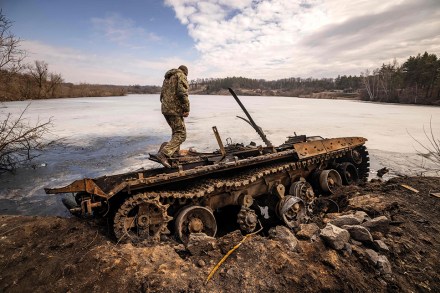
Ravenna, Italy Silvio Berlusconi believes that he alone can entice his old friend Vladimir Putin to the negotiating table and intends to give it a go before Christmas. The 86-year-old media tycoon and former Italian prime minister wants a peace deal, mediated by him, to be his political swansong. His private jet is already on standby. Last month, he said that Putin had sent him 20 bottles of vodka for his birthday and ‘a very sweet letter’ Internationally, the timing could not be better. Russia has suffered another military humiliation by abandoning the key city of Kherson and the Biden administration is reportedly telling Volodymyr Zelensky to think seriously about peace.

The bogus companies exploiting Britain’s registration rules

Britain appears to be enjoying a surge of entrepreneurialism, with more than 200,000 start-ups registered at Companies House between April and June this year alone. However, while many of these are genuine cases of people taking the plunge and embarking on their dream of opening a tea shop, launching a webinar app or whatever, an awful lot are not going to be contributing any cherries to our national pie – and some might well be pilfering a few. Among those unlikely to be contributing are the 36 companies registered last year to a single address in Bristol – not a business park but a small semi-detached house. Or the 95 registered, apparently by Romanian nationals, at 65 different houses in the same Herefordshire street since January last year.

Why do patients need to know they’re dying? 

Old people are being stranded in hospital, diagnosed with terrible diseases but unable to recover enough to go home. Dr Adrian Boyle, the new president of the Royal College of Emergency Medicine, has said that NHS hospitals ‘are like lobster traps… easy to get into but hard to get out of’. Might it not be better for some if they’d never gone, or at least never been told exactly what was wrong? In C.P. Snow’s 1951 novel The Masters, the Master of a Cambridge college is ill. People seeing his bedroom light on night and day wonder how long he has left, but the question never occurs to him because he hasn’t been told he has terminal cancer and so believes he is recovering and will soon be back at the helm.

How Syria became the world’s most profitable narco state

Lebanon Abu Hassan puts down his Kalashnikov and reaches into a pocket on his bodywarmer to hand me a small white pill. ‘Here,’ he says in Arabic, ‘a gift. This’ll keep you awake for 48 hours.’ He grins and adds in English: ‘Good sex!’ The pill is Captagon, an amphetamine known as ‘the poor man’s coke’. It can make the user feel invincible and was taken by fighters on all sides in Syria’s civil war; Isis were said to be big fans of ‘Captain Courage’. It has now spread across the Middle East. You might find Captagon fuelling a party in Riyadh or keeping a Baghdad taxi driver awake through a double shift. It is, of course, illegal. And horribly addictive.

Elf and safety: are child protection guidelines killing Santa’s appeal?

Santa Claus is coming to town. I know this because I recently spent an evening gift-wrapping empty boxes to decorate his grotto at an upcoming Christmas fair. With most of my grandchildren now in their teens, it’s been a while since I endured the grotto experience and I was interested to know how such a thing is managed in 2022. How does one navigate between overbearing safeguarding guidelines and the jaded palate of today’s pre-school sophisticate? Is it even worth the bother? Father Christmas must nowbe accompanied at all times byone or more vigilant adults  Like anyone who volunteers for a role that will place them in the company of children, our Santa will undoubtedly have been subjected to a Disclosure and Barring Service background check.

My 6,000-mile adventure of a lifetime

‘Oh, you’ll hate it, Julia. It’s men talking about cars all the time. Really, really boring. You drive all day, it gets incredibly hot, you’ve got no air-conditioning and then – if and when you make it to your hotel – the men start talking about cars again. It’s awful. Never again.’ This is not the kind of pep talk I’m hoping for on the eve of our 6,000-mile expedition to the Syrian border with my wife in Frieda, our 1956 Bristol 405. Our friend, the novelist Raffaella Barker, knows what she’s talking about. Her husband, who sells classic cars for a living, comes to my rescue. ‘Zip it!’ he says, but the seed of doubt has been sown. Sceptical friends reckon this trip has all the makings of a divorce.

Trump’s bumpy road back to the White House

Washington, D.C My local polling station is a Christian Brothers high school set amid football fields and parking lots. On Tuesday a woman who lives on our street was arriving to vote just as I was. She had come from a mandatory ‘active-shooter training session’ at her office. Of course, all shooters are ‘active’. Active shooter is what the TV stations call an armed psychopath during the brief period between the moment he starts gunning people down – say, in a cinema, church, school or office – and the moment he dies in a blaze of police- or self-inflicted gunfire.

The attempt to topple the Scottish Enlightenment

It’s not just America that is in the process of rewriting its history and casting itself as patriarchal and oppressive – a similar process is taking place in Scotland. Giants of the Enlightenment such as David Hume are being reimagined as the architects of slavery and the fathers of modern racism. Scotland’s first black professor, Sir Geoff Palmer, exemplified the new way of thinking in an astonishing talk I heard him give recently at Dundee University. He spoke about the horror of George Floyd’s murder and told the audience that when he watches the footage of the strangulation: ‘All I can see is David Hume.’ The attempt to topple the Scottish Enlightenment began in September 2020 when a group of students demanded that Edinburgh University’s David Hume Tower be renamed.

Russian roulette: what ‘tactical’ nuclear war would mean

In 1861 an American seed-drill designer named Richard Jordan Gatling created a super-weapon that he believed would bring an end to war. With his hand-cranked, ten-barrel machine-gun, Gatling did for warfare what his contemporary Isaac Singer had done for sewing, bringing mechanisation to a former handcraft. Gatling’s gun fired more than 200 rounds a minute – as much as an entire battalion of soldiers with muzzle-loading muskets. In his memoirs, Gatling wrote that ‘if a four-man machine-gun crew could kill a thousand infantrymen in five minutes’ then perhaps the terror created by such a weapon would ‘discourage war altogether’.

How Ed Miliband became the power behind Keir Starmer

Keir Starmer’s early leadership was defined by the expulsion of his predecessor. Jeremy Corbyn is no longer a Labour MP and will not be a Labour candidate at the next election. But now another former party leader is quietly defining Starmer’s leadership. This week Ed Miliband, the shadow climate secretary, caused outrage by suggesting that rich countries should pay aid to nations worst hit by climate change. Miliband’s influence extends far beyond his brief. Resentment has been brewing among Labour frontbenchers about just how much Starmer seems to listen to him. After all, he presided over one of Labour’s worst election results in 2015, a memory that has faded only because Corbyn did even more damage four years later.