Features

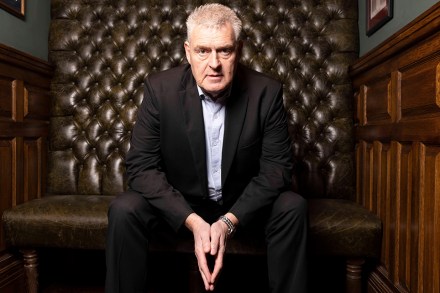
Lee Anderson: ‘Capital punishment? 100% effective!’

Who is the worst man in Britain? According to the Daily Mirror, it’s the 56-year-old former coal miner and Tory MP Lee Anderson, who clinched the award a year ago after criticising England’s footballers for ‘taking the knee’. How did Anderson, who this week was appointed Deputy Chairman of the Tory party, respond to the accolade? ‘I immediately rang my parents to thank them for all their support. It’s the first time anyone from my family has been voted the worst man in Britain, so I tried to win it two years on the trot.’  Since his election in December 2019, Anderson has emerged as the pugnacious ambassador for the Red Wall intake of Conservative MPs.
Collecting the dead in Ukraine

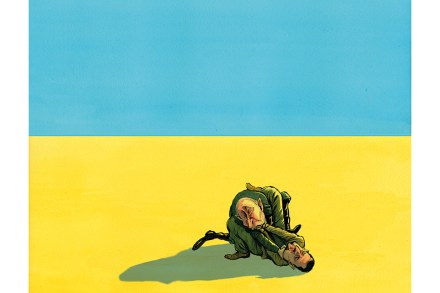
Dovhenke, Ukraine The Russian soldier lay where he had fallen. His plastic combat belt and flak jacket were still intact, but his legs were splayed at an unnatural angle, and where his face and scalp had once been there was now only a skull with dark stains on it.   ‘The guys who died protecting our country need to go home to their mothers, fathers, daughters and sons’ Oleksiy, leader of the Black Tulip, a small team of Ukrainian men who collect bodies from the country’s eastern battlefields, gingerly tied a rope around the decaying corpse. ‘These bodies are sometimes booby-trapped,’ he said. ‘We have to be careful.’   We all walked 50 or 60 yards up the muddy track we had come down and crouched. Then Oleksiy, bending low, gave the rope a tug.

In defence of amateur sleuths

Two weeks have passed since Nicola Bulley went missing while walking the dog in her Lancashire village. The police say their working theory is that she fell into the river but that they are also ‘keeping an open mind’ and pursuing ‘many inquiries’. The head of the underwater team searching the Wyre for Ms Bulley says that in 20 years he has never seen so unusual a case. The police say they would like to speak to ‘as many members of the public as possible’ and yet have also called the level of online speculation ‘totally unacceptable’. But is public speculation really so wrong? There’s a big difference between hindering the police investigation, which is a crime, and generally being interested in Ms Bulley’s disappearance.

One year on: how will the Ukraine war end?

In early October 2021 President Joe Biden, the CIA director William Burns and other top members of the US’s national security team gathered in the Oval Office to hear a disturbing briefing from US military chief General Mark Milley. ‘Extraordinary detailed’ intelligence gathered by western spy agencies suggested that Vladimir Putin might be planning to invade Ukraine. According to briefing notes that Milley shared with the Washington Post, the first and most fundamental problem facing Biden was how to ‘underwrite and enforce the rules-based international order’ against a country with extraordinary nuclear capability ‘without going to World War 3’. Milley offered four possible answers: ‘No. 1: Don’t have a kinetic conflict between the US military or Nato with Russia. No.

In praise of greyhound racing

I feel strangely and disproportionately elated when Number 2 dog, Ballyblack Bess, powers home strongly to win the 20.03 race. It’s a Monday evening in January in the greyhound stadium in Blackbird Leys, Oxford. I only won £9 but I’m pleased I came because an evening at the dogs is still great old-fashioned fun. The punters love it, as do the dogs, so it’s devastating that the RSPCA has demanded it be banned. They’ve teamed up with two other leading charities, the Dogs Trust and the Blue Cross, to request that it’s phased out over a five-year period. But the RSPCA is – excuse the pun – barking up the wrong tree. The main objection to the sport was always about what happened to the dogs once their racing careers were over.

Japan’s plans for an anti-China alliance

As the world’s attention focused last month on whether to send tanks to Ukraine, Japan’s Prime Minister, Fumio Kishida, was on a whistle-stop tour of the West. He held various meetings with G7 leaders, including Rishi Sunak and Joe Biden. His objective was clear: to create a new alliance that can counter China. Japan has been forming a ‘Quad’ with Australia, India and the US on naval manoeuvres  Japan adopted a ‘peace constitution’ in 1947 when it was occupied by the US, pledging that the country would never again wage war. For the past half a century, the military budget was capped at 1 per cent of GDP, and Japan sought to project its image abroad as a semi-disarmed economic giant, an Asian Germany of sorts. Now all this has changed.

The truth about the British Empire: Nigel Biggar and Matthew Parris in conversation

Nigel Biggar is a theologian, ethicist and author of Colonialism: A Moral Reckoning. He speaks to The Spectator’s columnist Matthew Parris about the legacy of the British Empire. MATTHEW PARRIS: Nigel, you’ve been in the news recently over your view on colonialism, which is, I think, basically that British colonialism is not all bad. Is that right?   NIGEL BIGGAR: Yes, I’ve become a bit more assertive in my view, since I first got into trouble five years ago. I published an article in the Times saying that we British can find cause for pride and shame in our past. I thought, who on earth can disagree with that? I actually thought it was rather an anodyne point of view, but that was enough to get me in trouble. Since then, I’m a bit more robust.

The dangerous myth of degrowth

Britain is beset by low productivity and stagnant growth, and things are not getting better. In the public sector, productivity stands at 7.4 per cent lower than it did before the pandemic. Until we can generate more growth in the economy, we cannot grow richer and real wages cannot grow. An uncontroversial statement, you might think – even if opinions vary on what to do about it. But no. There are people who genuinely don’t want economic growth, who think it an evil that must be ended. Take a comment piece published late last year in the normally sober pages of the scientific journal Nature.

In praise of drunkenness

Europe, I’m told, is entering the age of the ‘sober-curious’. Curiosity is a wonderful thing; why, then, did hearing this make me want to drink whisky until I talk in tongues and pass out? I’ve had such a long and varied relationship with alcohol since we met when I was a shy provincial child. It’s been my naughty secret (12-16), partner in crime (twenties), dangerous obsession (thirties/forties), toxic bestie (fifties) – until, somehow, now I’m almost 64, it’s ended up as casual restaurant date, always welcome but never needed. I’ve done some dumb things on alcohol, but I’ll always believe that it gave me more than it took from me. Because of this, I feel defensive of it when I hear people dissing it.

Rolling in it: the return of Tory sleaze

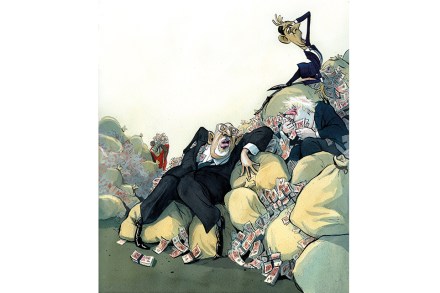
When Rishi Sunak stood on the steps of Downing Street to give his first speech as Prime Minister, he had a simple message: ‘This government will have integrity, professionalism and accountability at every level.’ He wanted his premiership to move on from the scandal, mayhem and psycho-drama of his two predecessors. As Michael Gove later put it: ‘Boring is back.’ The government, he said, has an ‘utter determination to try to be as dull as possible’. But the Tory scandal stories that Sunak is so keen to avoid are not, it seems, over yet. His party chairman, Nadhim Zahawi, is reported to have had to pay a penalty of more than £1 million as part of a settlement to the taxman over a ‘careless’ error.

Keir Starmer: ‘We haven’t won – yet’

When Keir Starmer won the Labour leadership in 2020, following the party’s worst election defeat since 1935, many people shook him by the hand, said ‘good luck’ and then added darkly ‘you’re not going to do it in five years’. Just three years later, he has done ‘it’, to the extent that Labour is 20 points ahead in the polls. The insult the Tories levelled at him when he became opposition leader – that he was boring – now looks like an advantage when it is offset by Conservative psycho-drama. Starmer clearly thinks things are going his way. Actually, things aren’t going his way when we meet, because his train is delayed. He is trying to go to Slough to campaign, but all the trains out of Paddington are either running behind or cancelled.

Tank warfare: why the West is worried about arming Ukraine

Ukraine’s top soldier, General Valery Zaluzhny, has said that if he is to launch a successful counter-offensive, the West will have to provide him with another 300 tanks. This is, of course, a negotiating position. President Volodymyr Zelensky’s government has been very effective in managing western allies: cajoling, demanding and guilting them into providing more than they intended. He’s actually going to be getting more tanks, if not 300, now that Berlin has been browbeaten into lifting its objections. Might Germany’s initial reluctance suggest a changing perception of the war? It has certainly revealed the limited nature of the European powers’ arsenals. Nato countries have already been supplying tanks.

The C of E is right to prevaricate on gay marriage

On Tuesday morning it was theology hour in the House of Commons. The Labour MP Ben Bradshaw had requested an urgent question on the Church of England’s latest prevarication on homosexuality. Ahead of next month’s synod, the bishops have decided that gay marriage will not be up for discussion, even though a full debate was expected after six years of consultation. Can the established Church continue to be out of kilter with the law of the land? Can MPs legitimately put pressure on it to reform its teaching? Bradshaw and others, including Penny Mordaunt, are muttering threats of disestablishment. Their case is weakened by the fact that parliament promised, ten years ago this week, that religious groups would not be coerced into performing gay marriages.

My Transylvanian horror

My first taste of proper street violence came in a Transylvanian town square 30 years ago. Ethnic Romanian and Hungarian villagers were going at each other with pitchforks, knives and strips of wood they had ripped from park benches. In an attempt to separate the two sides, the Romanian army had driven half a dozen armoured vehicles into the middle of the square. Just as things seemed to calm down, a group of villagers came running out of a hotel, pursued by fired-up Hungarians. As I ran to avoid the melee, a man appeared holding a chunk of wood and hit me over the head. For a second I was stunned. Then my survival instinct kicked in. ‘I’m English,’ I shouted in my best Hungarian. ‘English!’ He stopped mid-swing.

Gender wars: the Union’s new battle line

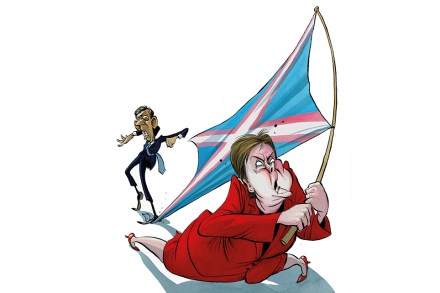
When Rishi Sunak had dinner with Nicola Sturgeon last week, the idea was to show he was interested in a friendly relationship: a ‘constructive dialogue’. Liz Truss had dismissed Sturgeon as an ‘attention seeker’ who was ‘best ignored’, but Sunak preferred a more positive approach. He was keen to pose for pictures afterwards. This new friendship lasted four days. Sturgeon is now accusing Sunak of ‘a full-frontal attack on the democratically elected Scottish parliament’ because he has become the first Prime Minister in history to veto a bill passed there – the Gender Recognition Reform (Scotland) Bill. Sturgeon has put on a virtuoso performance of grievance.

Why are our prisons still in lockdown?

When the Covid pandemic began, one fear was that the virus would tear through prisons and cause up to 5,000 deaths. The prison service, at its best in a crisis, introduced lockdowns and control measures. These were effective and, from March 2020 to September last year, only 207 prisoners died having tested positive for Covid-19 within the previous 60 days or with the virus confirmed as a contributory factor post-mortem. Locking down was always going to be the easy bit – there is an old prison-officer saying that ‘happiness is door-shaped’ (meaning that prisoners who are locked up can’t do any harm). The hard bit is getting prisoners back into work, education or training. And the lingering effect of lockdown policies still makes it hard today.

The dumbing-down of BBC Radio 3

In March, Alan Davey will step down as the controller of BBC Radio 3. His role over the past eight years has been huge. Not only has he overseen programming and strategy for Radio 3 and BBC orchestras, but he has also championed access to contemporary music and focused on forgotten past composers, many of whom are female. All very impressive. But there’s no escaping the fact that under his watch there has been a general dumbing-down of programming. Each year, the BBC Proms finds a new way to diversify its output, from proms based around video games, to rap, to an ‘Ibiza-style’ dance party. Even more egregiously, two years ago Radio 3 rebranded its late-morning show as Essential Classics.

The art of darts

I don’t watch television, which – given I’m a TV producer – is a little unusual. I suppose, just as professional chefs so often confess to living off cheese toasties, there is little joy to be had in bringing the office home. I make only one exception: the darts, which I am confident in saying is television in its purest and highest form. What makes it so compelling is that it is, fundamentally, a character-driven sport. The players choose their own walk-on songs, outfits and nicknames. And while not every player will go the full Peter ‘Snakebite’ Wright (who coordinates wacky outfits with his multi-coloured mohawk for every game), many create larger-than-life personas.