Features

Why has Oxford killed off a much-loved Catholic college?

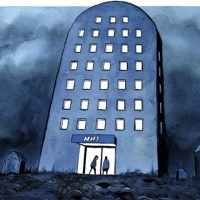
Few institutions can match the global prestige of Oxford University. Just look at the gifts lavished on it, like offerings brought to some mighty emperor of the ancient world. There’s the Saïd Business School, controversially funded with £50 million from Wafic Saïd, who helped to broker the British-Saudi arms deal. There’s the carbuncular Blavatnik School of Government, criticised by Russian dissidents for how the funder made his millions. There’s the new student housing at St Peter’s College, partly paid for with a donation whose original source was the mid-20th-century fascist demagogue Oswald Mosley. Yes, people do sometimes ask whether there’s any cash the university won’t accept. And now they have an answer.

What does it mean when Giorgia Meloni quotes G.K. Chesterton?

For a UK audience, the most striking moment in the new Italian PM Giorgia Meloni’s victory speech will have been that she anchored its peroration to a quote from G.K. Chesterton. ‘Chesterton wrote, more than a century ago,’ she said, ‘“Fires will be kindled to testify that two and two make four. Swords will be drawn to prove that leaves are green in summer.” That time has arrived. We are ready.’ G.K. Chesterton? The creator of the excellently herbivorous Father Brown mysteries, the Isaac Newton of what we now call ‘cosy crime’? That G.K. Chesterton? The author of a poem, memorised by many a previous generation of English schoolboys, about how ‘the rolling English drunkard made the rolling English road’? That one?

There’s a growing sense that tomorrow belongs to Sinn Fein

Where can Ulster Unionism go now? If it were a person, it would be someone in the grip of a long depression, whose occasional bursts of anger mask the fact that they so often feel despondent and betrayed. The widespread reaction to the latest Northern Ireland census, in which Catholics narrowly outnumber Protestants for the first time, is unlikely to give it a reason to be cheerful. A jubilant Michelle O’Neill, the Sinn Fein vice-leader, was quick to claim that ‘historic change is happening across this island’, while other party members called for a referendum on unity. The rallying cry of Sinn Fein has long been ‘Tiocfaidh ár lá’, which translates as ‘our day will come’.

The ups and downs of driving a Tesla

I began the week in Miami, looking forward to what a friend of mine describes as ‘the finest sight in all Florida – the departure lounge’. That is a little unfair; a tour of Cape Canaveral is mind-blowing. But beyond that I confess I find the state brash and gaudy, a fitting place for Donald Trump’s retirement. If indeed the 45th President has retired. No one will be surprised if he runs again, nor if he is re-elected with the help of his Republican party which has been busy restricting voters’ rights and playing origami with constituency boundaries. I doubt he will win the popular vote, but nor does he need to with the Electoral College on his side. The 2020 election was a referendum on The Donald and so will the 2024 election prove to be.

‘We’re so close’: there’s a cautious optimism at Labour conference

When Liz Truss scheduled her mini-Budget for the Friday before Labour conference, there was concern in Keir Starmer’s office. After months of meticulous planning, Starmer’s team feared the new Tory government would use their event to upstage his and distract from the party’s annual gathering in Liverpool. They were right to think that Kwasi Kwarteng’s statement would dominate the headlines; what they didn’t realise was that this would work entirely to their advantage. The market chaos provided the perfect backdrop to Labour conference: it reinforced a belief that, after 12 years in the cold, Labour is finally on the cusp of power. They can now present the Tories as the dangerous, slightly mad radicals and pitch themselves as the sensible option.

Wes Streeting: we need the private sector to help reform the NHS

When Labour MPs gossip about who could be their next leader, Wes Streeting’s name invariably comes up. Like Angela Rayner, the party’s deputy leader, Labour’s shadow health secretary spends half his time insisting he’s not running for the top job. Also like Rayner, he’s never actually stood for it – yet. But there have been plenty of moments in the past year when some of his comrades have wished he was the leader of the opposition rather than Keir Starmer. Streeting became suspiciously more visible as the ‘Beergate’ investigation into whether Starmer and Rayner breached Covid restrictions reached its climax earlier this year.

‘Staying silent isn’t an option’: meet Putin’s new opposition

Not every critic of Vladimir Putin ends up in jail. It still suits Russia’s President to present his country as a democracy. Elections are occasionally held against opponents whom Putin goes on to defeat, so enemies are often tolerated if they don’t pose a serious threat. Last week, 70 local councillors from across Russia used this remaining freedom to sign a petition calling for his resignation. Their protest started with a letter from councillors in St Petersburg which called for Putin to be indicted on charges of treason and removed from office. A petition followed. I spoke to a few of the signatories and found them surprisingly willing to discuss their reasoning with me. They don’t expect to overpower Putin and they know they risk being jailed.

There was no ‘hidden Unionist code’ in my Queen’s funeral anthem

There were two world premieres during the Queen’s funeral on Monday. One was a beautiful setting of some verses from Psalm 42 by Judith Weir, the Master of the King’s Music, and the other was an anthem by me, a setting of a passage from Romans 8, ‘Who Shall Separate Us From The Love of Christ?’ I wonder if Judith had to deal with some of the questions I got on the day. How could I have written the music so fast considering that Her Majesty only died on 8 September? Of course, these things are planned years in advance, so I composed the anthem some time ago. I was asked to keep quiet about it until Sunday night when the order of service was published.

The Energy Price Guarantee may cost much less than is feared

Critics of ‘Trussonomics’ – and there are many – have been quick to claim that the new energy price plan puts its economic credibility at risk. Indeed, early estimates suggested that the ‘Energy Price Guarantee’ could cost the taxpayer £150 billion or more over two years, making it the most expensive economic policy in history. More than the furlough scheme, more than even the bank bailouts. Fortunately, the bill looks like it will be a lot smaller and sceptics are set to be proved wrong. The Prime Minister proposes to cap the unit price of energy for households for two years, starting next month, with the government compensating suppliers for any additional costs.

The sad demise of the church pew

Imagine a child’s drawing of the interior of a traditional English church and the elements the picture is likely to contain. There will be colourful stained-glass windows, an altar and, almost certainly, rows of sturdy wooden pews. Yet the sad truth is that in parish after parish, the pews – which are often centuries old – are being removed and replaced by grimly functional chairs, of the sort to be found in any meeting hall or conference centre. I recently went to my own mid-Victorian parish church after a couple of months away and was dismayed to find the familiar old pews all gone and in their stead identikit rows of seats with pink cushions. Why do the Church of England’s seating arrangements matter?

Brace yourself for a coup in Brazil

‘Jail, death or victory.’ These are the three alternatives Brazil’s incumbent leader says await him. It is an unusual rallying call for an election campaign, but this is Jair Bolsonaro, the ‘Trump of the Tropics’, and he may well be right. Bolsonaro was elected in 2018 when his initial rival, Luiz Inácio Lula da Silva, the country’s former president, was jailed midway through the campaign on corruption charges. Bolsonaro, a relative unknown, beat the replacement Workers party candidate by a ten percentage point margin. His formula was to focus on anti-corruption and conduct his campaign predominantly via social media.

Her Majesty’s enduring love of dogs and horses

In 1995, Her Majesty was heard to remark that the worst aspect of the Parker Bowles divorce was that she had got Danny back. Danny was a corgi given to Camilla and me by the Queen in the early 1990s. She had previously given us a corgi called Windsor Flame who was wonderful, intelligent and brave. Danny had none of these qualities. He was short in looks, legs and temper. After the divorce he returned to Windsor, where he spent the rest of his life, very happy, in the care of Mrs Nancy Fenwick, who was unofficially the keeper of the Queen’s dogs. I came to realise how much the Queen’s dogs meant to her, how much she loved them and how very knowledgeable she was about them. She owned more than 30 corgis during her lifetime.

Elizabeth II’s devotion to the Commonwealth

It’s a question which would inevitably surface during any serious discussion of Queen Elizabeth II: who was her favourite prime minister? Unlike her grandfather, George V, who was clear that he favoured Ramsay MacDonald (and told him so), or George VI, for whom Winston Churchill was the clear winner, Elizabeth II always kept us guessing. Was she, too, a Churchill devotee? Some say she harboured a greater fondness for her first Labour PM, Harold Wilson, and not just because he was good company and shielded her from the republican wrath of his own MPs. He did not, unlike Churchill, outstay his welcome but timed his resignation to divert attention from the collapse of Princess Margaret’s marriage. Others point to Sir Alec Douglas-Home on patrician Scottish landowning grounds.

More mad than Vlad: Russia’s ultra-nationalist threat

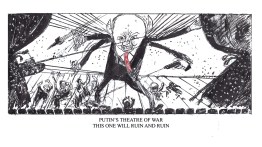
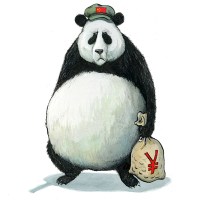
‘Russia without Putin!’ was the cry of Muscovites who turned out to protest against Vladimir Putin’s return to the presidency for a third term in December 2011. Crowds 100,000 strong chanted their opposition on Moscow’s Academician Sakharov Prospect – as symbolically named a venue as you could wish for – as riot police stood calmly by. There was anger in the crowd. But there was hope, too, not least because the massive protest was officially sanctioned. One after another, prominent opposition politicians such as Ilya Yashin, Boris Nemtsov and Alexei Navalny denounced Putin from a stage provided by the city authorities. Today the memory of those protests seems to belong to a different age of Russia. Yashin and Navalny are in jail.

How The Spectator reported the Queen’s life

The reason the British people love the Queen, and are willing to die for her, is that they can understand what she is about, in a way that they cannot understand what the constitution, cabinet and parliament are about, or the Courts of Justice or the Bank of England, or any of the other abstractions which comprise our so-called system of government. Monarchy is credible, as Bagehot said, because it is personal. Seeing is believing. That is why all the old royal ceremonials are important: not because they are incomprehensible and mysterious, but because they are intelligible and familiar. All that talk about the magic of monarchy is very misleading.

Recollections of a Queen’s piper

In 2015 I was lucky enough to become the Queen’s Piper. I played the bagpipes every morning for about 15 minutes under the window of Her Majesty, normally while she was eating breakfast. The Piper to the Sovereign is part of the household so I travelled with Her Majesty to her royal residencies, including Buckingham Palace, Windsor Castle, Balmoral Castle and the Palace of Holyrood house. The appointment also involved welcoming guests and visitors to the households for audiences with foreign and domestic dignitaries such as ambassadors and heads of state – and also British citizens receiving OBEs or CBEs and so on. For these occasions my role consisted mainly of informing them of the general etiquette and expectations while in Her Majesty’s presence.

A lifelong friendship: the Elizabeth I knew

On 29 January 1947, the Queen and Princess Elizabeth came to St Mark’s in Mayfair to attend my marriage to Eric Penn. On the following day they set sail on HMS Vanguard for South Africa where King George VI and the Queen, accompanied by their two daughters, were to make a historic tour of the region at a pivotal moment not just in the history of the union of South Africa, but of the British Empire itself. Princess Elizabeth and I were both born in 1926 within three months of one another, but our paths did not cross until I became engaged to Eric. He was comptroller of the Lord Chamberlain’s Office in the Queen’s household and I became a lady-in-waiting to Queen Elizabeth, the Queen Mother.