Features

Energy special: It’s decision time on shale gas

‘UK shale Eldorado just off the M62’, declared the Financial Times, reporting a huge gas find below Cheshire. Shale gas is natural gas trapped in beds of underground shale; it can be released by hydraulic fracturing, or ‘fracking’, which means pumping water, sand and chemicals into the shale under high pressure. That much we know for sure — but we also know that Eldorado, the city of gold lost in South America’s rainforests, turned out to be one of the world’s great myths. Had the FT forgotten, or was it issuing a coded warning? Either way, it provided a reminder that the scale, viability and dangers of the ‘shale gas revolution’ are still surrounded by forests of myth and counter-myth.

Energy special: The green jobs myth

Tim Yeo MP called his proposal for yet another draconian target to decarbonise Britain’s power sector the ‘green jobs amendment’. It was defeated last week by 290 votes to 267. One sweeping new regulation was apparently enough for the day as the Commons settled for casually renationalising the energy sector by passing the government’s bill. The amendment’s defeat is a setback for environmentalists, who had campaigned for it aggressively, but not for Britain’s two and a half million unemployed. ‘Green jobs’ are an utter farce. More expensive sources of energy will destroy more employment than they create. That is not to say that no one has a green job.

Energy special: Get ready for the ‘fire ice’ revolution

On Saturday, 8 June, the research vessel Kaiyo Maru No. 7 left the port of Joetsu, in western Japan, to begin a three-year survey of the Sea of Japan — the latest step in a little-known research programme that in a decade or less could profoundly change the international balance of power. Kaiyo Maru, a 499-ton trawler, is hunting for beds of methane hydrate, a cold, white, sherbet-like substance found off coastlines in Japan and much of the rest of the world. The United States Geological Survey estimates that as much as 2.8 trillion cubic metres of this mixture of frozen water and natural gas may exist. Although only part of this vast deposit is accessible, methane hydrate — ‘ice that burns’ — may be the Earth’s single biggest fossil-fuel source.

Notes on…London’s secondhand bookshops

After seeing the Dalai Lama receive an award at St Paul’s Cathedral, I thought I’d look in at some secondhand bookshops around the British Museum on my walk home. They had all gone. Gone the neat shop in Museum Street where I bought David Knowles’s Great Historical Enterprises; gone the untidy shop in Coptic Street where I first bought a Cresset Press edition of Hogg’s Private Memoirs and Confessions of a Justified Sinner. Gone the smart end of the market, Frew Mackenzie (next to Cornelissen the artists’ colourmen) where two big folios of the beastly Bishop Burnet’s History of His Own Time, 1723, 1734, chipped at spine ends, was the equivalent of the bargain box.

Take it from a former barrister: Chris Grayling is right to reform legal aid

Shakespeare took it a little far in Henry IV, Part II, when Dick the Butcher said, ‘Let’s kill all the lawyers.’ Chris Grayling hasn’t made the same proposal but you could be forgiven for thinking otherwise, listening to the howls of anguish and indignation coming from the Inns of Court. Grayling, the first non-lawyer to be made Lord Chancellor since the 17th century, has simply said he wants to make some savings in the legal aid bill. To the lawyers, unaccustomed to having their privileges and subsidies challenged by anyone, this means war. Already, 90 millionaire QCs — poor, impoverished Cherie Blair among them — have written a letter to the Telegraph attacking legal aid cuts for judicial review cases.

Why Sweden has riots

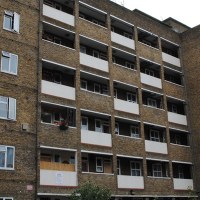
  Stockholm  ‘All of them should have been very happy,’ Robert A. Heinlein begins his 1942 novel Beyond This Horizon. The material problem has been solved on this future earth, poverty and disease have been eradicated, work is optional. And yet parts of the citizenry are not enthusiastic. Some are bored, others are preparing a revolt. Why should that be, in such a utopian world? A similar puzzlement has been the dominant reaction from commentators after riots broke out and cars and buildings were burned in heavily immigrant-populated suburbs of Stockholm in late May. Sweden?

How social media helps authoritarians

Have you heard? Do you know? Are you, as they say, ‘in the loop’? When the Mail on Sunday said a ‘sensational affair’ between ‘high profile figures’ close to Cameron had ‘rocked’ No. 10, did you have the faintest idea what it was talking about? I did, but then I’m a journalist. Friends in the lobby filled me in on a story which had been doing the rounds for months. I even know which law stopped the Mail on Sunday  following the basics of journalism and giving its readers the ‘whos’, ‘whats’, ‘whens’, ‘whys’ and ‘hows’. (Although with most affairs the ‘whys’ are self-evident.

Chen Guangcheng – the brave Chinese activist who David Cameron refused to meet

How did a blind Chinese dissident scale the walls of his house while under house arrest, evade government surveillance, travel hundreds of miles to Beijing, seek asylum in the American embassy and in the process shine attention on a horror the world has grown used to? The questions for Chen Guangcheng are legion. Last week I met up with him in London. Chen, who is 41, has been blind since childhood and wears smart dark glasses. At our meeting place in central London — the headquarters of a Christian organisation which has helped arrange his visit — he sits upright, suited and tied, occasionally repositioning himself by feeling the corners of the table. He does not share the world’s fascination with his personal story.

Timothy Birdsall – the greatest cartoonist you’ve never heard of

Few people under the age of 65 will have heard of the cartoonist Timothy Birdsall, who died 50 years ago on 10 June 1963, having produced his finest work in the last months of his life here in The Spectator and  in Private Eye. But had his career not been cut cruelly short by leukaemia at the age of only 27, he would today be revered as one of the outstanding cartoonists of our time. Tim was part of that talented late-1950s Cambridge generation, along with a galaxy of others later to become famous, from Peter Cook to Ian McKellen. On coming down in 1960 he was employed to do pocket cartoons for the Sunday Times, in the tradition that has led from Osbert Lancaster to Matt.

Notes on…the great English garden

‘Write about the best English gardens,’ says the email from the deputy editor, ‘or what makes a good garden?’ That’s a bit like saying, ‘write about the best paintings, or the best music.’ Beauty is in the eye of the beholder and we now behold so many varieties of English garden that it is hard to tell what Englishness is any longer. But it is probably safe to say that the trend is no longer lavender and roses and formal enclosures of yew and box, nor grassy parks with statues and studied references to high learning. When Kent leaped the fence in the 18th century and saw all nature as a garden, the whole world clapped. Pevsner called it ‘by far the greatest contribution England has made to aesthetic theory’.

Men who propose in public should be shot

Never mind all this gay stuff — when is parliament going to get on with the marriage legislation we really need? I’m talking about the law banning men from proposing to their girlfriends in public. It’s been happening for years. Local radio was always the worst offender. ‘Gareth, I think you’ve got something you want to say to Julie, haven’t you?’ the vapid Simon Bates wannabe would leer. In fact I blame Simon Bates for the whole phenomenon: he legitimised this mawkish sharing of supposedly private emotion. Those of you old enough to remember his ‘Our Tune’ feature on Radio 1 will know what I mean. To the rest of you I simply say: you lucky, lucky people. Then it spread to TV, village fêtes, public occasions of all sorts.

Meet the greatest threat to our countryside: sheep

The section of the A83 that runs between Loch Long and Loch Fyne in western Scotland is known as the Rest and Be Thankful. It would be better described as the Get the Hell out of Here. For this, as far as I can tell, is the British trunk road most afflicted by landslips. The soil on the brae above the road is highly unstable. There have been six major slips since 2007, which have shut the road for a total of 34 days. The cost of these closures is estimated at about £290,000 a year. It’s a minor miracle that no one has yet been killed. The Scottish government has spent millions on clearing the road and building culverts and barriers. It’s about to launch a new engineering project, at a cost of £10 million, which it hopes will reduce the frequency of these disasters.

It’s madness to slash the British Museum’s budget

The best argument in favour of state funding of the arts was made in the middle of the 18th century. In 1753 an Act of Parliament established the personal collection of Sir Hans Sloane as a national resource, ‘to be preserved and maintained not only for the Inspection and Entertainment of the learned and the curious, but for the general Use and Benefit of the Public’. But a dark cloud looms over the British Museum today. Rumour suggests (and ministers won’t deny) that the Chancellor is keen to lop a few million quid from its budget in the 2015/16 spending review which is due to be published this month. Culture Minister Ed Vaizey is being encouraged to fight like a weapon dog in defence of this invaluable cultural asset.

Don’t jump, Felipe!

Peering over my son’s shoulder as he forced himself through a pile of practice IGCSE maths papers in readiness for this week’s exams, I was shocked both by the absence of pounds sterling and by the ardently international imaginary first names dreamed up by the question-setters. That ‘I’ stands for ‘international’ — and goodness, you’re not allowed to forget it. ‘Nyali paid $62 for a bicycle.’ ‘Alejandro goes to Europe for a holiday. He changes 500 pesos into euros at an exchange rate of…’ ‘Abdul invested $240…’ ‘At 05 06 Mr Ho bought 850 fish at a market for $2.62 each…’ ‘On 1 January 2000 Ashraf was x years old.

Crossrail: transport miracle or public sector folly?

Phyllis has gone to Tottenham Court Road, but Ada is having a day off. In fact she’s slumbering deep below us, just south of Bond Street station with her head under Grays Antique Centre. Phyllis and Ada are twin sisters, 140 metres long, weighing 1,000 tonnes each. I’m imagining them as domesticated versions of those monstrous sandworms on the planet -Arrakis in Frank Herbert’s Dune, with their crystal teeth and ‘bellows breath of cinnamon’. They are the tunnel-boring machines that are munching through London’s sub-terrain from Royal Oak to Farringdon where, some time in autumn 2014, they will bump into their cousins Elizabeth and Victoria, coming the other way from Limmo Peninsula in Docklands.

Notes on…The Charm of the Dordogne

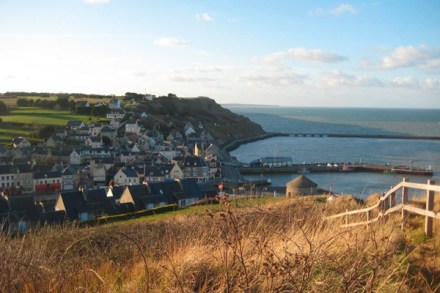
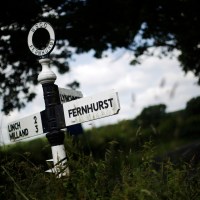
It’s only 150 years since a toff was roasted in the remote Dordogne village of Hautefaye. The poor soul was a French aristocrat resented by the locals. Perhaps he was an outsider. Perhaps he was a second-homer taking advantage of the delights of the Dordogne without ever turning up to any 19th-century equivalents of today’s wine and cheese festivals, arts exhibitions and boules tournaments. Silly fellow. Outsiders in 2013 — well, the Brits, anyway — are proper joiner-inners and the French are perfectly happy to have them around. But my goodness there are a lot of them.

Less alcohol, fewer drugs: how the British seem to be shedding their harmful habits

Gripped by his habitual despair, the French novelist Gustave Flaubert wrote to a friend in 1872, ‘I am appalled at the state of society. I’m filled with the sadness that must have affected the Romans of the 4th century. I feel irredeemable barbarism rising from the bowels of the earth.’ Warming to his bleak scatological theme, he continued, ‘I have always tried to live in an ivory tower, but a tide of shit is beating at its walls, threatening to undermine it.’ Many commentators would feel that exactly the same words could be applied to modern Britain. According to the pessimistic narrative of national decline, Britain is now drowning in the effluence of moral collapse. We inhabit a country supposedly awash with vice and decadence.

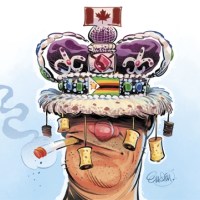
Why Mark Carney’s Canadian success story may be about to fall apart

No Bank of England governor has ever been installed in office with quite so much advance hype as Mark Carney. When he moves from running to the Bank of Canada to his new office in Threadneedle Street, expectations will be running high. Carney arrives with a reputation as a master of economic strategy, a man who can single-handedly steer an economy through the most treacherous of waters, and get a country growing again with a few deft strokes of monetary magic. Certainly, George Osborne has invested his hopes in him. During Carney’s time as governor in Canada, the country was ‘acknowledged to have weathered the economic storm better than any other major western economy’, he said on announcing the appointment.