Christopher Caldwell

Christopher Caldwell

Christopher Caldwell is a contributing editor of the Claremont Review of Books and the author of The Age of Entitlement: America Since the Sixties.

Trump, Europe and the power of delusions

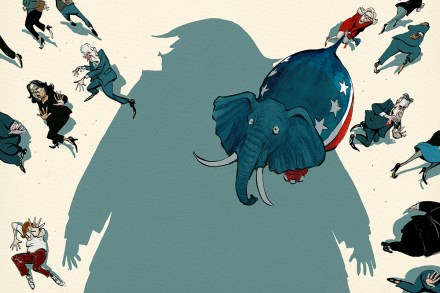
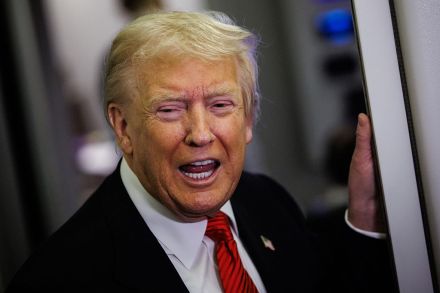
German Chancellor Friedrich Merz suggests to a classroom full of youngsters that Donald Trump has been “humiliated” by his war in Iran – and the President cancels deployment of the long-range missile systems around which Germany had planned its defense strategy for the coming decades. Spanish Prime Minister Pedro Sánchez observes a strict neutrality on Iran, declaring his country’s bases out of bounds – and Trump urges Spain be kicked out of NATO. British Prime Minister Keir Starmer hesitates to sacrifice his country’s navy in a war on which he wasn’t consulted – and Trump mocks him in public for a week.

europe

A change has come over Trump

Geostrategists used to fret over the “Eastern Question” or the Maginot Line or the Missile Gap. Today there is no doubt that the overriding geostrategic question of our day is whether the President of the United States is playing with a full deck. With the US-Israeli war on Iran failing, and depleting much of both countries’ non-nuclear defenses, with the Strait of Hormuz closed and western economies spiraling toward depression, Donald Trump greeted the world on Easter morning with a message to Iran’s leaders to “Open the Fuckin’ Strait, you crazy bastards,” then threatened the next day to wipe out Iranian civilization. He then denounced the Pope for having imparted Catholic teachings on just and unjust war.

The end of Trumpism

Having Donald Trump as President probably resembles being a heroin addict: you undergo regular episodes of sweating terror and mortal danger, the end result of which is to get you – at best – back to normal. A year ago, the Liberation Day tariffs nearly caused the American economy to seize up, before China mercifully let the matter drop. Then came the even more reckless decision to join Israel in bombing Iran’s Fordow nuclear installation; Iran agreed to halt hostilities just as it was figuring out how to penetrate Israeli airspace with its missiles. But now the President has pressed his luck. He has joined Israel in a campaign of aerial assassination and bombardment against Iran – this time of an almost incredible violence – and has wound up trapped.

The deep state vs Nixon

Americans took a break from their partisan vituperation in February to mull over newly revealed testimony that Richard Nixon gave to grand jury investigators in 1975, a year after the Watergate scandal drove him from power. James Rosen, a veteran Washington journalist and the biographer of Nixon’s attorney general John Mitchell, revealed the episode in the New York Times. Nixon had argued that his program of wiretaps had been made necessary by another spying operation that senior American military commanders were carrying out against him and his top aides.

nixon

How to lose friends and alienate people

After two deadly shootings in confrontations between Donald Trump’s Immigration and Customs Enforcement agents and the activists obstructing them, Minneapolis was starting to remind people of Kent State. By “people” we mean progressive baby boomers, inclined to make the Vietnam War the measure of all things. For them, the massacre of four student protesters by a nervous detachment of Ohio national guardsmen in 1970 alerted parents to the war’s inhumanity. It started the groundswell against Richard Nixon that would force him to exit the war three years later – and the White House the year after that. The analogy is a bad one. Trump’s position differs a lot from Nixon’s. It’s stronger politically.

What is anti-Semitic?

New York’s new mayor is woke. The Ugandan-born Muslim leftist Zohran Mamdani imperils the city as we know it, some people grumble. In a recent letter to supporters, Republican Representative Nancy Mace warned that Mamdani was “a man who’s bringing SHARIA LAW to America.” Of course, Sharia and woke are not the same thing. Mamdani’s program, brimming with paeans to trans and gay rights, might not thrill a Wahhabi cleric. Still, he has brought a Middle Eastern flavor, and not in the good sense. During the campaign Mamdani promised to arrest Israeli leader Benjamin Netanyahu should he decide to visit the United Nations. That hair-raising prospect would expose Mamdani to federal kidnapping charges. He has already done his share of scolding about the Middle East.

European leaders have changed their tune on war

Ten days after Thanksgiving, news watchers were exposed to one of the more culturally incongruous images in recent history: Ukrainian President Volodymyr Zelensky and French President Emmanuel Macron beaming in front of the British Prime Minister’s house at 10 Downing Street, giving each other the locked-thumbs handshake familiar to African-American jazz musicians and professional athletes of the 1970s. Right on, brother! At that moment, according to Ukrainian media, thousands of Zelensky’s soldiers had been encircled by Russian troops near the city of Pokrovsk (or Krasnoarmiisk, as it may well soon be renamed). Large gaps were appearing in the Ukrainian front, desertions were rising and Russians appeared to be opening a new front east of Kharkiv.

european leaders

Will anyone miss the Boomers?

From our UK edition

31 min listen

Christopher Caldwell joins Freddy Gray to discuss why the 'Boomer generation' – those born between 1946 and 1964 – became one of the most hated generations in recent history. Chris argues that the Boomers uniquely benefited from the resources of other generations, and were able to enjoy the benefits of leftist politics alongside the political and economic freedoms associated with the right; the apex of their power perhaps being the Clinton/Bush era. To what extent are the Boomers responsible for the decline of America? And what merits are there in judging society through age? Plus, do the digital-millennial generation – those born at the late 1980s and early 1990s – mark the next era of cultural configuration? Produced by Patrick Gibbons and James Lewis.

Eclipse of the boomers

Shortly after Christmas, the oldest baby boomer will turn 80. The 75 million people born between 1946 and 1964 who have dominated the American political imagination since the Eisenhower administration are starting to fade from the scene. Anyone who has felt oppressed by the baby boom – and this includes virtually every non-senior citizen in the country – will complain that it’s about frickin’ time. If the boomers are only now losing their influence, they long ago lost their marbles. What was the archetypal boomer moment of recent years? Probably Hillary Clinton’s 2016 presidential campaign. But maybe it was the indignant boycott of Spotify by Neil Young and Joni Mitchell over the Covid “misinformation” to which Joe Rogan allegedly gave vent in 2022.

boomers

Is Donald Trump a game theorist?

Is Donald Trump a more sophisticated mathematical thinker than we give him credit for? The other day, on one of the Sunday talk shows, a lawyer named Sarah Isgur explained the logic Trump was following in throwing the book at those who had once done the same to him. Isgur, who served in the first Trump administration, sees in the President’s actions something more sophisticated than mere revenge: “What you will hear from those people in the Department of Justice is: this is what deterrence theory is about. When you’re playing a cooperative game and the other side defects,” Isgur said, “then you hit them back disproportionately to create that deterrence.

game theorist donald trump

Does Pete Hegseth know what he’s doing?

From our UK edition

35 min listen

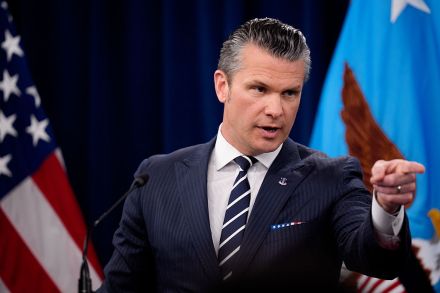
Pete Hegseth has declared war on 'fat generals' and DEI in the US army - but why have standards slipped? Chris Caldwell joins Freddy Gray to discuss why the current administration feels so passionately about forcing a 'major cultural shift' in the military, plus the legacies of Bill Clinton's 'don't ask, don't tell' policy and Joe Biden's acceptance of transgender troops. They also talk about the differences between America's 'Marshal spirit' and British 'obsession' with World War Two, and why one country is more deferential to their veterans than the other.

The bully doctrine

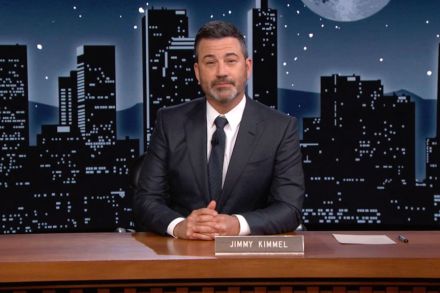
When the suspended late-night comic Jimmy Kimmel got his show back in late September, he did not apologize for the callous remark that briefly drove him off the air. Kimmel had accused Donald Trump and his followers of harboring and inciting the man who assassinated the activist Charlie Kirk, a beloved friend to many in Trump’s circle. This brought threats from one of Trump’s communications officials, then boycotts by two major station operators and finally Disney’s suspension of Kimmel. On his return, the comedian cracked a joke about Trump: “I don’t like bullies,” he said. “I played the clarinet in high school.” Weird thing to say. With tempers running so high, why would an impenitent enemy settle for calling Trump a “bully?” Why not call him a censor? A dictator?

bully

Liberalism is a lost cause

The worst book title of the modern age actually belongs to a superb work: The Strange Non-Death of Neoliberalism, which the English sociologist Colin Crouch wrote in 2011. The title was meant to play off the historian George Dangerfield’s 1935 book about the politics of the United Kingdom before World War One, The Strange Death of Liberal England. Alas, after almost a century, not many people remember Dangerfield. A larger problem is that it is hard to say what liberalism is, neo- or paleo-, dead or alive. In Europe, it mostly means the free market. In the United States, it mostly means various movements for social betterment pushed by those skeptical of the free market. Liberalism thus comes to mean every political tendency and its opposite.

liberalism

In the age of AI, humans must keep learning

This year, colleges stopped teaching students to write. As artificial intelligence chatbots allow students to generate unique essays that can’t easily be vetted for plagiarism, professors have felt the need to replace essay assignments with written examinations in closed rooms. It’s a considerably shrunken version of the kind of university education that was on offer 75 years ago. In June, a study from MIT showed steadily waning brain engagement and originality as student essayists used AI more. The college business model is in trouble: $75,000 for a year’s worth of diversity, equity and inclusion nonsense already struck parents as a bit steep. But at least the kids were being taught something. The new limitations AI places on instruction may do a lot of colleges in.

Why everyone is talking about Bill Belichick

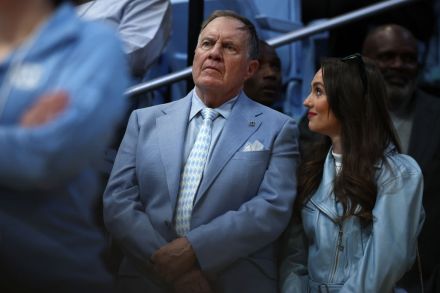
In early May, the 73-year-old former New England Patriots coach Bill Belichick published The Art of Winning, an autobiography of sorts, laying out the principles that made him the greatest coach in the history of professional football. It’s the book fans have been waiting to read for 20 years. Yet hardly anyone noticed, not even people thrilled at the prospect of Belichick’s move to the University of North Carolina next fall – his first crack at coaching college ball. People are distracted by his relationship with a 24-year-old beauty queen: two-time Miss Maine finalist Jordon Hudson. You can see why. Forty-nine years is an attention-grabbing age difference and Hudson is a force in her own right.

Belichick

The real battle for Europe

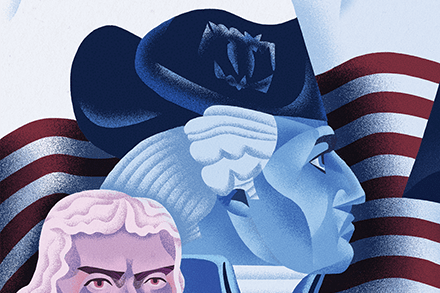
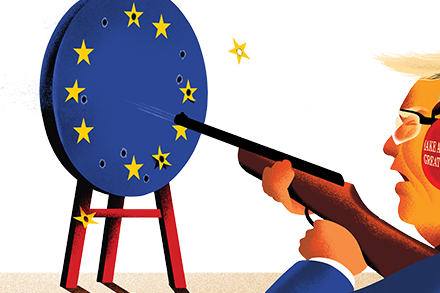
Donald Trump hates Europe – that suspicion had grown so widespread by mid-April that J.D. Vance was moved to declare in an interview: “I love Europe.” Even its people, he claims. Of course, Americans have taken sides in European rivalries from the outset: Thomas Jefferson was a France man after the French Revolution, while John Adams preferred England. FDR preferred Pétain, while Eisenhower preferred de Gaulle. But hate Europe outright? The idea is absurd. Though our ancestors are not 100 percent European, our country is. You can imagine President Trump calling for a Wienerschnitzel and a tub of mayonnaise more easily than you can imagine him calling for a bowl of hủ tiều nam vang and a bottle of nưởc mắm.

Europe

How DEI destroyed itself

Those who wonder why more Americans haven’t risen up in rebellion against the Trump administration’s assault on affirmative action, its gutting of university departments, its violation of the neutrality of the American legal profession, should keep in mind the epigraph from the 20th-century philosopher Will Durant that appears in the opening moments of Mel Gibson’s 2006 movie Apocalypto: “A great civilization is not conquered from without until it has destroyed itself from within.” As he promised to do, Donald Trump is dismantling large parts of the government he conquered at the ballot box last November. You don’t have to approve. Roughly half of Americans do not. But the regime he is undoing has yielded diminishing returns for most of this century.

DEI market

What’s in a rename?

As insane as some of Donald Trump’s policy proposals first appear, many acquire a certain logic on closer examination. Greenland, with only 56,000 people, has mineral wealth as essential to the weaponry of the twenty-first century as South Africa’s uranium was to that of the twentieth. The place really may require exceptional treatment, as Trump suggests. Meanwhile, the US Agency for International Development actually did drift so far into propaganda and election interference that zeroing out its budget came to seem sensible. But there are other policies on which the halo of idiocy still burns as bright as it did on the day the President first proposed them. Chief among these is the executive order renaming the Gulf of Mexico as the “Gulf of America.

renaming

Christopher Caldwell, Gus Carter, Ruaridh Nicoll, Tanya Gold, and Books of the Year I

From our UK edition

34 min listen

On this week’s Spectator Out Loud: Christopher Caldwell asks what a Trump victory could mean for Ukraine (1:07); Gus Carter argues that leaving the ECHR won’t fix Britain’s immigration system (8:29); Ruaridh Nicoll reads his letter from Havana (18:04); Tanya Gold provides her notes on toffee apples (23:51); and a selection of our books of the year from Jonathan Sumption, Hadley Freeman, Mark Mason, Christopher Howse, Sam Leith and Frances Wilson (27:08).  Produced and presented by Patrick Gibbons.

How quickly would Trump wash his hands of Ukraine?

From our UK edition

For American politicians, all wars are two-front wars. There is a hot battlefield somewhere in the Middle East or the South China Sea, and there’s a political battlefield in Washington, D.C. The domestic contest is decisive. The same goes for Europe. With Joe Biden riding into the sunset and the presidential campaign drawing to a close, American interest in Ukraine is winding down, too. Europeans talking tough about ‘standing up’ to Russia had better be prepared to do so on their own. The next president will find the domestic pressure to scale back involvement in Ukraine irresistible Donald Trump’s campaign message, muddled though it is, bodes ill for the Ukrainian war effort. His patience with this war would not extend 24 hours into his presidency, he warns. For J.D.