Features

The Queen’s speech can’t repeal the Law of Unintended Consequences

Last week, the European Commission voted to ban three pesticides which are said to harm bees. Everyone loves bees, so perhaps we should all be rejoicing? Well, I’m afraid my reaction was not joy, but to think: here we go again, this is bound to mean more dead bees. It’s inevitable: whether it’s a ban, an order or a reform, it doesn’t matter. When governments act they almost always forget the golden rule of public policy: the Law of Unintended -Consequences. And guess what? Just a few days after the vote, scientists are pointing out that the ban will mean farmers using older chemicals that are even more harmful to bees. For good measure, the alternative pesticides are more expensive to use and not as good at protecting crops.

The not-so-great Gatsby

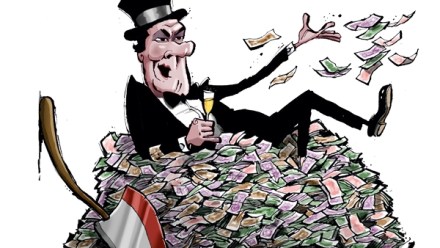
You do not need to have read the book or even seen a film adaptation to feel a thrill at the word ‘Gatsby’. More than a novel, a film or a character, ‘Gatsby’ is an aspiration. The golden age of jazz, cocktails and evening dress, F. Scott Fitzgerald’s novel is one of those works which has been subsumed and overtaken by its own myth. Such is The Great Gatsby’s enduring glamour that even the release of trailers for the latest film version (starring Leonardo di Caprio and Carey Mulligan) made news. You can see why. The film promises everything: beautiful people, luxurious locations and great clothes.

A visit to Bulgaria with Nigel Farage

One Sunday evening, while I was trying to avoid ironing my shirts, it occurred to me that it would be a good idea to take Nigel Farage to Bulgaria or Romania. The Ukip leader is convinced that hordes of people from these countries are poised to pour into Britain when the rules are relaxed next year, so why not go there with him to see if he’s right? A few weeks later, I put my proposal to him. ‘But nobody will come here from Romania,’ said Nigel. ‘They’ve eaten all the transport.’ So we went to Bulgaria. ‘I am getting lots of funny looks,’ observed the scourge of open-door immigration as we walked past scores of wide-eyed Bulgarians settling down on the plane to Sofia.

We must save the bread-and-butter letter from extinction

When my parents received a thank-you letter from a good friend recently, we all read it with (I’m afraid) not affectionate pleasure but a rising sense of indignation. The trouble with the letter was its extreme banality. It had been a lovely party, wrote the friend, the food delicious and the company great. The nerve, we all thought. He must think we’re mindless, to send us such a string of clichés. The writer must have felt a weight lift from his shoulders as he dropped his note into the postbox, but the truth was it would have been better had he never written at all. Platitudes by post are not worth the stamp. So why did he bother? Why do any of us bother any more?

Ukip vs the world

Ukip hope that this week’s county council elections are just the fireworks display before the big bang. In 2014 they think they can blow open British politics by winning a nationwide election. If they can succeed in doing that, they would almost certainly force Labour into matching the Tories’ pledge to hold a referendum on the EU after the next general election. This would guarantee the public its first vote on Britain’s EU membership in 40 years. The success of Ukip at making inroads during this campaign has caused some unease in Tory ranks. But a Ukip victory in the European elections a year before a general election would throw the Tories into a proper panic. Legions of backbenchers would demand that David Cameron brings forward the referendum on EU membership.

The Free Syrian Army is being taken over by groups of jihadist thugs

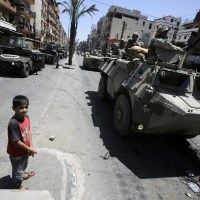
Ghadi had spent the past two years on the run from the Syrian regime but it was the rebels fighting against the government, the so-called Free Syrian Army (FSA) who finally caused him to abandon the revolution and flee Damascus. He had made the mistake of speaking out against one of the big FSA brigades running the Yarmouk district of the capital. ‘They are thieves and gangsters,’ he told me. ‘One Facebook post about what they’re doing will get you killed.’ I met Ghadi in a Beirut café, after he had made the long trek over the mountains from Syria to Beirut. Other activists joined us, all bitterly disillusioned by the corruption, looting and kidnapping that has consumed the uprising.

Why Russia’s diplomats should learn swimming-pool etiquette

The first couple of evenings there was just me and a middle-aged couple swimming decorously up and down. On the third day it changed. There were three more people, spread out at the shallow end. You would not have thought that an extra three people in a decent-sized pool could have caused such irritation and havoc. They contrived to occupy an inordinate amount of space and move around in a way that caused maximum disruption. Sometimes they swam widths; sometimes diagonals. They would stop and change direction without warning. Sometimes they floated with their toes under the rail, or disappeared under water and surfaced far too close for comfort. And when they swam, they swam splashily, in a clumsy, improvised way. The two other length-swimmers generally left before I did.

Investment special: Confessions of a stock picker

My name’s Freddy and I’m an online gambling addict. The problem started a few years ago when I opened an account on Betfair.com. At first it was small bets on football games, maybe the odd greyhound. A fiver here, a tenner there. Click, click, click. It was fun. Pretty soon, however, the hobby had developed into a minor obsession. I moved on to the harder stuff: cricket, tennis, even X Factor results. I had some wins but more losses: £20; £30; oops, there goes a hundred. Click, click, click. Then I downloaded the Betfair app onto my phone. Tap, tap, tap. I realised things had gone too far when I had almost all my savings on Andy Murray to win a quarter-final somewhere. He did, happily. But I got short odds — and it was Andy Murray, for goodness sake.

Investment special: The case for gold

Few assets are more misunderstood than gold. I might even refine that statement — if you’ll pardon the pun — and say that few assets are more misunderstood than money. Gold happens to be both. Technically, of course, we are constrained by government edict to use pounds sterling for the payment of our taxes and debts. My take on this dismal state of affairs, but also my optimism, can best be summarised in the title of Nathan Lewis’s recent book, Gold: The Once and Future Money. Economists give money three attributes. It should be a unit of account (we can price things in it). It should be a medium of exchange — which avoids the inconvenience of barter.

Investment special: How Shinzo Abe has revived Japan

Thank goodness for Shinzo Abe. Back in 2007, I wrote here that ‘over the next two to five years Japan will turn out to be one of the best investments UK-based investors can make’. By the middle of 2012, nearly five years on, that wasn’t looking like much of a prediction. Then prime minister Abe appeared on the scene. Since his election in November the yen has fallen 20 per cent against the dollar and the Japanese stock market has risen not far off 50 per cent. Phew. So what’s so great about Mr Abe? The short answer is that he has promised to do something about the Japanese economy after two decades of slow growth and semi-deflation, and — crucially — everyone believes him. He has what he calls a ‘three arrow’ strategy for change.

The tyranny of the cycle track

If Joni Mitchell were writing her song ‘Big Yellow Taxi’ today, about the ruination of the natural world by the march of modernity, the lyrics might run something like this: ‘They paved paradise, put up a cycling route.’ Not content with demanding cycling lanes through our towns and cities, the cycling lobby — by which I don’t mean old maids bicycling to communion, I mean the Lycra brigade — are starting to turn the countryside into a surface on which they can pedal themselves into an endorphin-rich sweat as well, it seems. The tarmacking of a six-mile track through unspoilt Warwickshire countryside near my parents’ home is the latest evidence of this. The Kenilworth Greenway, as it is now known, was a disused railway line before.

What it’s like to escape from Colditz

Colditz: Here I am, stuck in the same ventilation shaft that Pat Reid used to escape through just over 70 years ago. It’s a tiny letterbox-shaped hole, about three feet in length, one of the few natural holes through the castle’s monstrously thick outer walls. Captain Pat Reid and his fellow escapers had to strip off naked in order to shimmy through. It’s a cold day and even unclothed I’m far too well-fed to get through the gap, though Steffi, our well-informed guide, tells us ‘two English boys managed it last year, though you have to go through on your back, otherwise your knees get stuck’.

My battle with Britain’s mean, ineffective immigration system

When I first came to this country nearly a decade ago, Britain wanted immigrants like me. Back then you could get a visa just for being creative. It was called the ‘Artist, Writer, Composer Visa’ — a Blairite flight of fancy if there ever was one — and all you had to do was fill out a form proving that you’d made a name for yourself in your country of origin in one of those three disciplines. The application, as I recall, made a point of including conceptual artists and sculptors. I’d published a novel in Canada, so I was in. It was that easy. Thinking about it now makes me want to weep. Back then, Britain was more upbeat. There were jobs in the media and journalists still had expense accounts.

The Church of England needs a compromise on gay marriage. Here it is

It is a wearyingly obvious observation, but the Church of England remains crippled by the gay crisis. It is locked in disastrous self-opposition, alienated from its largely liberal nature. Maybe the new Archbishop of Canterbury, Justin Welby, has a secret plan that will break the deadlock: there is no sign of it yet. The advent of gay marriage has made the situation look even more hopeless. It entrenches the church in its official conservatism, and it further radicalises the liberals. A few weeks ago the church issued a report clarifying its opposition to gay marriage, in which it ruled out the blessing of gay partnerships. This was not a hopeful move: it ought to be keeping these issues separate.

Why France’s gay marriage debate has started to look like a revolution

Paris: Revolutions are often sparked by an unexpected shock to an already weakened regime. As commentators in France remark not only on the crisis engulfing François Hollande’s government but also on the apparent death-rattle of the country’s entire political system, it could be that his flagship policy of legalising gay marriage — or rather, the gigantic public reaction against it, unique in Europe — will be the last straw that breaks the Fifth -Republic’s back. Opposition to the bill has electrified the middle classes, the young and much of provincial France. On Sunday 24 March, in the freezing cold, the 4km stretch from the Arche de la Défense to the Arc de Triomphe was full of people protesting against the bill.

Exclusive: the Kremlin’s secret Margaret Thatcher files

‘I like Mr Gorbachev. We can do business together.’ This famous endorsement of the Soviet leader, from Mrs Thatcher, convinced the world that he was a fundamentally different figure from his predecessors. But did she really see in him a kindred spirit? In her memoirs Margaret Thatcher was equally generous about the Soviet leader — magnanimity in victory perhaps. The official Kremlin records, which preserve almost every word the two leaders said to each other, paint a very different picture. The Soviets, like the Nazis, were meticulous note-keepers, and the notes I have seen (and had the chance to copy) show the true nature of the Thatcher–Gorby relationship.

The wind turbine that could ruin Norfolk

Want to see a beautiful corner of old England? Come to north Norfolk, its gentle landscape dotted with houses, halls and cottages built from flint and clay dug from north Norfolk soil. Visit Baconsthorpe Castle, one of the most magical places in Britain, down a lane, up a track, round a corner and in a time warp. Walk, cycle or potter along winding country lanes under grand skies that have inspired poets and painters for centuries. Come, but come now — because, barring a miracle, north Norfolk will very soon be wrecked beyond recognition.

Africa’s election aid fiasco

The development industry is as fashion-prone as any other. Fads come and go. There are a few giveaways when it comes to spotting them. Deceptive simplicity is one indication. The idea should have a silver-bullet quality, promising to cut through complexity to the nub of a problem. Even better, it should be a notion that can be rolled out across not just a country, but a region. Covering the Kenyan elections, which climaxed with the inauguration last week of Uhuru Kenyatta as the country’s fourth president, I suddenly realised I was watching a fad hitting its stride: the techno-election as democratic panacea. We’ll see it again in Mali’s elections this summer. Like most of these trends, it is premised on the best of intentions.