Theodore Dalrymple

The folly of psychology

From our UK edition

A young Chinese girl, at school in an English-speaking country, approached me after I gave a talk at a conference and asked for my advice about what she should study. I knew nothing of her, except that she was pretty, with beautiful dark eyes, and was almost certainly of high intelligence. I was touched by her naive assumption that I would answer benevolently and in her best interests. It suggested that she had not yet encountered much of human malignity. ‘What are you interested in?’ I asked. ‘I was thinking of history and psychology.’ ‘Ah,’ I said, ‘definitely not psychology, at all costs not psychology.’ My answer emerged spontaneously, without any reflection – too spontaneously, in fact.

In defence of repression

From our UK edition

There is a modern superstition that for every terrible experience suffered there is an equal and opposite psychological technique that, like an antibiotic in a case of infection, can overcome or dissolve away the distress it caused or continues to cause. This superstition is not only false and shallow but demeaning and even insulting. It denies the depths of suffering that the most terrible events can cause, as well as the heroism and fortitude that people can display in overcoming that suffering. Fortitude can even be sometimes dismissed as ‘repression’. Not everyone, of course, is heroic or displays great fortitude. People can undoubtedly go to pieces under the effect of suffering: and what each person can bear depends upon many factors, both personal and impersonal.

There’s nothing ironic about civilisation

From our UK edition

A recent photograph on a BBC website startled me. It was of hundreds of books thrown out of a former library in Croydon on to the ground.  It startled me because I had taken an almost identical photograph 34 years before – in Liberia. The books in the University of Liberia had been pulled from their shelves and scattered in similar fashion to those in Croydon. Of course, the books in Liberia were at a higher intellectual level. The capital city of Monrovia was in those days cut off from the rest of the country by the forces of Charles Taylor, and the only way to arrive was by the Steel Trader, a ship owned by a redoubtable old Africa hand, Captain Monty Jones, responsible, at his risk and profit, for revictualling the besieged city.

Would Richard III have claimed PIP?

From our UK edition

Looking at the list breaking down the reasons for which people are granted Personal Independence Payments (PIPSs), up to £180 a week to help them with their daily living and mobility, one cannot help but be reminded of the London Bills of Mortality of the seventeenth century, when some people died ‘frighted’, or of ‘grief’, or ‘lethargy.’ Descanting on his own deformity does nothing to reduce Richard’s unease Of course, our nosology – our classification of disease – is far more scientific than it was nearly four hundred years ago, except perhaps in one important respect: that of psychological difficulties. This is important because such difficulties are responsible for by far the largest category of claims for PIPs.

Why we need migrants

From our UK edition

This is perhaps not the best moment in history to extol migrants from the developing world or Eastern Europe, but the fact remains that without them my life, and I suspect the life of many other people in the West, would be much poorer and more constricted than it is. A migrant is not just a migrant, of course. Indeed, to speak of migrants in general is to deny them agency or even characteristics of their own, to assume that they are just units and that their fate depends only on how the receiving country receives them and not at all on their own motives, efforts or attributes, including their cultural presuppositions. It takes two to integrate, after all. But I want to point to what seems to me a curious paradox.

Britain has become a pioneer in Artificial Unintelligence

From our UK edition

In some countries, the study and pursuit of Artificial Intelligence (AI) proceeds apace, while in this country the practice of Artificial Unintelligence (AU) becomes ever more widespread. AU is the means by which people of perfectly adequate natural intelligence are transformed by policies, procedures and protocols into animate but inflexible cogs. They speak and behave, but do not think or decide. They are always only carrying out orders and stick to them through thick and thin. AU is much in evidence in the organisation of the NHS. Its great advantage, from a certain point of view, is the multiplication of job opportunities for bureaucrats that it necessitates.

The real problem with mental health benefits

From our UK edition

A contributory factor to the continuing impoverishment of Britain is psychiatric diagnosis – or rather, the superstitious official belief in it. More than two thirds of Incapacity Benefit claims over the space of two years were for supposed psychiatric conditions. Psychiatric diagnosis has produced more invalids than the first world war. It is the foundry in which the mind-forg’d manacles are produced – mass-produced, in fact. The most common diagnoses – of depression and anxiety, for example – are completely dependent on what the patient tells the doctor. The doctor’s default position, quite rightly, is to believe what his patients tell him. Failure to do this can lead to disaster, besides which he has little time to investigate further.

Britain is not addicted to punishing criminals

From our UK edition

Mr Timpson, the new prisons minister, is the head of a company that employs about 600 ex-prisoners, and this is an admirable and humane social service. But good as this experience is, it is insufficient to decide on public policy as a whole.  In a recent interview, Mr Timpson said that there were far too many people in prison in Britain, that at least a third of prisoners should not be in prison, and that Britain had a Victorian obsession with punishment. It would probably be more true to say that Britain has an obsession with absence or mildness of punishment.  It would probably be more true to say that Britain has an obsession with absence or mildness of punishment.

It’s time to eliminate the concept of ‘mental health’

From our UK edition

The concept of mental health is a hypochondriac’s, narcissist’s, shirker’s and social security fraud’s charter: for who can prove that someone does not so feel depressed, anxious, or grief-stricken that he is unable to work? Who can distinguish between can’t, won’t and would rather not? Unfortunately, mental health has come to mean any deviance from a state of perfect equanimity and satisfaction Fragile mental health, and especially mental health issues, are said to be preventing large numbers of young Britons from working, with people in their early twenties now more likely to be out of work than people in their early forties as a result. One even hears people nowadays say that ‘I’ve got mental health’ – not meaning something positive but negative.

Are we prepared for the end of obesity?

From our UK edition

Sixty years ago, my biology teacher told me (so it must have been true) that after the war, some Americans were so delighted that the restrictions on food had been lifted that they ate capsules containing a tape worm so that they could eat to their heart’s content without getting fat. This, of course, revolted me, as it was intended to. I never forgot what she said.  Twenty years later, I was to see the future of the world, at least as far as obesity and type-II diabetes were concerned, on the island of Nauru. There, the inhabitants had suddenly become very rich, thanks to the mining of phosphate rock, and went from a strenuous subsistence to wealthy indolence in a matter of years.

Why are we letting dangerous criminals roam the streets?

From our UK edition

If you repeatedly ask someone to do something that is inherently, and obviously, impossible, and then blame him for not having done it, you might be suspected of ulterior motives, such as a desire to hide something such as your own incompetence.  And so it is with the criticism constantly levelled at the Probation Service, which is accused of not keeping the public safe. It does not do so because it cannot do so. Blaming it diverts attention from the defects of policing and criminal justice policy now going back over decades.

How we fell for antidepressants

From our UK edition

The French novelist, Michel Houellebecq, with his accustomed acuity about modern culture, titled his last novel but one Serotonin. By then, of course, this famous neurochemical had become the key to a perfect human existence, too little or too much of it resulting in all the little problems that continue to plague mankind. If only we could get the chemical balance in our brains right, all would be well, life would return to its normal bliss! After the commercialisation of Prozac, people started talking about the chemical balance in their brains in much the same way as they talked about the ingredients of a recipe. As Peter D.

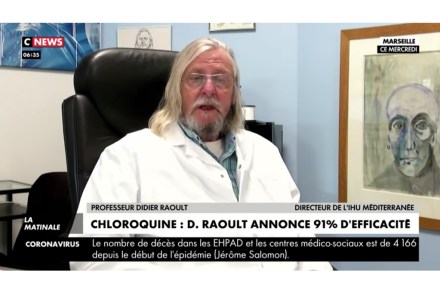
Didier Raoult — leader of the hydroxychloroquine cult

Professors of medicine do not usually look as if they have emerged from the pages of Asterix, or alternatively as if they were the drummer of a 1960s rock band just emerged from drug rehabilitation for the 17th time: but that is how Prof Didier Raoult, recently elevated to the rank of the most famous infectious disease doctor in the world, looks. If you type 'Didier' in your search engine, up comes Raoult, before even the soccer player, 'Drogba'. When infectious disease doctors are more famous than footballers, you know that an epidemic is serious.  Raoult says that he adopted his appearance to irritate his colleagues, which is another specialization of his, one at which he is undoubtedly very good.

didier raoult hydroxychloroquine

Fear, guilt and the virus

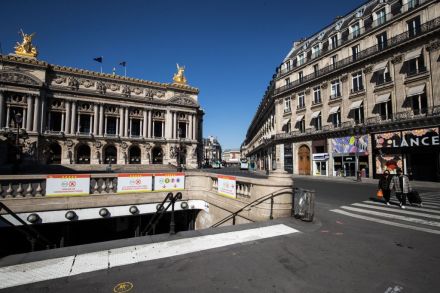
Fear and the frisson of fear are two very different emotions. The one is horrible and the other delightful or at least often sought after.Who, after all, does not enjoy a good fright in a cinema or while reading a thriller? When I arrived in Paris just before the lockdown was announced and one was no longer allowed out of the house without a laissez-passer (signed by oneself), all the places of public resort such as bars, restaurants and cinemas, had already been closed: but the atmosphere was still one of frisson of fear rather than of fear itself.

virus

Let’s abolish parole

From our UK edition

The furore over the parole granted to John Worboys, the rapist taxi driver, misses the point entirely — that the system of parole is disgraceful in theory and irredeemably unwork-able in practice. The only thing that it is good for is the employment of large numbers of officials engaged in pointless or fatuous tasks who might other-wise be unemployed. The system is predicated on the ability of experts to predict the future conduct of convicted prisoners. Will they or will they not repeat their crimes if let out early? It is true that, using a few simple statistical measures, such as numbers of past convictions and age, you can predict this with an accuracy somewhat better than chance. But all further efforts to refine prediction actually reduce, not increase, accuracy.

Love rats

From our UK edition

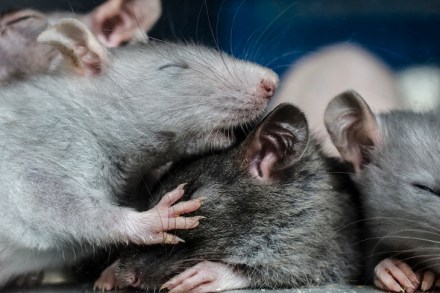
 Paris The rat is an intelligent, flexible and determined creature that's difficult to eliminate A rat’s not called a rat for nothing, and — as we are repeatedly told — we are never very far from one. Certainly not in Paris, where I sit, which has seen a great increase in their number recently. There’s also been a rise in the number of people living on the streets, and perhaps the two are in some way connected. On the other hand, the increase in the rat population may be due to the ban on the use of certain kinds of rat poison, as when arsenic rat poison was banned. Anyhow, the Ville de Paris has undertaken not to rid the city of rats altogether — that would be utopian — but to reduce their numbers.

Liberté, egalité, supériorité

From our UK edition

The French election, of unprecedented interest, hazard and potential for violence, has been largely about who is to blame. Blame for what, exactly? For the country’s chronic malaise. But is it the fault of the bankers, the bosses, the bureaucracy, or the immigrants? Quite often the British press gives the impression that France is in some kind of deplorable condition that we must at all costs avoid, a hybrid, perhaps, of economic Guinea-Bissau and ideological North Korea. In part, this is because the French themselves so strongly lament the state of their country; I have a whole shelf of books (by no means exhaustive) in which French authors predict its imminent collapse. Like any nation at any time in history, France has its problems.

British expats in the EU fear a stronger euro far more than they fear Brexit

From our UK edition

Whenever I return to England from my home in France I am struck at once by the number of grossly fat people of beached-whale proportions, by the almost militant vulgarity of much of the population, and by the shabbiness of the infrastructure. This suggests to me that our deeper problems are unrelated to our membership of the EU, and that we have neither the will nor the ability to solve them. This is not to say, however, that our membership serves our national interest. Brexit is possible, though I confess that I’ll believe it when I see it, given the integrity of our political class. Would Brexit affect my position in France and that of scores of thousands of other Britons living in the EU?

How we drive our children mad

From our UK edition

Mental health is a slippery concept at best and according to the annual prevalence rates given in the latest Diagnostic and Statistical Manual of the American Psychiatric Association, people in north America and Europe suffer from an average of about two-and-a-half psychiatric conditions a year. This suggests that either we are all mad or the American Psychiatric Association is mad (though with a shrewd eye to the main chance). It is hardly surprising then, since the child is father to the adult, that at least 10 per cent of children in Britain suffer from ‘diagnosable mental disorders’, to use a phrase much favoured in the press. Given the way that mental disorders are diagnosed, more or less by checklist, I am surprised that it is so few.

Don’t tax sugar – it doesn’t make you fat. Gluttony does

From our UK edition

If there is one characteristic that accounts for the deep unattractiveness of the modern British, it is their lack of self-control. It is not merely that they lack such self-control as they scream their obscenities in the street, eat everywhere they go, and leave litter behind them: it is that they are actively opposed to self-control on grounds of health and safety. They are convinced that self-control is the enemy of self-expression, without which their existences would be poisoned as if by an unopened abscess. Therefore the notion, increasingly propounded in the press and elsewhere, that sugar is an addictive substance will be music to their ears — or rather junk food to their stomachs. Not only is self-control bad for you, it has been proved (by science) to be impossible.