Features

Move aside, Boris

When Boris Johnson compared Theresa May’s Brexit plan to wrapping a suicide vest around Britain’s constitution, the harshest response came from a fellow Tory MP, Tom Tugendhat, who tweeted: ‘A suicide bomber murdered many in the courtyard of my office in Helmand. The carnage was disgusting, limbs and flesh hanging from trees and bushes. Brave men who stopped him killing me and others died in horrific pain. Some need to grow up. Comparing the PM to that isn’t funny.’ The response was a reminder of how high feelings are running in the Conservative party — and that Tugendhat is not one to pull his punches.

All battle, no plan

It looks as if the Conservative party is already at war. Fifty or so Brexiteer Tory MPs openly meet to discuss deposing the Prime Minister —  yet they have no strategy and (at present) no chance of defeating her in a confidence vote. On Twitter, Tory backbenchers and even ministers can be found threatening to destroy each other. This isn’t just about personality. In the last few months, the question of what Britain’s relationship with the EU should be and who should be Prime Minister have fused together — so the most divisive issue in British post-war politics has been combined with a drawn-out leader-ship contest. The Prime Minister has produced a plan: the Chequers proposal.

The Tiger trap

There is a Tiger on the loose. It is stalking our high streets. It is prowling our train stations. It has cubs in every shopping mall. It is the Tiger of Tat. And when it roars, it roars: BUY. Tiger, a home accessories chain which opened its first UK shop in 2005, is an emporium of the ephemeral, a grand bazaar of the banal. Here is everything you never needed: oddments and sodments, party bits and barbecue bobs, plastic flotsam and cardboard jetsam. Come buy, come buy! Whoopee cushions and avocado stress-balls, spangled hula hoops and fingerless yoga mittens, cheerleaders’ pompoms and sequinned bow ties. There are walls of coloured playground ‘slime’, tubs of gunk in lurid colours. Everything is something else. A Sellotape dispenser in the shape of a frog.

‘People don’t care which weapon kills them’

 Beirut 'The planes have already hit the hospitals', said an aid worker. 'They always do that first' The customs man wore a white linen suit. He had a large moustache. His ample belly touched the edge of his desk. The scent of cardamom wafted over as a tiny cup of coffee was placed in front of him. I was not offered one. This was Beirut airport in the summer of 2011. We were travelling on to Syria, next door, where a civil war was beginning. The customs man lazily flicked through my passport and took another sip of coffee. ‘Everything will be seized,’ he announced with satisfaction. Television cameras, satellite phones and flak jackets were taken away.

The Eurosceptic Queen

There has been much inconclusive speculation on the Queen’s views on Brexit. In 2016, the Sun asserted that she was in favour (later overruled by Ipso as ‘significantly misleading’). Last year, pro-EU commentators claimed that the blue hat with yellow stars she wore to open Parliament showed coded support for Remain. For now, we are none the wiser. What we do know, however, is that the monarch must be finding things a good deal easier on the way out than on the way in. Rewind to 1972 and a damp May evening at the Palace of Versailles.

But it wasn’t just the crash

We often hear it said that the financial crash created populism. It is now a familiar story: that the Lehman Brothers collapse and the Great Recession exposed a shocking and colossal failure of economic stewardship in general. Ordinary families suffered, while bankers were bailed out. This led to people losing confidence in mainstream parties and established institutions. And this, in turn, fuelled the populist upsurge that upended American and British politics — with Donald Trump and Brexit being two of the results. While this account is not wrong, I now believe that it represents only a portion of the truth. There are many other cultural and demographic trends at work. Take, for example, the way in which most cities are now thriving but most smaller towns are not.

Macron vs Salvini

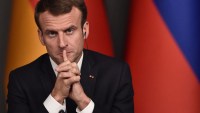
The first sign that Matteo Salvini was destined to do battle with Emmanuel Macron came in June, a few days after he was named Italy’s interior minister. Salvini, whose party, the League, wants to cut immigration drastically, announced that a German-registered rescue ship carrying 629 aspiring migrants from Africa would not be allowed to dock in Sicily. Macron reacted with disgust. ‘The policy of the Italian government,’ a spokesman for his political movement announced, ‘is nauseating.’ Salvini responded that if the French wanted to show their open--heartedness, they might make good on their unfulfilled pledge to feed and shelter some of the 100,000 African migrants Italy had until recently been receiving each year.

The Pope’s cardinal errors

The Catholic Church is confronting a series of interconnected scandals so shameful that its very survival is threatened. Pope Francis himself is accused of covering up the activities of one of the nastiest sexual predators ever to wear a cardinal’s hat: his close ally Theodore McCarrick, the retired Archbishop of Washington, DC. Popes John Paul II and Benedict XVI are also implicated; they did nothing, or almost nothing, while Mc-Carrick was seducing every seminarian he could get his hands on. (‘Hide the pretty ones!’ they used to say when he visited seminaries.) Yet powerful cardinals kept quiet and are now suspected of lying their heads off after Mc--Carrick’s crimes were recently made public. McCarrick is the world’s only ex-cardinal.

On bended knee

Every so often sport bursts its banks, spills from its usual courses and goes flooding incontinently onto the news pages. This year we’ve already had Australian cricketers doing unspeakable things with sand-paper, Gareth Southgate’s World Cup waistcoat and the return of Serena Williams to Wimbledon a few months after an emergency caesarean. And now we have Colin Kaepernick. He is currently an unemployed quarterback of America’s National Football League. He famously — heroically if you like — refused to stand for the pre-game national anthem, in protest against social injustice and police treatment of black people. Many other footballers followed suit.

The world the crash made

With September marking a decade since the Lehman Brothers implosion, stand by for a slew of economic retrospectives. Any meaningful analysis, though, needs to get beyond historic balance sheets and plunging share price graphs — however dramatic the data. For the most significant impact of the biggest financial and economic upheaval since the Great Depression has been the growing loss of faith in western liberal capitalism. Politics has been upended by the 2008 crisis — doing much to explain Trump, Corbyn and the broader shift away from centrist parties towards extremes. The demise of Lehmans, a once-impregnable investment bank, exposed a US financial sector riddled with chronic debts and fraud.

Bleak House

It takes seven years to know your way around Parliament. That’s what I was told when I arrived in the Commons press gallery seven years ago, but I am still none the wiser about how to get from the Snake Pit to the North Curtain Corridor, and have only recently discovered the location of the Yellow Submarine. As a building, the Palace of Westminster is a confusing, contradictory rabbit warren of underground corridors, secret briefing rooms at the top of towers and rooms with strange names. The very fabric of the building is dysfunctional, with pieces of masonry falling onto cars, and mice creeping through kitchens.

Sweden ablaze

 Uppsala, Sweden When I dropped off my kids at school early last week, I noticed that -another parent’s car was covered in ash — it had been parked in a garage where arsonists had been at work, attacking scores of vehicles. His Volvo had got away: just. ‘My car can be cleaned,’ the father told me, ‘but how can I explain this to my young kids?’ As Sweden goes to the polls next weekend, its politicians face another conundrum: how do they explain all this to the country? I live in Uppsala, a leafy and prosperous university town north of Stockholm. Around Gothenburg, the attacks have been far more dramatic: in mid-August, 80 torched vehicles made the city’s normally dull boroughs seem more like Aleppo.

I’m pro-Boris, loathe jihadis and love Islam. Here’s why

When Muslims make headlines, it’s invariably for the wrong reasons. The fuss over Boris Johnson’s burka joke is a case in point: he was making an argument in defence of Muslims, but was instead condemned for attacking us. Why the confusion? Because of how little our faith is understood. Let’s start with the burka. Islam makes various demands of its followers, but — despite what you might think from the headlines — covering our faces isn’t one of them. Based on the media’s fascination with these strange and oppressive garments, you might wonder why any modern woman would ever choose Islam. So here’s my answer. I’m a London-born doctor, raised in a Muslim family and now working in America.

The people vs Brexit

The very best impressionists do not simply mimic the mannerisms, speech patterns and facial expressions of their targets — they also cleverly satirise the beliefs, character and political dispositions of those targets. Most of us would not remember Mike Yarwood with great fondness because he was quite unable to do any of that. It was enough for Mike simply to raise his shoulders and laugh when evoking Ted Heath; there was no depth to the performance, nothing which gnawed away at Heath’s petulance and obstinacy and insecurity. So we should be grateful for Rory Bremner, who has pulled off a superb impression of a smug, simpering, Remainer London luvvie. With great acuity, he ticked all the boxes.

The great British train wreck

A couple of weeks ago I met David Grime and Alan Noble, members of the Lakes Line Rail User Group, over a very good dinner in the Brown Horse pub in Winster in the heart of the Lake District. They had contacted me in despair at the collapse of services on their beloved ten-mile Windermere branch line. This once reliable and well-used service is now a shadow of its former self: characterised by cancellations, rampant overcrowding, bus replacement services and — sometimes — an absence of any trains at all. The trouble started following an inexplicable government decision to take the service away from TransPennine Express and give it to Northern, part of the much larger Arriva Trains. It wasn’t long before services started to deteriorate.

The kings of Soho

Christopher Howse has just written a book about Soho. He drank there regularly with Michael Heath, The Spectator’s cartoon editor, in the 1980s. Last week, in the editor’s office, they remembered a vanished world. MICHAEL HEATH: I introduced you to Soho. CHRISTOPHER HOWSE: Well, I don’t know if you’re entirely to blame for that. But you taught me a thing or two. HEATH: There were such things as groupies for cartoonists in those days. There were girls hanging round you in Fleet Street waiting for you to finish the drawings for the following day and then they’d go off with the cartoonists and have meals or go to various clubs. The cartoonists were wealthy, really, because it was cash in hand. You couldn’t get a cartoonist who was stable.

The impeachment trap

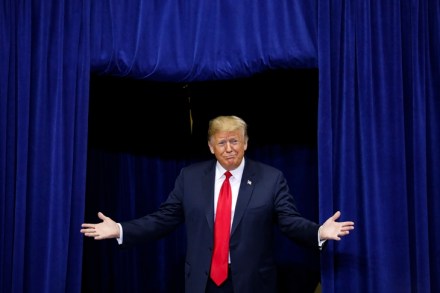
 Washington, DC No one knows who will prevail, but the 'hang 'em high' crowd seems to have an advantage The Democrats will face a dilemma if they win control of the House of Representatives in November’s midterm elections. Should they impeach President Trump over the Russia affair? Or should they impeach him over the Stormy Daniels porn-star payoff? Or should they impeach him over something else? There’s no doubt the party’s base of voters is more than ready to stick it to Trump. A recent poll by Axios found that 79 per cent of Democrats believe Congress should begin impeachment proceedings. And that’s now. Imagine how they will feel if they are fired up by victory in November.