Features

The Javid manifesto

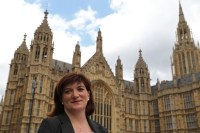
There’s an old joke that the most dangerous position in the Tory party is the favourite for the leadership. The frontrunner always ends up with a target on his back, which is why Sajid Javid should be feeling a little nervous right now. Theresa May survived a confidence vote but only after saying that she would resign before too long - so the hunt for a successor is on. He is Home Secretary, his fourth cabinet post. A poll of 700 Conservative councillors found they'd rather have him as leader than anyone else. He is also a former financier who made his name handling economic crises and is someone to whom MPs might conceivably turn if talks with Brussels fail and Britain looks set to crash out of the European Union.

Why are Americans so unhinged about Christmas?

The most obnoxious advert on American television this Christmas season features a thirtyish man telling his wife he ‘got us a little something’ at a holiday sale. He leads her out to the colossal driveway of their newly built modernist mansion to show her just what: two brand-new GMC pickup trucks, a boxy, blue one for him and an effeminate, red one for her. Anyone who has watched more than an hour of American TV over the past decade will know what comes next. She happens to like the blue ‘man’s’ one, leaving him to admit meekly that, well, he’s fond of red.

Brogues gallery

I spend most of my time drawing politicians, trying to work out what makes them distinctive. The eyes, the expression, their mood: it’s all about finding people’s peculiarities and accentuating them. When I started, I’d focus on the face. Everything else was an afterthought. It wasn’t until I came across a drawing by the Norwegian cartoonist Finn Graff – a cartoon of Helmut Kohl, I think – that I realised what I had been missing. How much you can tell from someone’s shoes. I didn’t discover this, so much as rediscover it. When I was a teenager, I worked in a shoe shop in my home town of Arendal, Norway. I used to challenge myself to identify the right shoe for a customer the moment they walked in.

The imitation game

Imagine looking at a photo of a stranger and feeling in response, quite naturally, the sort of happy affection you might feel towards a spouse. Well, it’s weird. In July this year, when Benedict Cumberbatch was filming Channel 4’s upcoming Brexit film (Brexit: The Uncivil War) a friend sent me some photos by text message, tabloid snaps from the set. Benedict plays my husband Dominic Cummings, director of the Leave campaign, and the shots were long-lens and hazy: Ben/Dom pushing his son on a swing; Ben/Dom kissing his wife. The real son-of-Dom and I were halfway through our Rice Krispies when the photos came through and I remember how taken aback I was. It’s not that they look alike. ‘We have different shaped heads,’ Cumberbatch tells me later.

Beyond Brexit | 13 December 2018

None of us can predict the potential fallout from Brexit, good and bad. What began as a vote of confidence in our institutions has shown them to be dangerously fallible. A country where people usually rub along together is now marked by a cultural and emotional rift. If Brexit does continue to dominate our politics for years, will it mean a reform of our institutions, or a battening down of the hatches by a beleaguered elite? Will the House of Lords, having alienated its natural defenders, at last be seriously reformed? Shall we try to restrain the dangerously capricious powers of prime ministers? Shall we empower local government? Both Brexiteers and Remainers will be in a rather militant mood.

My Christmas nightmares

Christmas in our family seems to guarantee tears and tantrums as well as jingle bells and jollity. Indeed, in my childhood, ‘feeling Christmassy’ meant feeling thoroughly overwrought or bad tempered, the antithesis of the ‘Christmas Spirit’. I think my father invented it when my mother, who was a terrible cook, spent all day making marmalade to give as Christmas presents and was then beside herself with anger when she burnt the lot. My earliest Christmas disaster was my first attempt at cake icing. I’d proudly come home from school with a Christmas cake. It was covered with smooth royal icing on which I’d painted the Three Kings — but I’d omitted the teaspoon of glycerine in the icing which would have stopped it drying to concrete.

Ever Trump

 Washington, DC Trump never sleeps, loyalists say - he spends every hour Making America Great Again Donald Trump derangement syndrome works both ways. It makes the President’s enemies hate him so much they go insane. It also affects Trump’s allies and supporters, who love him so much that they have become demented. Among Republicans in Washington, you still have elitist Never Trumpers, who loathe him with a pathological fury. You also have a growing number of insider loyalists who revere him so intensely that they’ve gone blind. They are Ever Trumpers. Ever Trumpers are specialists in doublespeak. On the one hand, they talk about what a triumphant hero the President is.

‘Someone had to stand up’

Saif ul-Malook greets me in the hallway of his daughter’s home. Pakistani hospitality dictates that a guest should not go hungry, so there are plates of samosas, kebabs and biscuits. I am also of Pakistani heritage, so know that etiquette dictates that I must politely refuse a few times — or until I can no longer ignore my rumbling stomach. Malook was flown out of Pakistan, because his life was in danger. Since leaving the country, he has kept a low profile in his daughter’s home, a modest detached house in a cul-de-sac off a busy road in a UK city. He asks for the location not to be revealed. The reason his life is in danger is because Malook was a key figure in one of the most renowned cases in recent times.

A life apart

Frank Field was given a standing ovation when he won The Spectator’s Parliamentarian of the Year award two weeks ago. Normally there’s polite applause, but he is the hero of the current clash between the Corbynistas and what used to be the Labour party. His local party in Birkenhead has threatened to deselect him so he plans to stand as an Independent next time, and he said in his acceptance speech: ‘If I’m successful in winning the seat again, then in some small way, as with Brexit, we will begin to change British politics.’ I met him in Portcullis House at the height of the Brexit furore when all the commentators were saying they had never known such cliffhanging times.

The Maduro diet

I am writing from my home, Barquisimeto, the fourth largest city in Venezuela, which was, not so long ago, the most prosperous country in Latin America. In the past four years, things here have changed — utterly. I am writing to explain how much has changed, and how quickly. I moved here as a girl in 1973 from San Cristobal in the Tachira region of the Andes, and I went on to become a university professor. My story was made possible by my country’s success. My mother, a widow who ironed laundry for a living, managed to send my three sisters and me to university. Like most Venezuelans bringing up children during the oil boom of the 1970s, she had an inbuilt sense of aspiration.

The meaning of time

The physicists Marc Warner and Emanuele Moscato met Professor Carlo Rovelli, author of the bestselling Seven Brief Lessons on Physics. Together they questioned him about his latest book, The Order of Time, which has been compared with the work of Stephen Hawking. Their conversation explains and explores the meaning of time, as it is and as we perceive it to be.   A theory of time  A practical reader of your book The Order of Time might wonder why we care about time, when it seems so obvious and so universal. Why would a physicist pay any attention to it? Nobody is obliged to be informed about the reality of the world, but it is a fact that time works differently to our common experience of it.

Look back in wonder

Ihad completely forgotten about the letter. It’s not that surprising, as I’d received it in February 1981. I was 18 and living with my parents in Northolt, west London. And for at least the past 25 years it had been in the garage in a box. Forgotten. That was until we decided something had to be done about the mess and had a good old sort out. My daughter found it and  asked: ‘Who’s this from, Dad?’ I knew who it was from the minute she handed it to me. It was from John Osborne, writer of Look Back in Anger. As a sixth- former I’d read the play and loved it. I saw myself in the character of Jimmy Porter, the original angry young man. I remember that I was terribly unhappy when I wrote to him — problems at school.

Paper chasers

Christmas books pages usually invite columnists to nominate their publishing event of the year. Well, here’s a corker: The Ties that Bind: Citizenship and Civic Engagement in the 21st Century, published by the House of Lords Citizenship and Civic Engagement committee. That obscure body has 12 members and takes itself seriously. The Ties that Bind was the fruit of hearings it held into ‘civic engagement through the prism of the civic journey each one of us who lives in Britain will undertake’. Its 168 luxuriant pages of red and black print, published ‘by the Authority of the House of Lords’, has nine chapters, bullet points, footnotes, boxes, appendices and a further wodge of evidence online.

What happens next?

Parliament is in deadlock over Brexit. So what can we expect in the coming days and weeks after the vote? These are the scenarios currently being war-gamed. May’s deal passes A political shock: Theresa May squeaks over the line after convincing Brexiteers that it was her deal or no Brexit — and Remainers that it was her deal or a no-deal Brexit. The DUP then rains on May’s parade. Seething over the backstop, it declares that the confidence and supply agreement is over for good. This scenario could involve delaying the initial vote in the hope this gives MPs time to come around. It passes on a second vote Theresa May’s deal fails to pass first time round by 50 votes.

Check your brags

Over the past 20 years, the old British trait of self-deprecation has been killed off. And in its place, boasting is booming. Last week, I was told by an 80-year-old Scottish businessman what a successful shipping tycoon he is, how wonderful his poems are, and why young women find him so attractive. Over a three-hour dinner, he never drew breath, never asked a question and only ever talked about his brilliant self. Tycoon types have always shown off, but now the habit has migrated down the generations and from men — the traditional show-offs — to women. I can no longer face seeing one old friend in her thirties, because every time I see her she says: ‘You know what? I’m bloody good at my job.

Yellow fever

I met a friend for lunch in Paris last Sunday. He and his wife had come up from the countryside for a weekend’s shopping. As we sat down, their nerves were still frayed from the previous day. It was, they told me, the most terrifying few hours of their lives. Trapped between the rioters and the police, they retreated to their hotel, where staff instructed them to stay in their room. The mob soon arrived and against a background noise of helicopters, police sirens, breaking glass and detonations, they tried unsuccessfully to force their way inside the hotel while singing an ode to the Révolution. It has been said that the gilets jaunes movement is to Emmanuel Macron what the miners’ strike was to Margaret Thatcher in the mid-1980s. Not in the slightest.

Let them buy Teslas! How Macron provoked an uprising

Emmanuel Macron is supposed to be the cleverest man in France but he has painted himself so completely into a corner that there’s no way out. Whether the gilets jaunes insurrection achieves its objectives or not, it has become his nemesis. As the yellow wave roils France, Macron is a diminished figure after a crunching fall to earth. Bastion of anti-populism, he has united 70 per cent of France against him. He did self-identify as Jupiter. Now, perhaps, he is looking like a sickly lame duck, albeit one for whom the word hauteur might have been invented. Instead of the confident leader, lecturing and preening on the global stage, he is barricaded in his palace, a sort of latter-day Marie Antoinette. French people can’t afford diesel? Let them buy Teslas.