Features

En garde!

‘It could be argued that getting out of the office to beat up some leftists is a good way to work up an appetite for lunch,’ one of France’s more cynical millionaires tells me, admiring Alexandre Benalla, 26, a recently fired security aide to President Emmanuel Macron. Benalla had rushed from his office at the Elysée Palace to brawl with members of La France Insoumise, the tattered remnants of the French left, who were demonstrating outside. Tally-ho! Right on. Except that you really are not allowed to do that, especially in the age of camera phones. And the more that comes out about this story, the weirder it becomes. What did Macron know and when did he know it? Who protected Benalla? Who leaked the story to Le Monde?

Brexit means Boris

A few months before he died in 2007, Bill Deedes asked if I would come to see him at his home in Kent and bring Boris Johnson along with me. I was writing a biography of Bill at the time, and I knew he was miserable because he had broken his hip and could no longer come up to London. Boris jumped at the idea and I remember our lunch as the last time I saw Bill exuberantly happy. Boris knew instinctively what a 93-year-old journalist who was struggling to write his weekly column needed, and filled him in hilariously on the London political and media gossip. The only slight awkwardness came when Bill stressed his admiration for David Cameron, and Boris’s impenetrable eyes momentarily turned just a little beady.

Forever stumped

‘There can be no summer in this land without cricket’, wrote Neville Cardus, whose rhapsodic vision of the game lies at the heart of its mythology. Hardly a week goes by without somebody borrowing a phrase or two from Cardus to emphasise what cricket means to England — or used to mean, for the modern landscape is very different. When England play their 1,000th Test match this week, against India at Edgbaston, it will be the only first-class cricket to be found anywhere in the kingdom. Between 28 June and 19 August, seven plump weeks at the height of summer, spectators have only one round of championship matches to enjoy, so dominant has the one-day (‘white ball’) game become.

A tale of two abbeys

Twenty years ago, Douai, a monastic boarding school in West Berkshire, shocked parents with an announcement that it was ‘no longer viable’. Pupil numbers had fallen through the floor — below 200 — and the sums didn’t add up. So four centuries of history were brought to an end and the boys were sent packing. Now those in the know worry about two more prestigious institutions — Ampleforth, the so-called Catholic Eton in North Yorkshire, and Downside, its more modest Somerset relation. As a former pupil of the latter I’ve been hoping the rumours are unfounded. The school, like Ampleforth, is a remarkable place that produces nice, well-rounded boys and girls. The monks, for the most part, are decent men, trying to live their vocations faithfully.

Who cares about care homes?

For millions of middle-aged children, finding good care for their parents is akin to a Grail quest — and just as unlikely to succeed. How can you tell if a care home is good? There are so many horror stories of neglect, abuse and even deaths. Most people rely on ratings from the Care Quality Commission (CQC). But when the care regulator says a home is ‘good’, does that mean it is actually good? In fact, as I discovered, it could mean anything. The CQC’s coveted ‘good’ grade is supposed to be a reassuring measure. It should tell you that your relation will be safe, because a team of inspectors has given the home its official approval. Sad to say, this is extremely optimistic.

Ukip reborn

The UK Independence Party might be about to make a comeback. Ever since Theresa May’s Chequers deal on Brexit, which went down very badly indeed among grassroots Conservatives and Leavers, the opinion polls have been kind to the Purple Army. The week after the Chequers deal went public, one pollster found support for the party had surged by five points to 8 per cent. It might not sound like much, but it is its best showing since March last year. Furthermore, such numbers are more than enough to tilt the balance at the next general election toward Jeremy Corbyn and Labour.

Problem children

There was a time when middle-class liberals used to complain that the English were a nation of child haters. They packed them off to boarding school as soon as possible and banned them from the dinner table as soon as they got back. Why-oh-why, they asked, can’t the English just relax and enjoy the presence of children like the French did? Well, they’ve got their wish. That old, much-mocked Victorian proverb — children should be seen and not heard — has been replaced by a new dictum in child-centric Britain: children must be seen, heard, celebrated, praised and obeyed all of the time. Once children were expected to fit themselves around the needs of grown-ups; now it’s the other way around.

Never-ending stories

I spent a bit of time last week on the set of the new Brexit film, which James Graham has written for Channel 4. My book on the referendum has been plundered by the new production, so it was fascinating seeing real events given life again, in several pitch-perfect performances. The subject of conversation on set was the public slating of a leaked (early) copy of the script earlier that week. Most agitated of the slaters was Carole Cadwalladr, the Observer reporter who has made her name by uncovering malfeasance around the use of data in politics and the financing of the referendum. ‘It’s profoundly wrong on every level,’ she moaned. ‘It’s wilfully misleading the public.

An alternative history

On 20 July, Germany’s political elite recalls the day in 1944 when Colonel Claus Schenk Count von Stauffenberg exploded a bomb intended to kill Hitler, and ran an abortive coup which ended in his own death and that of other plotters. To mark the anniversary, a military band in Berlin will thump out ‘Prussia’s Glory’, whereupon Defence Minister Ursula von der Leyen will urge massed recruits to emulate the rebels’ ethics. Many of us know these events from the 2008 film Valkyrie with Tom Cruise as Stauffenberg and Kenneth Branagh as co-conspirator General Henning von Tresckow.

The rehabilitation of Assad

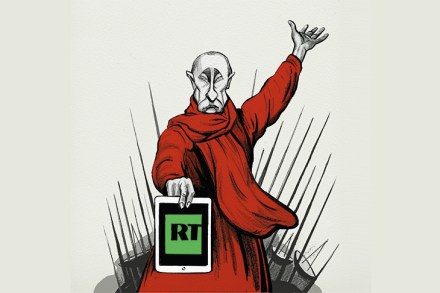
Amid the confusion and the almost deafening cries of treachery and collusion over Donald Trump’s relations with Russia, few noticed the most tangible outcome of this week’s Helsinki summit. In the lead-up to his face-to-face talk with Vladimir Putin, senior US and Russian diplomats — in close coordination with leaders from mutual ally Israel — brokered a deal among all the warring parties (bar the Islamist terrorists) finally to end the devastating seven-year Syrian civil war. As is often the case with Trump, the hype tends to drown out the message but it was there for anyone paying close enough attention. The US, Russians and Israelis have agreed on a solution to Syria. His name is Bashar al-Assad.

Jean-Claude drunker

The atmosphere in Brussels has become, of late, reminiscent of the late Brezhnev era. We have a political system run by a bureaucratic apparatus which — just like the former USSR — serves to conceal important evidence. Especially when it comes to the health of its supreme leader, Jean-Claude Juncker. At the Nato summit gala dinner last week, videos emerged showing Juncker unable to climb the few steps leading to the podium. He hesitates at the bottom before being grabbed by the very sturdy Ukrainian Petro Poroshenko. He is then held up during the ceremony. Afterwards Juncker — who is only 63, hardly an old man — staggers and wobbles away, propped up by Mark Rutte and António Costa, prime ministers of the Netherlands and Portugal.

Losing streak

England didn’t just lose the World Cup. When it comes to male nudity, the country has also lost its sense of shame. Everywhere — on the Tube, in buses, on the streets, in the pub — men are striding around topless. On Sunday in north Oxford I saw a man skiing topless, on roller-skis, with poles, down the Banbury Road. It’s as if Adam and Eve never ate from the tree of knowledge. Yes, it’s very hot. And yes, in the summer of 1976, men took their tops off but only in particular situations: on the beach, on a building site or in their back garden. I must admit that I cycle with my shirt open in this heat. But because I’m moving at speed, no one is exposed to my mottled flesh for long.

Unhappy returns

What to do about illegal migration from Africa into Europe? The EU’s repatriation programme seems at first like a great idea. Rather than just watching as desperate people risk their lives in the Med, we persuade them to go back home and help them to remake their lives there. The EU Emergency Trust Fund for Africa has coughed up £125 million for the scheme and about 25,000 migrants have already taken part, most heading home to west and central Africa. The poster boy of the programme is Smart Akawa. Two years ago, Akawa was flown by the EU back to his native Sierra Leone from a detention centre in Libya. With a modest EU grant, he has set up his own street-cleaning business, employing 14 other returnees to give garbage-strewn Freetown a much-needed scrub.

Brexit in a spin

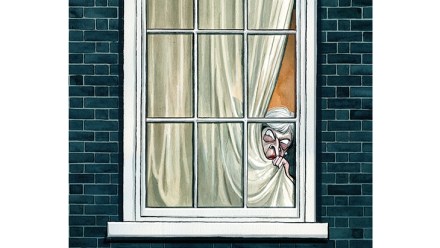
‘The numbers just don’t stack up,’ one cabinet minister wearily declared to me on Monday night. This is, perhaps, the single most important fact in British politics today: Theresa May does not currently have the votes to pass her Brexit plan even if she could get the European Union to accept it. Boris Johnson and David Davis’s resignations mean that it won’t just be Jacob Rees-Mogg and a dozen ultras voting against Theresa May’s Brexit deal, but a far larger group. Further proof of this came on Tuesday, when two of the party’s vice-chairs — Ben Bradley and Maria Caulfield — resigned so that they could oppose the deal. Tellingly, neither one would have been on anyone’s list of Brexit obsessives.

The agony of penalties

Last week, for the first time since 1996, and for the second time in nine attempts, England won a match that was decided by a penalty competition. You may have read something about it. The penalty shoot-out is the classic example — the type specimen — of a sport transforming itself for television. Television loves penalties because television loves drama. When drama is mixed with partisanship the mixture is irresistible: a perfect piece of entertainment. Many sports have gone down the same route: changing their essence to please television, to create entertainment and ultimately to make more money. It’s not always a bad thing. The tie-break in tennis was first used in 1965 on the professional circuit.

Not so fast

I’m losing my patience. Not so long ago I’d happily wait ten minutes for a bus, or even whole days for the next instalment of my favourite television programme. It didn’t seem to bother me in the slightest that my holiday photos would not be seen until I’d picked them up from the chemist. I even went to the library to get information from an encyclopaedia. Life, in short, used to be a waiting game, and patience was not just a virtue but a habit. Now I wonder how I survived in a world without Google Maps, Uber or smartphones with in-built cameras. The whole direction and purpose of modern life, at least on the surface and for those well-off enough to benefit, is to make everything frictionless, personalised, easy. Click a button, a taxi turns up to your house.

Dogs of war

When I was a child in the 1950s it was unheard of for someone to be killed by a dog. Dogs were rarely killed by other dogs. By the early 1990s, things were different. Dog-fighting made a comeback and the fad was for the ‘weapon’ dog, promoted via American gangsta rap. Staffordshire bull terriers were being bred in large numbers again and other fighting breeds, previously unheard of here, were brought into this country. In 1991, concerned about attacks, the government passed the Dangerous Dogs Act (DDA), which banned the American pit bull terrier as well as the lesser-known dogo Argentino, fila Brasileiro and Japanese tosa, all of fighting origins.