Features

The dragon vs the bear

At the height of the Cold War, as the West faced off against Red China and the Soviet Union, people used to joke that optimists learnt Russian while pessimists learnt Chinese. Today, the debate about which of these two great powers represents the biggest threat to our way of life is once again in full swing — though with new battle lines. And it’s not clear that Britain knows what to make of it all. For some commentators, the main challenge still comes from Vladimir Putin’s resurgent Russia. Those who once scoffed at Mitt Romney’s 2012 claim that Russia was the principal enemy of the United States now need no persuading that Moscow wants to unravel the post-Cold War international order. The Salisbury poisoning was just the latest reminder.

Project Fact

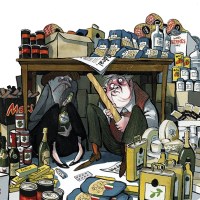
Food shortages, diabetics going without insulin, outbreaks of salmonella and swine flu: a no-deal Brexit has become a dystopia of the imagination that gives even the Old Testament a run for its money. To lend it extra credence, the doomsayers are not muttering men with long white beards but business leaders and figures from respectable-sounding thinktanks. Yet in just 11 weeks’ time, a no-deal Brexit could become a reality. Will we really be impoverished, hungry and living in fear of infectious diseases? Or is it just Project Fear, ratcheted up to a new level by those who see the clock ticking down and have become ever more desperate to persuade the public of the foolishness of its decision to vote for Brexit? Some dismiss the predictions of chaos as mere scaremongering.

Quiet terror

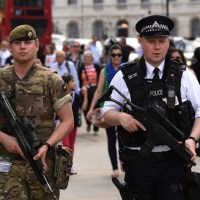
They don’t like to use the ‘Q’ word in counter-terrorism. It’s a bit like blurting out the name of the Scottish Play in a theatre. At Christmas parties, members of the security agencies insisted they had never been busier but once the year had turned and they were no longer tempting fate, they were prepared to admit that 2018 was a bit ‘quieter’. There were, for instance, far fewer arrests for ‘attack planning’, as opposed to downloading or sharing instructional and propaganda material. Last year, there were only four foiled attacks and one unsuccessful vehicle attack on Parliament. Right at the last gasp, with three hours to go to New Year, a knifeman in Manchester stabbed a couple and a police officer, but did not kill anyone.

Macron’s prophet

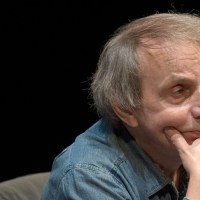
France’s literary event of the year took place this week with the publication of Michel Houellebecq’s new novel, Serotonin. Named after the brain chemical that regulates mood, his seventh novel has been described by one French newspaper as ‘prophesying the yellow vest movement’. The critics have lavished praise and the public are plucking it from the shelves. The initial print run was 320,000, which is quite something given that the average run for a novel in France is 5,000 copies. And it’s selling so fast that I haven’t been able to obtain a copy from the booksellers close to where I live in Paris. It’s a similar story in Germany, where the print run of 80,000 is virtually unheard of for a foreign author, and Spain.

Homegrown industry

If you were looking for an international drugs empire, Downham Market would not be the first place you’d think of. With a population of around 10,000, this sleepy Fenland town is probably about as typical as they come — typical, that is, apart from the smell. It was around two years ago that residents first noticed it: a distinctive pungent scent which seemed to hang on the wind before eventually engulfing the town for several days. Now locals say the gusts come and go. But when the odour first appeared, it was so strong that at least one resident phoned the police to complain about feeling nauseous. It turned out that the smell was coming from an 18-hectare cannabis plantation housed in some nearby industrial greenhouses.

Meat-free moggies

As I write, my cats and a visitor from the next street are hammering into their food, at nearly £5 a box. Once they only ate greens to make themselves vomit, but now they relish food labelled, ‘garden fresh’, containing carrots, pumpkin and pulses, plus ‘prebiotics to aid digestion’. I watch them eat and wonder how cats have evolved so quickly from savage carnivores into something more like middle-class ladies getting their five a day. Not that long ago, pets were fed scraps or, if they were lucky, Spratt’s Patent Food, which provided Puss and Fido with boiled horse flesh and beef blood, sold from barrows by street urchins. Tinned food arrived from the US in 1922. It made dog poop white, something that doesn’t seem to grace our pavements now.

The new boat people

When the migrant crisis started, about three years ago, it was seen as a mainly Syrian affair. Caught in the crossfire between Bashar al-Assad and sundry jihadist groups, ordinary Syrians were heading for Europe, part of the largest mass movement of people since the second world war. But as we now know, that analysis was wrong. Or rather, it was only one facet of the historical migration phenomenon that was unfolding then and still is today. As a reporter, I hit the migrant trail, following the new arrivals by foot, bus, train and ferry through the Greek islands and the Balkans. I heard many languages besides Arabic, among them Pashto, Urdu, Bengali and even French (spoken by a Congolese family I encountered at the Serbian--Hungarian border).

The last heave

There is a strange pre-revolutionary atmosphere in Brussels. At the various receptions and dinners before we broke up for Christmas, it felt a bit like the Last Supper. Elections to the European Parliament are usually predictable affairs, but this time Europhiles (like myself) fear it will be different. We have grown used to populists doing well in national elections over the years, from Sweden to Italy. But the European Parliament elections in May might lead to a landslide victory for Marine Le Pen’s National Rally, Italy’s League and other nationalist populist parties — and a victory may change the political face of the European Union. In the past, it never really mattered much if the Euro election was carried by the left or the right: the result was the same anyway.

The way we were

‘The Spectator, having quite recently been a very bad magazine, is at present a very good one.’ Those gratifying words began a full-dress leading article in the Times on 22 September 1978, headed ‘On the Side of Liberty’. Its occasion was this magazine’s sesquicentenary, which we celebrated with a grand ball at the Lyceum Theatre, and much else besides. Although I can’t possibly be objective, I think that the praise was deserved. The revival of The Spectator 40 years ago was wonderful: it assured what had been the very insecure future of the paper, and it was the time of my life.

Brexit: the movie

‘I try to interpret the most generous version of somebody’s actions,’ says the dramatist James Graham. This rare ability to create open and sympathetic characters has turned the 36-year-old into our foremost political playwright. His breakthrough work, This House, chronicled the terminal decline of James Callaghan’s premiership between 1976 and 1979. Rather than focusing on Callaghan and his destroyer, Margaret Thatcher, the play looked at the backbenchers and party whips who laboured behind the scenes to keep Callaghan’s government afloat. Graham’s plays are comedic but he’s principally an observer rather than a satirist. Yet he recognises the value of caricature.

The darkest dawn

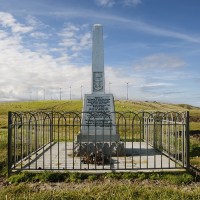
The centenaries of the Great War came to a close in November with commemorations of the 1918 Armistice. But one final British centenary associated with that conflict has just passed. Few people on the mainland will be aware of it, though it has certainly been marked in the Outer Hebrides. It is the commemoration of the worst peacetime naval disaster since the sinking of the Titanic. And one of the most terrible, poignant and final tragedies to have come from the Great War. On the evening of 31 December 1918, a vessel was boarding passengers at the Kyle of Lochalsh. His Majesty’s Yacht Iolaire had been requisitioned by the Admiralty to transport some of the hundreds of Royal Naval Reservists heading back to the Isle of Lewis and Harris after four years of service.

Girl trouble

Talking to someone in her mid-twenties recently, I mentioned someone else of the same age. ‘She’s a really talented girl,’ I said. Then I checked myself. ‘Sorry… er… woman.’ Sara smiled. ‘It’s OK,’ she replied. ‘That’s what I call myself. I’m a self-identifying “girl”.’ Fair enough. But the exchange stayed with me. It brought back the episode of Have I Got News For You which featured the ‘Michael Fallon touched Julia Hartley--Brewer’s knee’ story. Quentin Letts offered the opinion that Fallon had been brave, on the grounds that Hartley-Brewer is a ‘big strong girl’. ‘She’s not a girl,’ responded the presenter Jo Brand.

The Javid manifesto

There’s an old joke that the most dangerous position in the Tory party is the favourite for the leadership. The frontrunner always ends up with a target on his back, which is why Sajid Javid should be feeling a little nervous right now. Theresa May survived a confidence vote but only after saying that she would resign before too long - so the hunt for a successor is on. He is Home Secretary, his fourth cabinet post. A poll of 700 Conservative councillors found they'd rather have him as leader than anyone else. He is also a former financier who made his name handling economic crises and is someone to whom MPs might conceivably turn if talks with Brussels fail and Britain looks set to crash out of the European Union.

Brogues gallery

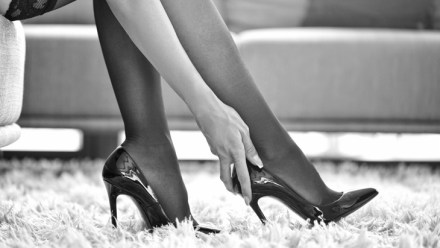
I spend most of my time drawing politicians, trying to work out what makes them distinctive. The eyes, the expression, their mood: it’s all about finding people’s peculiarities and accentuating them. When I started, I’d focus on the face. Everything else was an afterthought. It wasn’t until I came across a drawing by the Norwegian cartoonist Finn Graff – a cartoon of Helmut Kohl, I think – that I realised what I had been missing. How much you can tell from someone’s shoes. I didn’t discover this, so much as rediscover it. When I was a teenager, I worked in a shoe shop in my home town of Arendal, Norway. I used to challenge myself to identify the right shoe for a customer the moment they walked in.

The imitation game

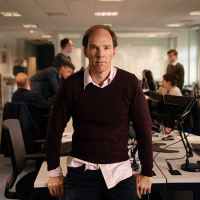
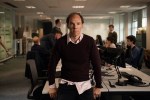
Imagine looking at a photo of a stranger and feeling in response, quite naturally, the sort of happy affection you might feel towards a spouse. Well, it’s weird. In July this year, when Benedict Cumberbatch was filming Channel 4’s upcoming Brexit film (Brexit: The Uncivil War) a friend sent me some photos by text message, tabloid snaps from the set. Benedict plays my husband Dominic Cummings, director of the Leave campaign, and the shots were long-lens and hazy: Ben/Dom pushing his son on a swing; Ben/Dom kissing his wife. The real son-of-Dom and I were halfway through our Rice Krispies when the photos came through and I remember how taken aback I was. It’s not that they look alike. ‘We have different shaped heads,’ Cumberbatch tells me later.

Critical injuries

A decade ago, a publisher produced a set of short biographies of Britain’s 20th-century prime ministers, which I reviewed unenthusiastically. My wife reproved me: ‘What did you do that for? For a fee of a few hundred pounds you have made a dozen entirely gratuitous new enemies. If you don’t have something good to say about books, don’t write about them.’ Honest reviewing would grind to a halt if all its practitioners deferred to her advice. It is nonetheless true that victims of an unfavourable notice seldom forget or forgive. As authors, we commit our souls as well as our bodies. Memories of the most flattering reviews of my own books fade within hours. Yet wounds from the stinkers fester for years.

Beyond Brexit | 13 December 2018

None of us can predict the potential fallout from Brexit, good and bad. What began as a vote of confidence in our institutions has shown them to be dangerously fallible. A country where people usually rub along together is now marked by a cultural and emotional rift. If Brexit does continue to dominate our politics for years, will it mean a reform of our institutions, or a battening down of the hatches by a beleaguered elite? Will the House of Lords, having alienated its natural defenders, at last be seriously reformed? Shall we try to restrain the dangerously capricious powers of prime ministers? Shall we empower local government? Both Brexiteers and Remainers will be in a rather militant mood.