Arts feature

How the Houthis wage war through poetry

Poetry is politics in the Yemen. When the last Imam of Yemen, who was also the hereditary ruler, was deposed in a coup in 1962, it was a local poet who announced the change of regime on the radio, in verse of course. And the current al-Houthi regime in the north of the country, like all its predecessors, asserts its legitimacy, confounds its enemies and rallies its supporters through poetry. As an aspect of their cause, they have consciously avoided high-Arabic poetry – a literate, urban cultural form – and have made use of the zamil tradition, which immediately speaks not of the palaces of emirs and princes, but takes the listener to sit beside the farmers and Bedouin shepherds in the villages and hills.

The visionary art of Eduardo Paolozzi

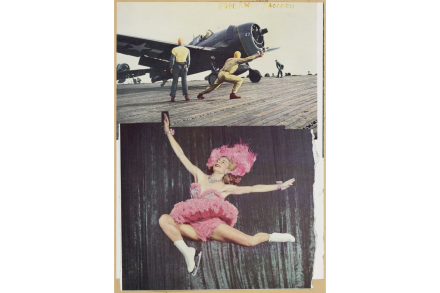
On 10 June 1940, a riot erupted in Edinburgh as a 2,000-strong mob swarmed the streets, hell-bent on revenge. Their targets were barbers, delis and ice cream parlours; anything or anyone Italian. Mussolini had just entered the war and the mob scented blood. The police eventually quelled the violence and the city’s more sympathetic locals helped sweep up the broken glass and mop up the spilled wine. But nearly half of the city’s 400 Italian Scots were rounded up under Winston Churchill’s order to ‘collar the lot’, and sent to internment camps. Among them was the 16-year-old Eduardo Paolozzi, who was locked up at Edinburgh’s Saughton prison. While Paolozzi was creating pop mash-ups, Warhol was still making whimsical illustrations of shoes It could have been worse.

The man who got the West to fall in love with India’s sacred literature

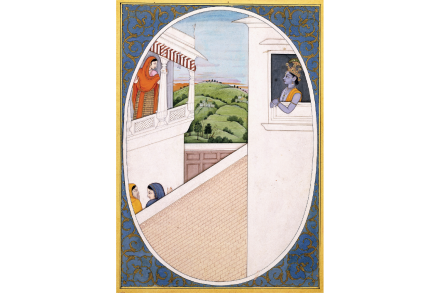
The first European translation of the Bhagavad Gita, a dialogue between Prince Arjuna and Lord Krishna, appeared in English in 1785. Strangely, this classic of Indian spirituality, which is much concerned with liberation, was prefaced with talk of conquest, rightful dominion and chains of subjection. The translation had been produced under the auspices of the English East India Company, then in the process of claiming for itself ever-larger swaths of territory in India. The first edition incorporated a letter written by the governor-general in Calcutta, Warren Hastings, in which he compared the Gita with Homer and Milton.

The stars are aligned for Royal Opera’s tantalising new production of Elektra 

About 30 minutes before the end of Richard Strauss’s Elektra, the universe splits open. Elektra, daughter of the murdered king Agamemnon, lives for the day when her brother Orest will return to avenge her father by slaughtering her mother. Now Orest is here and his sister no longer recognises him. Until suddenly, shatteringly, she does, and Strauss’s 109-piece orchestra unleashes a dissonant scream unlike anything that had been heard in European music. Indeed, for many listeners in 1909 it was the end of music. Satirists compared it to capital punishment (one cartoon depicted a quaking victim of ‘Elektra-cution’). When it transferred to Covent Garden in 1910, newspapers promised London audiences ‘the most arduous score ever written’. It sold out.

Video games aren’t a total waste of time

My wife argues with the children about video games. I argue with the children about video games. The children argue with each other about video games. Consequently, I argue with my wife about video games. It is a total nightmare – and it’s one that in various versions will be replicated in houses with young children up and down the country. The problem, in part, is a cultural divide. It frustrates me, too, when the children refuse to come off Rocket League or Fifa when they’re told to (‘I’m in the middle of a game!’). I’m also wary of the addictive nature of these things. But at the same time I can absolutely see the point of them; as my outgoing, intelligent, football-loving, film-making wife cannot.

A Nativity that sends shivers down the spine

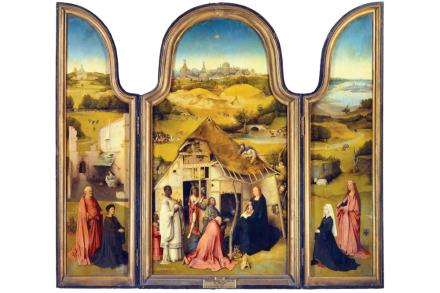
Hieronymus Bosch was not a natural painter of religious images. His terrifying visions of Hell may have helped to keep congregations on the path of righteousness, but they did not inspire feelings of devotion – which could explain why none of the large altarpieces he painted remained over their altars after his death. In the eyes of the church, his Last Judgments were titillating: one painting showing ‘monstrous creatures from the underworld’ was removed from a church in his native ‘s-Hertogenbosch during his lifetime by officials offended by its orgy of nudity. Even his ‘Adoration of the Magi’ (c.

The Spectator film critic who transformed cinema

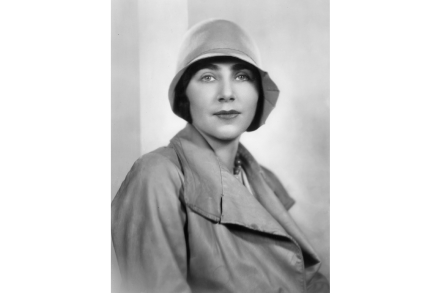
‘Going to the pictures is nothing to be ashamed of,’ insisted the film writer Iris Barry in 1926. But it certainly wasn’t something to be proud of, either. To the cultural cognoscenti of the 1920s, Barry admitted, the cinema was barely an art at all – about as aesthetically significant as ‘passport photography’. And for much of polite society, seeing a film was done in secret, if at all. So it was a considerable boost for the fledgling medium when, 100 years ago, the word ‘cinema’ began to appear for the first time in this country above its own regular column, with its own dedicated critic, in the arts pages of The Spectator. Attending to this young art form was the even younger Barry.

The award-winning choreographer who fell foul of the mob

Ebullient, articulate and eminently sensible, Rosie Kay never wanted to be a martyr to the culture wars. A modern dance choreographer with an impressive track record – including 5 Soldiers, an award-winning exploration of army life, contributions to the closing ceremony of the 2012 Olympics and a fellowship at Oxford – she would rather be getting on with the business of creating new work for her small dance company. But she’s been given no choice – and all because of a party she held in August 2021 at her home in Birmingham.

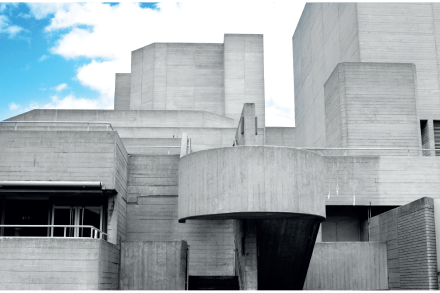
Our theatre critic applies to be director of the National Theatre

The director of the National Theatre will be stepping down in 2025. I’ve written to the chairman offering a new vision for Britain’s leading playhouse. Dear Sir Damon Buffini, I’m a reviewer of plays and a part-time theatre producer. In the past 20 years I’ve seen more than 2,000 shows, hundreds of them at your venue, and here is my plan to transform the NT. Britain’s dramatic heritage is the best in the world and our national theatre should meet that standard of excellence. Three simple reforms to start with. US stars crave the prestige offered by the NT. Each year we will hire half a dozen Oscar-winning actors One: cancel the annual £16 million subsidy from the Arts Council. Britain’s leading theatre doesn’t need a donation or the advice that accompanies it.

The growing revolt against Arts Council England

The acronym for Arts Council England is rather unfortunate at the moment. The organisation is being accused of many things: being overly close to government, underfunded and blinkered – but nobody thinks it is ace. Even friendly culture critics are losing patience. As the august arts commentator Richard Morrison recently wrote in the Times: ‘The Arts Council… seems determined to shift public subsidy on to supporting amateurs and community projects.’ ‘We are tempted to refuse our ACE grant and not spend so much time box-ticking’ Simple purpose has been replaced by a giant strategy paper, Let’s Create, which seems concerned with how ACE can insist on a policy of social engagement, rather than continue as an agency funding a range of professional arts organisations.

The rise of Christian cinema

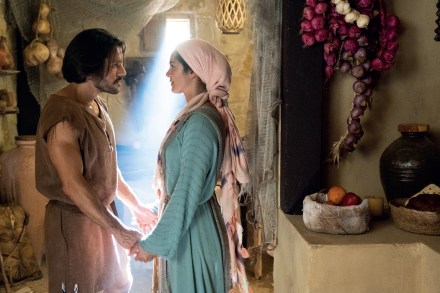
Author Matthew Vaughan spent much of his life in the church – and even preached the gospel in Pakistan – but never considered himself a fan of Christian media. ‘To be honest, most of the films I saw were pretty corny,’ he tells me over the phone from his home in Birmingham. For Vaughan, that changed when he came across an American box-set drama about Jesus called The Chosen. ‘It kept getting recommended to me by American missionaries,’ he says. ‘They said it was like a Jesus movie for the Netflix generation – well written, well acted and with a good budget behind it.’ Christian viewers vote on which projects should get the green light, then invest their money in them Vaughan is far from alone. Since 2019, more than 100 million people have watched The Chosen.

Can everyone please shut up about Maria Callas?

One thing that exasperated me intensely during my many years as an opera critic was the assumption that I must be a passionate admirer of Maria Callas. She is the only prima donna who most people have heard of, and her supreme status has long been taken for granted, to the point at which the sound of her voice, as well as her personal story, have fomented a myth, a legend, an icon, and made any rational judgment almost impossible. She is Callas, La Divina, the embodiment of opera: one can only fall down and worship. The Callas bibliography runs, according to the British Library, to 136 books In a year that marks the centenary of her birth (she died in 1977), the incense in the temple has become positively stifling.

No one should trust the camera in the age of AI

This war is being fought with pictures more than words. The poignant shots, often selfies, of families, children, even babies, who were to become victims of Hamas butchery, the wailing mothers and children on stretchers in Gaza, the missile strikes and collapsed concrete buildings. We know politicians on all sides lie, but photography is a mechanical process; these pictures must, surely, be the truth? Almost all these photos have been taken with mobile phones. To a rough approximation, everybody now has a smartphone. There are said to be seven billion smartphones in use around the world – there are only eight billion people. (Sales of what we used to know as cameras have crashed by 85 per cent.

How the Georgians invented nightlife

Modern nightlife was invented in London around 1700. So argued the historian Wolfgang Schivelbusch, who traced this revolution in city life to its origins in court culture. Medieval and Renaissance courts held their festivities while it was still light outside, but by the late 17th century, aristocrats preferred to party after dark. The trend was rapidly commercialised: a new kind of conspicuous consumer descended on pleasure gardens like Vauxhall and Ranelagh, to eat, drink, stroll and listen to music by the many-coloured light of thousands of oil lamps.

Has VR finally come of age?

A heavily made-up Iranian woman in bra and knickers is dancing seductively before me. We’re in some vast warehouse, and she’s swaying barefoot. But then I look around. All the other men here are in military uniforms and leaning against walls or sitting at desks, smoking and looking at her impassively. I slowly realise we are in a torture chamber and this lithe, writhing woman is dancing, quite possibly, for her life. Me? I have become one of her tormentors. You can immerse yourself in war-ruined Ukraine, go on the run from the Holocaust, become a mushroom Welcome to The Fury, a bravura attempt by Iranian artist Shirin Neshat to use virtual technology in her art. ‘Have you ever experienced VR before?

Stone is the solution to many of our architectural problems

The story of ‘The Three Little Pigs’ is hammered into us all from an early age. But its moral lessons obscure its more literal advice about building: skimping on materials is a false economy. It’s a lesson learned too late for schools built with reinforced autoclaved aerated concrete (Raac). Who would’ve predicted that concrete made cheaper by cutting it with air, puffed up like a Malteser, would end up crumbling like one too? It’ll soon prove that the initial cost savings of Raac will be wiped out multiple times over once the risk to life and expensive, disruptive repairs have been taken into account. Getting materials wrong almost cost the little pigs their bacon. Is it any surprise that we are returning to building in solid, dependable masonry?

The splendour of Edinburgh’s new Scottish galleries 

For nearly 50 years, the Scottish collection at Edinburgh’s National Galleries has been housed in a gloomy subterranean space beneath the main gallery, rarely visited, never celebrated. If you didn’t know it was there, don’t be ashamed. Just 19 per cent of visitors ventured into the bowels to find the jumble of Scottish paintings, dimly lit and hanging on colour-sucking, mucky green walls above a depressing brown carpet. Of those who did get there, lots immediately turned and fled back upstairs to the luminous comforts of Titian, Velazquez and Rubens. Safe to say, the space was not exactly showcasing Scottish art; a puzzling strategy for the country’s flagship gallery. The hang is uncluttered. Each painting has room to breathe But no more.

The dazzling classic The Red Shoes has several unfashionable lessons for us today

The Red Shoes, Michael Powell and Emeric Pressburger’s 1948 film about a ballet and its company, is 75 this month, and its birthday is being marked with great fanfare. From October to December, the BFI is putting on a major retrospective of the films of Powell and Pressburger, with an accompanying exhibition and nationwide screenings of The Red Shoes itself. A companion book to The Red Shoes by Pamela Hutchinson – stuffed with insight and background – is being published, as well as a lavish volume, The Cinema of Powell and Pressburger, complete with pictures and essays (almost love letters) about the late filmmakers from artists such as Tilda Swinton and director Joanna Hogg.

Why is Frans Hals still not considered the equal of Rembrandt?

Who was Frans Hals? We know very little about him. He was baptised in either 1582 or 1583 in Antwerp. He died in 1666 at the age of 83 or 84. Approximately 220 works survive. One discredited narrative claimed Hals was a drunk – an inference probably based on his subject matter. There are several depictions of drinkers. On the other hand, there is his evident industry. Two streets in Haarlem, where he lived his entire life, have been identified, but not the actual houses. He was buried in St Bavo’s church in the Grote Markt, which was originally Catholic but became Protestant. There are two commemorative slabs next to each other in the chancel floor competing for authenticity. Which is appropriate, because there are two Frans Hals – the traditionalist and the innovator. They co-exist.

‘People thought I was insane’: Graham Nash on the birth of Crosby, Stills and Nash

Graham Nash always seemed like the reasonable, peace-making one among his famously fractious compadres, David Crosby, Stephen Stills and Neil Young. But he didn’t get to where he is today by being plagued with doubt or false modesty. Even talking remotely over a Zoom connection, he still radiates a kind of unshakeable certainty. ‘I just trust that the universe loves me enough to support what I’m doing,’ he declares. ‘I don’t seek my life, my life happens to me and I’m perfectly content to let it. Look what I’ve done in my life… Pretty nice!’ ‘Joni was the only witness to that sound and it was created in less than a minute’ At 81, Nash is, incredibly, a pre-baby boomer, but mentally he seems about three decades younger.