Arts feature

Much more than just a game: World of Warcraft at 20

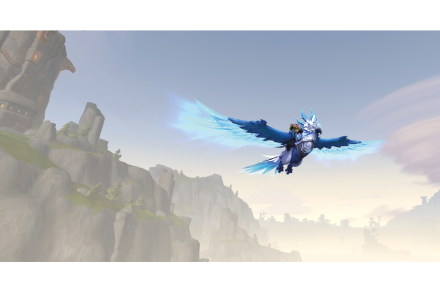
On 23 November, the video game World of Warcraft celebrates its 20th anniversary. That’s no small thing. By most metrics, it is the most successful video game of its type in history. At its peak, it had more than 12 million active subscribers, and in its two-decade-and-counting lifetime it has made more than three times as much money as the highest-grossing Hollywood movie of all time. Yet many, if not most, of you will never have heard of it or will have only the dimmest idea what it is. As someone who has played this daft game for several hours a week for years, I commend it to your attention, then – because a) there’s much innocent joy to be had in playing it, and b) World of Warcraft and games like it are an unignorable part of the cultural landscape.

How a single year in Florence changed art forever

The story goes that one day early in the 16th century Leonardo da Vinci was strolling through Florence with a friend. Near the Ponte Santa Trinita they came across a group of gentlemen disputing a point in Dante’s Divine Comedy. Seeing Leonardo, they asked him to explain the passage. At that same moment, Michelangelo Buonarroti also happened to hurry by, and Leonardo beckoned the sculptor over to interpret it for them. But Michelangelo, feeling he was being mocked, rounded on Leonardo: ‘Explain it yourself, you who tried to cast a horse in bronze, and couldn’t do it, and had to abandon the project in shame!’ With that he turned on his heels and stalked off, leaving Leonardo standing in the street embarrassed and furious.

Could AI lead to a revival of decorative beauty?

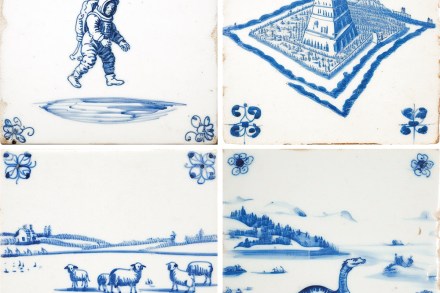
In front of me is what appears to be an authentic Delft tile. The surface of the tile is mottled, and painted on to it is a picture of a man. The blue tones blur and fade into the edges. Delicate brush strokes are visible if you peer closely. It looks as though it were made many years ago. Except it wasn’t. It was designed this morning by artificial intelligence and created in a small factory near Stoke-on-Trent, using some of the most advanced printing technology available. ‘Josiah Wedgwood would have loved what we are doing… I suspect William Morris would have hated it,’ says Adam Davies, the co-founder of the company creating these tiles.

The triumph of surrealism

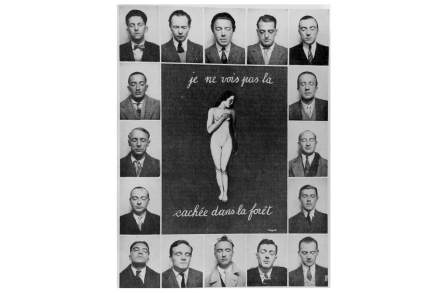
When Max Ernst was asked by an American artist to define surrealism at a New York gathering of exiles in the early 1940s, he pointed across the room at André Breton and said: ‘That is surrealism.’ Even today it can seem as if no other answer is available, so tenacious was his grip. A former student of neurology and psychiatry, with no qualifications other than an instinct for the coming thing (‘an astute detector of the unwonted in all its forms’, as he later described his fellow conspirator Louis Aragon), Breton encountered the early writings of Freud as a medical orderly on a trauma ward, during the first world war, and immediately recognised the significance of his work.

At Las Vegas’s Sphere I saw the future of live arts

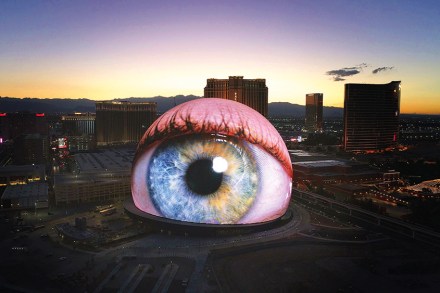
Does Elon Musk have a good eye for the aesthetic? Earlier this month, the Tesla magnate took a break from his incessant political posting to praise something he described as a ‘work of art’ – the Las Vegas Sphere. He then treated his 200 million Twitter followers to a video of an awed crowd, desperately angling their phones to capture the supposed majesty of the Sphere. Admittedly, it was hardly the first time that the Sphere has gone viral on social media. Since its grand opening last autumn, this very modern monument has had a knack for conquering the internet, with videos of its optical illusions prompting both awe and disgust. Its occasional surreal turns (like when it turned into a giant cartoon emoji, side-eyeing the Las Vegas skyline) have made headlines in their own right.

‘Some pianists make me shake with anger’: Vikingur Olafsson interviewed

At the BBC Proms this year, an Icelandic pianist dressed like a Wall Street broker played a slow movement from a Bach organ sonata that had the audience first gasping and then stamping their feet. This was an encore to a performance of the Schumann Piano Concerto that neither milked the poetry nor romped thrillingly through the finale – and that, too, nearly had the Prommers throwing their underwear at the shy soloist. How do you explain the phenomenon of Vikingur Olafsson? At first glance, he fits the mould of the bespectacled scholar-pianist who recoils from vulgarity – a young Alfred Brendel or Richard Goode, say, whose Beethoven or Schubert cycles have the cognoscenti underlining felicities in the score. ‘The Goldbergs are the hardest piece.

How some of the most derided bands of all time are making a comeback

The fate of the pop musician – at least the pop musician below the top tier of stardom – has historically been to fall from fashion. At some point in their rise they will be of the moment, the spirit of the age, and then they won’t be. At best, they’ll have a slow but perfectly lucrative fade, as their fanbase dwindles to the zealots. At worst they’ll become a punch line, a raised eyebrow: ‘What were we thinking?’ Every hit, every sold-out show, is just another step closer to irrelevance. ‘There’d be 800 teenagers in a club in Minneapolis, which felt absurd: we’re old enough to be their parents’ It may be that the single greatest artistic effect of the Covid pandemic has been to change that.

Who should win the Stirling Prize?

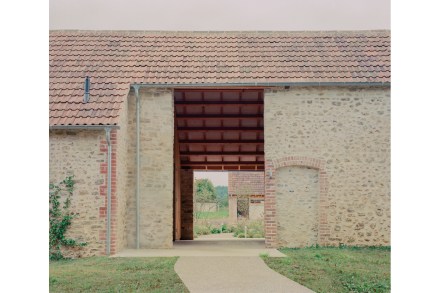
The Stirling Prize is the Baftas for architects, a moment for auto-erotic self-congratulation. Awarded by the Royal Institute of British Architects, its premise is straightforward: it’s for Britain’s best building of the year. But this year, it seems the prize committee has struggled even with this. Among the six projects shortlisted for this ostensibly nationwide prize, four are in London and a couple could barely even be considered buildings at all. The most tenuous nominee for a ‘best building’ – yet one with the best bookies’ odds – is the Elizabeth Line by Grimshaw Architects. One of the most expensive infrastructure projects in Europe with a much-delayed opening, it remains frustratingly unreliable.

How Michael Craig-Martin changed a glass of water into a full-grown oak tree 

‘Of all the things I’ve drawn,’ Michael Craig-Martin reflects, ‘to me chairs are one of the most interesting.’ We are sitting in his light-filled apartment above London, the towers of the City rising around us, and we are discussing a profound question, namely, what makes an object a certain type of thing? Or to put it another way, what makes a chair a chair? Craig-Martin’s career has been characterised by what he calls ‘my object obsession’. There will be chairs on view in the grand retrospective of his work which is about to open at the Royal Academy, but by no means only chairs. The galleries will be filled by a cavalcade of mundane bits and pieces, among them safety pins, filing cabinets, forks, smartphones, pliers, light bulbs and buckets.

How claims of cultural appropriation scuppered an acclaimed new ballet

On 14 March 2020 I was at Leeds Grand Theatre for the première of Northern Ballet’s Geisha. The curtains swung open on fishermen flinging out their nets, geisha, samurai, 19th-century Japanese village folk, followed by the sudden appearance of American sailors. It was in essence a Japanese Giselle: the tale of a geisha, spurned by her American lover, who dies of grief, and whose restless spirit returns from the grave. Far from being offended, the Japanese Embassy offered their official imprimatur It was a unique production. Many of the dancers at Northern Ballet are Japanese, Chinese or Korean and this was an east Asian story.

The unstoppable rise of stage amplification

Recent acquisition of some insanely expensive hearing aids aimed at helping me out in cacophonous restaurants has set me thinking about the extent that modern life allows us to filter our intake of noise. This is big business. As sirens wail and Marvel blockbusters and rock concerts crash through legal decibel levels, controlling sound levels has become an increasingly sophisticated operation, abetted by everything from silicone pastilles and the volume-control knob to the wireless earbud.

How did we ever come to accept the inhumane excesses of capitalism?

What was neoliberalism? In its most recent iteration, we think of the market seeping into every minute corner of human existence. We think of privatisation, off-shoring and the parcelling out of services to the highest bidder. Neoliberalism takes the proud liberal individual – in pursuit of his or her happiness, rather keen on freedom – and shreds them through a mean-spirited calculator to come up with some sort of shrunken market midget, an efficient risk-evaluating robot. Neoliberalism takes the proud individual and shreds him or her through a mean-spirited calculator Yet even though the market is supposed to be the arbiter of everything, repeated state intervention appears to be necessary to sustain this otherwise perfect economic vision.

Immersive and spectacular: Piet Oudolf’s new borders at RHS Wisley reviewed

Piet Oudolf’s long borders at Wisley were worn out. The famous designer had in fact become a bit embarrassed by them: they’d done well for 20 years but in that time his own style had evolved – and so had people’s tastes. Oudolf is now such a household name that his pointillist landscaping is considered fine art on paper, let alone when actually planted up. (There are weighty coffee-table books exploring his art.) But the long borders had become, well, just borders, on either side of a long grassy walk up the hill from the Wisley glasshouses. Many of the people who visit Wisley for a walk – rather than to peer at plants – were perfectly capable of ignoring the whole lot.

Edinburgh has turned into a therapy session

Therapy seems to be the defining theme of this year’s Edinburgh festival. Many performers are saddled with personal demons or anxieties which they want to alleviate by yelling about them in front of a paying audience. Professor Tanya Byron puts it like this in the Pleasance brochure: ‘Therapy is where art and story-telling combine.’ This show crashes and burns like the stock market on a bad day. A cheerier ending might help. At the Pleasance, Joe Sellman-Leava is seeking catharsis through his show It’s The Economy, Stupid! (Jack Dome, until 26 August). He begins by delivering a friendly lecture about credit, interest rates, retail banks, Adam Smith and so on. After 40 minutes, he loses his cool and starts to rant and swear at the crowd about his personal lack of funds.

The tragic fate of Ukraine’s avant-garde

In a recent interview Oleksandr Syrskyi, the new commander-in-chief of the Ukrainian army, said that he spends his time off reading books on the country’s ‘difficult history’. If even he finds it difficult, where do us non-Ukrainians start? In the introduction to its new exhibition, the Royal Academy makes a brave attempt at explaining the political background to Ukrainian modernism, developed in a brief window of creative opportunity before it was slammed shut by Soviet repression.

Why Sir Arthur Conan Doyle believed in fairies

Sherlock Holmes fans will be delighted to know that there is a new play featuring the great man. In it Holmes, 72, bored silly by retirement and bee-keeping in the Sussex Downs, is back living at his old haunt of 221B Baker Street and  reunited with the widowed Watson. The case that lands in Holmes’s lap concerns a reported outbreak of fairies in the Bradford area. Thus we are plunged into the Cottingley saga, a mystery that fascinated the public in the 1920s. The play is by Fiona Maher, a fairy-lore expert, organiser of the Legendary Llangollen Faery Festival (she’s known as Tink) and author of a very well-researched book on the Cottingley affair that sheds much new light on the hoax. In the play, the great detective’s sleuthing mirrors her own detective work.

Are kids’ games under threat?

We hear a lot about the rights of the child, but the first I heard of the child’s right to play was at the Barbican’s latest exhibition. Among the games-related facts in Francis Alÿs’s new show is a quote from Article 31 of the United Nations Convention on the Rights of Children, confirming a child’s right ‘to engage in play and recreational activities’. Barbie has stood seven times for the US presidency. (As a young looking 65, she could do well) Are children’s games under threat? Alÿs thinks so. Children in Europe today, he laments, have a tenth of the freedom to roam that he enjoyed growing up in the 1960s in a Belgian countryside virtually unchanged since Bruegel.

Why I fell out of love with Wagner

It’s four years since I gave up opera criticism. The pandemic had struck, I had hit a significant birthday, and notched up three decades at the coal face – a quarter of a century at the Telegraph, and an earlier stint at this address. There were other things I wanted to do and after reviewing something like 2,500 performances, I had said everything I wanted to say, several times over, and knew that it was time for other voices to be heard. Truth be told, I was becoming a little jaded. My blind spots – opera seria, the final eight mediocrities of Richard Strauss, Rossini’s irritating comedies – were turning cancerous, and I was even tiring of masterpieces like Tosca and Die Zauberflöte: no reflection on them, simply the effect of over-familiarity. ‘Don’t you miss it?

Forget monetary policy, the Bank of England’s greatest crime was architectural

In 1916 the Bank of England committed what Nikolaus Pevsner was to call the greatest architectural crime to befall London in the 20th century. It decided to demolish much of its own building, designed by the great Georgian neoclassical architect John Soane. Soane’s lost masterpiece is the subject of the latest series from the essential architecture podcast About Buildings and Cities. The podcast, started in 2016 by presenters Luke Jones and George Gingell as a hobby, has slowly become a fan-funded staple for architects, offering a re-evaluation of the received wisdoms about the canon and some affable banter along the way. He built a rich ‘internal world’, lit by roof lanterns that crown dramatic vaulted spaces Soane worked on the Bank of England for almost 50 years.

The art of Japanese woodblock printing

Van Gogh owned a copy of Utagawa Kunisada’s woodblock print of the ‘Yoshiwara Poet Omatsu’ (1861), which is currently on display at the Watts Gallery. It depicts the poetess who rose from humble origins in an elegant kimono at her dressing table and was part of Kunisada’s series of paintings titled Biographies of Famous Women, Ancient and Modern, but Van Gogh may not have known that. By the time he started amassing Japanese prints – he splurged on 600 of them in the winter of 1886 – they had become collectibles sought after by avant-garde artists for their clear lines, bright colours and the immediacy of their cropped figure compositions anticipating photography.