Arts feature

Fast cars, minimalist design and en suite bathrooms: the real Rachmaninoff

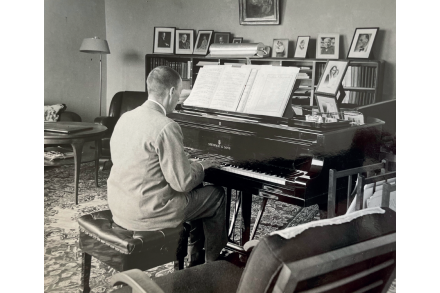
The train from Zurich to Lucerne tips you out right by the lakeside, practically on the steamboat piers. A white paddle-steamer takes you out of the city, past leafy slopes and expensive-looking mansions. Tribschen, where Wagner wrote the ‘Siegfried Idyll’, slides away to the right as you head out across the main arm of the lake. At the foot of Mount Rigi, shortly before the steamer makes its whistle-stop at the lakeside village of Hertenstein, is a promontory where – if the sun is coming from the west – a yellow-coloured cube shines among the trees. This is the house that Sergei Rachmaninoff built between 1931 and 1934: Villa Senar, his last attempt to make a home outside Russia in Europe.

‘I disliked him intensely’: Richard Lewis on first meeting Larry David

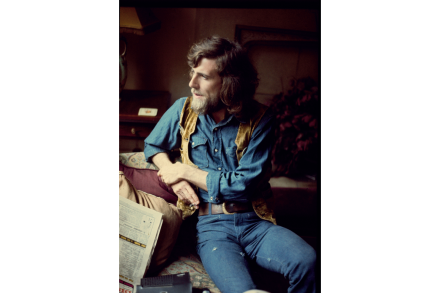
Richard Lewis has died at the age of 76. Ben Lazarus interviewed him for the magazine last year: Richard Lewis first met Larry David at a summer sports camp, aged 12. ‘I disliked him intensely. He was cocky, he was arrogant,’ Lewis says. ‘When we played baseball I tried to hit him with the ball: we were arch rivals. I couldn’t wait for the camp to be over just to get away from Larry. I’m sure he felt the same way.’ Eleven years later they met again on the New York stand-up scene – but didn’t recognise each other. One evening, as they drank into the night, it dawned on them. ‘I looked at his face and I said, “There’s something about you, man, that spooks me.” Just saying that spooks everyone!’ It clicked. ‘“You’re Richard Lewis!

On the trail of Roman Turkey with Don McCullin

The genesis for our book Journeys across Roman Asia Minor was hatched in the autumn of 1973, when Sir Donald McCullin was a young man. He had been assigned by the Sunday Times to work with the writer Bruce Chatwin on a story that would take them from a murder in Marseille to the Aurès highlands of north-east Algeria. It was an emotionally gruelling journey and they rewarded themselves on the way back by stopping off to look at a solitary Roman ruin. No photographs were taken, but the memory of this place from all those years ago remained embedded in Don’s imagination. Three decades later, that seed bore fruit, as he undertook a series of visits to North Africa. I was lucky enough to accompany him on two of these trips, into western Libya and southern Algeria.

Our great art institutions have reduced British history to a scrapheap of shame

Let’s indulge in some identity politics for a second: I am from Hong Kong, born as a subject of the last major colony of the British Empire, minority-ethnic, descended from Chinese refugees, now living here in exile. This summer, both the National Portrait Gallery and Tate Britain are presenting new displays that are meant to reflect the ‘inclusive’ and ‘diverse’ identities of Britain. Supposedly, I fit nicely among their target audience. In reality, as an immigrant looking to be included in this nation, I am perplexed by my visits.

The joys of provincial repertory theatre    

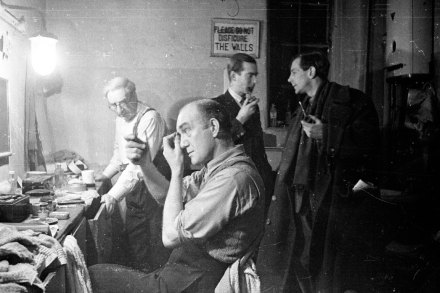
Provincial repertory theatre, in which a semi-permanent company of actors performed a varied diet of plays for their community, week-in, week-out, has all but died out in Britain. Local theatres have become venues for visiting productions, one-off events and numerous outreach schemes, but the old continuity – a kind of magic – has gone. I caught the last of it as a child. I was nine years old when in 1979 the brand-new playhouse in my area – the Wolsey Theatre, Ipswich – opened its doors to the public, and for the next four years it would be the centre of my world. If I wasn’t watching shows there (and I saw some half a dozen times), I was dreaming about it, reading scripts or writing to a local photographer for black-and-white photos of the company’s players.

The West has much to learn from Hungarian culture

In central Budapest a crew from Hungary’s state TV is filming the unveiling of a new street sign. In honour of his centenary year composer Gyorgy Ligeti now has a road named after him. Contemporary classical music is deemed newsworthy in Hungary. Even more astonishingly – and anyone working in British classical music might want to sit down at this point – the ‘Ligeti 100’ concert at the Budapest Music Centre, dedicated to a clutch of bracing new works, was being filmed for transmission prime time on the Hungarian equivalent of BBC1. Here, we’d be lucky if it got a midnight slot on Radio 3.

Can ballet survive the culture wars?

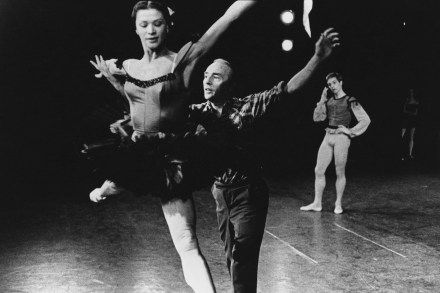
Through several phases of the culture wars, ballet has served as a canary in the coal mine, its intense and exposed physicality highlighting all the issues surrounding sexuality, gender and power that have currently become our unhealthily narcissistic preoccupation. Perhaps the warnings started with the phenomenon of Vaslav Nijinsky. Against the defined masculinity and femininity of the Edwardian era, he stood out as seductively androgynous and effeminate as well as staggeringly charismatic – a godlike hero unashamed to represent le spectre de la rose. Bloomsbury ogled, and rumours about his pederastic relationship with his patron Serge Diaghilev circulated scandalously.

The problem with podcasts

A few months ago, a clip from a podcast went mildly viral online. A lightly dressed woman sits in front of a microphone, explaining her sex life in pedantic detail to an offscreen interviewer. It was strange and unpleasant, which was why people couldn’t stop looking at it. What kind of podcast is this, exactly? Who’s listening to it? The answer was nobody. The woman was a porn actress called Vicky Banxx, and the podcast didn’t exist. Across the world, thousands of people are doing the same thing: plonking themselves down in front of mics, setting up a camera and talking in a genial, conversational style to absolutely no one.

The joy of kabuki

It’s a long climb up the 1,368 steps to the Shinto shrine at Kotohira. Many of the pilgrims are making comfort stops at the countless teahouses that line the route, but other worshippers break their journey at Kanamaru-za, the oldest surviving kabuki theatre in Japan. A middle-aged man in Barbara Cartland war paint, heavy black wig and kimono ought to be ridiculous Kabuki, with its vivid stock characters, juicy plots and sumptuous costumes, has always been the most popular and accessible of the Japanese theatrical traditions. In the early 17th century performances featured both sexes, but in 1629 the ruling shogunate decreed that actresses (many of them prostitutes) were a danger to public morals and the art form became – and remained – an all-male preserve.

Why the Chester Mystery Plays are more popular than ever

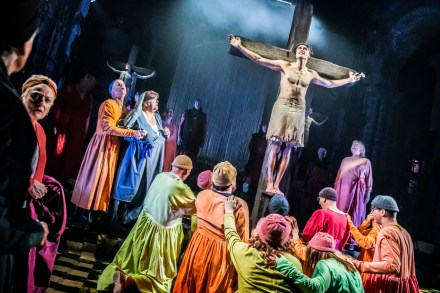
Hang around for long enough at Chester Cross, and theatre is pretty much guaranteed. It’s a Saturday morning in May: a human statue holds his pose, a remote-control buggy zips about advertising the spring sale at MenKind and three connoisseurs of discount cider are making their views known from the bench outside St Peter’s Church. All normal for Chester, and when the Town Crier strides up, crowds gather on the first-floor Rows like the audience at a Tudor playhouse. Oyez! The people of the city seek permission to stage the latest cycle of the city’s medieval Mystery Plays and tradition dictates that the Banns be read in public some six weeks before the first performance. You might wonder what tradition has to say about what comes next.

Is wrestling an art?

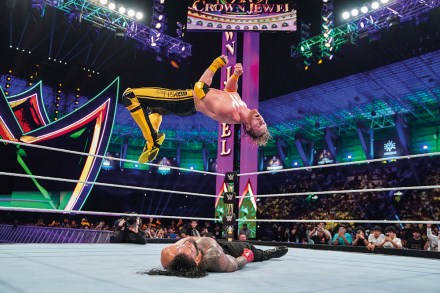
It isn’t easy selling out Wembley Stadium with its capacity of between 70,000 and 90,000 (depending on the exact arrangement). It’s a feat achieved by only a handful of performers each year – all of whom you’ve likely heard of. This summer, though, Wembley will play host to something rather different – an American pro wrestling show called AEW (All Elite Wrestling). A few months ago, AEW’s biggest achievement this side of the Atlantic was bagging a midnight slot on ITV4. Now it’s going head to head with Harry Styles on ticket sales. These days wrestling storylines are usually written by professional screenwriters Arguably, AEW isn’t even the most important wrestling event in Britain this year.

The woman who pioneered colour photography

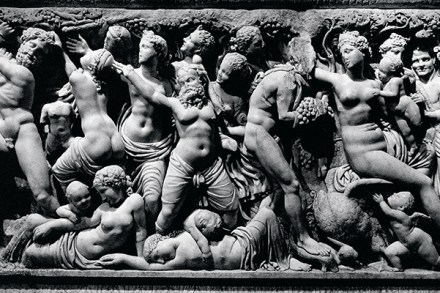
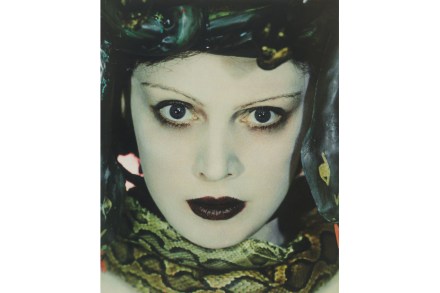
When colour photography first came in at the start of the last century, it met a surprising amount of resistance from distinguished photographers. But Madame Yevonde loved it, owned it, revelled in it. She invested in a new Vivex repeating back camera, exhorting her fellows at the Royal Photographic Society in 1932: ‘Hurrah, we are in for exciting times. Red hair, uniforms, exquisite complexions and coloured fingernails come into their own… If we are going to have colour photographs, for heaven’s sake let’s have a riot of colour.’ But what she went on to create was far better than that. In her classical series ‘Goddesses’ (1935) she controlled colour like a Renaissance master, painting with it, creating atmosphere and character.

We must save this Tudor masterpiece for the nation

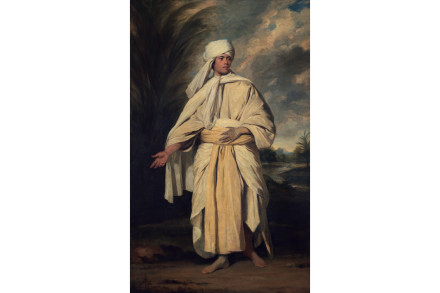
Last month there was rejoicing that Joshua Reynolds’s ‘Portrait of Omai’ had been saved for this country at a cost of £50 million. My hat was in the air with everyone else’s. But much less attention has been given to another artwork that is in need of rescuing, one of far greater national and artistic importance: an object that proclaims the birth of the Church of England – and is available for less than a tenth of the cost of ‘Omai’. It has been described as the ‘Holy Grail of Tudor tapestry’ ‘Saint Paul Directing the Burning of the Heathen Books’ by Pieter Coecke van Aelst is a monumental tapestry, nearly 20ft long and 12ft high. It is the sole survivor of a series of nine tapestries that Henry VIII commissioned in the mid-1530s on the life of Saint Paul.

The lives of even anti-Putin Russian artists are being made impossible

Swift and sure, the guillotine blade came down on Russians in the West on 24 February last year, the day Russia invaded Ukraine. The logic was clear as concerned Putin loyalists; cutting them off from western gravy trains in the face of their dear leader’s grotesque aggression made some sense. They could bed down with the devil, so to speak, but not on our buck. So one doesn’t weep much over the relegation to Europe’s fringes of the likes of openly pro-Putin musicians such as pianist Denis Matsuev or the former LSO and Munich Philharmonic chief conductor Valery Gergiev. Then there’s the soprano Anna Netrebko, who, seen as being close to Putin, was sacked immediately by the Met when she didn’t condemn the Russian President fast enough.

In praise of goths – the most enduring of pop subcultures

More than 40 years on, every town still has them, wandering the streets with pale skin, more make-up than you can find in Superdrug, swathed in acres of black fabric. Goths, rather unexpectedly, have turned out to be the great survivors among pop subcultures. Others have risen and faded, but the goths – laughed at, ignored, dismissed – have endured, seeing their style and their musical tastes slowly incorporated by everyone else (there’s even a goth version of hip-hop, known as ‘horrorcore’). Goth was a fitting name for the music: overbearing and foreboding; delivering ecstasy through the building and releasing of tension rather than through major chords and primary colours; drawing on punk, Bowie, the Doors and the Stooges.

From Botticelli to Marvel: why artists love St Francis

‘A small, black, repulsive picture’ is not how most people today would describe Zurbaran’s haunting painting of ‘Saint Francis in Meditation’ (1635-9) in the National Gallery. But that was how one Protestant critic of its acquisition in 1853 described this image of an Italian saint satirised three centuries earlier by the German Lutheran cleric Erasmus Alber in his Koran of the Franciscans. Alber chose his title advisedly, for one of this peacemaking saint’s legendary acts of diplomacy was initiating an interfaith dialogue with the Muslim Sultan of Egypt, al-Malik al-Kamil. In 1219, so the story goes, Francis crossed to Damietta, then under siege by troops of the Fifth Crusade, slipped unarmed into the city and was arrested and brought before the Sultan.

From Bayeux to Cartier-Bresson: how artists have brought the coronation crowds to life

In 1937, the Parisian communist newspaper Ce soir sent a 28-year-old would-be filmmaker on an unpromising first assignment. Henri Cartier-Bresson was to take photographs of the British coronation, an event of limited appeal either to Ce soir’s readers or to Cartier-Bresson himself. But on the streets of London, he discovered what would become his signature approach. Two Brylcreemed lads in their best suits, hoisting their girlfriends on to their shoulders for a better view He would turn away from the King, the procession, the organised magnificence, and focus solely on the crowds, looking for some fleeting moment in which the meaning of the day was concentrated.

John Gielgud and Richard Burton’s fraught, botched, triumphant Hamlet

In 1963 two Hamlets went into production: one directed by Laurence Olivier, the other by John Gielgud. The situation had been engineered by Richard Burton and Peter O’Toole. The story goes that while shooting the film Becket, Burton and O’Toole had decided they should each play the Prince under either Olivier or Gielgud and they tossed a coin over who would get which director. O’Toole got Olivier; Burton got Gielgud. Both productions – booze-drenched affairs – went ahead, but the Hamlet that became a showbiz legend was Burton’s doomed Dane. The production made a fortune; it was probably the most profitable Shakespeare ever staged Burton looked up to Gielgud.

What the V&A Dundee exhibition doesn’t tell you about tartan

Criss-crosses, everywhere: 300 objects covered in them. The exhausting range and depth of the world’s most famous pattern is on full display at the V&A Dundee’s vast new exhibition. Tartan is a more genuine emblem of Scottish nationhood than the famous deep-fried Mars bar, which no one really eats. But it’s not uniquely Scottish. Plaid has been worn across western Europe for hundreds of years, then was claimed by Scotland as the symbol of the nation, now recognised the world over. It’s even a political weapon. In the recent SNP leadership election, the outsider Ash Regan wore practically nothing but the fabric. Ian Blackford has in the past unnerved many a viewer when he bent down in his kilt to lay a wreath at the Cenotaph.