Barnaby Rogerson

Waging war through poetry

Poetry is politics in the Yemen. When the last imam of Yemen, who was also the hereditary ruler, was deposed in a coup in 1962, it was a local poet who announced the change of regime on the radio, in verse of course. And the current al-Houthi regime in the north of the country, like all its predecessors, asserts its legitimacy, confounds its enemies and rallies its supporters through poetry. As an aspect of their cause, they have consciously avoided high-Arabic poetry — a literate, urban cultural form — and have made use of the zamil tradition, which immediately speaks not of the palaces of emirs and princes, but takes the listener to sit beside the farmers and Bedouin shepherds in the villages and hills.

poetry

How the Houthis wage war through poetry

From our UK edition

Poetry is politics in the Yemen. When the last Imam of Yemen, who was also the hereditary ruler, was deposed in a coup in 1962, it was a local poet who announced the change of regime on the radio, in verse of course. And the current al-Houthi regime in the north of the country, like all its predecessors, asserts its legitimacy, confounds its enemies and rallies its supporters through poetry. As an aspect of their cause, they have consciously avoided high-Arabic poetry – a literate, urban cultural form – and have made use of the zamil tradition, which immediately speaks not of the palaces of emirs and princes, but takes the listener to sit beside the farmers and Bedouin shepherds in the villages and hills.
On the trail of Roman Turkey with Don McCullin

From our UK edition

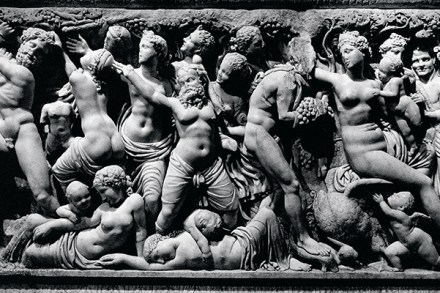
The genesis for our book Journeys across Roman Asia Minor was hatched in the autumn of 1973, when Sir Donald McCullin was a young man. He had been assigned by the Sunday Times to work with the writer Bruce Chatwin on a story that would take them from a murder in Marseille to the Aurès highlands of north-east Algeria. It was an emotionally gruelling journey and they rewarded themselves on the way back by stopping off to look at a solitary Roman ruin. No photographs were taken, but the memory of this place from all those years ago remained embedded in Don’s imagination. Three decades later, that seed bore fruit, as he undertook a series of visits to North Africa. I was lucky enough to accompany him on two of these trips, into western Libya and southern Algeria.

A walk through Fez is the closest thing to visiting ancient Rome

From our UK edition

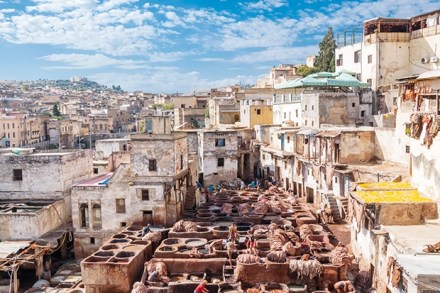
Fez is one of the seven medieval wonders of the world. An intact Islamic city defined by its circuit of battlemented walls, it is riven by alleyways. You pass doorways that look into a 10th-century mosque, then a workshop courtyard, before coming through a teeming covered market and twisting past the high walls of a reclusive garden palace. The aesthetic highlight of any visit will be the teaching colleges built in the 14th century by the Merenid Sultans, and nothing can quite prepare you for the colours and odours of the open-air tanneries or the drama of listening to the dusk call to prayer from the ruins of the Merenid tombs. To the north of the city rise the slopes of Jebel Zalagh, dotted with olive orchards.

Why is the V&A hiding a picture of Mohammed from its website?

From our UK edition

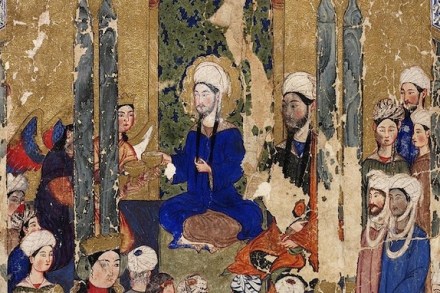
The V&A has recently decided to remove an historic image of the Prophet Mohammed from its website. The image remains in the collection and will be made available to scholars and researchers by appointment. I am not sure it is a very uplifting example, this censorship of the past, but they are certainly not alone in doing this.  Indeed over the last generation, a slow but efficient iconoclasm has been at work in Britain pruning images of the Prophet from published books, not just about the life of the Prophet but also illustrated surveys of Islamic Art.  It is extraordinary how successful this campaign has been, based not on any physical threat but on a deluge of orchestrated complaints by telephone and email.

Mohammed — in pictures

From our UK edition

Two months ago I was sitting beside the tomb of a descendant of the Prophet Mohammed, telling a story about the last week of the Prophet’s life. It was detailed enough to paint an imaginary portrait of him and included a mildly ribald joke from one of his wives, told to him on his deathbed when he was racked with fever. This kind of story often perplexes my rationalist friends back home. ‘Why can you describe the Prophet but not draw him?’ ‘Why can you make jokes but not draw cartoons?’ Where does this idea that it is forbidden to represent the Prophet come from? There is no line in the Koran that forbids it.