Arts feature

War games do something seriously unpleasant to our brains

Three years ago, I killed several thousand people over the course of a single weekend. Late into the night, I ran around butchering everyone I saw, until by the end I didn’t even feel anything any more. Just methodically powering through it all, through the wet sounds of splattering heads, bodies crumpling, shiny slicks of

The rise and fall of Tammy Faye

Tammy Faye Bakker was a chirpy, perky televangelist noted for her lavish mascara and her barrel-stave eyelashes. She once conducted an interview on her PTL (Praise the Lord) chat show for which she remains revered among gays. It was in 1985 and she was talking to Steve Pieters, a soft-spoken church pastor with a soup-strainer

How politics killed theatre

Hope can be remarkably persistent. And so, despite several years of experience pointing in starkly the other direction, a recent weekend saw me at Who Killed My Father at the Young Vic, the latest from ubiquitous Belgian director Ivo van Hove. A young friend had gone with his father the previous week and both described

Why I admire Saudi Arabia’s monstrous new city

The Kingdom of Saudi Arabia wants me to know that it is building a new city. Its adverts follow me around the internet. ‘Imagine a traditional city and consolidating its footprint, designing to protect and enhance nature.’ I’m imagining. Their city ‘will be home to nine million residents, and will be built with a footprint

The art of menus

There is, of course, no endeavour, no craft, no profession, no trade that neglects to ‘reflect society’. This is a commonplace. The collective narcissism of considerate builders, for instance, claims that hod carriers and brickwork reflect society. The contention of Menu Design in Europe is kindred. Graphic artists, restaurateurs, decorators and chefs have, through two

Why the Arts Council should kill off ENO and ENB

Pity Arts Council England, least loved of our NGOs, understaffed and under-resourced, its arm’s-length status gnawed to the shoulder by DCMS ukases, the stinginess of the Treasury and the government’s (in some respects, welcome) indifference to our higher culture. In return for its annual grant-in-aid (currently £336 million), it is obliged to cheer-lead policies of

The art of the monarchy

Elizabeth II spent virtually all her life surrounded by one of the world’s greatest art collections. Even when she was a child, and the likelihood of her inheriting the throne still seemed remote, visits to her grandparents at Buckingham Palace involved looking at pictures, since George V enjoyed showing her the Victorian narrative paintings that

The uncomfortable lessons of the new Fourth Plinth statues

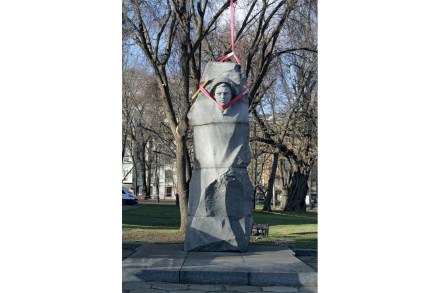
The Revd John Chilembwe – whose statue now adorns Trafalgar Square – is notorious for the church service he conducted beneath the severed head of William Jervis Livingstone, a Scottish plantation manager with a reputation for mistreating his workers. The night before, Chilembwe’s followers had broken into his house and chased him from room to

There's much more to Winslow Homer than his dramatic seascapes

Until the invention of photography war reportage depended on old-fashioned illustration, and even after that the illustrated press took a while to catch up. Photographic reproduction didn’t work on cheap newsprint, which demanded a crispness of definition that early photography couldn’t provide. So reports on the American Civil War in the new illustrated periodicals aimed

In praise of character actors

The star system is a false hierarchy: the best rarely make it to the top. I thought of this recently when it was announced that David Warner had died. Few outside acting could name him, though you may have seen his head flying off in The Omen, a film in which heads are cheap. Warner

The magic of Les Ballets Trockadero de Monte Carlo

Drag isn’t what it was. Pantomime dames, character actors and any number of sketch-show comedians had fun dressing up as harridans or movie stars (check out Benny Hill’s unforgettable Elizabeth Taylor) but those old-school travesti turns have been out-camped by a more unsettling performance style that women are finding increasingly hard to take. Directors and

Why Merseyside is the natural home for a Shakespearean theatre

Prescot is a neglected little town in Merseyside noted for having Britain’s second narrowest street and for its Brazilian waxing salon. It’s now also home to Shakespeare North, a game-changing new theatre. This handsome, modern brick building overlooking a Jacobean church has a light, airy, unfussy interior – a stairway to heaven. You leave the

In defence of country-pop

I am aware that the music I enjoy is widely considered to be the worst ever produced in human history. Worse than a roomful of children with recorders, cymbals and malice; worse than a poultry abattoir. Every so often, someone will ask me what I listen to, and I’m forced to tell them the truth.

The joy of volcano-chasing

Katia and Maurice Krafft were both born in the 1940s in the Rhine valley, close to the Miocene Kaiser volcano, though they didn’t know each other as children. They met on a park bench when they were students at the University of Strasbourg, and from that moment on, according to their joint obituary in the

From Leonardo to Hepworth: the art of surgery

A doctor with wild grey hair and mutton chops holds a scalpel in his bloodied hand. He has paused for a moment, allowing one of his students to take his place and complete the incision. It’s a remarkably clean cut; the young man with the clamp has barely dirtied his shirt cuffs. Even so, the

Paris's glittering new museums

How do you manage a dictatorship? By producing ‘a succession of miracles’, according to Louis-Napoléon, that ‘dazzle and astonish’. In 1852 he inaugurated his Second Empire regime with a strategy of soft power predicated on the assumption that the loyalty of politically volatile Paris was to be won not by violent repression but by visible

The man who changed Indian cinema

At 6ft 4½in tall, Satyajit Ray was head and shoulders above his countrymen. His height was unheard of among Bengalis, ‘a low-lying people in a low-lying land’, as the colonial saying went. With his stature, jawline and baritone voice, he might have been a Bollywood hero. Instead, he chose to tower over the world of

The opera that wouldn’t die

When Erich Wolfgang Korngold completed his third opera, Die tote Stadt, in August 1920, he’d barely turned 23. Yet such was his reputation that what followed was practically a Europe-wide bidding war for rights to the première. The young composer had his pick of companies and conductors (the Vienna State Opera tried and failed). In