Arts feature

Meet the musicians trying to revive French-language pop 

The other day, I went to see a nouveau riot-girl band called Claire Dance play in a disused factory in Bagnolet on the edge of Paris. They were great: the kind of sonic kick in the nuts I’d been waiting more than a decade for an all-female band to deliver. I half-wondered whether it was just my own imperfect command of French that left me clueless as to their message. ‘C’était tout een eenglish,’ came the response from the guitarist afterwards. How come they never considered accompanying such emotionally charged music with lyrics in their mother tongue? ‘It’s considered cringe,’ she replied. ‘We only like English music.

‘I want every production I do to be the funniest’: an interview with Cal McCrystal

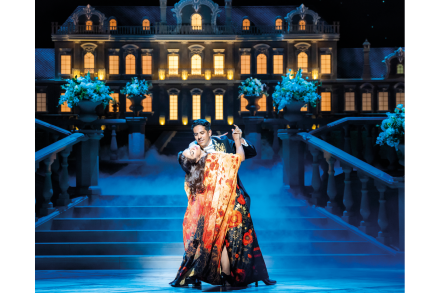
There are certain things that you don’t expect at the opera. Laughter, for example. Proper laughter, that is; not the knowing sort that ripples politely across the auditorium five seconds after the punchline appears in the surtitles. We’re talking unconstrained laughter; laughter that gives you an endorphin rush and sends you straight online to tell your friends that they must see the show. But that’s Cal McCrystal’s whole business. He’s the director who devised James Corden’s delirious plate-spinning capers in the National Theatre’s One Man, Two Guvnors and whose face (in motion-capture) provided the elastic expressions of a small Peruvian bear in Paddington. ‘I want every production I do to be the funniest I’ve ever done.

The craft renaissance

As long ago as the 1960s, the poet Edward James was worried that traditional crafts were dying out. Having frittered much of the family fortune he had inherited, aged five, on supporting struggling surrealists (he commissioned the Mae West lips sofa and lobster telephone from a scuffling Dali) and on backing shows starring his actress girlfriends (‘very wealth-consuming,’ he admitted, ‘because invariably they flopped’) then creating an 80-acre sculpture garden in the Sierra Gorda mountains of Mexico, the man described as ‘the last of the great eccentrics’ decided in his late fifties to invest his remaining money in something more sensible.

An exclusive look at Graham Linehan’s Father Ted musical

The tree-lined streets of Rotherhithe are an odd place to unveil a West End musical. But this is a suitably odd situation. Graham Linehan – lauded comedy writer turned culture warrior – is about to unveil what he calls ‘a musical that may never be seen’. For much of the past 30 years, the idea of turning Father Ted, cult sitcom of the 1990s, into a West End musical would have seemed a hot prospect – certainly to the legions of nerdy, largely male fans who still stream episodes decades later. Once upon a time, it looked destined for Shaftesbury Avenue, backed by one of the biggest names in theatre. Now it might be going nowhere.

The unstoppable rise of country music

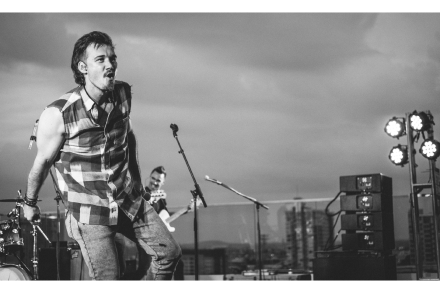
When a major artist releases a new album, the first thing to follow is the onslaught of think pieces. And when Beyoncé released Cowboy Carter earlier this year, the tone of these think pieces – especially on this side of the Atlantic – was one of slightly baffled congratulation. Here, at last, was a pioneer who might drag this hidebound genre – of sequins and satin, of lachrymose, middle-aged songs about drink and divorce – into the modern age. ‘Modern country is like punk for the Hannah Montana generation’ The only problem is that Beyoncé was not leading; she was following. Beyoncé pivoted to country not to make it cool, but because it’s become cool – and more of a commercial powerhouse than it has been for years.

The woman who revolutionised British fashion: Barbara Hulanicki interviewed

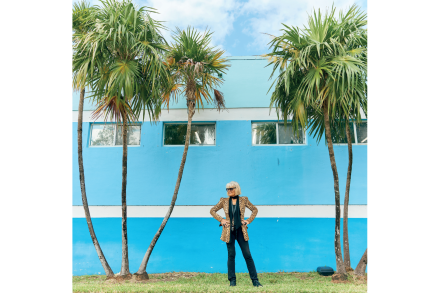
‘I was one of your original customers in Kensington Church Street,’ I tell the founder of Biba when we meet. ‘Are you coming to complain?’ she shoots back. At 87 and fresh off a flight from Miami, Barbara Hulanicki is as sharp as a tack. The designer was in London for the opening of The Biba Story, the Fashion and Textile Museum’s celebration of the revolution she accomplished in 1960s street fashion. Believe me, it was a revolution – I was there and yes, I remember. In fact I can summon a mental inventory of all the items of clothing I bought from Biba over its short life, from the lilac fit-and-flare mini-coat that was my first proud purchase in 1967 to the brown maxi-coat with the power shoulders and the shaggy fake-fur trim that was my last in 1972.

The brilliance of Beryl Cook

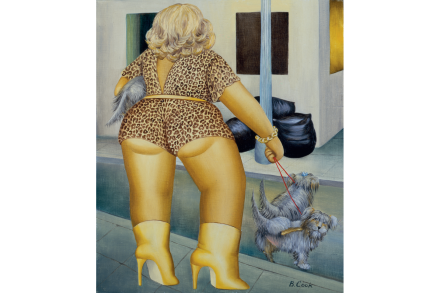
Nobody claims Beryl Cook was an artistic genius, least of all the artist herself. ‘I think my work lies somewhere between Donald McGill [the saucy postcard artist that George Orwell wrote so lyrically about] and Stanley Spencer,’ she once told me. ‘But I’m sorry to say I’m probably nearer McGill.’ She was, as ever, being modest. I actually think she’s nearer Spencer – and Hogarth, come to that. Cook’s paintings make us laugh but that doesn’t stop them from being art. (Few would say Shakespeare’s comedies are as profound as his tragedies, but they’re brilliant creations, nevertheless.) Though Victoria Wood dubbed her work ‘Rubens with jokes’, there aren’t actually any jokes in her pictures; they’re all direct observations, not double entendres.

It’s time to free art from being ‘interactive’ and ‘immersive’

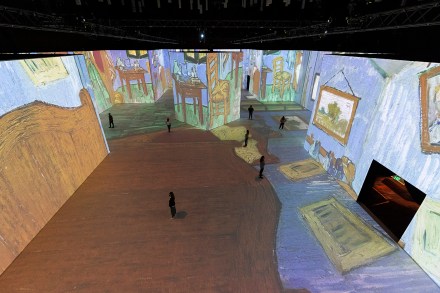
The American artist and critic Brad Troemel once pointed out that art galleries have all turned into a kind of adult daycare, and ever since then I haven’t been able to visit a gallery without noticing it. Nearly two decades ago, Carsten Höller installed a set of big aluminium slides in the Turbine Hall at Tate Modern, and they were undeniably good fun because going down slides is fun. It’s also fun, although maybe for a different type of person, to ask if going down slides counts as art. These days, though, you can hardly move for this stuff. The world is already interactive. You walk around in it. You can steal things from shops Last summer the Turbine Hall hosted a set of giant building blocks by Rasheed Araeen.

‘I couldn’t afford loo roll’: Bruce Robinson on being skint, Zeffirelli’s advances and Withnail’s return

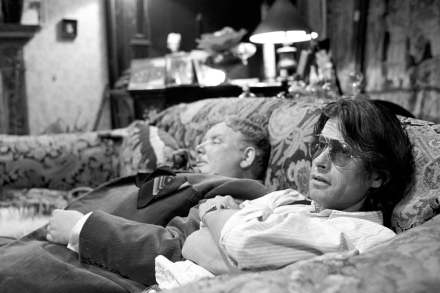
Bruce Robinson is ramming a huge log into the grate of his ancient fireplace in mud-clogged Herefordshire. He’s 77 and the film for which he is famous, Withnail and I, is about to open as a play. Isn’t it curious it hasn’t happened before, given that the comedy is about two thirsty, unemployed actors and is a sort of love-hate letter to the theatre? ‘I was living on 30 bob a week – I could either afford fish and chips or ten gold leaf’ ‘I wasn’t fond of the idea of staging it,’ says Robinson, who wrote and directed the 1987 film based on his own boozy life as an actor in the 1960s. ‘I’d done it, you know; it’s decades ago and it’s over. There was a time when Withnail was stuck to me like a colostomy bag. I just wanted to move on.

We have lost an unforgettable teacher and one of Britain’s great critics

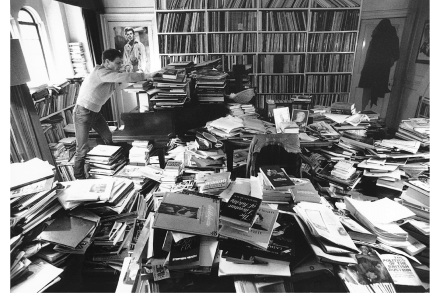
Tanner, the critic RICHARD BRATBY Michael Tanner (1935-2024), who died earlier this month, had such a vital mind and stood so far above the common run of music critics that it’s hard to believe he’s gone. For a philosopher to concern themself with the inner game of opera is not unknown (think of Friedrich Nietzsche and Roger Scruton). To do it as perceptively and as readably as Tanner is rarer. For two decades, starting in  1996, his weekly Spectator opera column offered as thorough and as stimulating an education in musical aesthetics as one could hope to receive; intellectual red meat served with forensic clarity and a mischievous, subversive smile.

The tumultuous story behind Caravaggio’s last painting

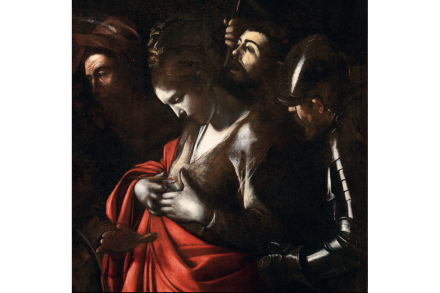
For centuries no one knew who it was by or even what it was of. The picture that had hung unnoticed in a succession of noble palazzi in the Italian province of Salerno, with its deep chiaroscuro and close-cropped composition, looked like a Caravaggio – but after Caravaggio almost every painting in Naples did. When it entered the collection of the Banca Commerciale Italiana in 1973 it was attributed to Mattia Preti, a Calabrian Caravaggista of the next generation who had caught the tenebrist bug. But in 1980, a letter discovered in the Naples State Archive changed the picture. Written on 11 May 1610 by Lanfranco Massa – the Naples agent of the Genoese nobleman Marcantonio Doria – it explained a delay in the transportation of a painting of Saint Ursula to Genoa.

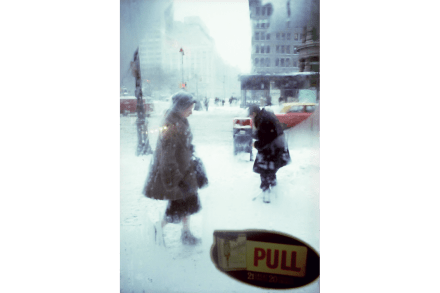
The quiet brilliance of street photographer Saul Leiter

This is the second exhibition of mid-century New York street photography at the MK Gallery in Milton Keynes. The first, in 2022, surveyed the work of Vivian Maier, who at her death left behind a vast quantity of prints and negatives: evidence of a hidden life unsuspected even by those in whose household she lived and worked for four decades. There are continuities between Maier and the subject of the current show, Saul Leiter. They were contemporaries, loners who lived into their eighties (Leiter died four years after Maier, in 2013), prolific but uninterested in recognition, their reputations largely posthumous. Leiter was born in 1923 in Pittsburgh, like Andy Warhol and, like Warhol, he got out.

Why art biennales are (mostly) rubbish

Should you visit Malta this spring, you may notice something decidedly weird is afoot. Across the public squares of its capital, Valletta, performance artists are blocking busy thoroughfares and causing havoc on packed café terraces. The Hospitaller and British military forts that dominate the capital’s famous harbour, meanwhile, are full of dysfunctional installation work, while the curio-filled vitrines of local museums are forced to compete with video art. Even the Grandmaster’s Palace – for centuries the country’s seat of power – has accommodated several dozen mini-exhibitions on the theme of ‘the Matri-archive of the Mediterranean’.

Roxy Music’s Phil Manzanera on Castro, Kanye, his spook dad and the two Bri/yans

Roxy Music didn’t make Phil Manzanera rich. Kanye West did. When a guitar phrase from Manzanera’s obscure 1978 solo song, ‘K-Scope’, was sampled in 2012 by West and Jay-Z on their track, ‘No Church in the Wild’, the one-third share Manzanera was given of publishing and sales revenue proved life-changing. The song featured on a platinum-selling album, and was used in The Great Gatsby and numerous adverts. ‘I would earn more money from a short guitar riff that I wrote one evening on a sofa in front of the telly than I ever earned in the entire 50 years as a member of Roxy Music.

Why architectural modernism was championed by the rulers and the ruled

My childhood in Hong Kong was shaped by a particular style of building: market halls with brise-soleils sheltering us from the glare; housing-block stairwells with perforated blockwork letting in dappled light and breeze; classrooms accessed from open-air decks, with clerestory windows cross-ventilating the stale, sticky air. In this sub-tropical ex-British colony, these features defined its mid-century municipal buildings. While the investment in public amenities has since been portrayed as ‘pacification’ to shore up consent for British rule, it also undeniably nurtured – in the wake of a ravaging Japanese occupation – the explosion of Hong Kong’s middle class. This included my parents, who were raised, schooled and housed in such postwar colonial architecture.

The fading art of elegant gallery dining

We live in times generally unfriendly to ritual, religious or civic. For 50 years at least, churches have stripped away once-glorious liturgical rituals in order, they say, to render themselves more accessible, even as pews have emptied. On the civic side, great art museums – some would say the cathedrals of our secular age – once invited visitors to a ritual that gave a rest to the feet and the eyes while enhancing the experience of being there in the first place. It was called having lunch. The space is still there but is a shell. ‘Redesigned’ is not the adjective; vandalised would be better Visual attentiveness requires energy even if, like me, you shy away from reading the labels. Energy requires calories.

Serious composers write ad music too

Next month in London, they’re celebrating a composer you’ve probably never heard of, but whose work you’re sure to have heard. If you’ve watched much British TV or cinema in the past half century, you’ll already know his music, and better than you think. A quick test of age: do you remember ‘The Right One’ – the song that used to advertise Martini (‘any time, any place, anywhere’) in a haze of wah-wah pedal and 1970s hair? How about Dennis Potter’s sci-fi swansong Cold Lazarus, or more recently, the Bafta-winning Édith Piaf biopic La Vie en Rose? Still no? Then picture David Suchet as ITV’s Poirot: and come on, surely you can already hear that smoky sax curling across the titles?

Will a new Labour government let architects reshape housing?

‘We make our buildings, and afterwards they make us,’ Winston Churchill said in 1924 in a speech to the Architectural Association. This was flattery of the highest order, designed to butter up the audience of budding architects and inflate their sense of how much power they had to shape society. It’s remarkable then, 100 years later, how powerless architects have become when it comes to the biggest architectural crisis of our time: housing. According to the Royal Institute of British Architects, only 6 per cent of new homes in the UK are designed by architects. Everything else is dealt with by volume housebuilders, with the top three alone building 25 per cent of them, churned out from identikit designs.

What were we all doing here? My 600-mile trip to hear an organ play a D natural

In the year 2000, in a small east German town, work began on the construction of an organ that had one purpose: to perform John Cage’s ORGAN2/ASLSP (1987) for precisely 639 years. The late avant-garde composer’s only instruction for the piece was to play the piece ‘as slowly as possible’. And so in 2001 – the instrument finally ready – the world’s longest organ recital began in St Burchardi church, Halberstadt, with a rest lasting 17 months before the first chord commenced droning in 2003. It consisted of two G sharps and a B. Two weeks ago, I – along with several hundred others – made the pilgrimage to the town to witness the work’s latest chord change.