Timothy Jacobson

Ship shape: Normandie, the biggest French restaurant of all

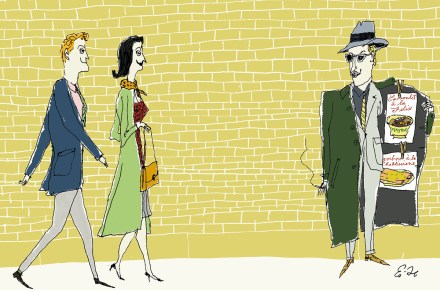
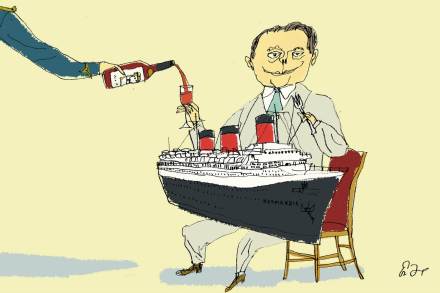
These pages recently carried a lament for the little French restaurant, and the loss from the cities they once graced of a certain element of gentility and, yes, class. On the same subject, let us consider another era when class was valued more highly, and which produced the classiest, and the grandest, French restaurant of all. This requires a journey. In July 1936, a Chicago family, relations of mine, embarked on an unrushed two-month European vacation. A meticulous Thos. Cook & Son-Wagons-Lits, Inc. itinerary routed them first to France, then Italy, Switzerland, Germany, Holland and finally to England. It was a thoroughly first-class affair.
French

Old texts and Bacon’s Castle: a walk through Virginia history

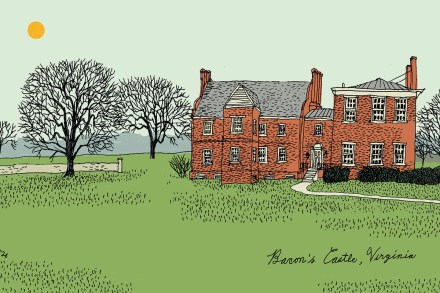
You will find Bacon’s Castle amid the flat tobacco and peanut fields in Surry County, Virginia, across the James River from Jamestown, if not quite a “castle” then certainly a very fine Jacobean mansion and the oldest brick dwelling in America. When I first visited this part of the Tidewater in 1958, I was ten and Jamestown, the year before, had turned 350. Queen Elizabeth II and Prince Philip came to crown the anniversary, and replicas of the three ships that brought the first English here in 1607 — Susan Constant, Godspeed and Discovery — were tied up in perpetuity at Jamestown. I came on a field trip with my schoolmates to take in the sights and something of the history of the place and of Colonial Williamsburg, just up the road. Bacon’s Castle was not on our itinerary.

Virginia

Iron clad: good cooking’s most essential metal

Miles Coverdale’s translation of Psalm 105 in the Book of Common Prayer elevated iron from metallurgical to literary significance. The story of Joseph being sold unjustly as a bondservant — “Whose feet they hurt in the stocks: the iron entered into his soul” — shames flaccid times like ours. And iron’s virtues excel not least of all in cooking, where it can enter literally into our bodies and, who knows, maybe our souls too. Joseph just got things started. Think of the first ironclads, Monitor and Merrimac, hammering away at each other at Hampton Roads in 1862, of the dreadnoughts that put paid to Nelson’s wooden walls, of Agatha Christie’s ironclad alibis, of the verse in Christina Rossetti’s great carol: “Earth stood hard as iron, water like a stone.

iron

On D-Day at eighty

Traveling to Normandy fourteen years ago, we encountered a rare guide. He was a middle-aged Frenchman native to the neighborhood. I do not recall how long he had been at it, but he had learned something important about the guide business that was evident the day he shepherded us, and another American woman and her teenaged daughter, about the places made famous before any of us were born. He knew when to show, when to tell and when to relate something from his own experience that would enlighten ours. He took things in a certain order, which was not the order I would have guessed. First we stopped at the German cemetery at La Cambe, where 21,200 of the some-80,000 German soldiers who died in Normandy are interred. I remember few other visitors.

Normandy

The fading art of elegant gallery dining

From our UK edition

We live in times generally unfriendly to ritual, religious or civic. For 50 years at least, churches have stripped away once-glorious liturgical rituals in order, they say, to render themselves more accessible, even as pews have emptied. On the civic side, great art museums – some would say the cathedrals of our secular age – once invited visitors to a ritual that gave a rest to the feet and the eyes while enhancing the experience of being there in the first place. It was called having lunch. The space is still there but is a shell. ‘Redesigned’ is not the adjective; vandalised would be better Visual attentiveness requires energy even if, like me, you shy away from reading the labels. Energy requires calories.

The wonder of cooking with coal

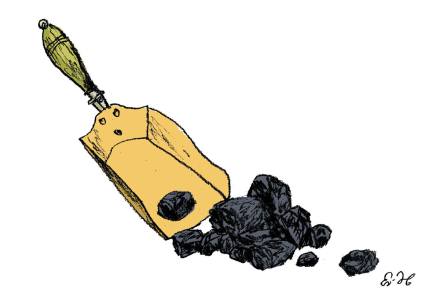
The grandest compliment ever paid me came near the end of a small dinner party last winter from guest and friend Jeffrey who, on settling into an old wing chair as his host stoked the fire with coal, remarked: “I feel like I’ve just stepped into an Evelyn Waugh novel.” It was, he said, the coal. About as close as anyone these days will have come to a domestic coal fire is the screen image of one in Downton Abbey or its predecessor, Upstairs Downstairs. Those television “fires” were all actually gas ones made to imitate the look of coal. In Waugh’s time in houses like that, they all would have burned the real thing.

coal

How to plan a suitable feast for New Year’s

It is commonplace that the December run-up to the holiday season (aka the Christmas season) is heavy with festivity. The well-lubricated office Christmas parties of yore were legendary, while at home the domestic calendar brimmed with all sorts of communal gaiety. This all occurred during Advent, which in the old Christian dispensation was a penitential season. Except when among the most devout, I was never able to see that this much dampened the fun. As the marketers now see it, the season of getting and spending stretches from somewhere around Halloween right up to Christmas when, all of a shameless sudden, it’s on to Valentine’s. This leaves New Year’s curiously — sometimes on the coldest night of the year — out in the cold.

new year's

In praise of corn, a Thanksgiving essential

The Indians, as we innocently called them in the days of my youth, put their name to it: “Indian Corn.” Somehow, “Native American” or “First Peoples Corn” just doesn’t do it, so here let us observe this now-verboten usage. Technically, Indian Corn (known as calico or dent corn too, for its coloration and dents in the kernels) is one variety of maize, first cultivated, they say, in Mexico thousands of years ago. Columbus, who called the natives “Indians” because he was looking for India, brought back seeds to Europe in the 1490s; they did not take. The Plymouth colonists in the 1620s, from whose early travails the American feast of Thanksgiving emerged, grew Indian corn courtesy of the local Wampanoag tribe. It no doubt helped them survive when the English peas ran out.

corn

The joy of baking your own bread

Flour furnishes most everyone’s kitchen. If you’re a baker or breadmaker, you will probably have several five-pound bags of it in the pantry alongside the yeast. If you don’t bake or don’t bake much, you will probably have at least a cup or two of it in the canister on the kitchen counter for thickening the gravy, frying the chicken or making the roux. Most likely, most of it will have come from wheat. Wheat has been with mankind for 10,000 years or so and was first domesticated somewhere in the Fertile Crescent, or, as our old geographies used to say, Mesopotamia, which also, it was hinted, was the neighborhood of the Garden of Eden. Wheat’s genetic diversity made it adaptable to a variety of climes and continents.

bread

Return to The Hague

Much is said, chiefly by Americans used to Amtrak, about continental Europe’s wonderful train system, though just how wonderful depends on where you want to go. On a recent journey from Southampton, where we had disembarked early morning from the Queen Mary, to The Hague where we missed our evening dinner reservations at the Hotel des Indes, I made certain discoveries. One was that The Hague, seat of the Dutch government, home to the king and queen, venue of the World Court and other august institutions of world government, is now off-line: i.e. it is not on the high-speed rail network that links up London, Paris, Brussels and Amsterdam. This seems curious and, in a way, charming.

The Hague

A parting salute to the swizzle stick

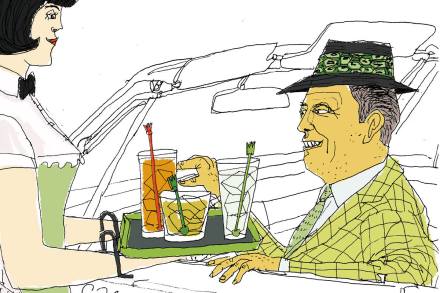
We live in the age of takeaway-everything, a phenomenon amplified since the late, great plague by another barbarism: the drive-thru. You need no longer even get off your derrière to collect the goods. Just lower the power window, flash your phone, then “grab-and-go.” That this is a powerful cultural proposition the conga-line of cars filling multiple lanes at your local Chick-fil-A, where they have it down to a science, will attest. I recall my first innocent meeting with drive-thru, then called drive-in, in 1959 when a bank in the small town where my family lived cut a hole in the wall and installed the requisite sliding drawer. Things have clearly gotten out of hand since. Not all takeaway is created equal.

swizzle

The trouble with food porn

Food porn, an exaggerated photographic representation of how food supposedly looks, has been with us since the 1970s. Today, it is as ubiquitous as “traditional” porn and just as sad. It disorders our senses. Food tastes and smells, only thirdly does it look. Youthful gazing through the bakeshop window is one thing; seeing food mediated through the photographic image is quite another: it titillates but does not nourish. It has been a steep fall from the innocent old days of “Oh boy, that looks good!” exclaimed in the real presence of home-prepared meatloaf or macaroni-and-cheese, not in response to a picture of it. This disordering of our senses manifests in two ways.

food porn

Jimmy Kelly’s Steakhouse keeps a simple, good thing going

I have written before in these pages about declining standards in the restaurant world, which has less to do with the food than with the whole “experience” of dining out: the lack of tablecloths, the napkin-wrapped silverware, the to-go boxes, the slovenly informality of staff and customers alike. I stand by every word of it, which is why discovery, or rediscovery, of rare holdout occasions, in this diner-out, is sheer joy. One such exception, long known to me, Jimmy Kelly’s Steakhouse in Nashville, is exceptional in another sense, too. It has been in operation without interruption and under the same family ownership for eighty-nine years.

Nashville jimmy kelly's

The beauty of the Beaumont inn

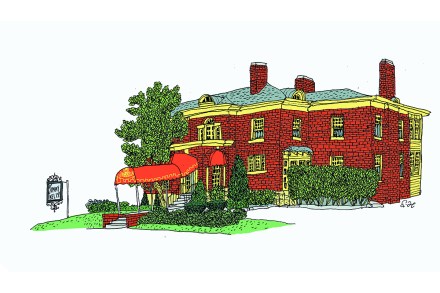
It is not often these days that I get to return to the Beaumont, an old inn in the Kentucky Bluegrass first visited half a century ago. The cliché that time and distance make the heart grow fonder has truth in it, as I have relearned this season. The Beaumont has been in the food and lodging business since 1917. It is owned and operated by branches of the Dedman family whose roots reach back to the early days of trans-Appalachian settlement. The original building dates from the 1840s and was once a girls’ finishing school. The young ladies in crinolines are long gone, but not a certain air of gentility. The Beaumont has a worthy watering hole — the Owl’s Nest — refashioned from an old carriage shelter in 2003 when liquor-by-the-drink finally came to Harrodsburg.

Beaumont

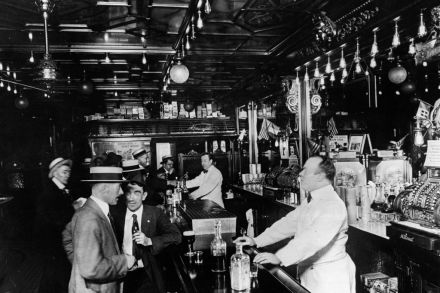
Lucius Beebe knew how to live

There are some characters who infuse literature and life with disproportionate zest. The nature of their vocations is less relevant than the fervency they bring to the job, which is what makes them stand up off the page and sail through time. Lucius Beebe, who kept a Rolls-Royce and a Bentley, favored bowler hats and evening dress and wrote a column for the old New York Herald Tribune in the 1930s and then for Gourmet until his death in 1966, sits high up on my list of zestful characters who go the distance: militantly old-fashioned, never out-of-date. The association with the estimable, sadly deceased Gourmet justifies talking about Beebe under the food heading as much as any other, even though he did not always write about food as such.

beebe

A Cuban Missile Crisis spent on the Atlantic

It is a common thing we have all experienced to be true: events that forever fix themselves in our memory of a certain place. Call it the “I’ll never forget where I was on December 7, 1941 or September 11, 2001” syndrome. On the Sunday Japan attacked Pearl Harbor, my father was on a train passing through western Pennsylvania after a job interview in New York City; he preserved a copy of the Pittsburgh paper to prove it. On the morning of September 11, I was breakfasting at home, awaiting my driver for Dulles International Airport; due to fly that day, I did not.

Ukraine in black and white

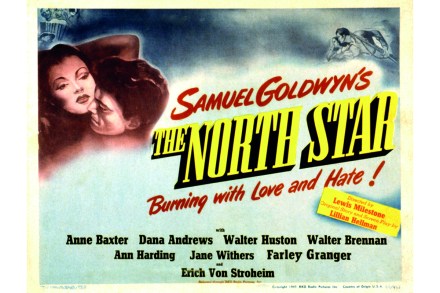
Displays of wanton brutality and heroic resistance in the Russo-Ukrainian War of 2022 have prompted some in the West to proclaim a moment of “moral clarity.” Some caution might be wise here, since moral clarity in world affairs is not always as clear or as moral as its claimants think. It was Soviet ideology, succeeding czarist imperialism, that for so long smothered Ukraine, along with the other captive nations consigned to Stalin at Yalta. As Ukraine may now be slipping captivity at last, the West rejoices. But how clear is the clarity? History’s players sometimes switch roles even from one act to the next. It has not, for example, always been brutal Russians that heroic Ukrainians went up against. Eighty-one years ago, it was brutal Germans.

North Star

The decline and fall of eating out

"Upgrade” is a term I associate with flying and getting a seat in the front cabin that you don’t pay for — except perhaps with “miles” and “points,” our version of Green Stamps. Upgrade’s predecessor from the era of rail travel was “step-up,” the term used by the Pullman Company when a passenger wished a better accommodation and space was available. You paid the conductor the step-up charge (in cash), and the porter dutifully toted your bags to your new compartment. Nowadays, it is no longer necessary to travel to upgrade. Just step out for lunch and add some “protein” to your salad. Upgrade! Marketing gibberish in the restaurant world is nothing new, but today it signifies the accelerating downgrade (sorry, no refund) of the whole business.

upgrade

On the spot along the Outer Banks

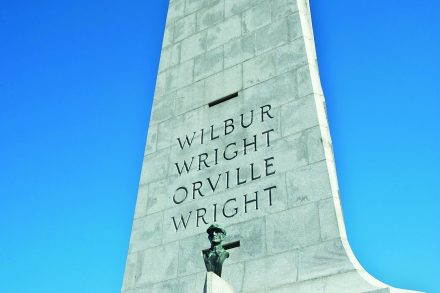
Most likely we experience it first as children, on summer vacation or a school trip: the sensation that something really important from a long time ago happened right here, on this very spot. Visits to our national monuments still stir the same old feeling, but, as I am long past childhood, a question arises that did not then. How is it that by stepping literally onto the spot, we step out of our own heads and into the past? The conventional wisdom for the past half-century or so has been that historic sites demand explanation or, in professional jargon, interpretation.

outer banks

In praise of the country store

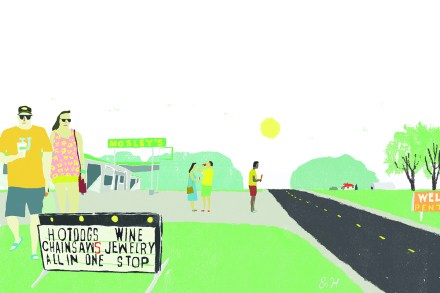
In our age of branded everything, I suppose it should not surprise that the country store, that artifact of an older rural landscape, should have gotten the treatment too. Play the word-association game with Americans today and for “country store” you’re likely to get “Cracker Barrel™,” the publicly traded chain of folksy restaurants/retail emporia strung along the interstate system and specializing in a long menu of so-called comfort food, clean restrooms and rockers on the porch. Do not be deceived. Lunch at Mosley’s Store in Pintlala, Alabama, sixteen miles south of Montgomery on US Route 31, the old Mobile Road, bespeaks a different reality. It has to do with food, tangentially.

country