Arts feature

In from the cold | 12 February 2011

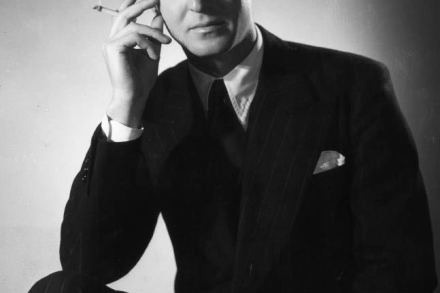
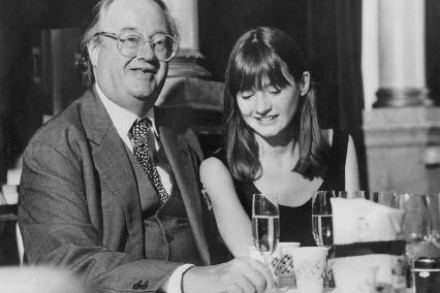
Philip Ziegler puts the case for Terence Rattigan, whose centenary is celebrated with numerous revivals of his work After decades in the doldrums, Terence Rattigan seems once more to be returning to popular and critical favour. Last year After the Dance was one of the National Theatre’s more emphatic successes, and the centenary of Rattigan’s birth is being celebrated by productions of his plays at the Old Vic, the Jermyn Street Theatre and in Northampton, West Yorkshire and Chichester. There is to be a Rattigan season at the British Film Institute, and a new screen adaptation of The Deep Blue Sea. Rattigan, it seems, is back. Of course, he never really went away.

‘I want to be a vagabond’

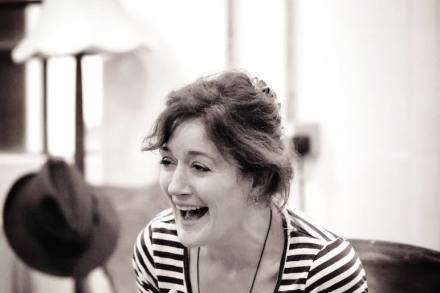
Lloyd Evans talks to Sophie Thompson, whose lack of vanity defines her approach to acting Straight off, as soon as I meet Sophie Thompson, I can see the look she’s striving for. Elegant ragamuffin. Torn jeans, scruffy trainers and a charity-shop blouse all offset by some peachy designer accessory worth five grand. Then I realise there’s no peachy accessory. She’s just pulled on her gardening gear and left it at that. And not a trace of make-up either which, for a woman over 45 — even though she looks ten years younger — is either reckless or bold. Or perhaps just genuinely modest. Thompson is starring in the social satire Clybourne Park, which opened at the Royal Court last autumn and arrives in the West End this week.

Hand of destruction

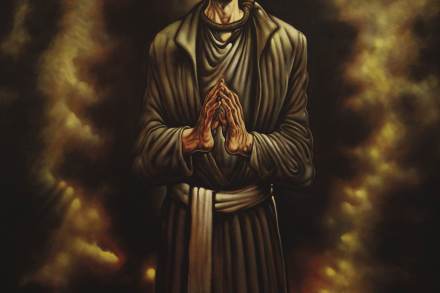
Mark Greaves talks to the artist Peter Howson about his latest commission and his demons Peter Howson started hallucinating last summer. Lying awake at night, he saw what he describes as ‘devils, demons and goblins’. They told him there was no point in living; that he might as well do away with himself. It was, he says, probably the worst year of his life. He felt as if he had been abandoned by God. At times he says he couldn’t really walk or see. He made himself feel better by reading the Book of Job — in which Job’s children die, his possessions are destroyed and his skin covered in boils as part of a test by God. I am anxious about meeting him in such a delicate state.

Creative protesting

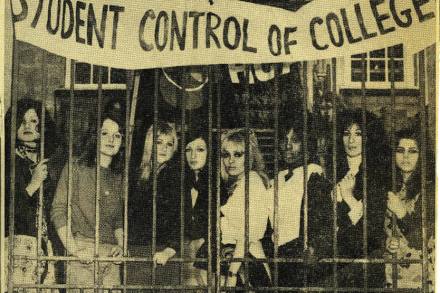
It’s time to heed the complaints and free art schools from the constraints of the university system, says Niru Ratnam The Turner Prize award ceremony always attracts protest — usually in the shape of the Stuckists, a group of bedraggled, eccentric-looking artists who gather outside Tate Britain in funny hats and bemoan the death of representational painting. But this year they were upstaged by around 200 art students, who entered the museum in the afternoon and refused to leave, staging what was described as a ‘teach-in’. In addition to wearing their own humorous hats, the students made speeches, marched round and chanted.

Best in show | 15 January 2011

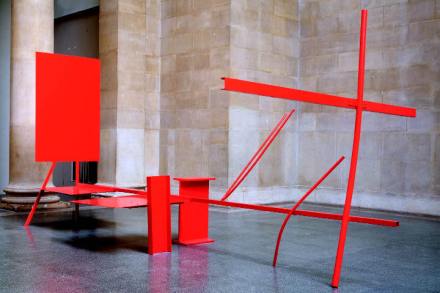
Penelope Curtis, director of Tate Britain, talks to Ariane Bankes about the planned revamp of the museum and 100 different ways of showing sculpture The evening after first meeting Penelope Curtis, director of Tate Britain, I bumped into a mutual friend who told me, only half-joking, that she could be frightening. Fair enough, I thought: to become the first woman director of one of Britain’s pre-eminent public galleries you have to frighten a few people along the way. As it happened, I hadn’t found her alarming at all at the press briefing that morning: direct, brisk, purposeful — she was, after all, embarking on a wholesale top-to-toe redesign and rehang of the gallery — but approachable.

Hit Liszt

Damian Thompson highlights the gems among the prolific and pilloried composer’s nine million notes The extraordinary thing about Franz Liszt is that he remains one of the most famous composers of the 19th century despite the fact that the overwhelming majority of his music is forgotten — and likely to stay forgotten. He wrote enough of it, that’s for sure. If you were to listen to his works one after another without interruption, it would take about a week. I’m basing that estimate on the fact that Leslie Howard’s 98 CDs of Liszt’s complete piano music, which are just about to be reissued by Hyperion, last for just over five days. That’s nine million notes spread over 12 miles of printed pages, in case you were wondering.

Turkish time travel

Harry Mount looks across the Dardanelles and sees yesterday’s weather today In Canakkale — the biggest town on the Dardanelles, where more than 130,000 British, Australians, New Zealanders and Turks were slaughtered in the 1915 campaign — Mark Wallinger, the 2007 Turner Prize winner, has dreamt up a clever little work about memory. On the Asian quayside, looking across to the Gallipoli killing fields on the European side of the straits, is an old shipping container, tricked out like a 1950s picture house; think Cinema Paradiso, and you get the idea. Using a 1950s-style sign, Wallinger has named it ‘Sinema Amnesia’ (Sinema is Turkish for cinema).

Arts administration: Questions of privilege

The rights and wrongs of internships for those who are seeking a first job have been hotly debated in the press recently, and nowhere more so than with reference to young people who hope to make a career in arts and music administration. But the principles remain the same whatever the discipline: is it legal for an organisation to employ people who are usually given a stipulated job when they become an intern, and not to pay them; and is it acceptable that these opportunities tend to go to young people who are already rich enough (through parental support or earnings from a gap year many cannot afford to take in the first place) to underwrite the costs of living while earning nothing?

Wedgwood Museum: At risk

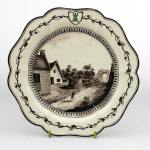
We are fairly certain that the late Robert Maxwell never met the even later Josiah Wedgwood, but Cap’n Bob’s nefarious legacy is now being keenly felt by Wedgwood’s descendants. For it was in the aftermath of Maxwell’s plundering of the Mirror Group that the Pension Protection Fund was established to compensate pensioners in the wake of insolvency. And now this legislation is being used to asset-strip one of the great museums of England. On the southern edge of Stoke-on-Trent stands the Wedgwood Museum, dedicated to ‘The People Who Have Made Objects of Great Beauty from the Soils of Staffordshire’.

Intimations of infinity

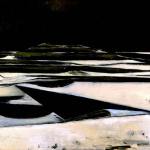
Andrew Lambirth finds a striking metaphor for the physical limitations of earthbound existence versus the infinite freedom of the spirit in Paul Nash’s painting ‘Winter Sea’ Paul Nash is one of the best-loved English painters of the last century, a great imaginative artist, always trying to discover the appropriate form for what he wanted to say. Nash was a philosopher-poet who expressed himself best (though he was a good writer) in visual terms and chose landscape painting as his primary vehicle. Although he died prematurely, in 1946 at the age of 57, his work stands easily above that of most of his contemporaries, and its originality and inventiveness have continued to inspire painters and beguile the public.

Serious business

Emily Mortimer on how her father John was asked by Kenneth Tynan to translate Feydeau’s farce and how she wishes he were still around to drink champagne with the current cast It was in the middle of the Sixties that I had the opportunity of learning the true meaning of farce,’ my father wrote. That was the time he was palling around with Ken Tynan. He used to tell us about an election-night party at Tynan’s house, which included among the guests some life-size wax ladies dressed as nuns, who were to be found sitting on the loos and lying in abandoned attitudes on all the beds.

Come together

Niru Ratnam invites you to join in and take off your trousers in the name of art at the taxpayer’s expense — while you still can In the week before the G20 summit in early 2009, I found myself sitting at a large, round, glass-topped table in the new extension to the Whitechapel Gallery. A large tapestry copy of Picasso’s ‘Guernica’ hung on one of the walls nearby. Around the table were 30-odd people made up of students, random art folk, regulars of the Anarchist Bookshop located in the alley next to the gallery and, somewhat incongruously, the managing director of the Whitechapel Gallery looking dapper, if increasingly confused, in the chair. We had all been invited along to respond to ‘the current political and economic climate’.

Rewarding rubbish

If you went on holiday to Italy this year, you may have come back with a plate, a mug or a jug — an item or two of the painted pottery still handmade (at least sometimes) by craftsmen and women, mostly in Umbria, but also in the Marche, and which you can see in the shops in Siena and Florence and in other places in Tuscany. If you went on holiday to Italy this year, you may have come back with a plate, a mug or a jug — an item or two of the painted pottery still handmade (at least sometimes) by craftsmen and women, mostly in Umbria, but also in the Marche, and which you can see in the shops in Siena and Florence and in other places in Tuscany.

Chinese burn

A kind of madness has taken grip of the art market. It seems that the world’s super-rich have decided that money has no value — or at least that it has a value different from that understood by the rest of us. Just this month, one of Alma Tadema’s fanciful biblical epics was sold for an incredible $36 million (previous auction record $2.8 million), a Modigliani changed hands at $69 million (previous record $31 million), while a now famous porcelain vase made for the Emperor Qianlong, which turned up in a bungalow in Pinner, realised more than £53 million — a world auction record for any Chinese work of art. Of all global art markets, none is more feverish than that of Chinese art.

The folly of ambition

Andrew Lambirth talks to the artist Keith Coventry about drawing inspiration from Sickert, Churchill and Ladybird Books Keith Coventry has no time to visit the two lap-dancing clubs that lurk a few doors down from his studio, a small room with barred windows in a light-industrial block in the East End. Here, he puts in long hours, often forgetting to eat in his total immersion in the act of putting paint on canvas. He grudgingly admits to being a workaholic. This is where he painted ‘Spectrum Jesus’, which two months ago won him the £25,000 John Moores Painting Prize, one of the most prestigious accolades in the art world. Winning the John Moores does not guarantee immortality — not much does, except perhaps genius — but it can make a difference.

A good life

As she prepares for the role of Mrs Malaprop, Penelope Keith talks to Lloyd Evans, who finds her decisive, cheerful, pragmatic and modest, with a tendency to break into fits of unexpected giggles A winter off. That’s what Penelope Keith had planned for this year. But when an opportunity arrived to play Mrs Malaprop in Sheridan’s The Rivals she couldn’t turn it down. ‘It’s one of the great women’s parts so I thought I must have a bash at that.’ We meet in a compact, slightly unloved dressing-room in the Theatre Royal, Brighton, where she sits in light-brown slacks and a soft-pink cardigan with her back to a bright mirror festooned with good luck cards. An assistant brings me a cup of coffee and Keith instantly spots that I have nowhere to put it.

The art of giving

How will the arts world plug the funding gap? Igor Toronyi-Lalic investigates It’s an idea so simple in concept, so elegant in execution, so bursting with potential, that you kick yourself for not thinking of it yourself. ‘You put your project here,’ explains 28-year-old solicitor and budding internet entrepreneur Michael Troughton, scrolling down the front page of his flash new website. ‘And you put your money there.’ Even his cat comes to investigate. What Troughton is describing is WeFund.co.uk, the first British attempt to apply crowdfunding to arts financing. Barack Obama used crowdfunding for his 2008 presidential bid — that is, asking a lot of people to give a small amount of money.

The accidental pianist

James Rhodes is being hailed as one of Britain’s most exciting new musicians, and has just signed a six-album deal. Here, he describes his journey from psychiatric hospital to concert hall So I’m sitting in what’s laughably called the Serenity Garden at a London psychiatric hospital that shall remain nameless, and one of the patients approaches me quietly and asks me what I do. Not what I’m locked up for (psych hospital etiquette forbids it), but what I do. She’s cute in an anorexic, self-harming kind of way, so I tell her that I play the piano. ‘What, like in a band?’ she asks, remarkably unslurred by meds. ‘No,’ I say. ‘Just me. I’m a concert pianist. Classical shit.’ ‘Wow! Seriously?

Picasso by Picasso

In an upstairs room in an unfrequented corner of Zurich’s Kunsthaus, there is a portrait of one of the unsung heroes of modern art. In an upstairs room in an unfrequented corner of Zurich’s Kunsthaus, there is a portrait of one of the unsung heroes of modern art. Wilhelm Wartmann was the first director of this splendid gallery, and in the autumn of 1932 he mounted the first major retrospective of the work of Pablo Picasso. This autumn, to celebrate its centenary, the Kunsthaus is mounting the same show. It’s a unique chance to see how the world saw Picasso at his peak — and how Picasso saw Picasso — for this groundbreaking exhibition was curated by the artist himself.

Ahead of their time

‘Museum decides against building new extension’ is not the stuff of newspaper headlines, so most of you will be unaware that the National Museum of Wales in Cardiff has been creating a distinct museum of art on the top floor of its existing Edwardian building. A few weeks ago, the Welsh museum relaunched its Impressionist and Modern galleries after an imaginative paint job and a rehang, and next year it will open a new suite of contemporary galleries in its former archaeology wing. For £6.