Arts feature

Led Zep’s favourite folkie

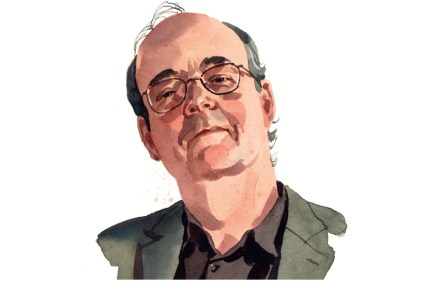
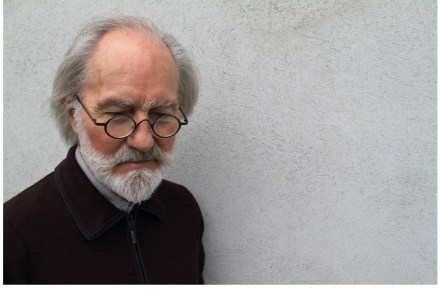
Without Roy Harper’s baroque, mellifluous, melancholy folk there would have been no ‘Stairway to Heaven’. James Delingpole meets a neglected genius In 1970, shortly before the release of Led Zeppelin III, guitarist Jimmy Page invited his folk-singing chum Roy Harper up to his Oxford Street offices to have a look at the new album. ‘What do you think?’ asked Page. ‘It’s nice,’ replied Harper, toying with the amusing picture wheel built into the sleeve. ‘Look at it!’ said Page. ‘Yes, it’s nice,’ said Harper. ‘No. Look at it!’ said Page, growing exasperated. And then Harper noticed the title of track five, side two. ‘Oh. Oh! Thanks! I don’t know what to say.

Killing comedy

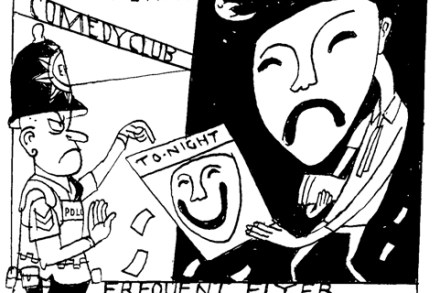
There is a ban on comedy flyering in Leicester Square. Westminster Council has decided that flyers are litter and that the flyerers — usually anxious baby comedians – ‘harass’ the tourists. This is ridiculous. Most comedians would scream at their own reflection in a pint. Even so, if the council finds any flyers it will remove the venue’s licence. As if comedians did not have enough woes — manic depression, calm depression, depression that is not really depression but suppressed rage, poor rates of pay, joke theft, Frankie Boyle — their solitary reason for living, which is attention, is now at threat.

Out of this world | 10 September 2011

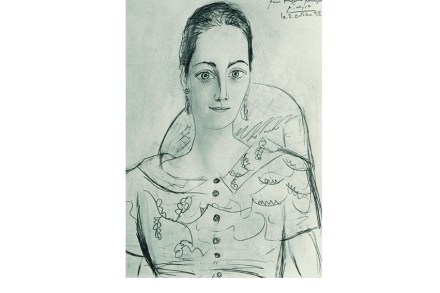
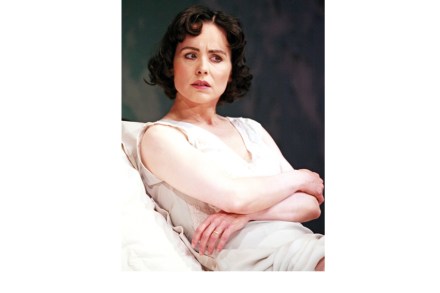
Lloyd Evans meets Tara FitzGerald and is struck by her uncanny beauty and her desire to hear what he thinks Tara FitzGerald’s beauty is fabulous. Literally, there’s something unworldly about the surfaces and contours of her face. It’s as if the codes of her biology had been transmitted to earth from a higher realm, from alien beings. The wide cheekbones are angular yet softly curvaceous. Her eyes have a luminous purity, a revelatory greenness. Her dark hair glows, and her immaculate skin is invitation-card white. She speaks in a low, smokily textured voice that occasionally surges into a throaty giggle. I meet her at the Tricycle theatre in Kilburn where she’s currently starring alongside Antony Sher in Arthur Miller’s Broken Glass.

Musical heaven

Here in suburban Surrey it is already the season of mists and mellow fruitfulness. The damson tree in our front garden is so weighed down with fruit that the branches almost reach the ground, as if it were impersonating a weeping willow, and my dear old mum has made two jars of delicious jam, with the promise of many more to come. The leaves on the great chestnut I see from my study window are beginning to turn, the lawn is sodden with rain and the summer holidays already seem a distant memory. I find that it is always this time of year, rather than 1 January, that brings on reflections about the past, and the future.

Blackpool’s ups and downs

The town’s first visitors were daytripping mill workers; now it’s a place for hen and stag parties. William Cook charts its changing fortunes, as a photographic exhibition reveals Think of Blackpool and fine art probably isn’t the first thing that springs to mind, but Britain’s biggest, brashest seaside resort is the unlikely home to one of Britain’s loveliest little galleries. Hidden behind the grey seafront, a drunken stumble from the North Pier, the Grundy Art Gallery was founded in 1911 by two brothers — local philanthropists and art lovers — and this summer it celebrates its centenary with a photographic exhibition that spans the past 100 years. No other town encapsulates Britain’s ups and downs quite as well as Blackpool.

Down and out in Edinburgh

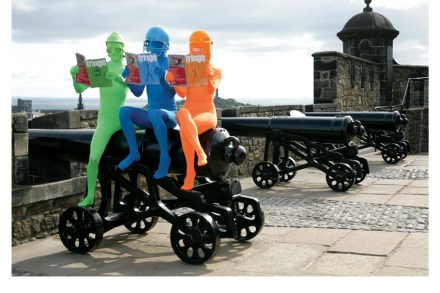
Lloyd Evans mingles with sozzled Scots, benumbed punters and performers with nothing to lose at this year’s Fringe It’s for losers, Edinburgh. The world’s down-and-outs come here in droves every August. This year I was one of them. Having failed to secure my usual lodging, a spartan cell on the university campus, I had to book a backpackers’ refuge on the Royal Mile. It was better than a park bench. Just about. The website promised ‘fitted sheets’ and ‘lounge with real fire (gas/coal effect)’ as tokens of its commitment to luxury. I rented a towel (20p, no deposit), which turned out to be fairly clean on one side. The accommodation was rammed. Six rooms, eight bunks each. Nearly 50 of us sharing four showers. No soap.

Fringe round-up – Mixed blessings

Hit and miss at Edinburgh. It always is. Random impulses drive you to select one show from the thousands on offer. Coffin Up (10 Dome) contained the hint of a macabre pun (‘coughing up’?), so along I went. It begins in a mortician’s office. There’s a coffin centre stage. The lid springs open and a masked clown sits bolt upright. He waves. Surprise! On comes the undertaker, also masked, and we learn through wordless gestures that he’s bankrupt and has embarked on a killing spree to save his business. It’s charming enough in a cheesy kind of way. The best thing is the soundtrack, a sequence of pub tunes and orchestral favourites that lends subtle emphasis to the dramatic mood.

The real deal

The Cambridge Footlights (King Dome) have a lot going for them. Poise, brains, clean-cut looks, nice accents and privileged status at the Edinburgh Fringe as keepers of a sacred flame. But in reality these advantages count against them. Audiences know that comedy comes from a paranormal neverland, from damaged grotesques, from halting, slobbering outsiders. Comedy is unpleasant. And these boys are anything but. So it takes them a while to convince us that they’re the real deal and not some artful muck-about from the college quad. Their comedic sources are obvious. Movie spoofs, workplace mix-ups. And much of their material defies current political orthodoxies. A joke about the Jamaicans not being able to muster an army feels distinctly weird.

Totally Tom: class act

If you are feeling chippy — and I hope you are not — you might find Totally Tom annoying. If you are feeling chippy — and I hope you are not — you might find Totally Tom annoying. Here are two Old Etonians, Tom Palmer and Tom Stourton, who want to be comedians. They have been catapulted towards success at an early age thanks to the internet, and their act is all the rage at this month’s Edinburgh Fringe. Girls like them, obviously. ‘Oh, my God, Tom!’ shouts a nubile blonde as they walk into the room. ‘I was just about to text you!’ Chippiness, however, would be quite the wrong reaction. Totally Tom are totally brilliant. They are talented, funny, and admirably self-effacing.

Let there be light | 20 August 2011

The bare brickwork of Westminster Cathedral’s ceiling was always meant to be covered in mosaic. Mark Greaves meets Tessa Hunkin, who will bring the project to life Three years ago, Tessa Hunkin was asked if she would like to undertake the biggest mosaic project since the Hagia Sophia. The project, which would probably take decades and cost tens of millions of pounds, was to decorate the ceiling of Westminster Cathedral. Monsignor Mark Langham, then cathedral administrator, told her, ‘We will have work for you for the rest of your life.’ The cathedral, built in 1903, was always meant to be covered in mosaic. The bare brickwork of its vast domes and vaults is not part of the design — it was just never finished. But momentum is building to change that.

An Australian in Lautrec’s Paris

The remarkable career of Charles Conder At the small but distinguished exhibition at the Courtauld Institute — Toulouse-Lautrec and Jane Avril (until 18 September) — we glimpse many of the habitués of the Moulin Rouge with the exception of Charles Conder. A marginal figure in at least four works by Lautrec, he is also the subject of a fine portrait drawing at the Art Gallery of Aberdeen. Conder was born in London in 1868 and as a child went to Australia with his parents. He showed an early aptitude for art and at the age of 15 was employed as an illustrator for the Sydney Morning Herald.

In Monet’s garden

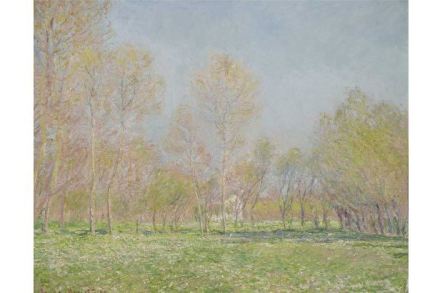
We owe Giverny to the generosity of Americans Whoever coined the famous aphorism ‘When good Americans die, they go to Paris’ didn’t tell the full story. For American plein-air painters, Paris was never more than limbo. Heaven, they eventually discovered, was Giverny, presided over by the Impressionist deity Monet. It was 1887 when the first American scouts came to reconnoitre the small Normandy village 80 kilometres down the Seine. They reported back to Paris, and within a few summers Monet’s rural retreat was infested with artists’ studios and the fields around were sprouting clumps of painters’ white umbrellas.

Seeking closure

What makes an appropriate encore? And when should they be performed? Michael Henderson on the art of finishing well After a recital at Wigmore Hall earlier this year András Schiff performed an encore, as pianists often do. Normally a Bach prelude or a Schubert impromptu will round the evening off. It is part of the unspoken contract between performer and listener, to prove that both parties have been paying attention. On this occasion, however, Schiff played the arietta that closes Beethoven’s last — and greatest — sonata, the Op. 111 — all 18 minutes of it! It made thematic sense, because he had devoted the concert to sets of variations by five composers. So, he clearly thought, I shall conclude matters with the most famous variations of them all.

Magical mystery tour

Jane Feaver goes behind the scenes with Kneehigh, a theatre company with an international reach that remains resolutely close to its Cornish roots These days, when Mike Shepherd appears on stage in Cornwall he is greeted as a local hero, the boy in the playground everyone most wants to play with. Some 30 years ago he founded the theatre company Kneehigh, where he remains associate artistic director.

Appreciation – Cy Twombly: the outsider

With the passing of Cy Twombly — who has died of cancer aged 83 — a beacon light of rare civilisation has gone out in the Western world. With the passing of Cy Twombly — who has died of cancer aged 83 — a beacon light of rare civilisation has gone out in the Western world. An elusive artist, with a highly developed faculty of challenge and response, he developed a pattern of investigation into the visual which was part philosophical inquiry and part sensual celebration. Despite close association with Robert Rauschenberg and Jasper Johns, recognition came late. He remained something of an outsider: an esoteric American artist who settled in Italy in 1957 and grew obsessed with Classical antiquity.

An instinct for comedy

William Cook discovers that the clue to Nicholas Parsons’s enduring success lies in his ability to laugh at himself When I was a kid, watching Sale of the Century on my grandma’s colour telly, Nicholas Parsons used to seem like the smartest man in show business. Meeting him half a lifetime later, in a rooftop restaurant in Kensington, I’m pleased to find that he still looks just as dapper. His blue blazer is neatly pressed, his white shirt is crisply ironed and his bright eyes sparkle like a schoolboy’s. You’d never guess he was in his eighties, with more than 60 years in showbiz behind him. He’s worked with Tony Hancock, Kenneth Williams — all the greats, and he’s outlived the lot of them. He’s a living marvel.

Whose art is it anyway?

Niru Ratnam tackles the thorny question of what constitutes British — or should that be English? — art In the past few months there have been two large-scale exhibitions showcasing British art. The first was the British Art Show at the Hayward Gallery; the second Modern British Sculpture at the Royal Academy. On show at the former were an elegant suite of works by Wolfgang Tillmans (born in Germany), a tapestry by David Noonan (Australia), the much-lauded film ‘Clock’ by Christian Marclay (America) and the delicate paintings of Maaike Schoorel (Netherlands).

Viewpoint – Valuing culture

How should we measure the value of a work of art? Let’s take, for example, Michelangelo’s statue of David in the Accademia in Florence. How should we measure the value of a work of art? Let’s take, for example, Michelangelo’s statue of David in the Accademia in Florence. The 17ft marble figure attracts a huge number of visitors from all over the world, so the box denoting popularity gets a tick. The revenue box gets ticked as well because of the gallery’s entrance fees and the money spent on accompanying T-shirts and postcards. And also to be considered is the amount this piece would fetch in a hypothetical sale.

Growing old gracefully | 25 June 2011

Michael Tanner says that the Wigmore Hall, celebrating its 110th birthday, combines Edwardian grandeur with contemporary appeal The Wigmore Hall is so expert in advertising itself with taste and discretion that it manages to give the impression, simultaneously, of belonging to a previous era and thus having all the charm of the Edwardian age at its most appealing, while also showing its adaptability to contemporary technology and, at least as important, to contemporary music. Even its website contrives to have a winningly traditional air, while of course being completely up-to-date. Certainly the building itself, especially as you approach it, evokes the age in which it was constructed, 110 years ago, with its pointed glass canopy and its lengthy, narrow, mahogany-lined entrance hall.

Sound – It’s rocket science

With 3D images astounding half the population and leaving the other half feeling distinctly seasick, it was only a matter of time before another of our senses got the same treatment. Sure enough, 3D sound reproduction is finally with us; but while you might expect Professor Edgar Choueiri, its inventor, to be an audio engineer of some sort, he in fact spends most of his time as professor of mechanical and aerospace engineering at Princeton University. Let the ‘3D sound? It’s not rocket science’ gags commence. Born in Lebanon and schooled in France, Choueiri now works on spacecraft propulsion in the US, funded by Nasa.